Artwork
Au bord de la Seine
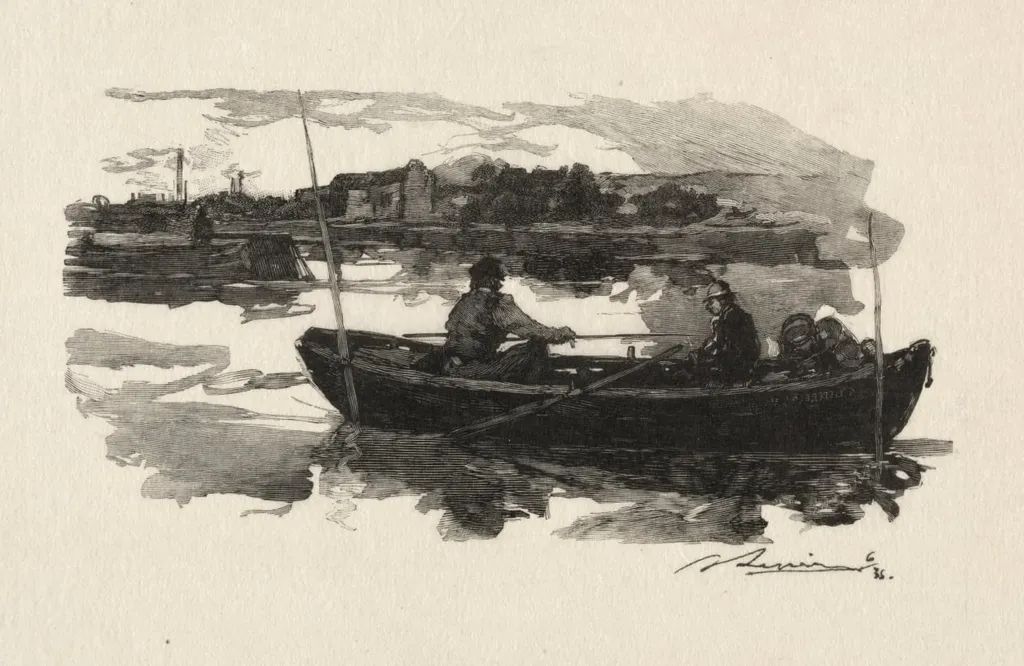
Au bord de la Seine is a print by the Impressionist artist Auguste Lepère. It dates from 1888 and is held in the collection of the Cleveland Museum of Art.
About this work
Overview
Auguste Louis Lepère, a French artist instrumental in revitalizing wood engraving in the late 19th century, produced *Au bord de la Seine* in 1888.
Auguste Louis Lepère, a French artist instrumental in revitalizing wood engraving in the late 19th century, produced *Au bord de la Seine* in 1888. The print captures a quiet moment on the riverbank, rendered with spontaneous, fluid lines. Its emphasis on everyday life and immediate observation aligns with broader trends in French graphic art of the period. The work is part of the Cleveland Museum of Art’s collection, reflecting its significance in the revival of printmaking as a serious medium.
Subject & Meaning
Two figures are depicted rowing a small boat along the Seine, their forms simplified yet dynamically composed. The scene avoids idealization, focusing instead on ordinary labor and leisure. Behind them, faint outlines of trees, distant structures, and a smokestack suggest the encroachment of industry on the riverside. The composition prioritizes human presence over landscape detail, conveying a sense of transient, unremarkable moments rendered with quiet dignity.
Technique & Style
Lepère employed wood engraving with loose, rapid incisions to evoke motion and atmosphere rather than precise detail. The water is suggested through fluid, irregular lines; the background is minimized to smudged tones and sparse contours. This approach reflects a deliberate move away from polished academic styles, embracing the immediacy and tactile quality of hand-carved wood. The result is a work that feels both spontaneous and carefully controlled, characteristic of his revivalist technique.
History & Provenance
Created in 1888, the print emerged during a period of renewed interest in traditional print methods across Europe. Lepère’s work contributed to the reestablishment of wood engraving as a legitimate artistic medium, distinct from mass-produced illustrations. The piece entered the Cleveland Museum of Art’s collection through documented acquisition, preserving its place within the context of late 19th-century French graphic arts and the broader print revival movement.
Context
In the late 1800s, French artists increasingly turned to printmaking to explore modern life with immediacy and intimacy. Lepère’s work responded to this shift, aligning with Realist and Impressionist sensibilities by capturing fleeting moments without embellishment. The inclusion of a factory chimney subtly acknowledges industrialization’s presence, reflecting broader societal changes. His technique stood in contrast to the ornate styles of earlier generations, favoring directness and material honesty.
Legacy
Lepère’s prints, including *Au bord de la Seine*, helped reestablish wood engraving as a vehicle for artistic expression rather than mere reproduction. His emphasis on handcrafted marks and observational subject matter influenced subsequent generations of printmakers in Europe and beyond. The work remains a reference point for those studying the intersection of technique, modernity, and the everyday in 19th-century graphic art.
Artist & collection
Artist
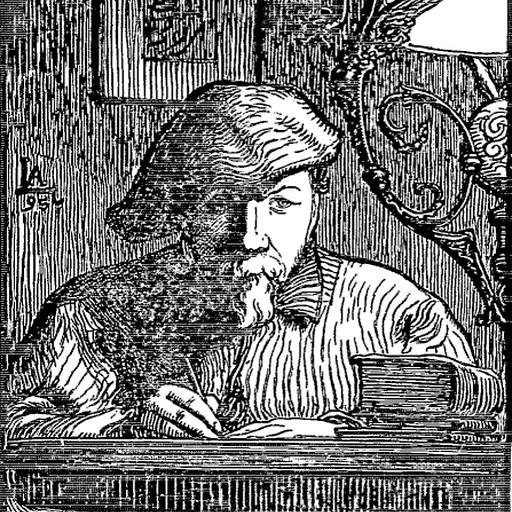
Louis-Auguste Lepère (30 November 1849 – 20 November 1918) was a French painter and etcher. Lepère is also considered a leader in the creative revival of wood engraving in Europe.

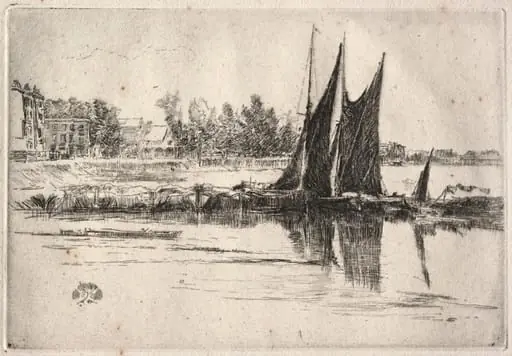 Hurlingham
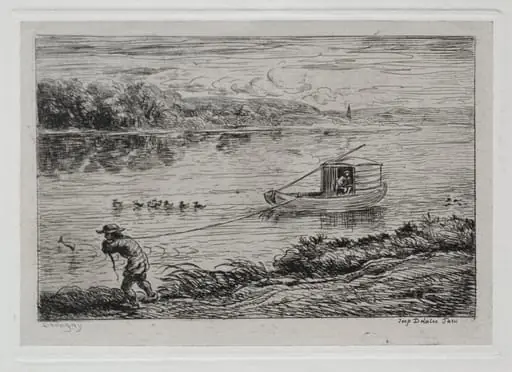 The Boat Trip: Cabin Boy Hauling the Tow-Rope or Hauling by Rope
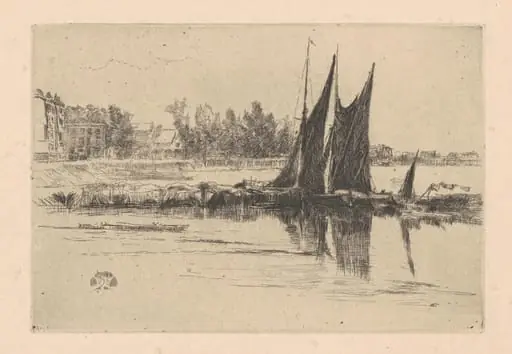 Hurlingham
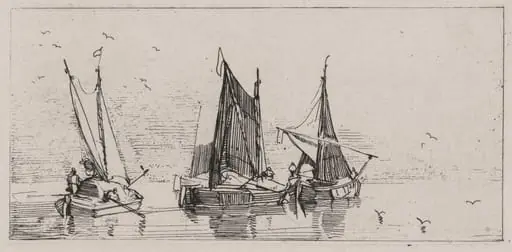 Three Sailboats
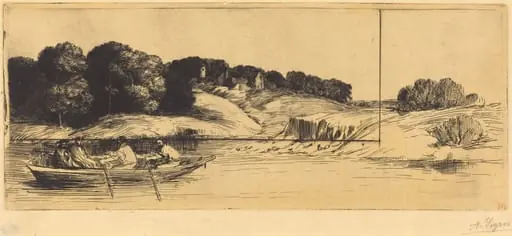 Landscape with Boat, 1st plate (Le paysage au bateau)
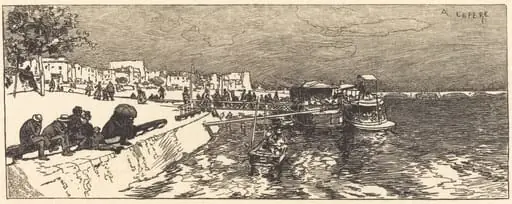 Pier at Bercy (Embarcadere a Bercy)
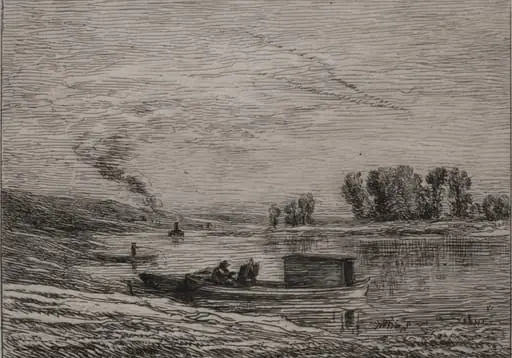 The Boat in Conflans
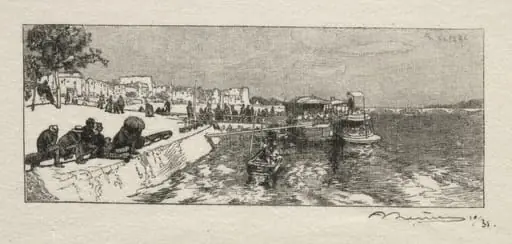 Embarcadére a Bercy
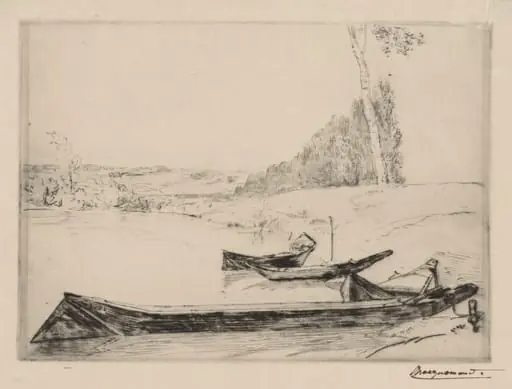 Small ferry-boats on the banks oft he Seine
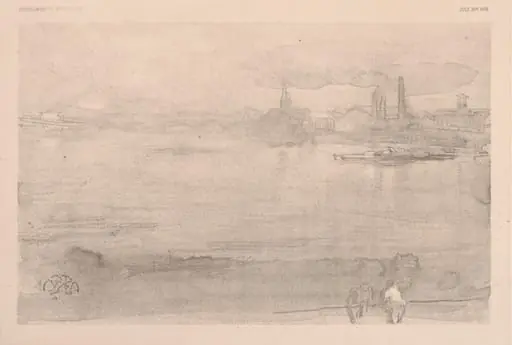 Early Morning: The Thames at Battersea
 Danube at Walhalla
 Egham
Egham