Artwork
Bataille du Col de la Chiprotte
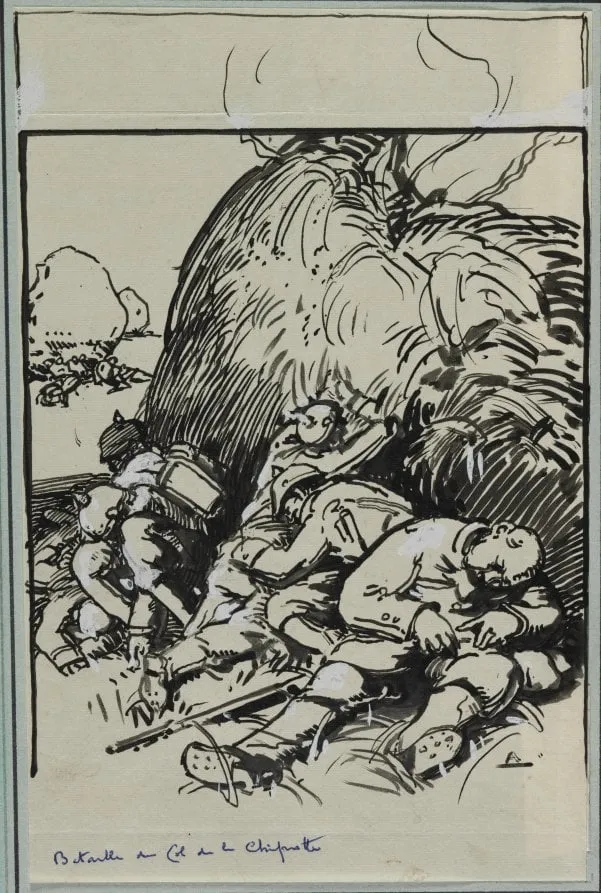
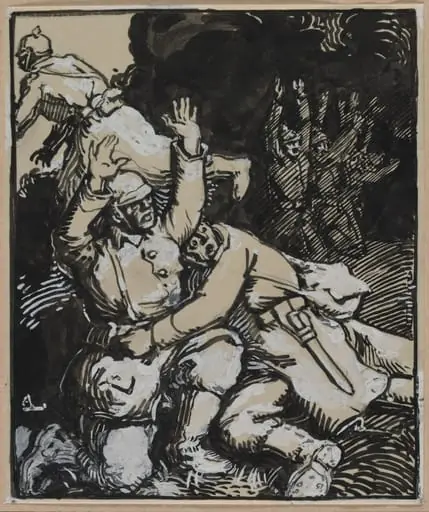
Bataille du Col de la Chiprotte is a drawing by Auguste Lepère. It dates from 1914 and is held in the collection of the Cleveland Museum of Art.
About this work
Overview
Created in 1914 by French artist Auguste Louis Lepère, *Bataille du Col de la Chiprotte* is a dynamic drawing that captures the chaos of combat.
Created in 1914 by French artist Auguste Louis Lepère, *Bataille du Col de la Chiprotte* is a dynamic drawing that captures the chaos of combat. Though Lepère was renowned for his wood engraving revival, this work is a spontaneous ink sketch, not a finished print. It resides in the collection of The Cleveland Museum of Art, reflecting his interest in immediate, visceral representation over polished finish.
Subject & Meaning
The drawing depicts a disordered battlefield on a steep, muddy slope, with soldiers in fragmented uniforms collapsing or crawling amid debris. A massive cannon dominates the background, its barrel pointed downward, suggesting imminent fire. The title references a real location, yet the scene lacks clear narrative or heroism—instead, it conveys the confusion and physical toll of warfare through raw, unidealized forms.
Technique & Style
Lepère employed rapid, angular ink lines to convey motion and disarray, avoiding smooth contours or detailed anatomy. The sketch’s urgency is heightened by loose, overlapping strokes and minimal shading, emphasizing texture over precision. This approach aligns with sketchbook practices, prioritizing emotional impact and kinetic energy over formal composition or finish.
History & Provenance
Executed in 1914, the drawing emerged during a period when Lepère was deeply engaged with printmaking and observational drawing. It entered The Cleveland Museum of Art’s collection through documented acquisition, though its specific origins prior to museum ownership remain unrecorded. Its preservation reflects institutional interest in early 20th-century French graphic works beyond finished prints.
Context
Created at the outbreak of World War I, the drawing resonates with the era’s growing artistic shift toward documenting war’s brutality rather than glorifying it. Lepère’s focus on movement and chaos aligns with contemporary European artists rejecting academic traditions, embracing immediacy as a response to modern conflict and industrialized violence.
Legacy
Though not widely exhibited, the drawing exemplifies Lepère’s commitment to expressive draftsmanship. It stands as a quiet counterpoint to his more celebrated engravings, illustrating his ability to convey tension through minimal means. Its presence in a major museum underscores its value as a personal, unvarnished record of wartime experience.
Artist & collection
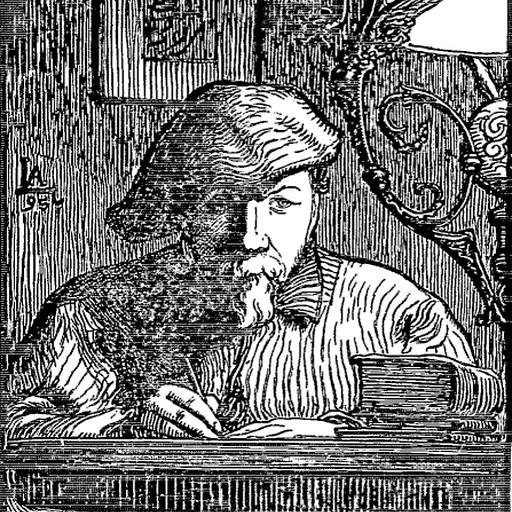
Artist
Louis-Auguste Lepère (30 November 1849 – 20 November 1918) was a French painter and etcher. Lepère is also considered a leader in the creative revival of wood engraving in Europe.

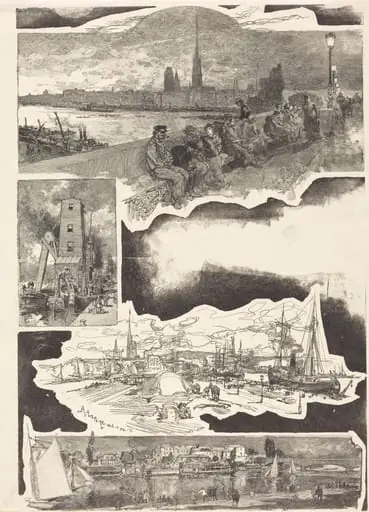
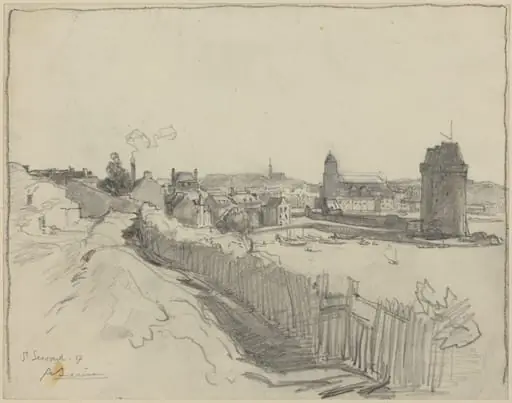
 Dans une tranchée, des soldats allemands se rendent
 Return from the Woods
 Tail Piece for Chapter XXI from "Lorna Doone"
 St. Christopher Crossing the Water with Christ on his Shoulders
 Bringing the Hay Home
 Route de Versailles
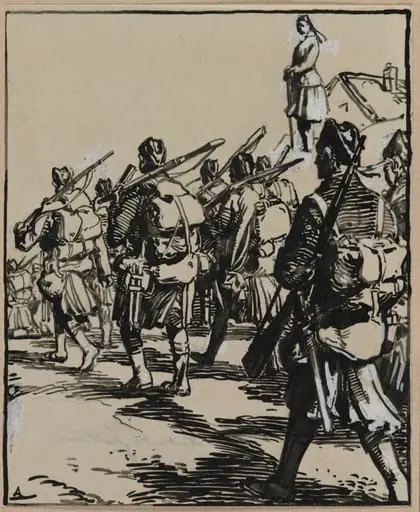 Bataille des frontières: groupe des soldats britanniques
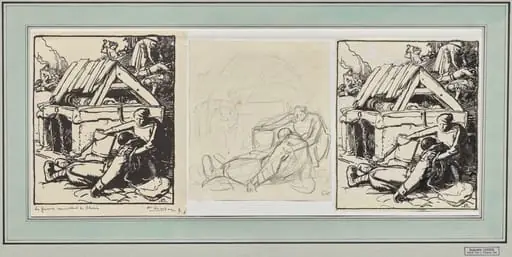 Les Femmes receuillant les blesses
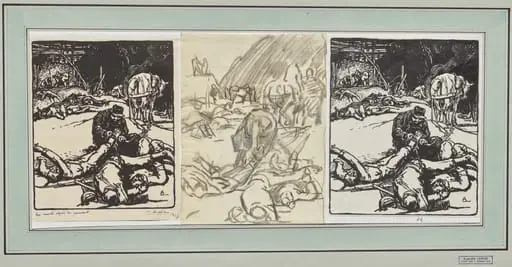 Les Morts après le combat
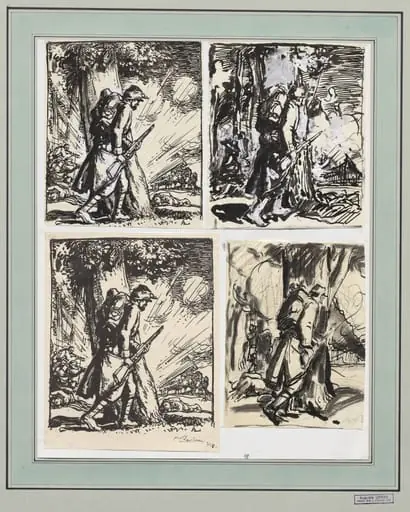 Fantassin à l'abri d'un arbre
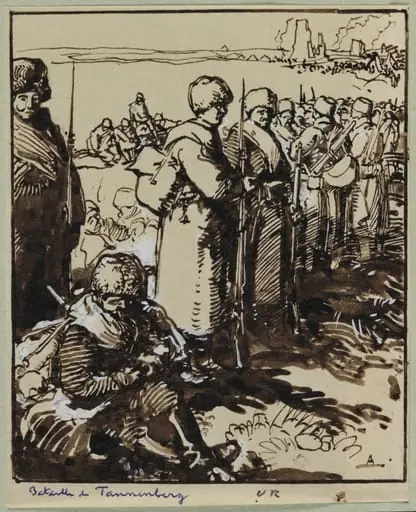 Bataille de Tannenberg
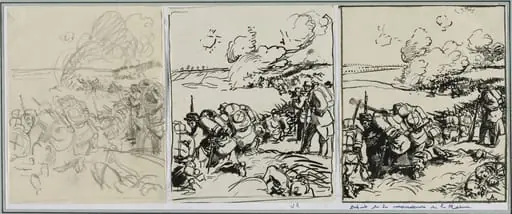 Dêbut de la manoeuvre de la Marne