Artwork
Bombe explosant sur un cuirasse aux canons braques
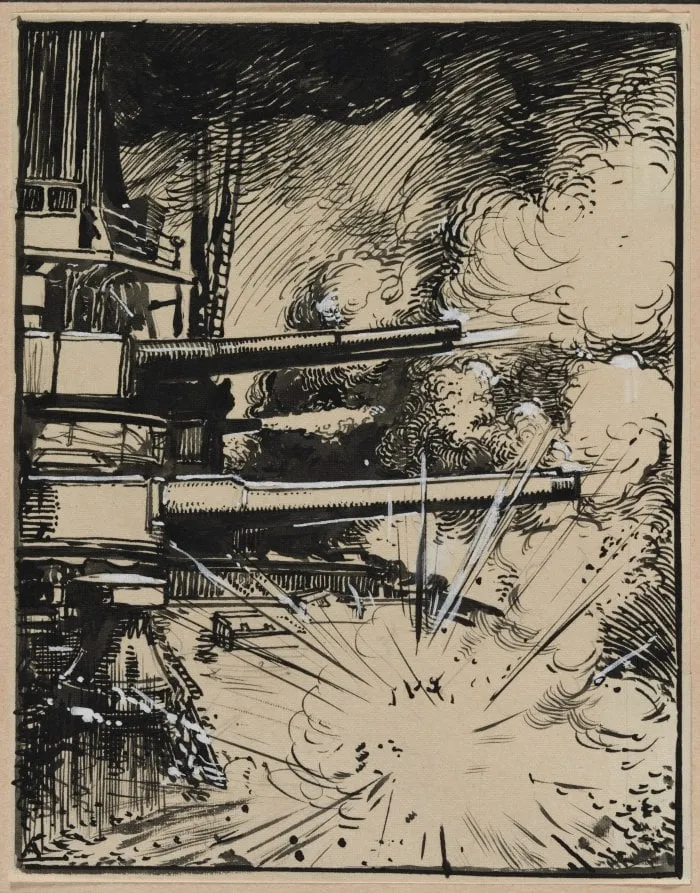
Bombe explosant sur un cuirasse aux canons braques is a drawing by Auguste Lepère. It dates from 1914 and is held in the collection of the Cleveland Museum of Art. Created in 1914 by French artist Auguste Louis Lepère, this ink drawing captures a naval explosion amid turbulent seas.
About this work
Overview
Created in 1914 by French artist Auguste Louis Lepère, this ink drawing captures a naval explosion amid turbulent seas. Lepère, known for revitalizing wood engraving, employed rapid, expressive linework to convey violence and motion. The work resides in The Cleveland Museum of Art’s collection, reflecting his engagement with contemporary themes of conflict during the early months of World War I.
Subject & Meaning
The drawing depicts a warship engulfed in an explosion, its cannons still firing as the vessel disintegrates. Surrounding waves churn violently, and the sky is choked with dense, swirling clouds. The scene suggests the chaos of modern naval warfare, emphasizing destruction over heroism. No figures are visible, focusing attention on the machinery of war and its sudden, overwhelming force.
Technique & Style
Lepère used bold, unrefined ink strokes to simulate the frenzy of the explosion and the turbulence of the sea. Lines are jagged and layered, avoiding smooth transitions. The contrast between dark, heavy masses and sparse, jagged highlights creates a sense of depth and motion. The technique prioritizes immediacy over detail, evoking the raw energy of the moment through gestural mark-making.
History & Provenance
The drawing was produced in 1914, during the first year of World War I, a period when Lepère was deeply involved in printmaking and social commentary.
The drawing was produced in 1914, during the first year of World War I, a period when Lepère was deeply involved in printmaking and social commentary. It entered The Cleveland Museum of Art’s collection through documented acquisition, though its earlier ownership history remains unrecorded. Its survival as a singular work underscores its role as a personal response to wartime imagery rather than a commissioned piece.
Context
Lepère created this work amid rising European tensions and the rapid mechanization of warfare. While not a direct illustration of a specific battle, it reflects widespread public awareness of naval combat’s destructive potential. His choice of a dynamic, almost abstract style aligns with broader artistic shifts away from realism toward expressive interpretations of modern conflict.
Legacy
Though not widely exhibited, the drawing exemplifies Lepère’s commitment to using traditional print techniques to address urgent contemporary subjects. It stands as a quiet but forceful record of early 20th-century anxieties about industrialized war. His approach influenced later artists exploring abstraction and emotional intensity in print media, particularly in wartime contexts.
Artist & collection
Artist
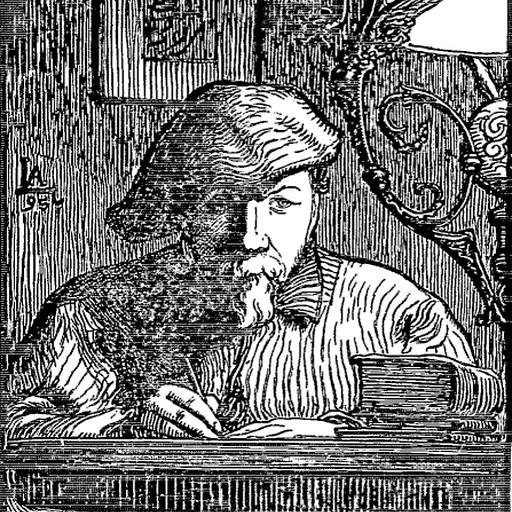
Louis-Auguste Lepère (30 November 1849 – 20 November 1918) was a French painter and etcher. Lepère is also considered a leader in the creative revival of wood engraving in Europe.

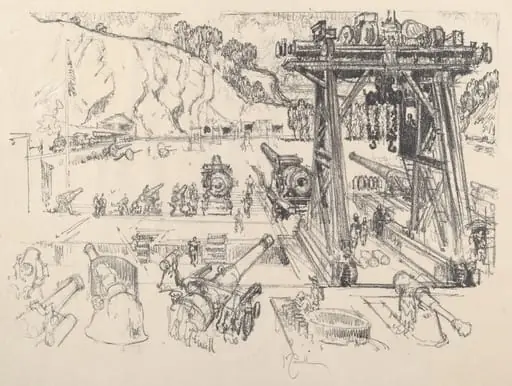 The Gun-Testing Ground
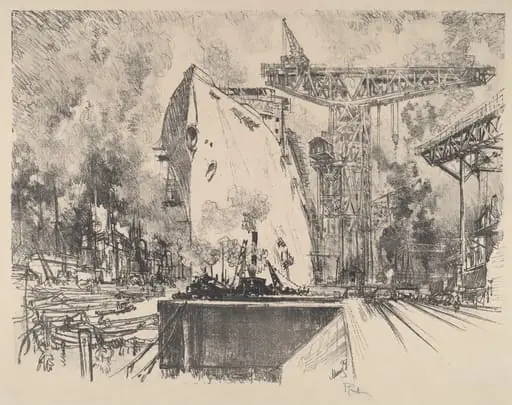 Building the Bismarck, Hamburg
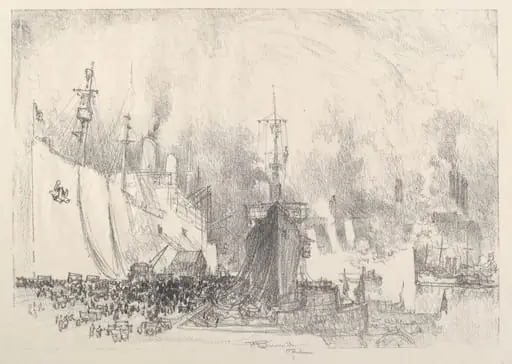 The Transports
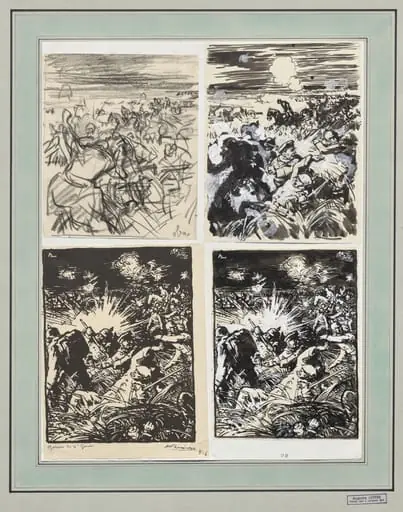 Marais de Saint-Gond
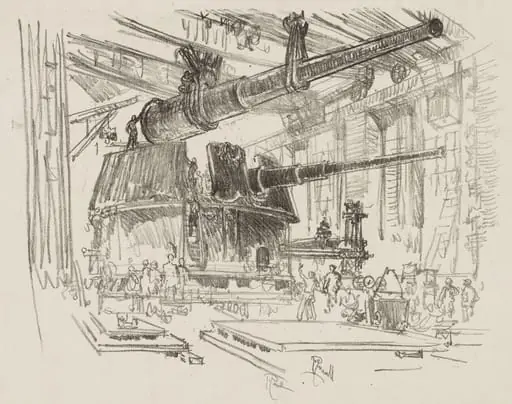 English War Work: Fitting Guns in Turrets
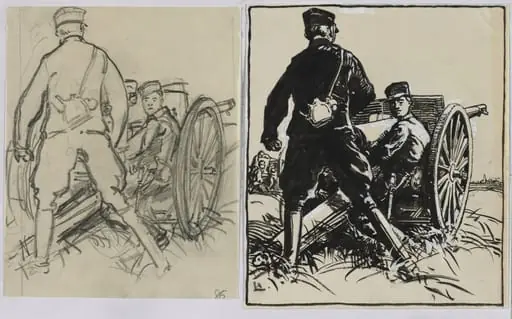 Artillelurs belges
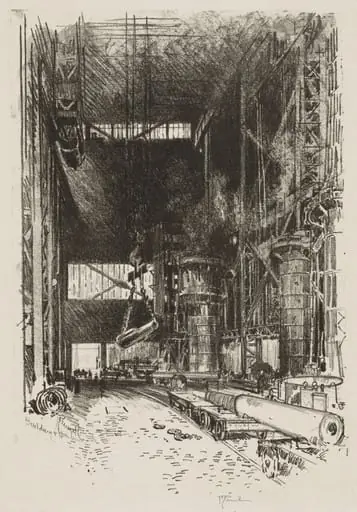 English War Work: The New Gun Pit
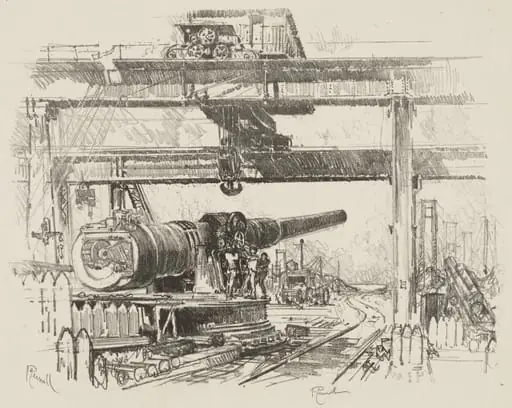 English War Work: Gun-Testing
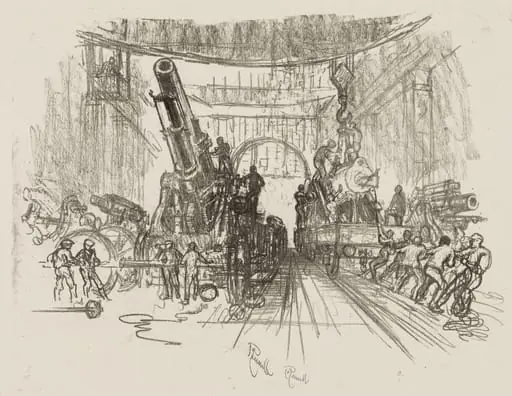 English War Work: Ready for War
 Ready for War
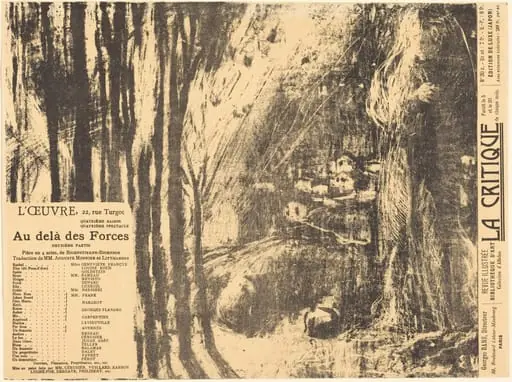 Au-delà des forces humaines
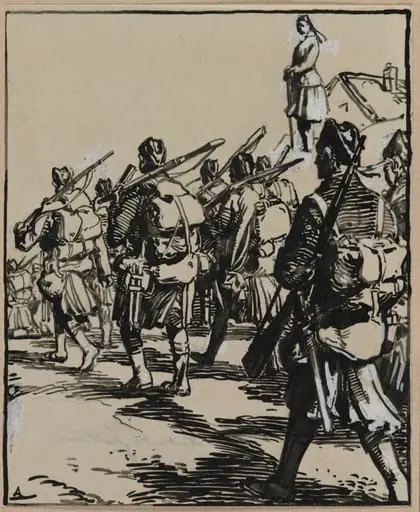 Bataille des frontières: groupe des soldats britanniques