Artwork
Marais de Saint-Gond
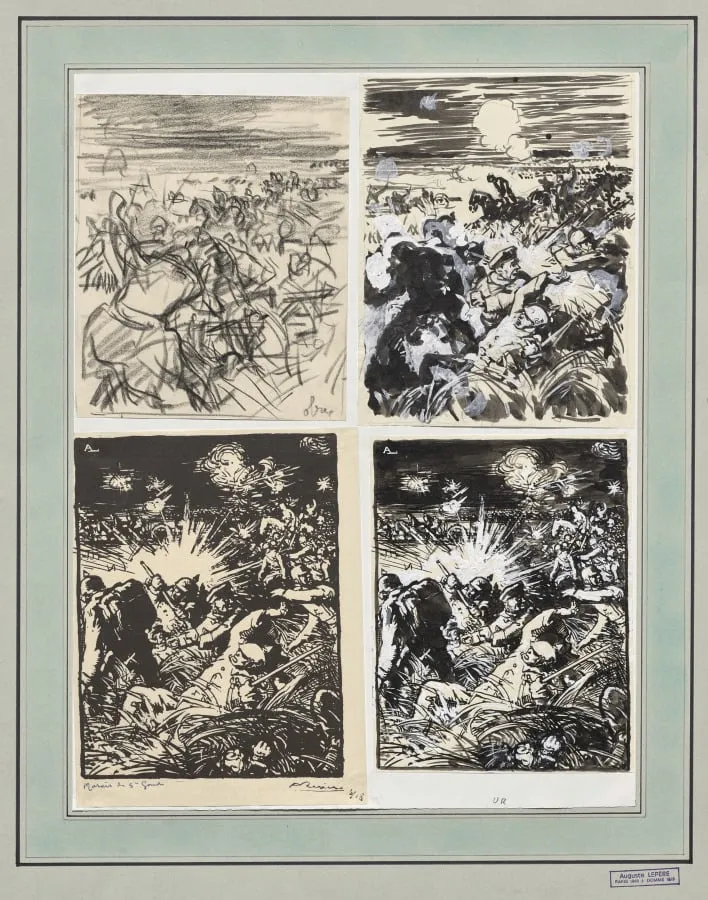
Marais de Saint-Gond is a drawing by Auguste Lepère. It dates from 1914 and is held in the collection of the Cleveland Museum of Art.
About this work
Overview
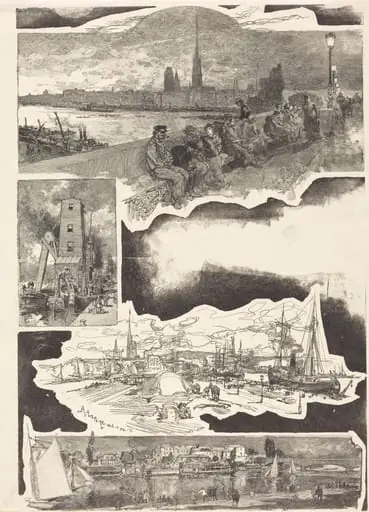
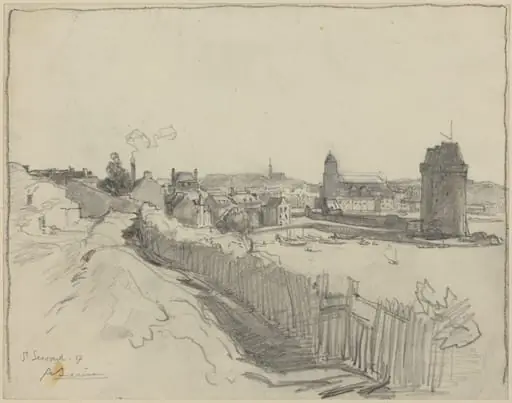
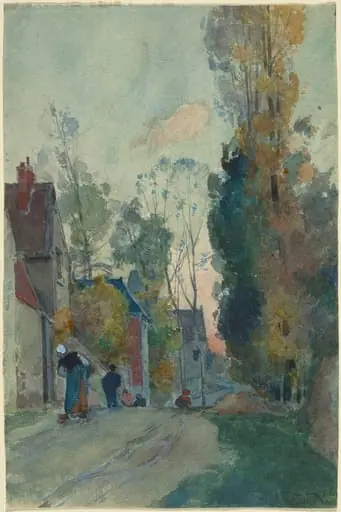
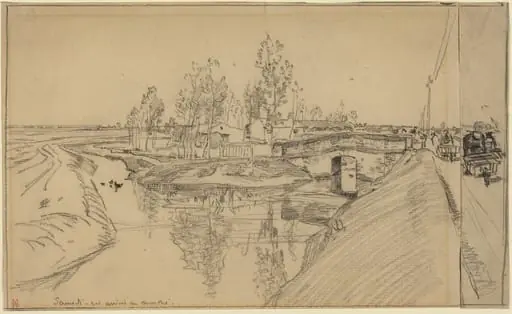
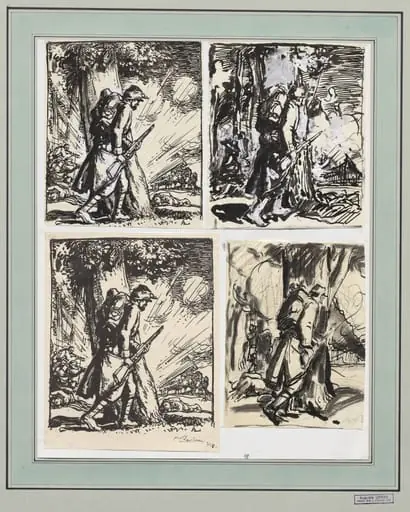
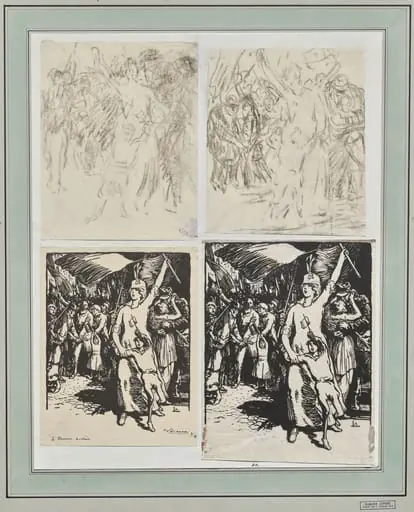
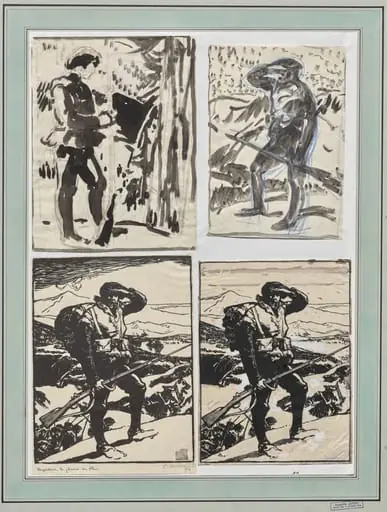
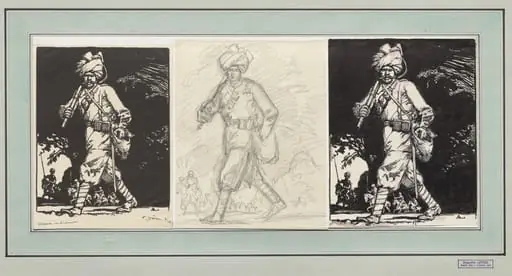
Created in 1914 by French artist Auguste Louis Lepère, *Marais de Saint-Gond* is a mixed-media drawing that combines sketchwork with bold woodcut prints.
Created in 1914 by French artist Auguste Louis Lepère, *Marais de Saint-Gond* is a mixed-media drawing that combines sketchwork with bold woodcut prints. The work is part of the Cleveland Museum of Art’s collection and reflects Lepère’s engagement with traditional printmaking techniques. Its fragmented structure presents multiple scenes within a single composition, suggesting a narrative unfolding across time and space.
Subject & Meaning
The drawing depicts four chaotic battle scenes set in a marshland, with soldiers on horseback and foot entangled in mud and tangled vegetation. The setting evokes confusion and disorder, possibly referencing the early violence of World War I. The absence of clear heroes or victory underscores a sense of futility, aligning the work with broader anxieties about modern warfare and its brutal, indiscriminate nature.
Technique & Style
Lepère employed wood engraving with strong chiaroscuro contrasts, using deep blacks and stark whites to heighten emotional tension. Two panels are rendered as loose sketches, while the other two are fully developed prints with sharp, angular lines. This contrast between finished and unfinished areas creates visual rhythm, guiding the viewer’s eye through the chaos while emphasizing the instability of the scene.
History & Provenance
The work entered the Cleveland Museum of Art’s collection in the 20th century, though its immediate post-creation history is not well documented. Lepère, known for reviving wood engraving in late 19th-century Europe, produced this piece near the end of his career. Its timing—just before the outbreak of global conflict—suggests it may have been a personal response to rising tensions in Europe.
Context
Made in 1914, the drawing coincides with the beginning of World War I, a period when artists across Europe grappled with the scale and horror of industrialized warfare. Lepère’s focus on muddy, disordered battlefields diverges from heroic military imagery, instead aligning with emerging realist and anti-war sensibilities. His use of traditional printmaking in a modern context reflects a broader cultural reckoning with technology and violence.
Legacy
Though not widely exhibited, *Marais de Saint-Gond* stands as a testament to Lepère’s commitment to printmaking as a vehicle for social commentary. Its hybrid technique and somber tone influenced later artists who sought to convey trauma through layered, non-narrative imagery. The work remains a quiet but potent example of how traditional media could be adapted to express the disorientation of modern conflict.
Artist & collection
Artist
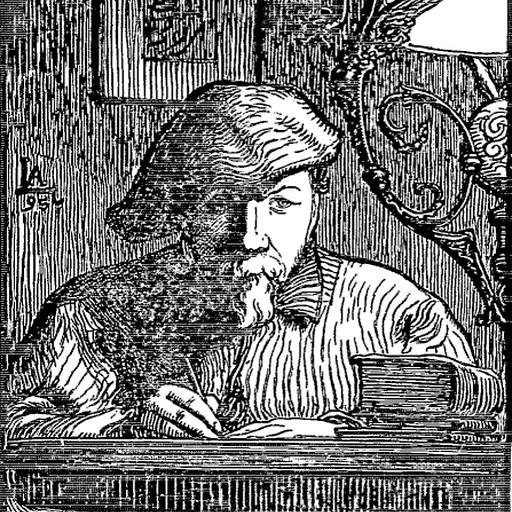
Louis-Auguste Lepère (30 November 1849 – 20 November 1918) was a French painter and etcher. Lepère is also considered a leader in the creative revival of wood engraving in Europe.