Artwork
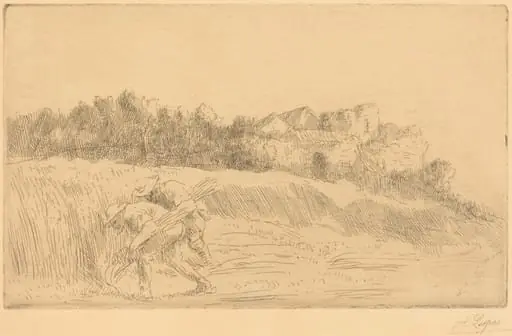
Javelles de Seigle, Crèvecoeur
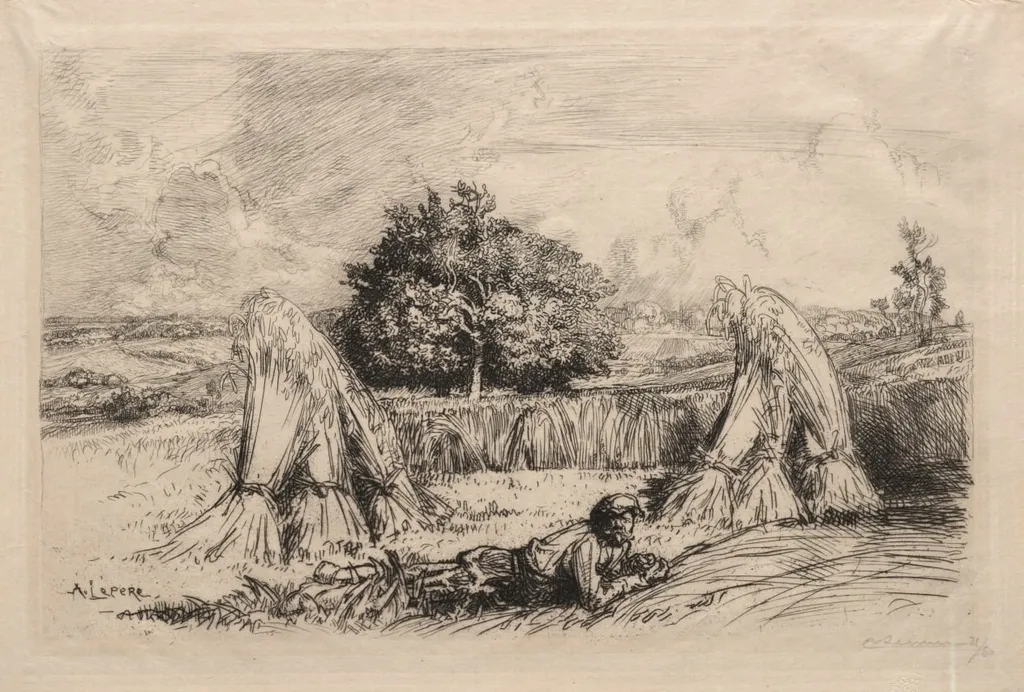
Javelles de Seigle, Crèvecoeur is a print by Auguste Lepère. It dates from 1915 and is held in the collection of the Cleveland Museum of Art.
About this work
Overview
Created in 1915 by French artist Auguste Louis Lepère, *Javelles de Seigle, Crèvecoeur* is a wood engraving that captures rural labor in the French countryside. Lepère, instrumental in reviving traditional wood engraving techniques in Europe, used this medium to render everyday scenes with precision and quiet dignity. The work is part of the permanent collection at The Cleveland Museum of Art.
Subject & Meaning
The distant village and sparse trees frame the activity within a broader landscape, emphasizing the quiet continuity of agricultural life.
The scene depicts two figures engaged in the harvest of rye, one stooping to bind sheaves, the other resting with a long pole. Their postures suggest the rhythm of manual labor, not its hardship. The distant village and sparse trees frame the activity within a broader landscape, emphasizing the quiet continuity of agricultural life. No dramatic tension is present—only the unremarkable dignity of seasonal work.
Technique & Style
Lepère employed fine, incised lines characteristic of wood engraving to suggest texture and motion. The grasses are rendered with rapid, directional strokes, while the figures are simplified yet expressive. Light is implied through varied line density rather than shading, creating a sense of airy openness. The composition balances detail with economy, avoiding ornamentation in favor of observational clarity.
History & Provenance
The print was produced during the final years of Lepère’s career, when he focused on rural subjects rooted in French peasant life. It entered the collection of The Cleveland Museum of Art in the 20th century, likely through acquisition from a European print dealer or collector. Its preservation reflects institutional interest in early 20th-century print revival movements.
Context
Lepère worked at a time when industrialization was transforming rural Europe, yet he turned to traditional methods to document fading agrarian routines. His prints, including this one, were part of a broader effort among artists to preserve the visual language of rural labor through handcrafted techniques, countering the rise of mechanical reproduction.
Legacy
Lepère’s wood engravings influenced a generation of printmakers who valued craftsmanship over mass production. *Javelles de Seigle, Crèvecoeur* remains a quiet testament to his commitment to documenting ordinary life with technical rigor. Though not widely exhibited, it endures as an example of how printmaking could serve as both art and ethnographic record.
Artist & collection
Artist
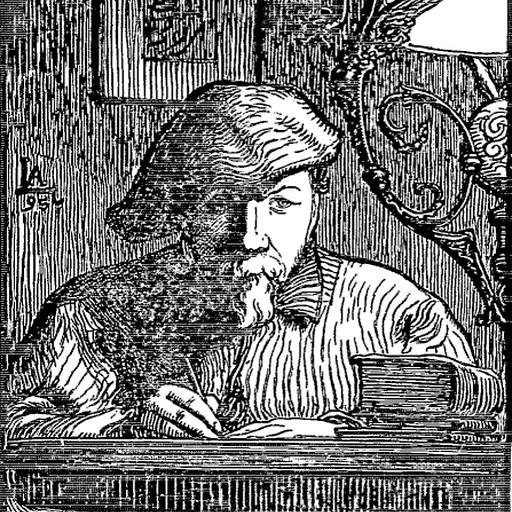
Louis-Auguste Lepère (30 November 1849 – 20 November 1918) was a French painter and etcher. Lepère is also considered a leader in the creative revival of wood engraving in Europe.

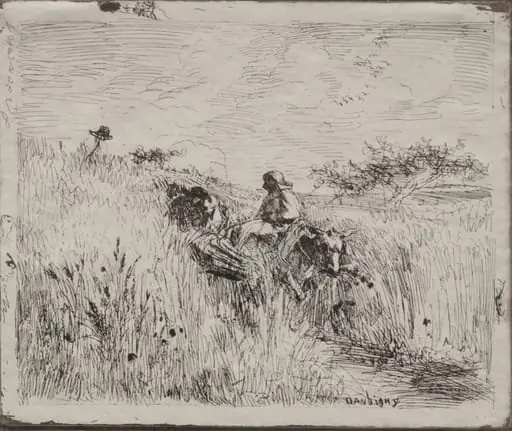 Path Through the Grain Field
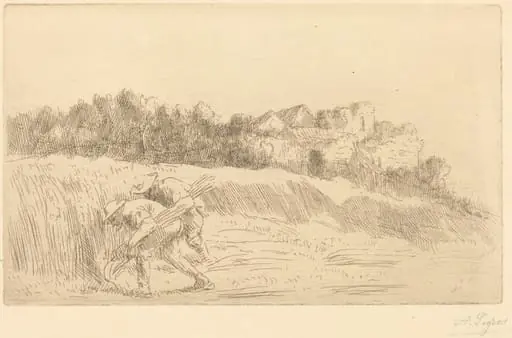 Harvesters (Les moissoneurs)
 The Harvest Field
 Harvest scene
 Peasant Woman Seated near a Hedge
 Old Willesley House
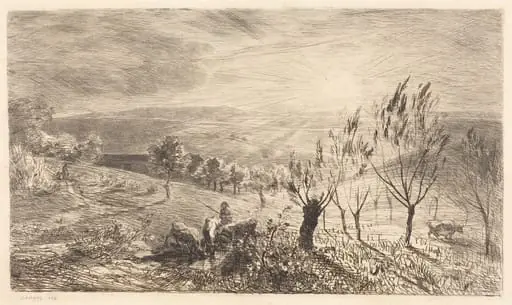 Sunrise (Le Lever du soleil)
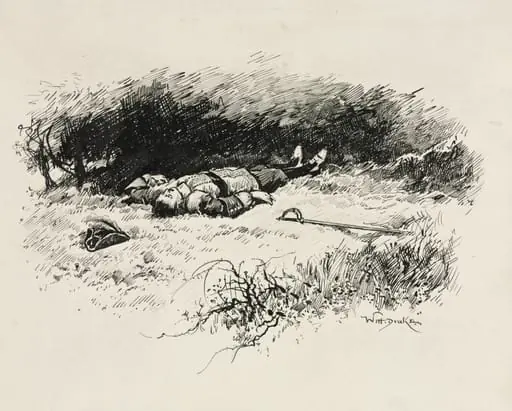 Tail Piece for Chapter XXI from "Lorna Doone"
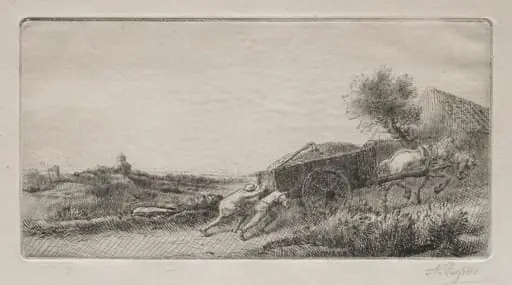 Bringing the Hay Home
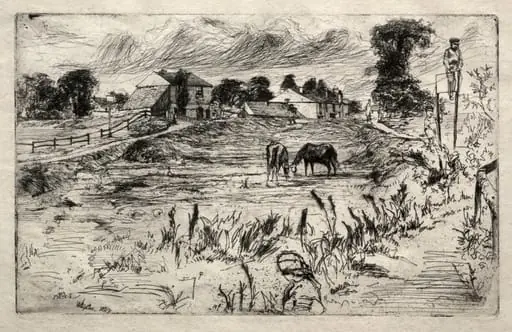 Landscape with the Horse
 Harvesters (Les moissoneurs)
 Breakfast in a Glade