Artwork
La Ravine en juin
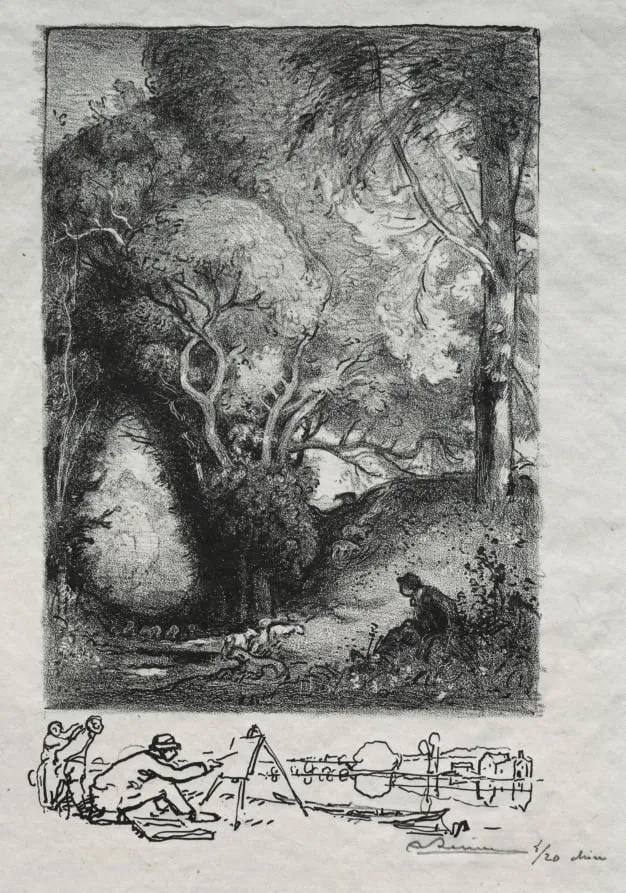
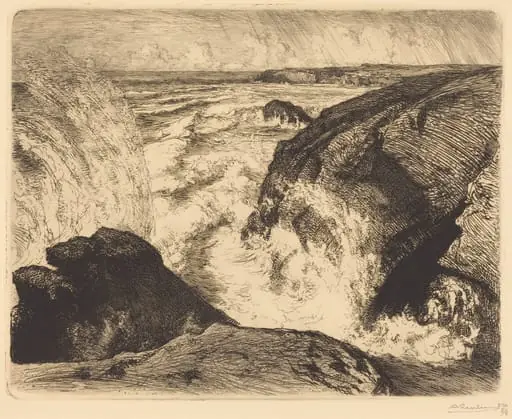
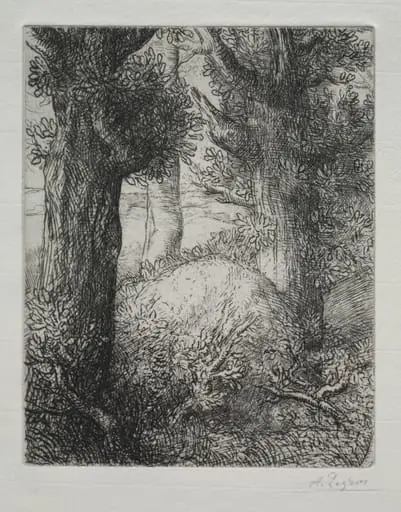
La Ravine en juin is a print by Auguste Lepère. It dates from 1913 and is held in the collection of the Cleveland Museum of Art.
About this work
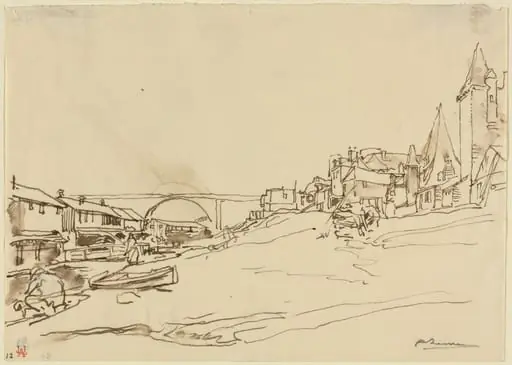
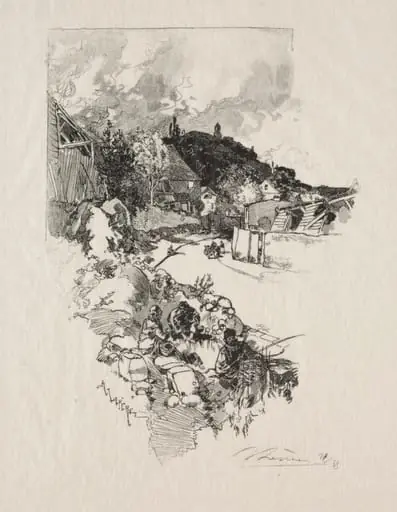
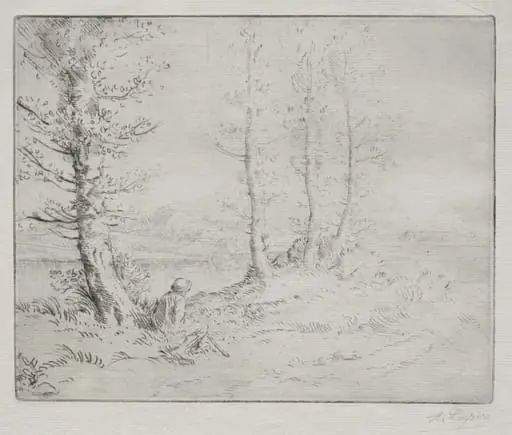
In the distance, a small figure sits near a stream, while below, two people sketch outdoors with an easel and a boat tied up by a fence.
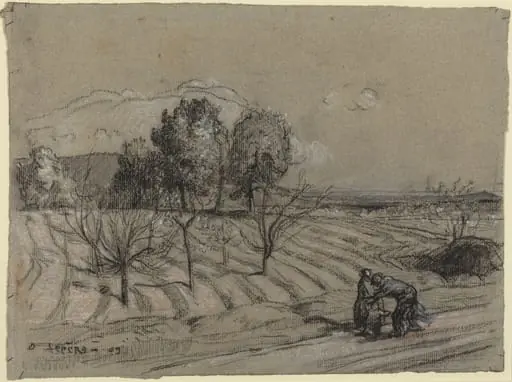
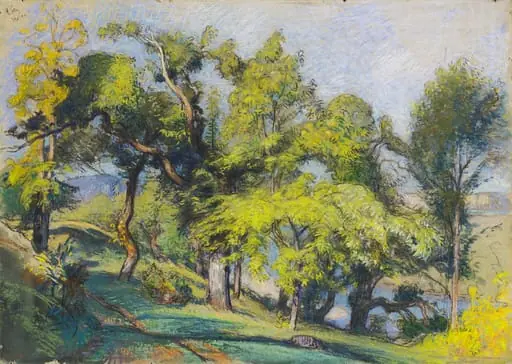
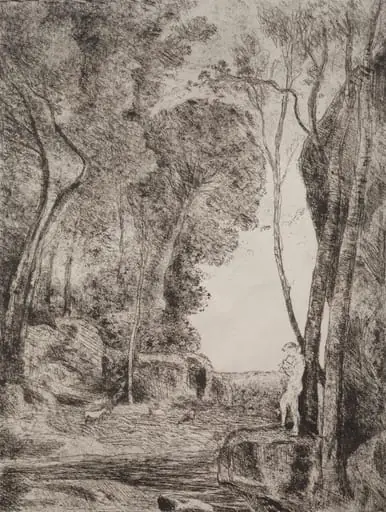
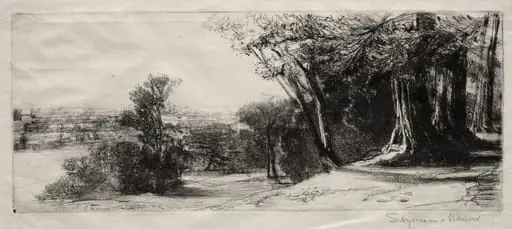
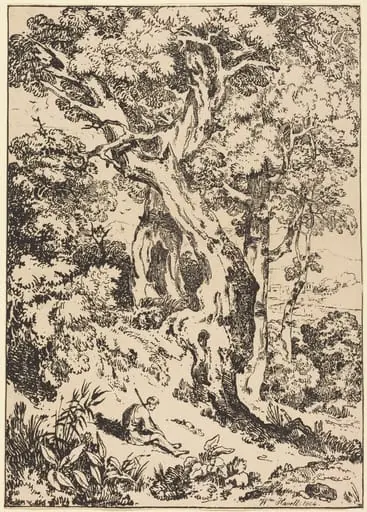
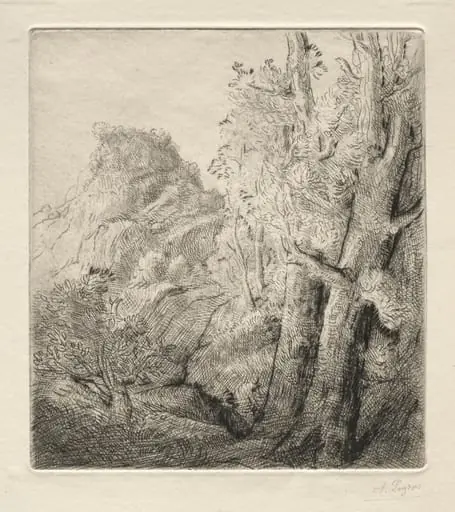
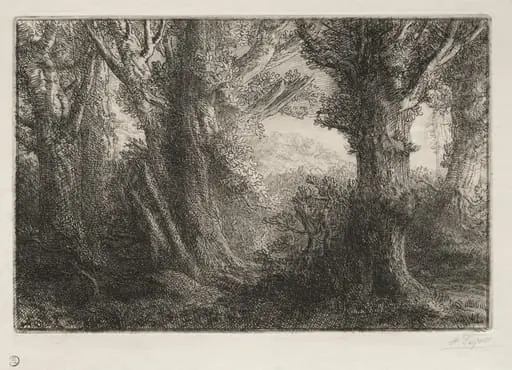
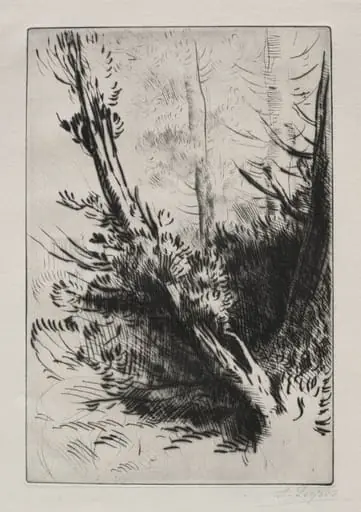
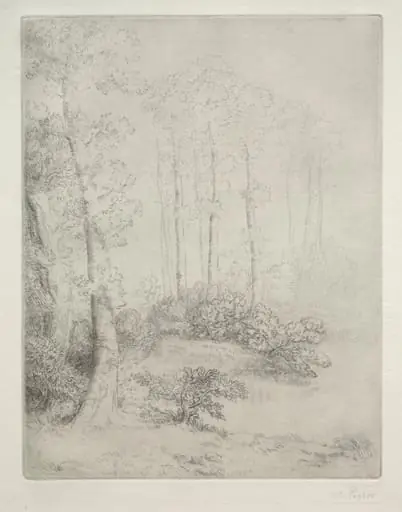
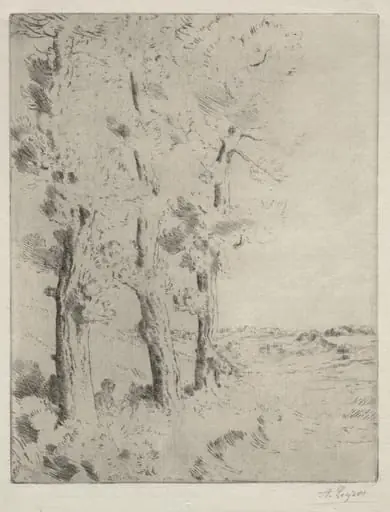
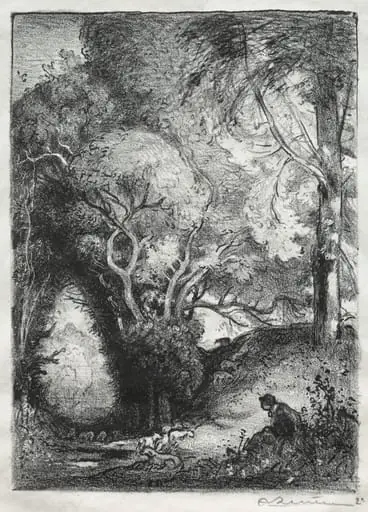
This sketch shows a quiet forest scene with twisted trees and tangled branches. The ground is rough, with rocks and shadows. In the distance, a small figure sits near a stream, while below, two people sketch outdoors with an easel and a boat tied up by a fence.
The artist included their signature in the corner, marking it as a 1913 work. The top image feels like a dreamy, shadowy forest, while the bottom sketch looks like a quick study of a real place.
Next, check out The Cleveland Museum of Art to see this sketch in person.
Overview
La Ravine en juin is a 1913 print by Auguste Louis Lepère, a key figure in the European revival of wood engraving. The work is part of The Cleveland Museum of Art's collection.
Subject & Meaning
The print depicts a serene, layered forest scene. The upper portion conveys a dreamy, shadowy atmosphere with twisted trees and rocky, shaded ground. Below, a more realistic sketch shows two artists at work outdoors, accompanied by an easel, a tied-up boat, and a distant figure by a stream, juxtaposing the mystical with the mundane.
Technique & Style
The composition contrasts two distinct visual approaches: the top, characterized by dense, expressive shading evoking a mystical ambiance, and the bottom, featuring quicker, more direct lines suggestive of a sketch from life, highlighting Lepère's versatility in capturing contrasting moods within a single work.
History & Provenance
Created in 1913, the print bears Lepère's signature. It is currently held in the collection of The Cleveland Museum of Art, where it is available for public viewing.
Artist & collection
Artist
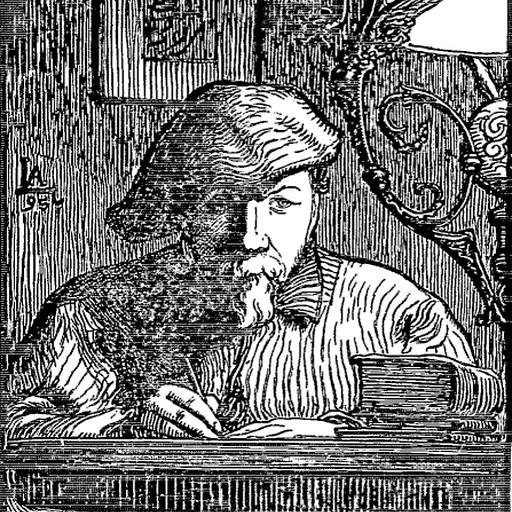
Louis-Auguste Lepère (30 November 1849 – 20 November 1918) was a French painter and etcher. Lepère is also considered a leader in the creative revival of wood engraving in Europe.