Artwork
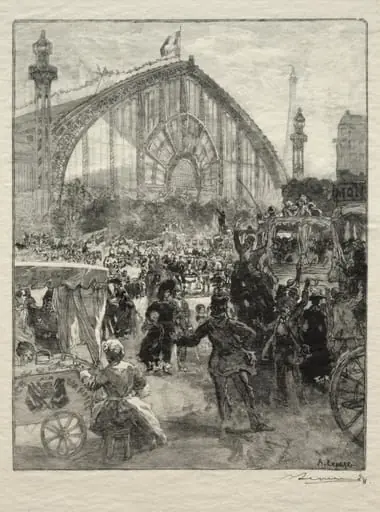
Le Palais des Arts Liberaux, Intèrieur
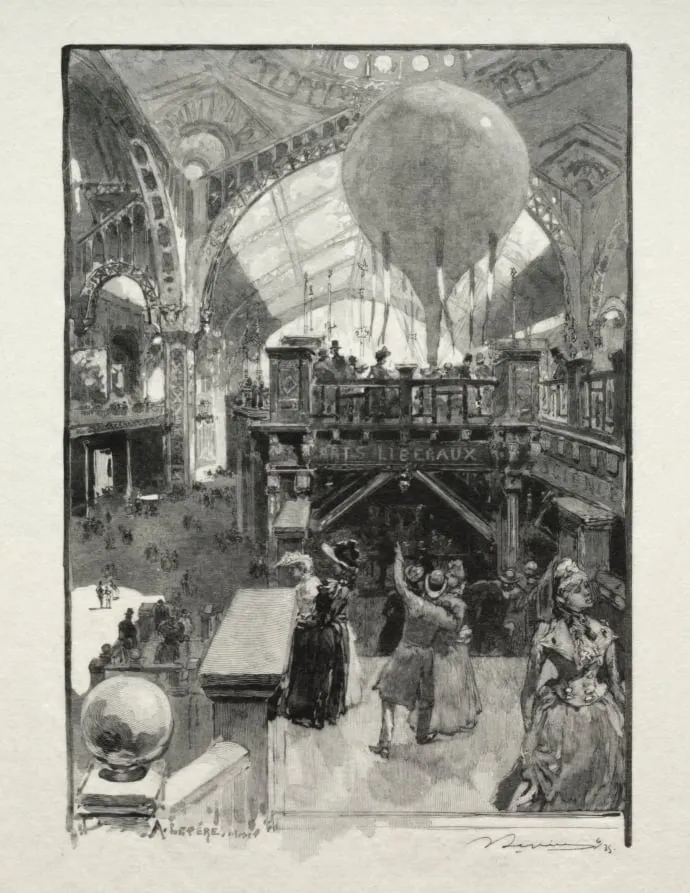
Le Palais des Arts Liberaux, Intèrieur is a print by the Impressionist artist Auguste Lepère. It dates from 1889 and is held in the collection of the Cleveland Museum of Art. Created in 1889 by French artist Auguste Louis Lepère, this print captures an interior architectural space associated with the arts.
About this work
Overview
Created in 1889 by French artist Auguste Louis Lepère, this print captures an interior architectural space associated with the arts. Lepère, recognized for revitalizing wood engraving in Europe, employed the medium to explore complex spatial compositions. The work reflects his technical precision and interest in documenting cultural environments through detailed printmaking rather than painting.
Subject & Meaning
The presence of elegantly dressed individuals suggests a scholarly or ceremonial setting, possibly linked to the exposition culture of late 19th-century France.
The scene portrays a grand hall where figures gather around a table, near a globe and a hot air balloon—symbols of intellectual and scientific curiosity. The presence of elegantly dressed individuals suggests a scholarly or ceremonial setting, possibly linked to the exposition culture of late 19th-century France. The arrangement implies a space dedicated to the liberal arts, where knowledge, exploration, and social exchange converge.
Technique & Style
Lepère used wood engraving to achieve fine linear detail and tonal variation. His careful incisions define architectural elements and fabric textures, while subtle shifts in ink density create depth through chiaroscuro. The composition directs attention toward the central group, using perspective and lighting to guide the viewer’s gaze through the expansive room, emphasizing spatial harmony over dramatic effect.
History & Provenance
Produced during the 1889 Exposition Universelle in Paris, the print aligns with a period of renewed interest in traditional printmaking techniques. Lepère’s work was exhibited and collected by institutions and private patrons interested in the revival of artisanal print methods. Though specific early ownership records are sparse, the piece is documented in major French print collections from the early 20th century.
Context
In the late 1800s, French artists sought to elevate printmaking beyond reproduction, treating it as an independent art form. Lepère contributed to this movement by combining technical mastery with thematic depth. The interior depicted may reference public exhibition spaces of the era, where science, art, and education were displayed together—mirroring the ideals of the Exposition Universelle.
Legacy
Lepère’s work helped reestablish wood engraving as a respected medium in fine art circles. While not widely known today, his prints influenced later generations of printmakers who valued craftsmanship and narrative detail. 'Le Palais des Arts Liberaux, Intérieur' remains a representative example of how 19th-century artists used print to engage with contemporary intellectual culture.
Artist & collection
Artist
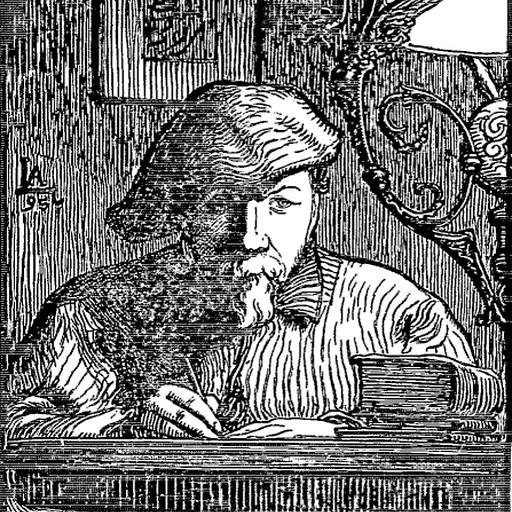
Louis-Auguste Lepère (30 November 1849 – 20 November 1918) was a French painter and etcher. Lepère is also considered a leader in the creative revival of wood engraving in Europe.