Artwork
Le Stryge de Notre Dame
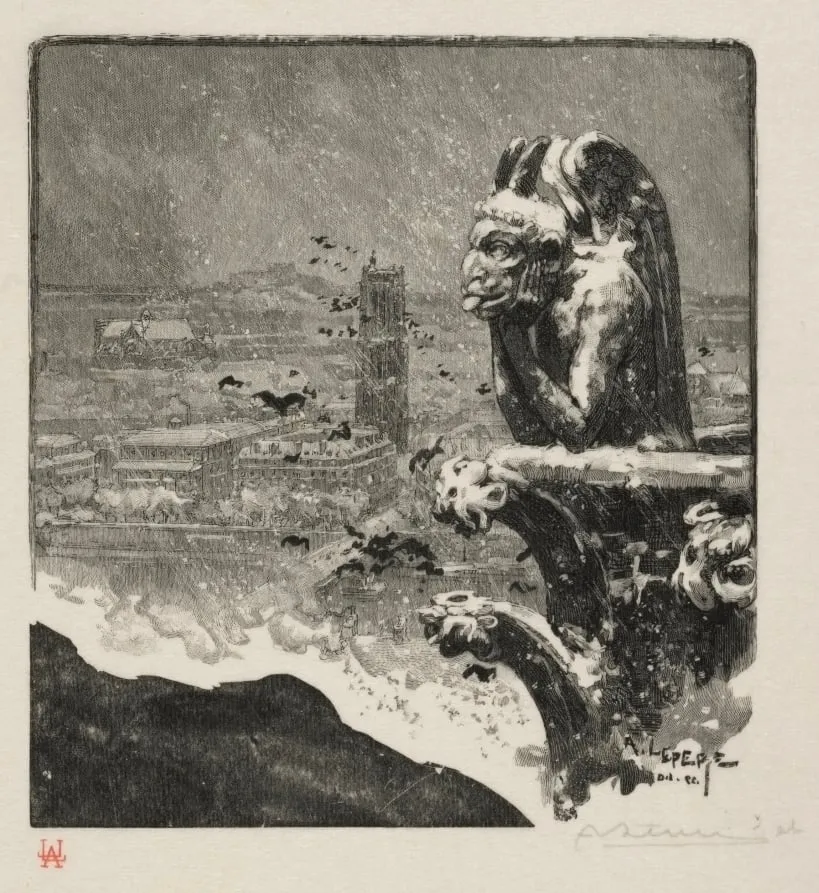
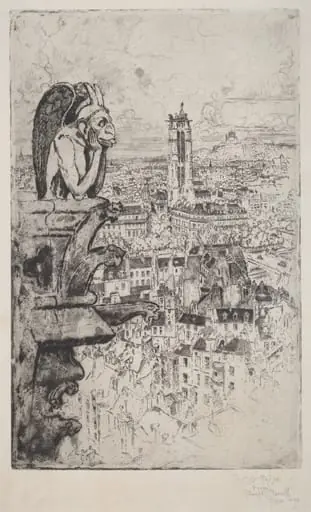
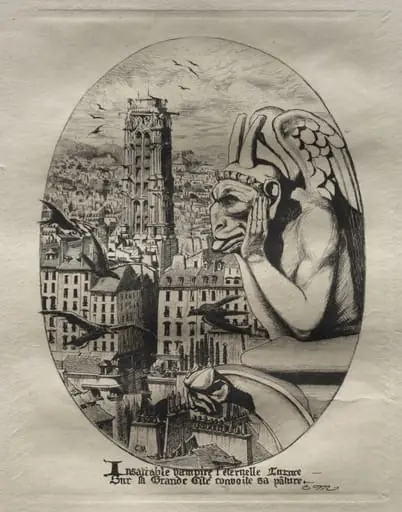
Le Stryge de Notre Dame is a print by the Impressionist artist Auguste Lepère. It dates from 1890 and is held in the collection of the Cleveland Museum of Art.
About this work
Overview
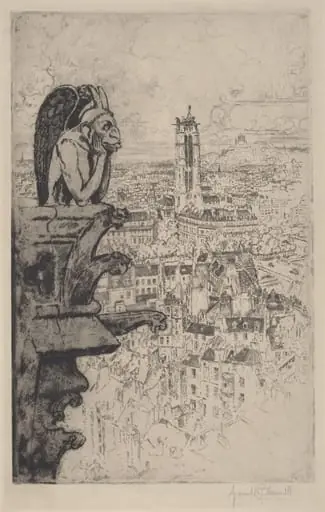
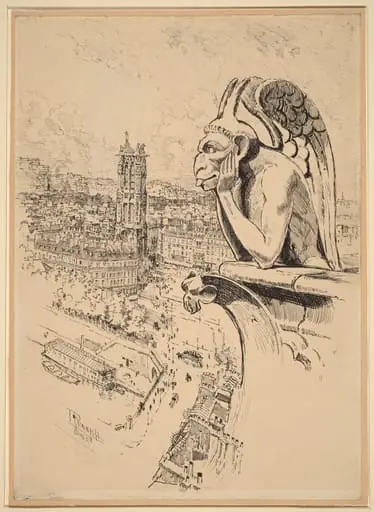
Le Stryge de Notre Dame, created in 1890 by French artist Auguste Louis Lepère, is an etching that portrays a solitary, winged figure perched on a ledge above a cityscape. The composition is dominated by a range of gray tones, contrasting dark architectural forms with lighter sky and airborne birds, establishing a somber, atmospheric mood.
Subject & Meaning
The central figure resembles a gargoyle, its head turned to the right, wings spread and tail elongated, suggesting a guardian or watcher overlooking the urban environment. The presence of a church steeple among the rooftops reinforces the connection to Notre‑Dame, while the surrounding birds introduce a sense of movement and natural contrast to the stone sentinel.
Technique & Style
Executed as an etching, Lepère employs chiaroscuro to model volume, using deep shadows to define the gargoyle and buildings against a lighter background. The gradations of gray create depth and a three‑dimensional illusion, while the precise line work reflects his expertise in reviving traditional wood‑engraving methods within a modern printmaking context.
History & Provenance
Le Stryge de Notre Dame belongs to the later period of Lepère’s career, when he focused increasingly on print media after establishing himself as a painter. The work exemplifies his contribution to the resurgence of wood‑engraving techniques in Europe, though specific details of its exhibition history or ownership remain limited in the record.
Artist & collection
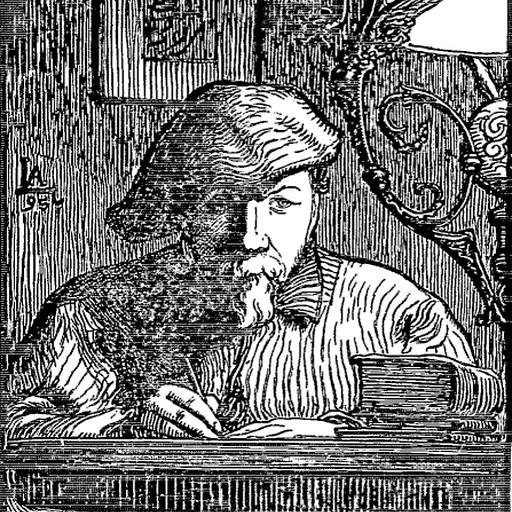
Artist
Louis-Auguste Lepère (30 November 1849 – 20 November 1918) was a French painter and etcher. Lepère is also considered a leader in the creative revival of wood engraving in Europe.