Artwork
Notre Dame vue du Marché aux pommes
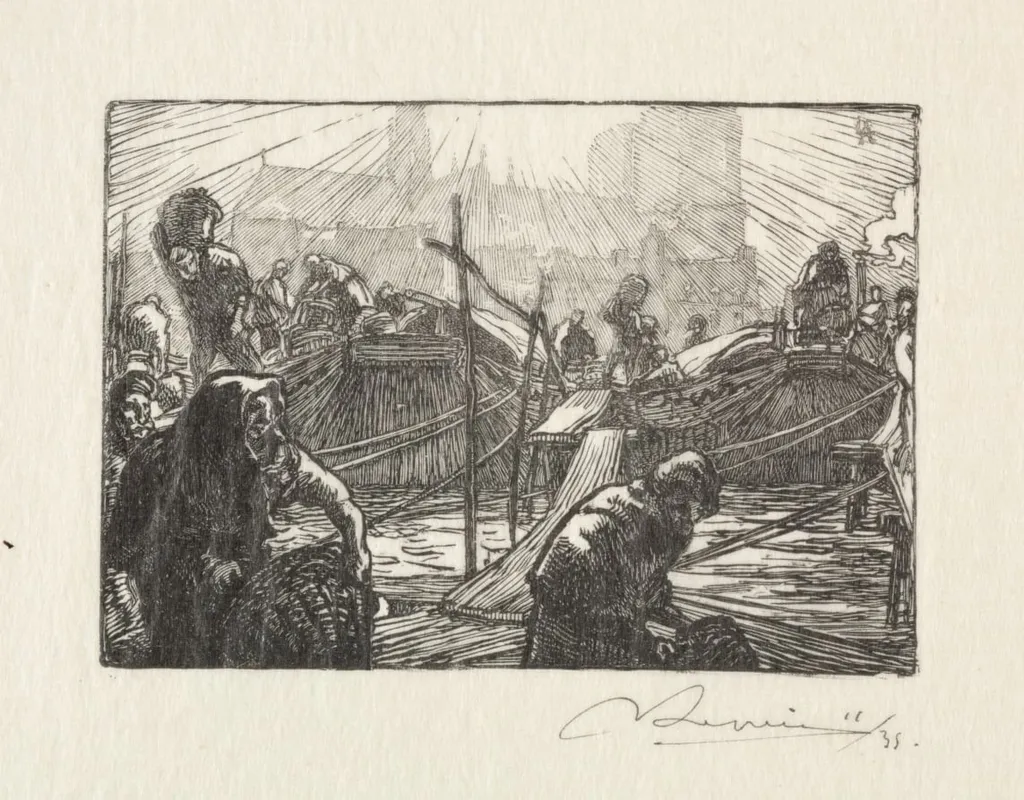
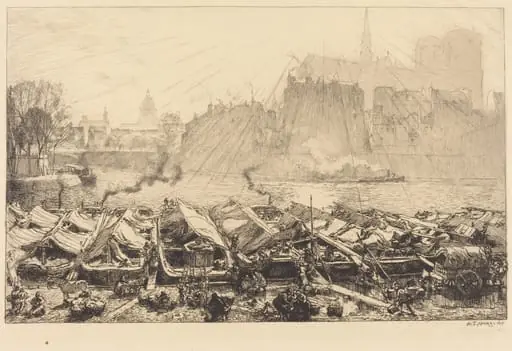
Notre Dame vue du Marché aux pommes is a print by the Impressionist artist Auguste Lepère. It dates from 1897 and is held in the collection of the Cleveland Museum of Art.
About this work
Overview
Auguste Louis Lepère’s 1897 print, *Notre Dame vue du Marchen aux pommes*, offers a bustling perspective of Parisian life as seen from the market area opposite the cathedral. Executed in the wood‑engraving tradition that Lepère helped revive, the image captures a rain‑slicked street filled with pedestrians, umbrellas and riverboats, while the towering façade of Notre‑Dame looms in the background.
Subject & Meaning
The composition juxtaposes the monumental architecture of Notre‑Dame with the ordinary activity of the Marché aux pommes, emphasizing the coexistence of historic grandeur and everyday commerce. Figures huddle under shelter, suggesting the city’s resilience amid inclement weather, while the presence of boats hints at the Seine’s role in sustaining urban rhythm.
Technique & Style
Lepère employed fine wood‑engraving lines to render sharp contrasts of light and dark, a chiaroscuro effect that models depth and movement. The meticulous incisions create a textured surface, allowing the rain‑soaked streets and atmospheric sky to emerge with a sketch‑like immediacy, while the detailed architecture retains structural clarity.
History & Provenance
Created during the late‑19th‑century resurgence of wood engraving in Europe, the work reflects Lepère’s dual identity as painter and etcher. It entered the collection of the Cleveland Museum of Art, where it remains part of the institution’s holdings of French printmaking from the period.
Artist & collection
Artist
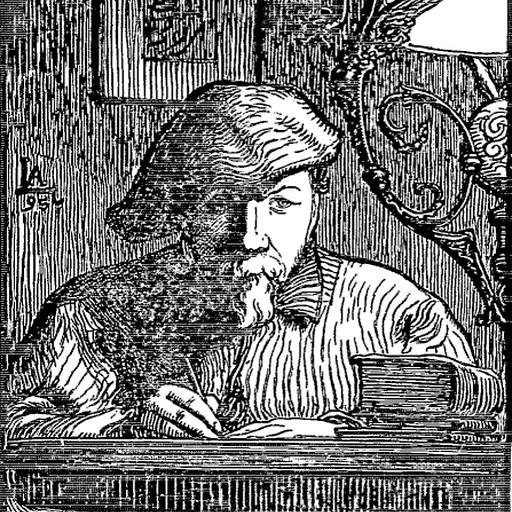
Louis-Auguste Lepère (30 November 1849 – 20 November 1918) was a French painter and etcher. Lepère is also considered a leader in the creative revival of wood engraving in Europe.

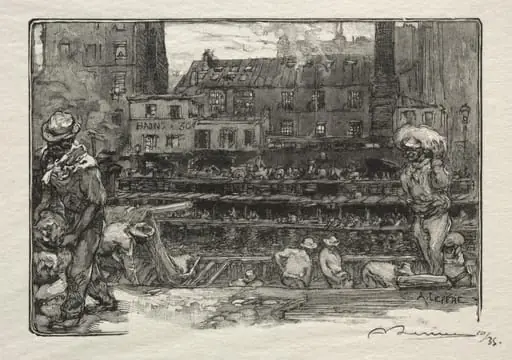 Les Déchargeurs de Plâtre
 The Great Apple Market (Le grand marche aux pommes)
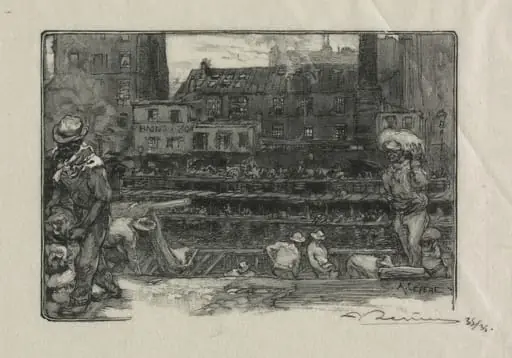 Unloaders of Plaster (Canal St. Martin)
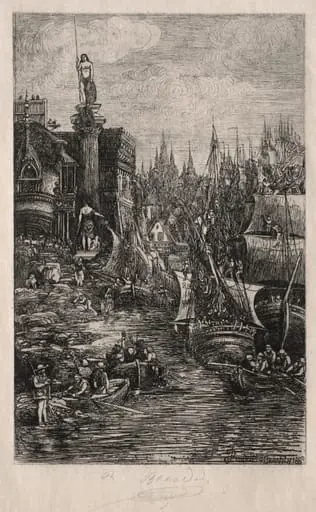 My Dream
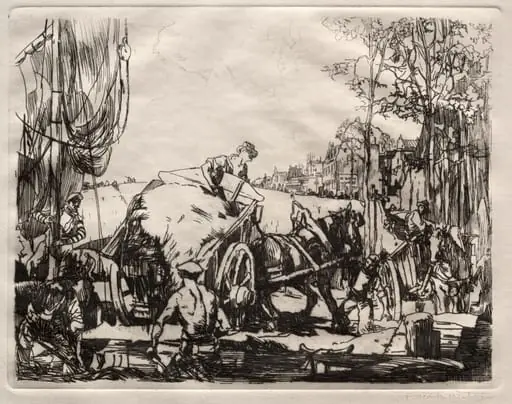 Port at Low Tide
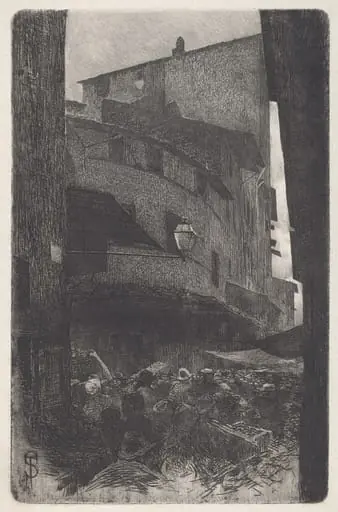 Santa Maria della Tromba
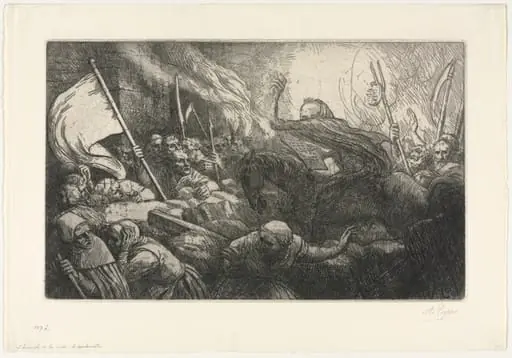 The Triumph of Death: The Proclamation
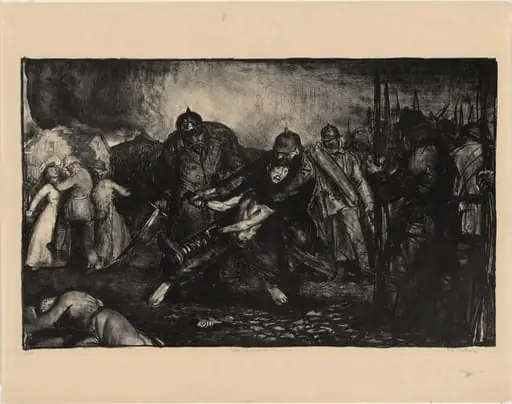 The Germans Arrive
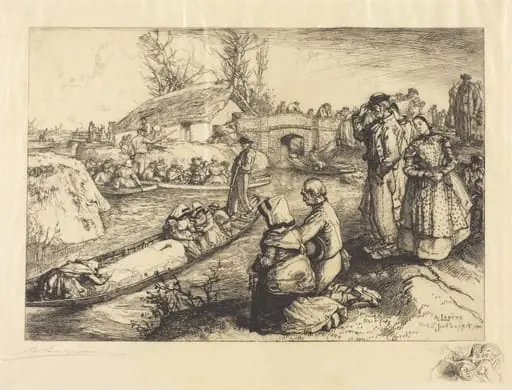 Burial in the Vendeen Marsh (Un enterrement dans le marais Vendeen)
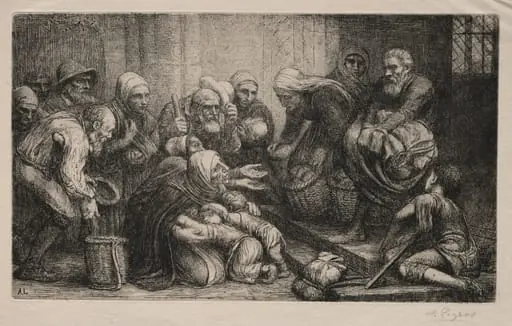 The Beggars of Bruges