Artwork
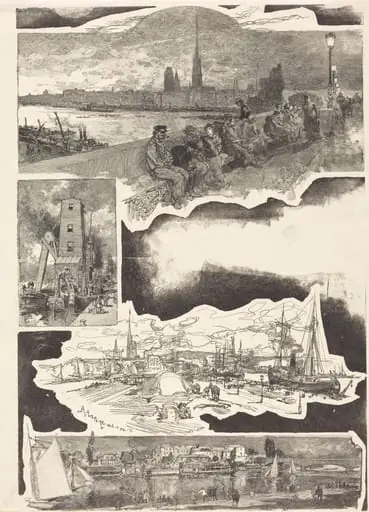
Rouen Illustré: Rue des Charretes; Rue de Halage; Rue Eau de Robec; Place des Arts
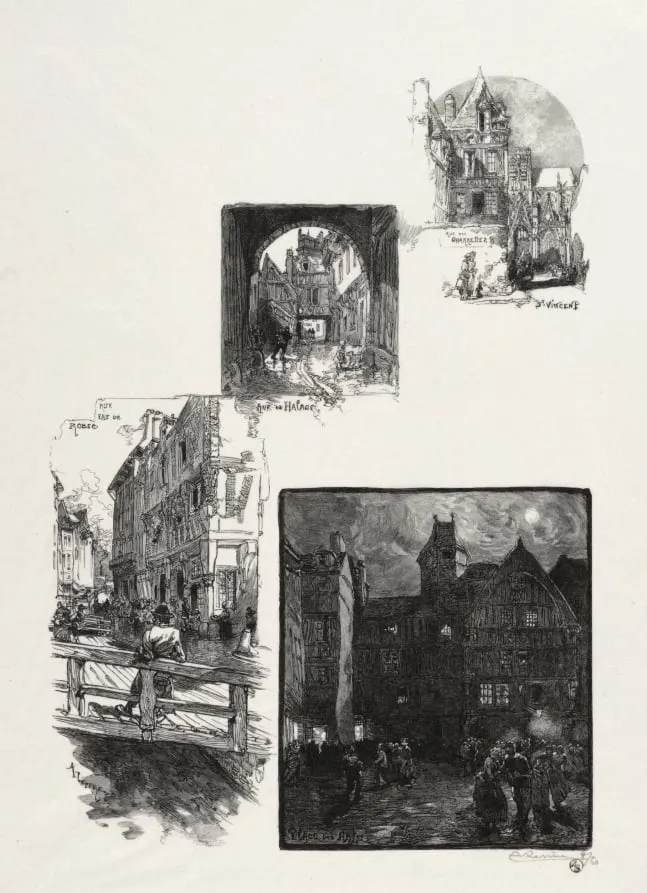
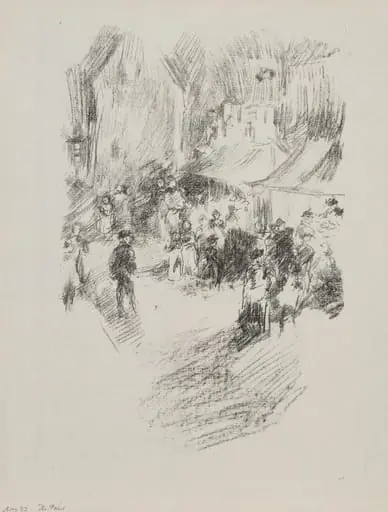
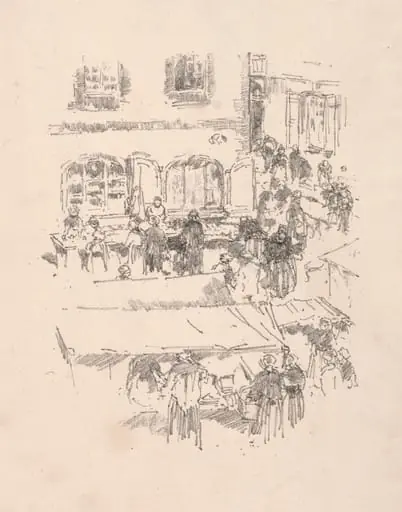
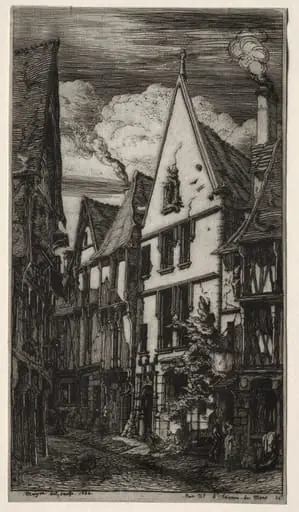
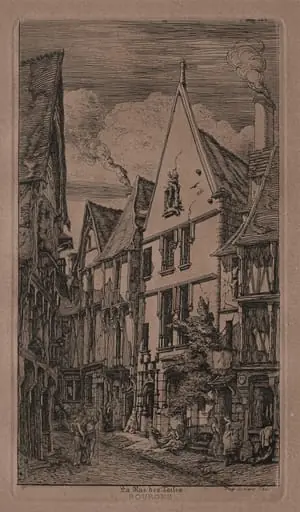
Rouen Illustré: Rue des Charretes; Rue de Halage; Rue Eau de Robec; Place des Arts is a print by the Impressionist artist Auguste Lepère. It dates from 1896 and is held in the collection of the Cleveland Museum of Art. Created in 1896 by Auguste Louis Lepère, this print is one of four in a series documenting everyday urban life in Rouen.
About this work
Overview
Created in 1896 by Auguste Louis Lepère, this print is one of four in a series documenting everyday urban life in Rouen. Executed in wood engraving, it presents four distinct street scenes without theatrical embellishment. Lepère’s approach prioritizes quiet observation over monumentality, focusing on modest architecture and unremarkable moments of daily existence in a provincial French city.
Subject & Meaning
These are not landmarks but lived-in spaces—crumbling facades, uneven roofs, and cluttered windows suggest decades of use.
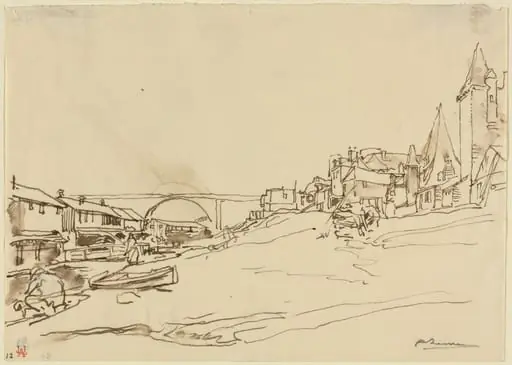
The four panels depict ordinary urban corridors: narrow lanes lined with aging buildings, a bridge with a solitary figure, and a crooked house bearing a faded sign. These are not landmarks but lived-in spaces—crumbling facades, uneven roofs, and cluttered windows suggest decades of use. The absence of grandeur signals an interest in the quiet endurance of the commonplace, reflecting a shift toward documenting reality as it is, not as it should be.
Technique & Style
Lepère employed wood engraving with a loose, almost sketchlike hand, using swift, irregular lines to suggest texture and shadow. The black-and-white tonality emphasizes contrast without fine detail, allowing the wear of surfaces to emerge through implied rather than rendered form. The technique’s immediacy mirrors the spontaneity of a field sketch, reinforcing the sense of transient observation over polished finish.
History & Provenance
Part of a larger project commissioned to record Rouen’s urban fabric, these prints were produced during a period of renewed interest in traditional printmaking. Lepère, instrumental in reviving wood engraving in late 19th-century France, used the medium to counter the dominance of photography and mass reproduction. The series was likely distributed as a portfolio, appealing to collectors interested in regional identity and artisanal craft.
Context
In the 1890s, French artists increasingly turned from historical and mythological subjects to scenes of daily life, aligning with Realist and early Modernist tendencies. Lepère’s focus on unidealized streets resonated with broader cultural movements that valued authenticity over spectacle. His work stood apart from both academic painting and industrialized illustration, offering a quiet, handcrafted alternative rooted in local observation.
Legacy
Lepère’s Rouen series contributed to the revival of wood engraving as a serious artistic medium in Europe. Though not widely exhibited in major institutions, his prints influenced later printmakers who sought to elevate craft-based techniques. The series remains a quiet testament to the value of documenting ordinary spaces, preserving a visual record of urban life before modernization erased much of its texture.
Artist & collection
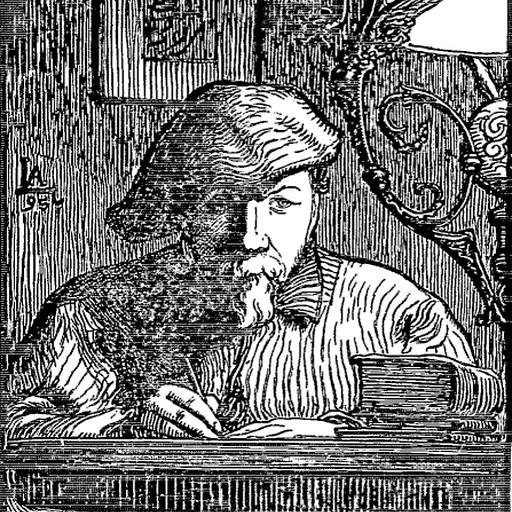
Artist
Louis-Auguste Lepère (30 November 1849 – 20 November 1918) was a French painter and etcher. Lepère is also considered a leader in the creative revival of wood engraving in Europe.