Artwork
The Two Hunchbacks
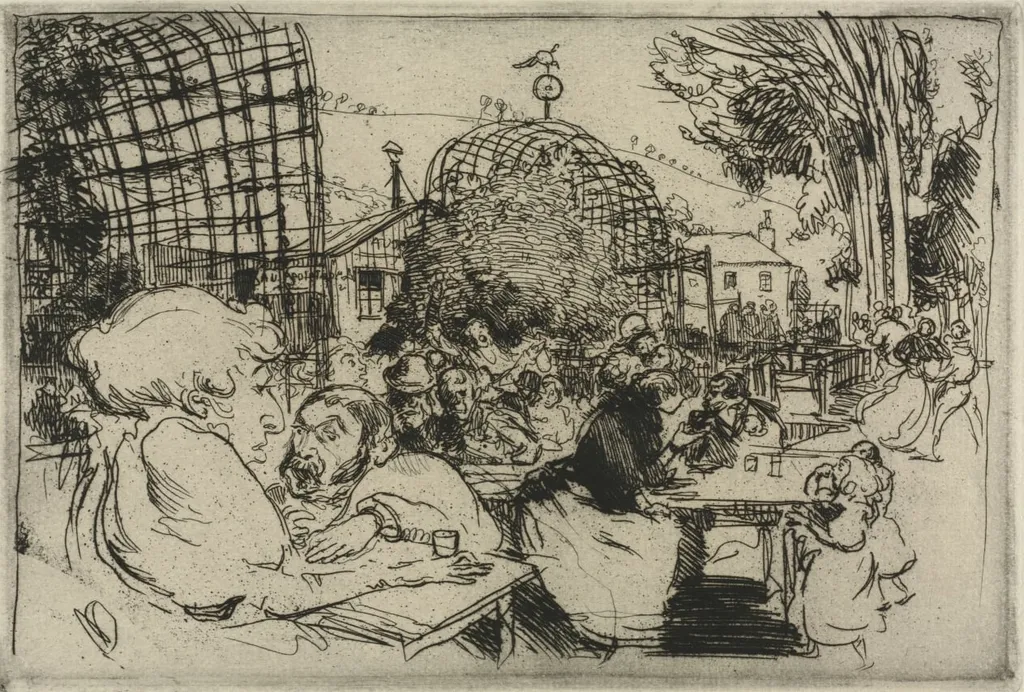
The Two Hunchbacks is a print by the Impressionist artist Auguste Lepère. It dates from 1893 and is held in the collection of the Cleveland Museum of Art.
About this work
Overview
Created in 1893 by French painter and etcher Auguste Louis Lepère, *The Two Hunchbacks* is a wood‑engraved print that belongs to the Cleveland Museum of Art. The composition presents a crowded courtyard scene dominated by two bent figures in the foreground, set against a bustling backdrop of architecture, a globe and a throng of people.
Subject & Meaning
The central focus rests on the two hunch‑backed figures whose twisted postures lean on one another, suggesting a shared burden or mutual support. Around them a chaotic mass of onlookers—standing, climbing, gesturing—fills the space, evoking the energy of a public gathering and perhaps commenting on the marginalised within a bustling urban environment.
Technique & Style
Lepère employs rough, expressive lines characteristic of his revival of wood engraving, favoring gestural marks over fine detail. The figures are rendered larger than the surrounding crowd, emphasizing their prominence. Overlapping shapes and loose strokes convey movement and immediacy, creating a sense of urgency that contrasts with the more static architectural elements.
History & Provenance
The print was produced during Lepère’s mature period, when he was instrumental in re‑establishing wood engraving as a respected medium in Europe. It entered the collection of the Cleveland Museum of Art, where it remains on view, representing an important example of late‑19th‑century French printmaking.
Artist & collection
Artist
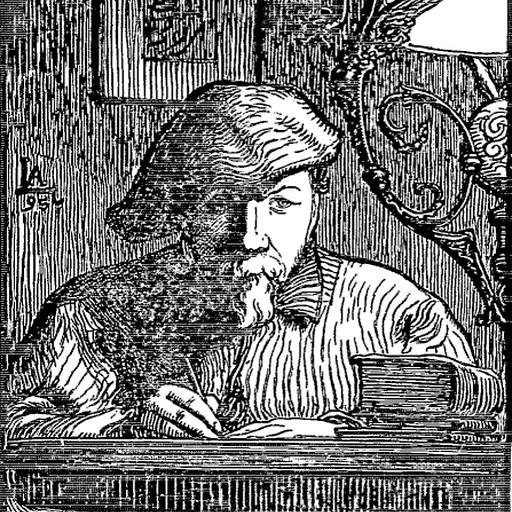
Louis-Auguste Lepère (30 November 1849 – 20 November 1918) was a French painter and etcher. Lepère is also considered a leader in the creative revival of wood engraving in Europe.

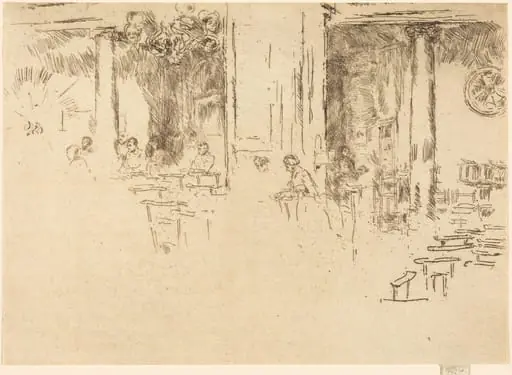 Church, Brussels
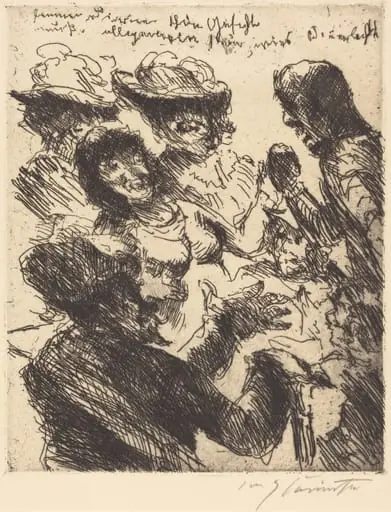 "Einer dirne schön gesicht muss allgemein sein wie's sonnenlicht" ("A Pretty Girl's Face is Like the Sunshine")
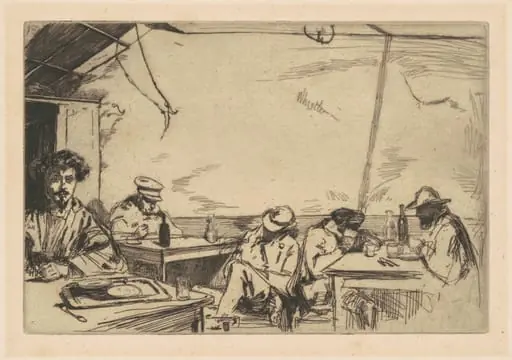 Soupe à Trois Sous
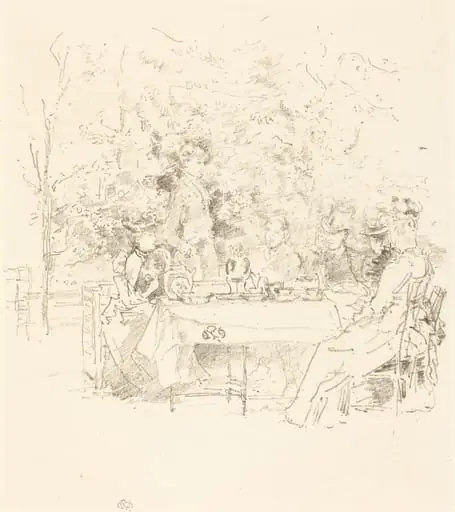 The Garden
 Soupe à Trois Sous
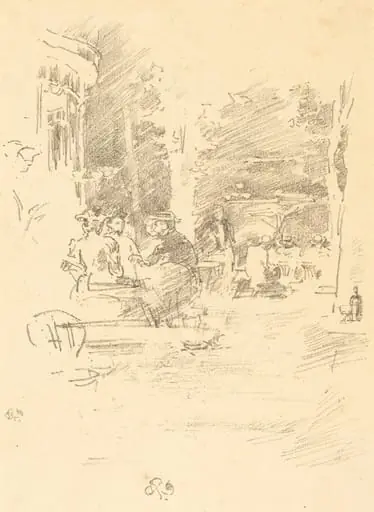 The Little Café au Bois
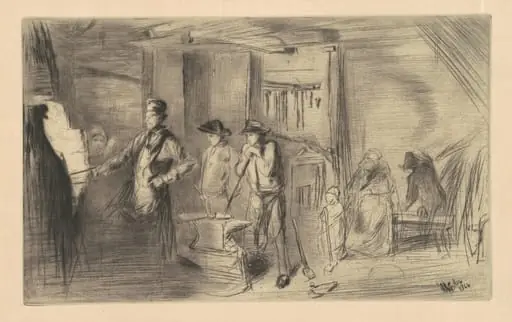 The Forge
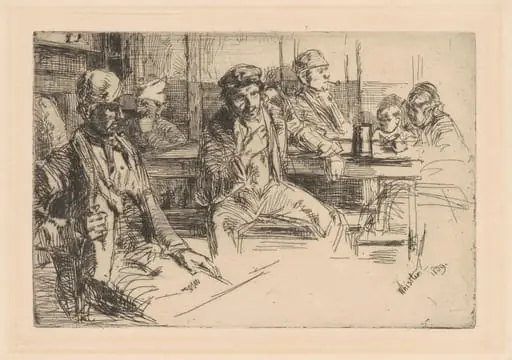 Longshoremen
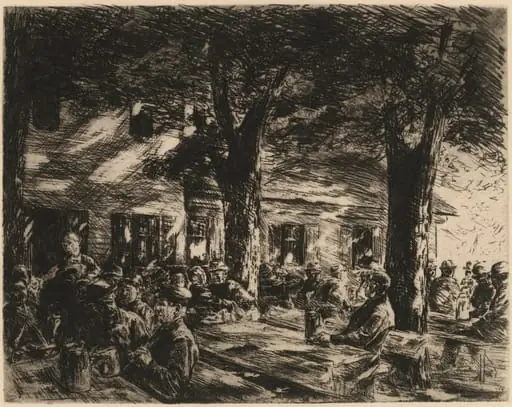 A Tavern Garden in Rosenheim
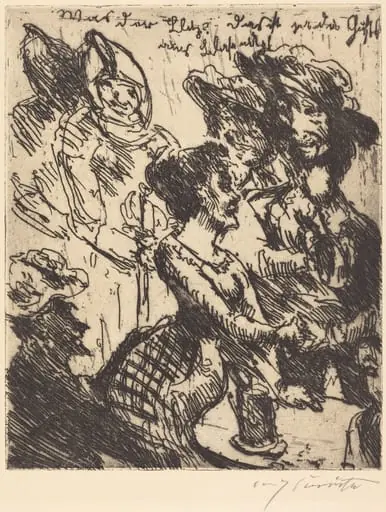 "Was der blitz! Das ist ja die gustel von blasewitz" ("What's That! It's Gustel von Blasewitz")
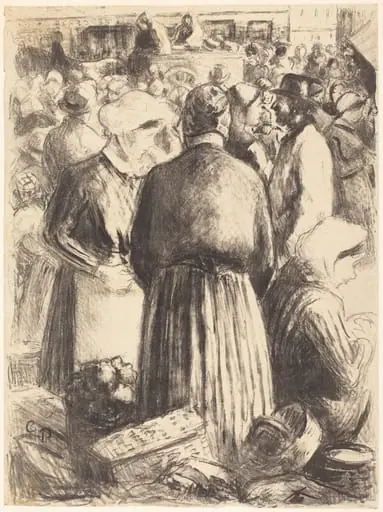 Market at Pontoise (Marché a Pontoise)
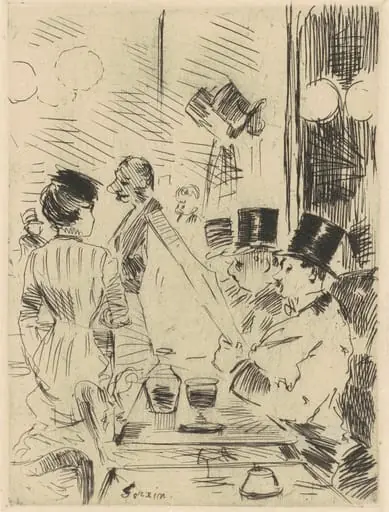 Le Cafe