Artwork
The Genius of the Sculptor
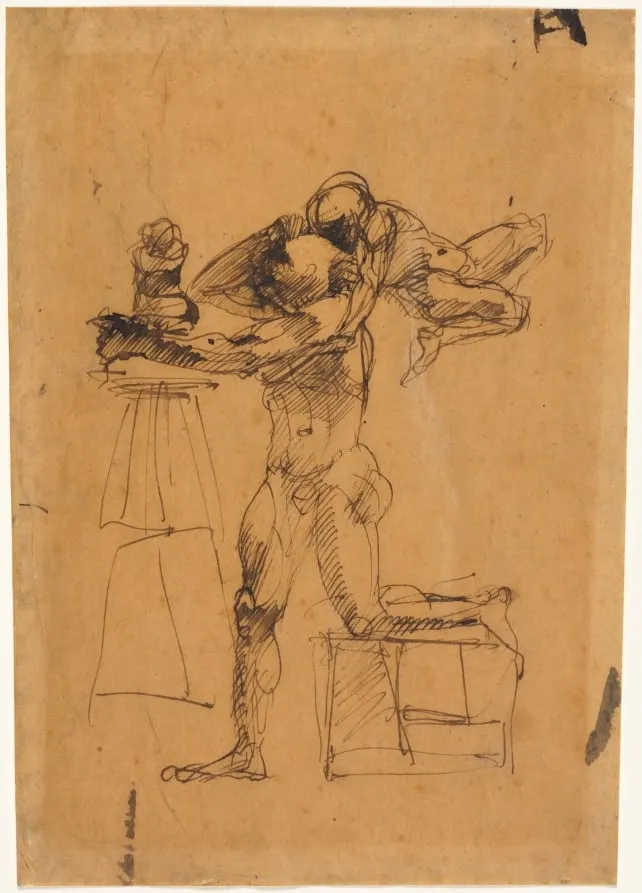
The Genius of the Sculptor is a drawing by the Impressionist artist Auguste Rodin. It dates from 1882 and is held in the collection of the Cleveland Museum of Art.
About this work
You see a man hunched over, hand pressed to his forehead, while a small, wingless figure hovers above him like a thought bubble.
You see a man hunched over, hand pressed to his forehead, while a small, wingless figure hovers above him like a thought bubble.
Rodin called this floating shape a “genius”—his twist on the old idea of a winged muse. Instead of an angel dictating ideas, the genius here is the artist’s own creative spark, made visible.
Look up more of these wingless muses in the work of Auguste Rodin (French, 1840–1917).
Overview
This drawing by Auguste Rodin presents a solitary male figure in deep contemplation, his hand pressed to his brow. Above him hovers a small, wingless form, distinct from traditional angelic muses. Rodin titled this figure a 'genius,' redefining the source of creativity as internal rather than divine. The composition strips away classical ornamentation to focus on the psychological weight of artistic thought.
Subject & Meaning
The figure represents the artist in the throes of creation, not as a passive recipient of inspiration but as the origin of it. The hovering form, devoid of wings, symbolizes the artist’s own inner creative force—no longer an external deity or muse, but an embodied energy rising from within. Rodin’s choice reflects a modern shift toward viewing genius as an internal, human phenomenon rather than a supernatural gift.
Technique & Style
Rodin rendered the scene with loose, expressive lines, emphasizing gesture over detail. The hunched posture of the figure conveys intense concentration, while the floating genius is suggested with minimal, fluid strokes. The contrast between the solid, grounded form and the ethereal, undefined shape above highlights the tension between physical presence and abstract thought, characteristic of Rodin’s approach to drawing as a means of capturing mental states.
History & Provenance
Created during the late 19th century, this drawing belongs to a series in which Rodin investigated the nature of artistic inspiration. It was not made for public display but as part of his private study, often revisiting themes later developed in sculpture. The motif of the wingless genius recurs in his sketches and bronzes, suggesting a sustained personal inquiry into the metaphysics of creativity.
Context
Rodin’s reimagining of the muse drew from Renaissance precedents, such as Michelangelo’s winged figures on the Sistine Chapel ceiling, yet rejected their divine associations. In an era of growing secularism and psychological inquiry, Rodin aligned his vision with emerging ideas about the self as the source of meaning. His genius is not sent from above—it emerges from the mind’s labor, reflecting 19th-century shifts in philosophy and artistic identity.
Legacy
Rodin’s wingless genius became a recurring motif in his oeuvre, influencing later artists who sought to visualize internal states rather than external ideals. By removing the wings, he transformed a centuries-old symbol into a modern metaphor for self-generated creativity. This drawing stands as an early and intimate articulation of that idea, predating and anticipating 20th-century explorations of the psyche in art.
Artist & collection
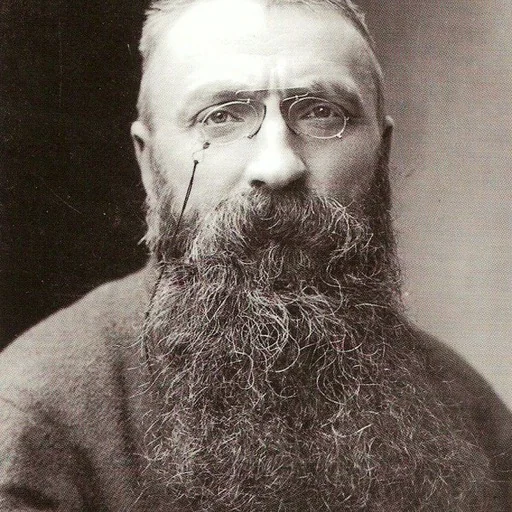
Artist
François Auguste René Rodin (; French: ; 12 November 1840 – 17 November 1917) was a French sculptor generally considered the founder of modern sculpture.

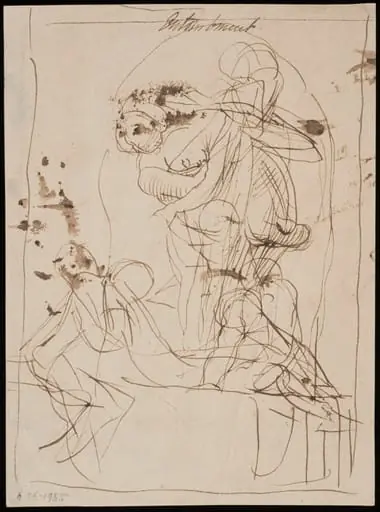 The Entombment
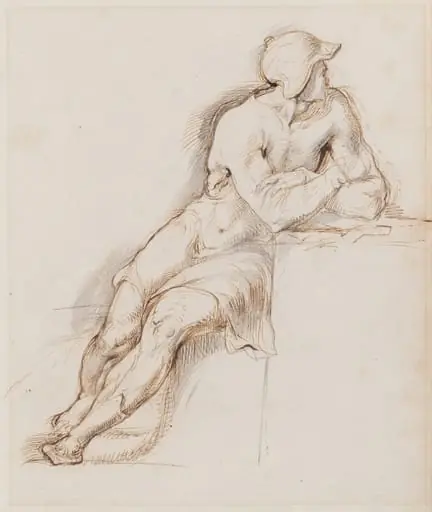 Study of a Seated Man Wearing a Helmet
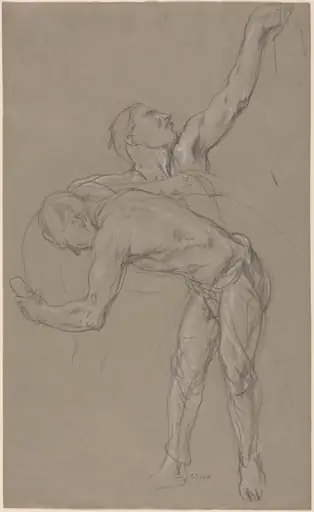 Two Male Figures: Study for "The Good Samaritan"
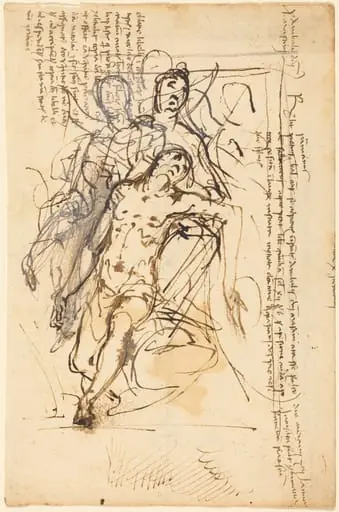 The Pietà
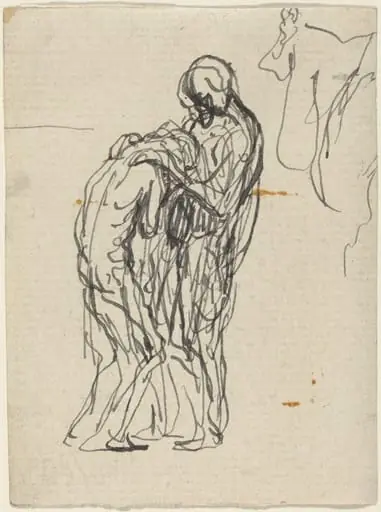 The Prodigal Son
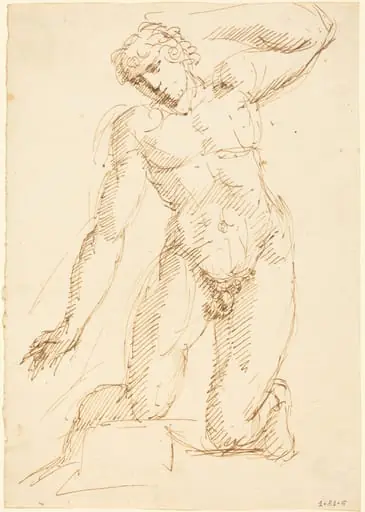 A Male Nude Kneeling
![Los and His Spectre [verso], by William Blake](https://artifactworldgallery.com/img/william-blake--los-and-his-spectre-verso--615ad7f82d334e5f-w320.webp) Los and His Spectre [verso]
Los and His Spectre [verso]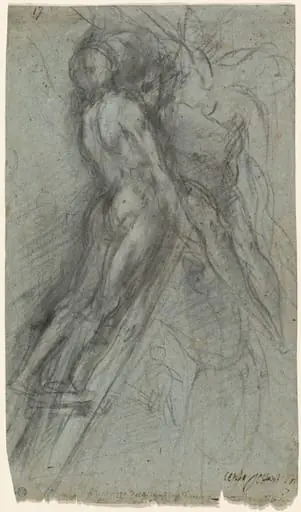 The Descent from the Cross
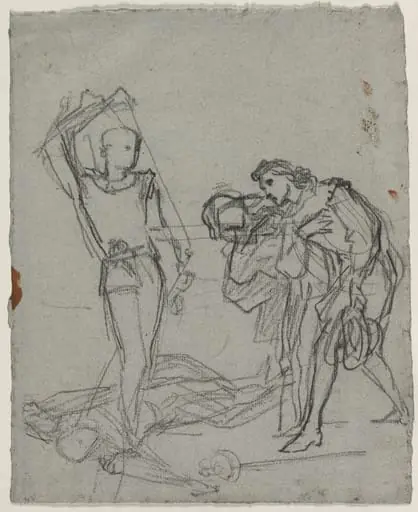 Duel after the Masked Ball (recto)
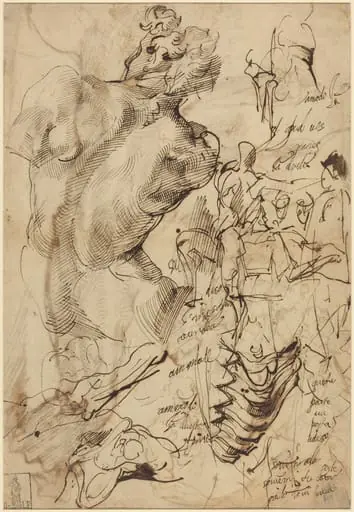 Studies of a Sculpture of a Male Nude, Vertebrae, and Gesturing Figures
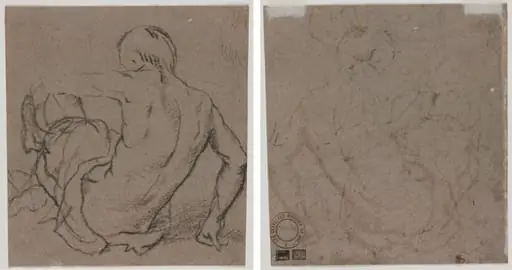 Man Seated on the Ground, Seen from Behind (recto); Sketch (verso)
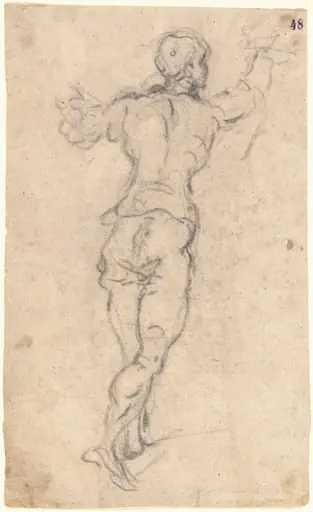 A Striding Youth with His Arms Raised, Seen from Behind