Artwork
Brooch with Table-Stones, Flying Scorpions at Top, and Dogs at Bottom
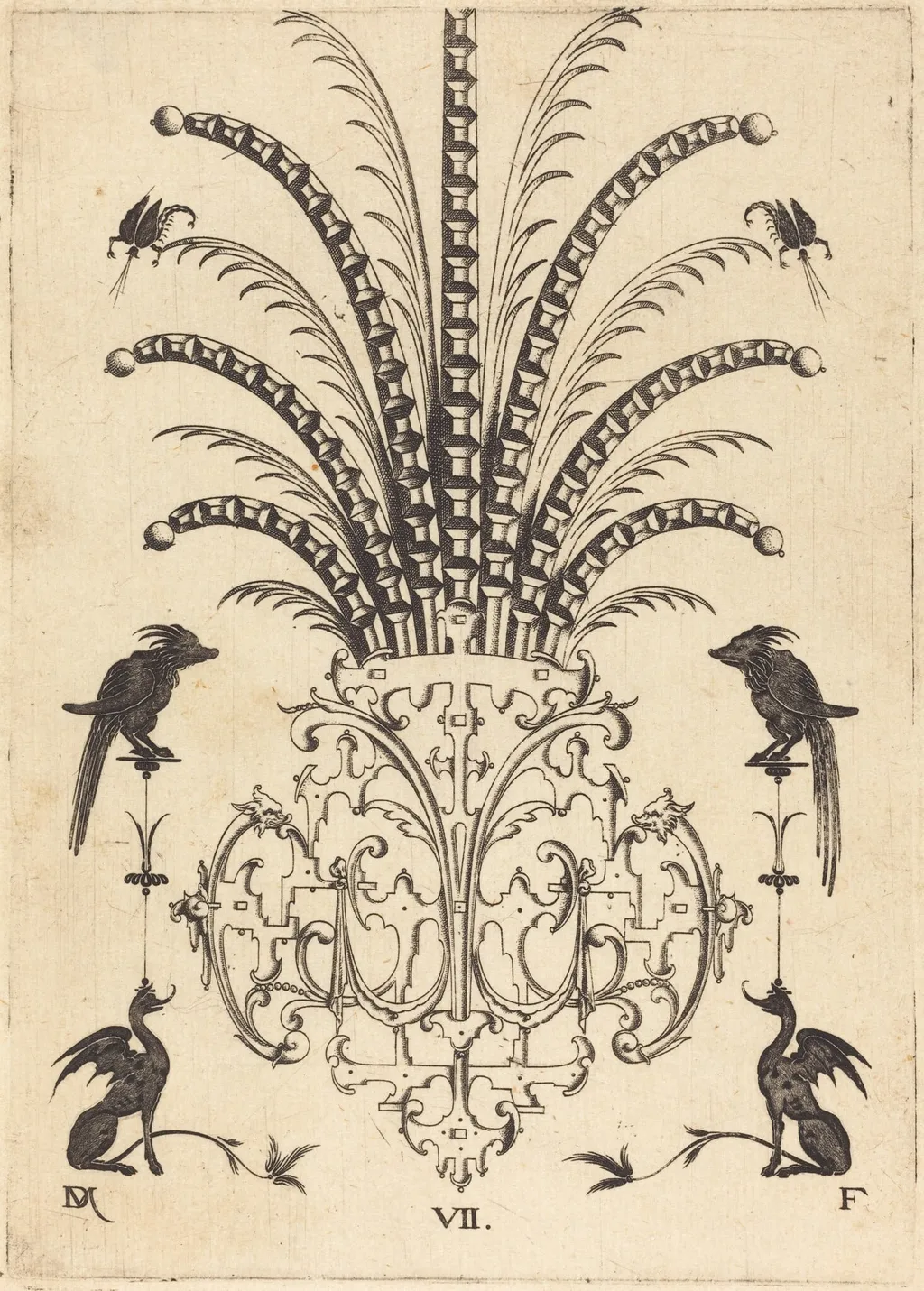
Brooch with Table-Stones, Flying Scorpions at Top, and Dogs at Bottom is an ink print by the Renaissance artist Daniel Mignot. It dates from 1596 and is held in the collection of the National Gallery of Art.
About this work
Overview
This engraving, dated 1596 and attributed to Daniel Mignot, depicts a stylized brooch rendered in fine black-and-white lines.
This engraving, dated 1596 and attributed to Daniel Mignot, depicts a stylized brooch rendered in fine black-and-white lines. The composition centers on an ornate metallic form, adorned with natural and fantastical elements. The work is not a wearable object but a detailed representation, likely intended as a design study or decorative prototype, showcasing the precision possible in Renaissance metal engraving.
Subject & Meaning
The brooch features a central floral or plant-like structure with clustered dots along its stems, flanked by two perching birds. At its base, two dogs face outward, their postures suggesting vigilance. Scorpion-like forms occupy the lower corners, introducing a sense of danger or protection. The combination of domestic animals, celestial birds, and venomous creatures may reflect symbolic contrasts—guardianship versus threat, nature versus the uncanny.
Technique & Style
Mignot employed fine, controlled engraving lines to model volume and texture, creating depth through cross-hatching and delicate stippling. The surface of the brooch appears metallic, with shadows suggesting curvature and relief. The intricate patterns—swirls, dots, and sharp contours—demonstrate a mastery of line work typical of late 16th-century goldsmithing designs, where precision served both aesthetic and functional documentation.
History & Provenance
The engraving originates from a period when goldsmiths and jewelers circulated design drawings as templates for craftsmen. Though no physical brooch matching this design is known, such engravings were often kept in workshops or collections to preserve motifs. Mignot’s work survives as a rare example of French decorative arts documentation from the late Renaissance, likely preserved in private or institutional archives.
Context
In late 16th-century France, engraved designs for jewelry were essential tools for artisans, bridging artistic vision and technical execution. This piece reflects broader trends in Mannerist ornamentation, where natural forms were stylized with surreal or symbolic additions. The inclusion of scorpions and birds aligns with contemporary emblem books that assigned moral or astrological meanings to creatures, suggesting the design may have carried layered significance beyond decoration.
Legacy
Mignot’s engraving contributes to the historical record of Renaissance decorative arts, illustrating how jewelers translated complex iconography into wearable forms. While the brooch itself was never made, the print preserves a moment in design practice where artistry, symbolism, and craftsmanship converged. It remains a valuable reference for scholars studying the transmission of ornamental motifs in early modern Europe.
Artist & collection


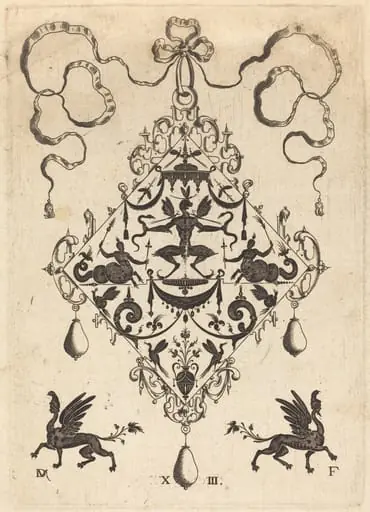 Large Pendant, Winged Fantasy Creature Holding Two Snakes
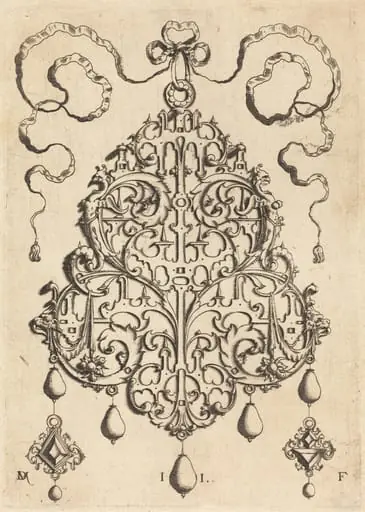 Large Strapwork Pendant with Two Hangers as Earrings at Left and Right
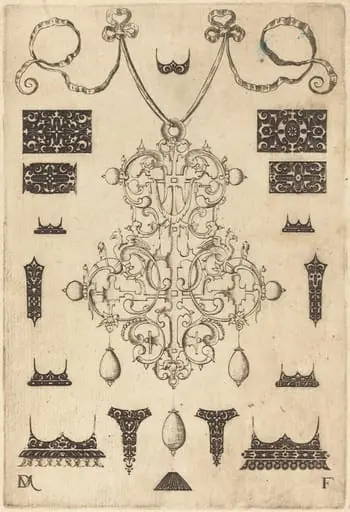 Large Pendant with Three Drops Below, Surrounded by Fifteen Different Studs
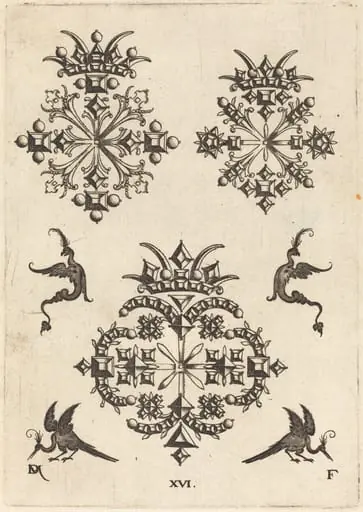 Three Brooches with Fantasy Birds at Left, Right, and Bottom
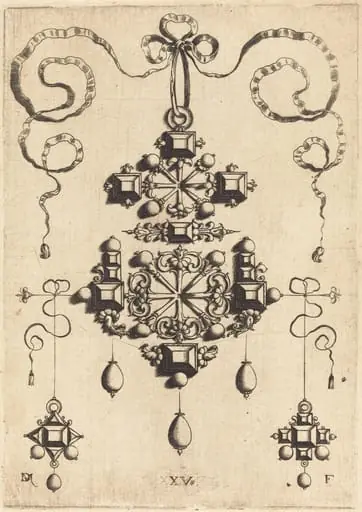 Pendant with Two Double Crosses, Surrounded by Four Diamond-Shaped Stones, Five Table-Stones, and Thirteen Pearls
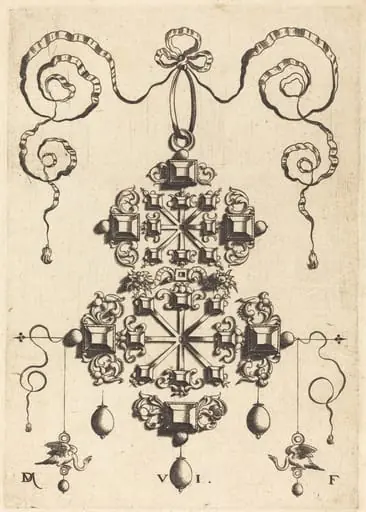 Large Pendant with Two Double Crosses, Surrounded by Six Large and Sixteen Small Table-Stones
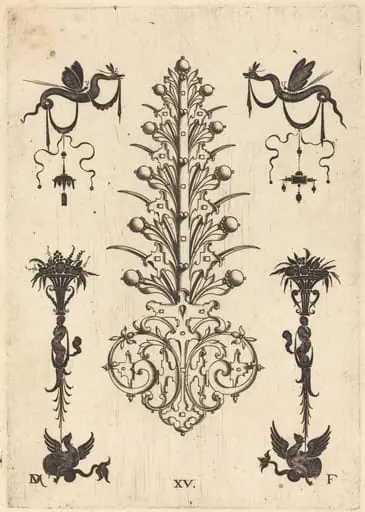 Hyacinth-Shaped Brooch with Winged Snakes at Top and Winged Animals at Bottom
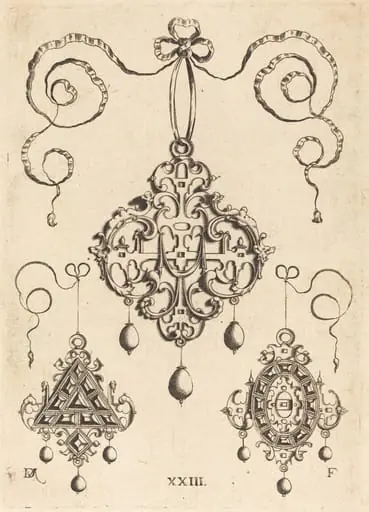 Three Strapwork Pendants, The Lower Ones Triangular and Oval
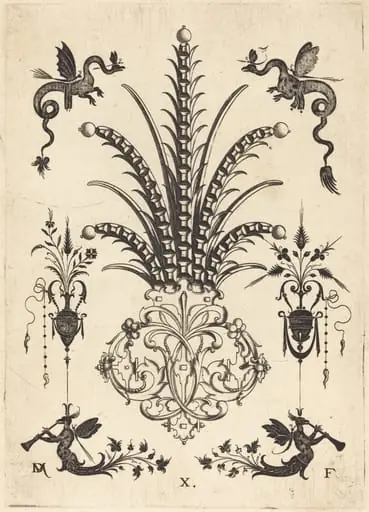 Brooch with Table-Stones, Dragons at Top, andWinged Monsters Blowing Horns at Bottom
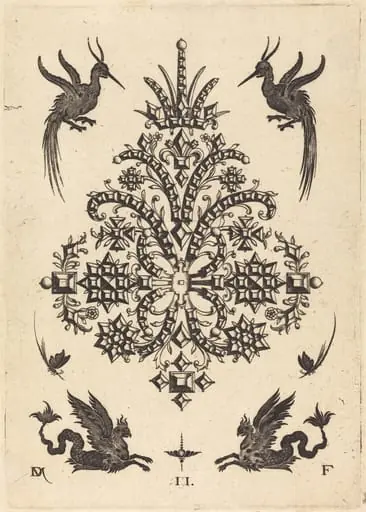 Brooch with Tablestones and Winged Griffins Above and at Bottom
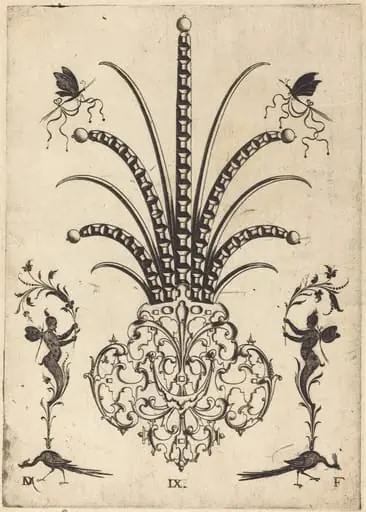 Brooch with Table-Stones, Butterflies at Top, and Peacocks and Hermes at Bottom
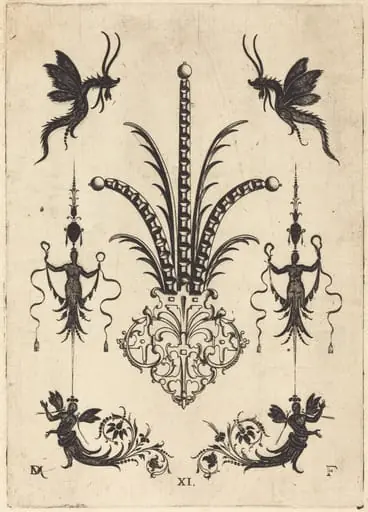 Brooch with Table-Stones, Winged Animals at Top, and Winged Human Beings at Bottom
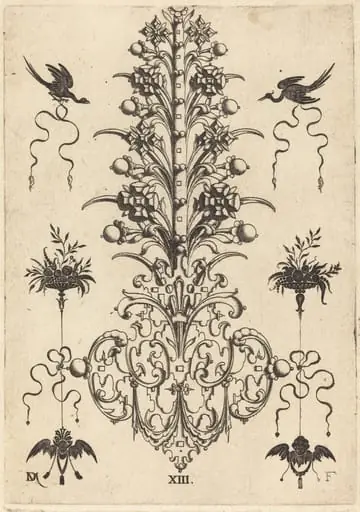 Hyacinth-Shaped Brooch with Birds at Top and Devil's- and Angel's-Head at Bottom
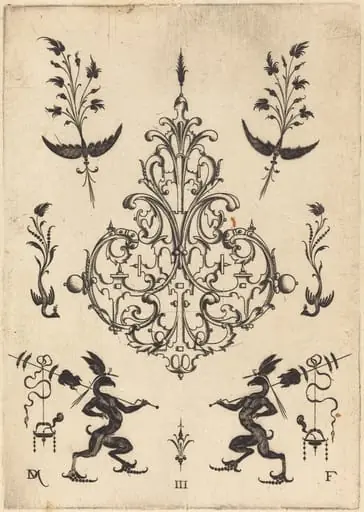 Brooch with Sprigs at Top and Griffins with Trophies at Bottom
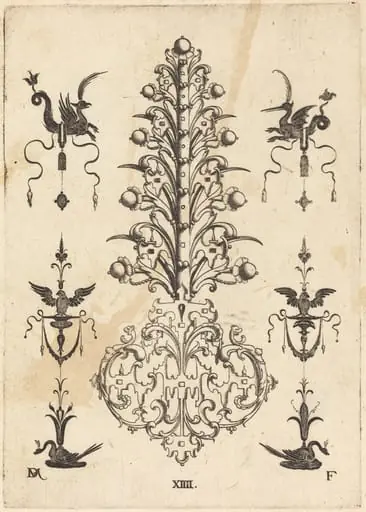 Hyacinth-Shaped Brooch with Winged Animals at Top and Crouching Swans at Bottom
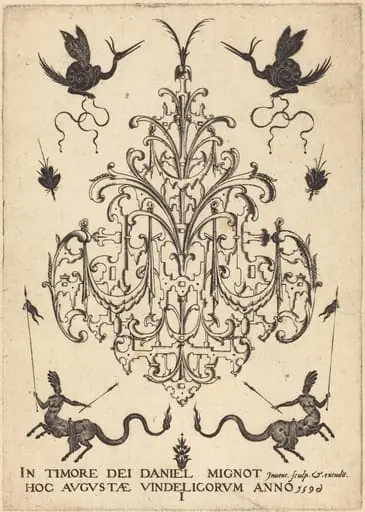 Title-Page: Brooch, Snail-like Animals Above, Centaurs with Banners at Bottom
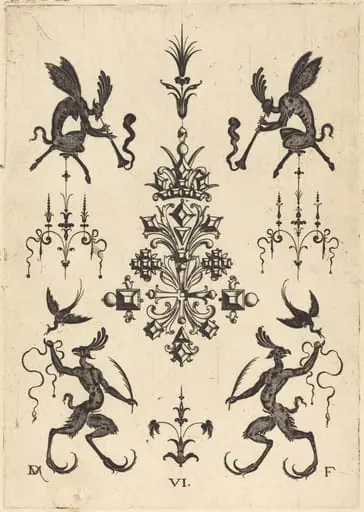 Brooch with Winged Fauns Blowing Trumpets at Top and Fantasy Creatures with Birds at Bottom
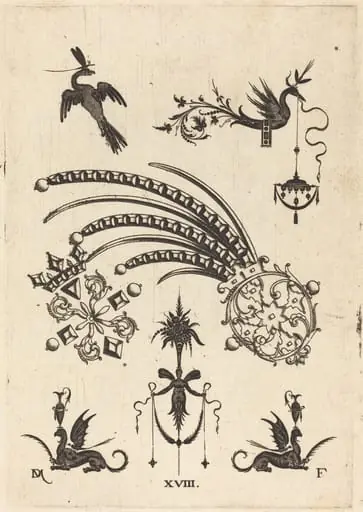 Two Brooches with Bird and Winged Snake at Top and Griffins with Vases at Bottom
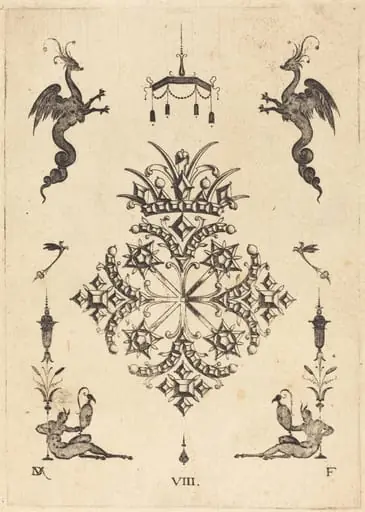 Brooch with Fantasy Animals at Top and Fauns with Vases at Bottom