Artwork
Thy Kingdom Come (Monument to Sir Thomas Barting)
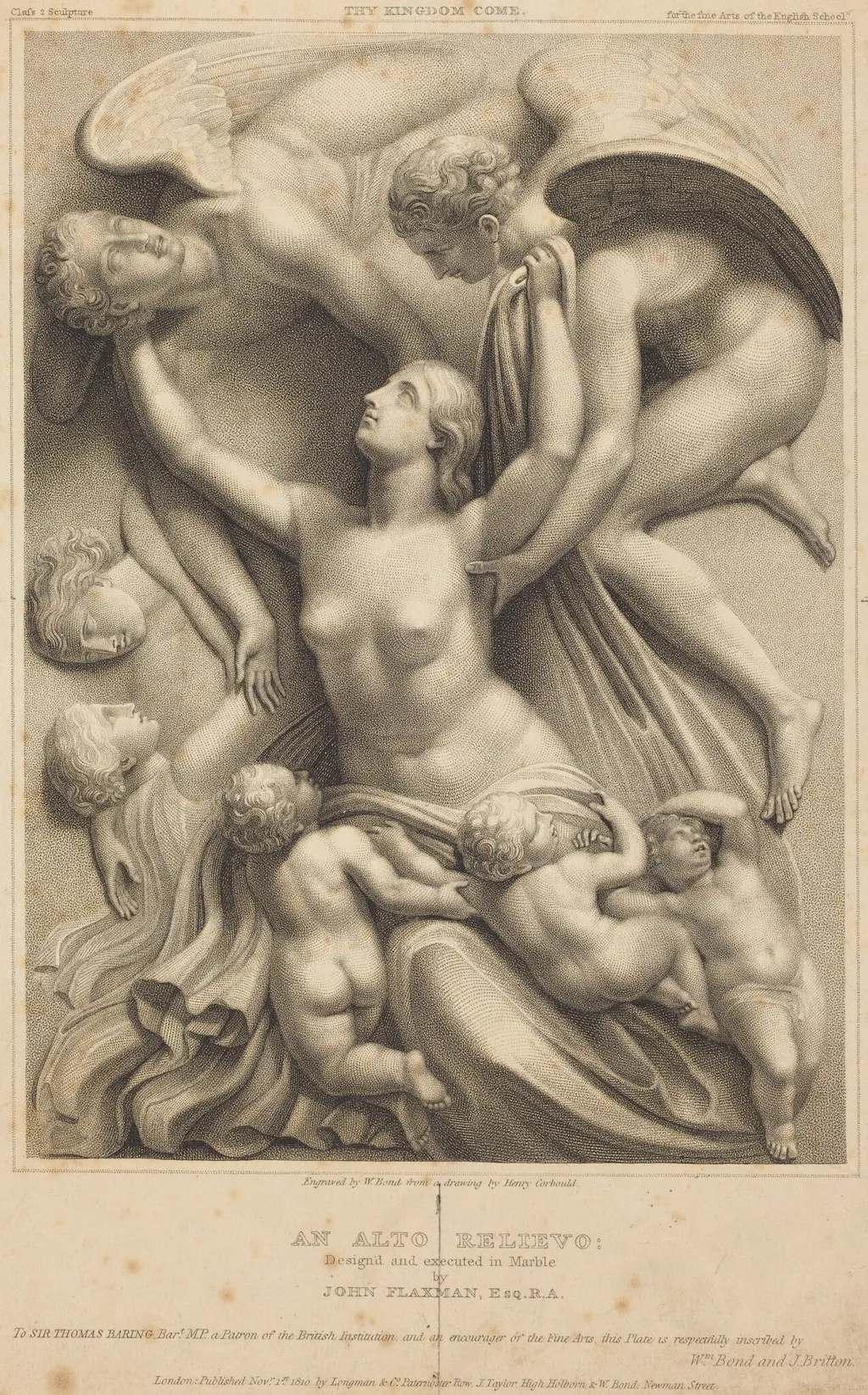
Thy Kingdom Come (Monument to Sir Thomas Barting) is an ink print by the Romanticist artist William Bond. It dates from 1810 and is held in the collection of the National Gallery of Art.
About this work
A central man looks upward with arms outstretched, while smaller figures clutch at him or float nearby.
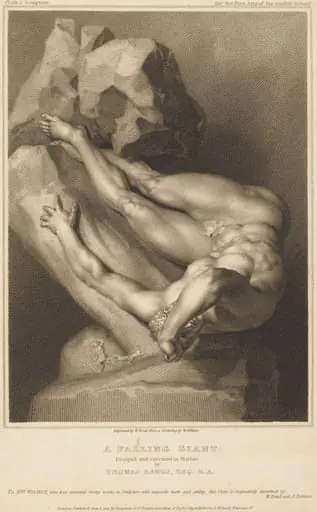
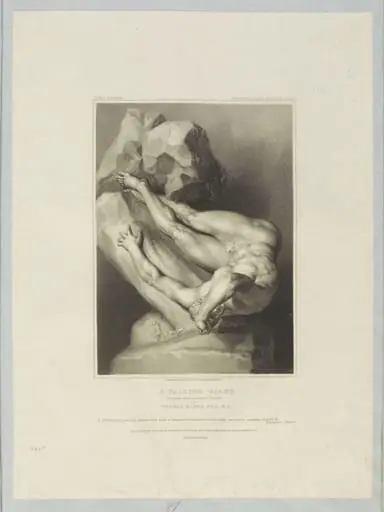
This print shows a dramatic scene of swirling figures in mid-air, tangled in flowing robes. A central man looks upward with arms outstretched, while smaller figures clutch at him or float nearby. The background is dark and cloudy, with a few faint symbols like a sunburst and a crown. The whole image feels restless, like movement captured in stone.
The title at the top reads *"Thy Kingdom Come"*, hinting this is a monument to someone important. The artist’s name, William Bond, is listed at the bottom, along with the year 1810.
Look up engraving to see how artists like Bond used fine lines to create depth.
Overview
This 1810 stipple engraving by William Bond depicts a dynamic, airborne composition of robed figures in turbulent motion. A central male figure, arms extended, gazes upward while surrounding figures appear to cling or drift around him. The scene unfolds against a shadowed, clouded backdrop, punctuated by faint symbolic elements such as a sunburst and crown.
Subject & Meaning
The print serves as a commemorative monument to Sir Thomas Barting, suggested by its title, *Thy Kingdom Come*. The upward-reaching central figure and ethereal arrangement evoke themes of ascension or divine calling. Smaller figures may represent mourners, celestial beings, or allegorical personifications, reinforcing the work’s funerary or spiritual significance.
Technique & Style
Executed in stipple engraving, the work employs dense clusters of fine dots to model form and create tonal variation. This method allows for subtle gradations of light and shadow, lending the figures a sculptural quality. The swirling drapery and dynamic poses reflect the Romantic era’s emphasis on emotional intensity and movement.
History & Provenance
Produced in 1810, the engraving was likely commissioned to memorialize Sir Thomas Barting, though details of its early ownership remain unrecorded. As a print, it was designed for reproduction and wider distribution, aligning with the period’s practice of disseminating commemorative imagery through multiple impressions.
Context
The work emerges from early 19th-century British printmaking, a period marked by both technical innovation and a growing market for reproductive engravings. Monumental prints like this often served to honor public figures, blending artistic ambition with commemorative function. The title’s biblical allusion situates the work within a broader cultural engagement with mortality and transcendence.
Artist & collection