Artwork
Flooded Meadows at Olney, Buckinghamshire
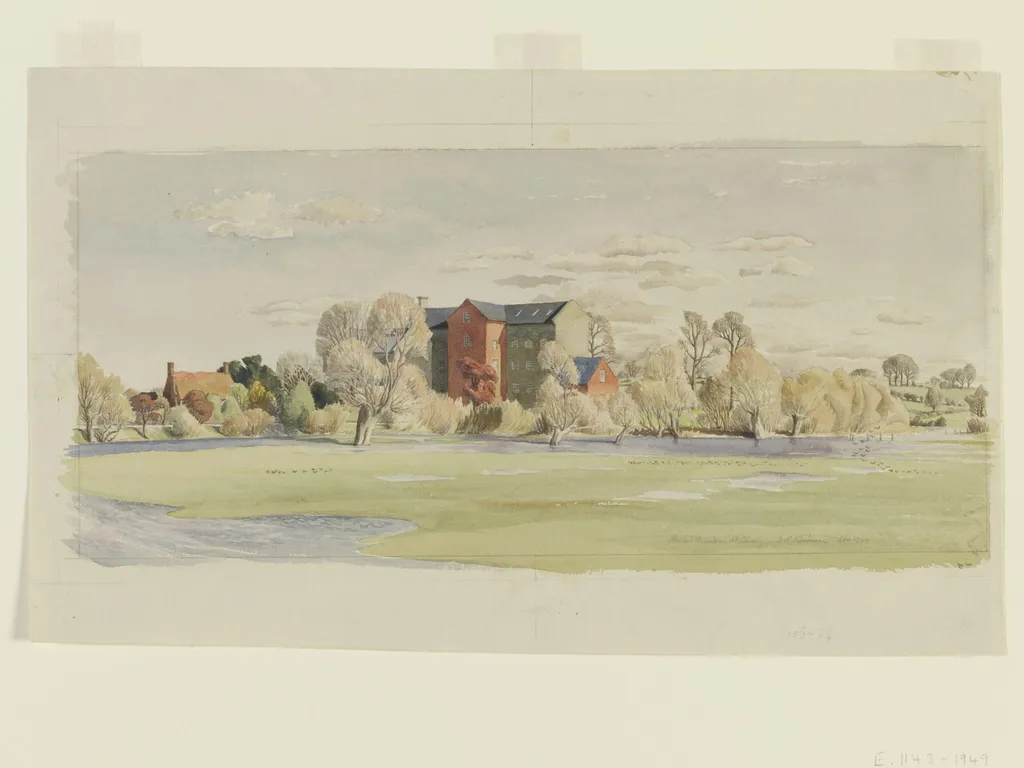
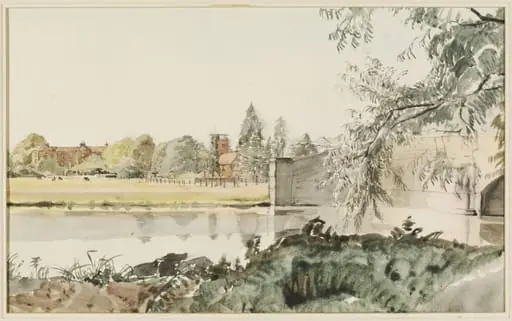
Flooded Meadows at Olney, Buckinghamshire is a watercolor work on paper by Stanley Roy Badmin. It dates from 1940 and is held in the collection of the Victoria and Albert Museum.
About this work
Overview
The work was produced as part of the Recording Britain project, a government-backed effort to visually archive rural landscapes at risk during wartime.
This watercolour by Stanley Roy Badmin captures a quiet stretch of countryside near Olney in Buckinghamshire, rendered in 1940. The work was produced as part of the Recording Britain project, a government-backed effort to visually archive rural landscapes at risk during wartime. Its subdued palette and tranquil composition reflect the project’s aim to preserve everyday scenes of British life, prioritizing observation over dramatic expression.
Subject & Meaning
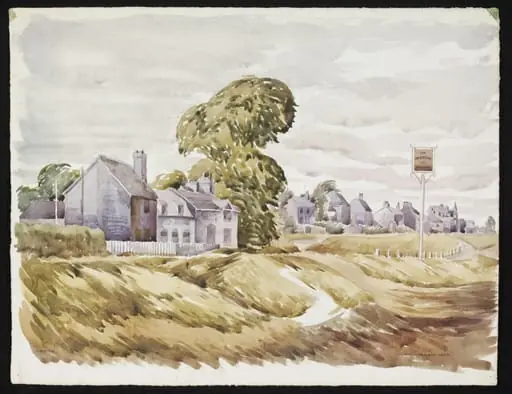
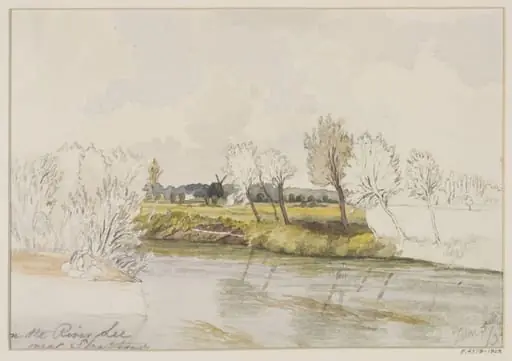
The scene centers on flooded meadows, with a red-painted watermill and rows of willow trees delineating the river’s path. The modest cluster of buildings—some red, others grey—suggests a quiet rural settlement, untouched by industrial change. The stillness of the water and the bare winter trees evoke a sense of pause, aligning with the project’s intent to document a fading pastoral idyll amid the uncertainties of war.
Technique & Style
Badmin employed light, transparent watercolour washes to suggest the reflective surface of flooded fields and the delicate texture of tree bark. Forms are simplified, with soft edges and minimal detail, creating a sense of calm. The pale sky and muted tones unify the composition, emphasizing atmosphere over precision. The artist’s signature appears in the lower corner, consistent with the project’s emphasis on modest, unadorned documentation.
History & Provenance
Created in 1940, the work was commissioned by the Recording Britain project, initiated by Sir Kenneth Clark to record landscapes vulnerable to wartime destruction and modernization. It entered the Victoria and Albert Museum’s collection as part of this initiative, which gathered over 1,500 works by artists across Britain. The piece remains a documented artifact of the project’s mission to preserve national visual heritage during a period of upheaval.
Context
During the Second World War, Britain faced widespread disruption to its rural fabric. The Recording Britain project responded by deploying artists to capture scenes deemed at risk—from ancient mills to hedgerows—before they vanished. Badmin’s depiction of Olney’s flooded meadows reflects this urgency, offering a quiet counterpoint to wartime propaganda, focusing instead on endurance and the quiet persistence of place.
Legacy
The Recording Britain collection, including this watercolour, endures as a significant archive of mid-20th-century British landscape. Badmin’s work contributes to a broader understanding of how artists documented everyday environments during crisis. Today, these pieces serve as historical records, offering insight into a nation’s relationship with its land at a moment of profound transition.
Artist & collection
Artist
Stanley Roy Badmin painted detailed English landscapes and townscapes in watercolour during the early 1940s.

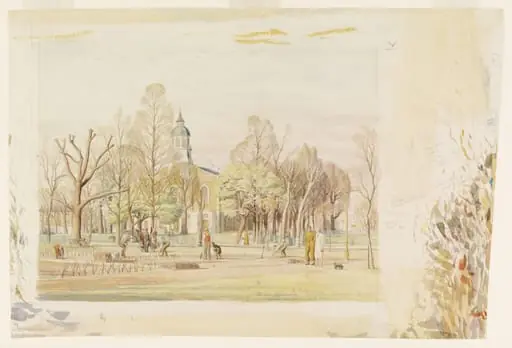 Holy Trinity Church and the new Allotments, Clapham Common, London
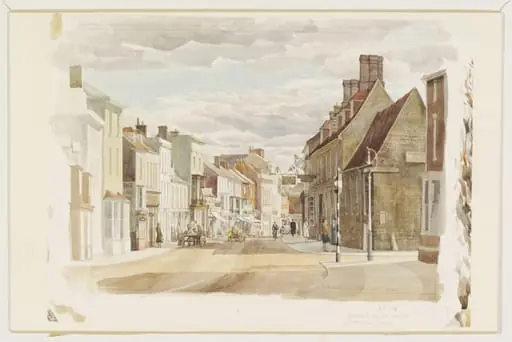 Towcester High Street from the Pomfret Arms Corner, Northamptonshire
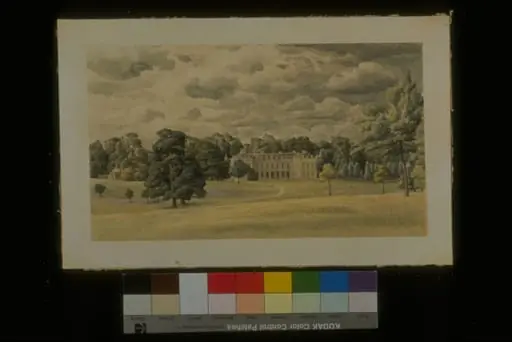 Boughton House, near Kettering
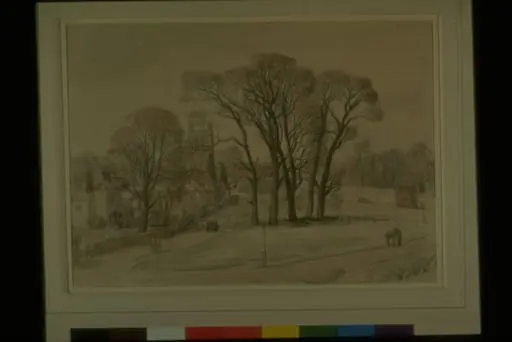 Long Melford Green on a Frosty Morning, Suffolk
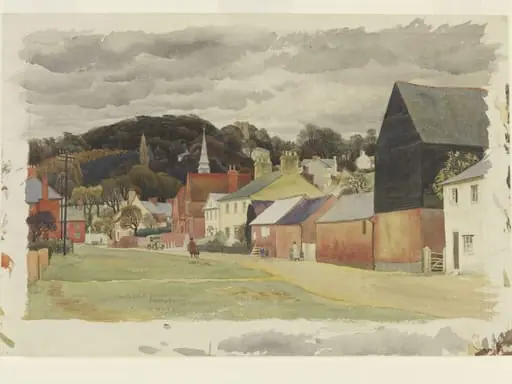 Bow Brickhill, Bletchley, Buckinghamshire
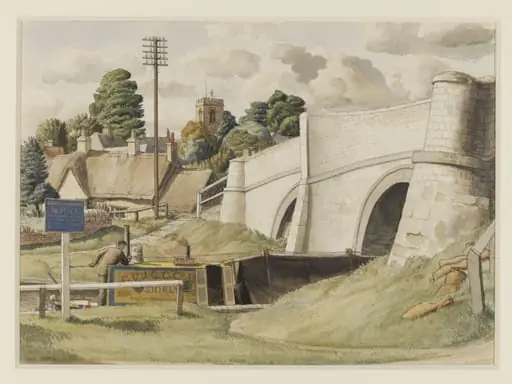 Stoke Bruerne, Northamptonshire
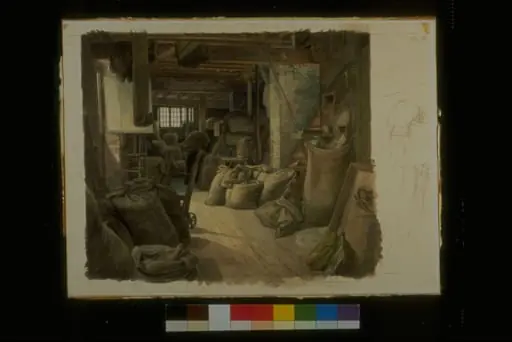 Chegworth Mill (Ground Floor), Harrietsham, near Maidstone, Kent