Artwork
The Crucifixion
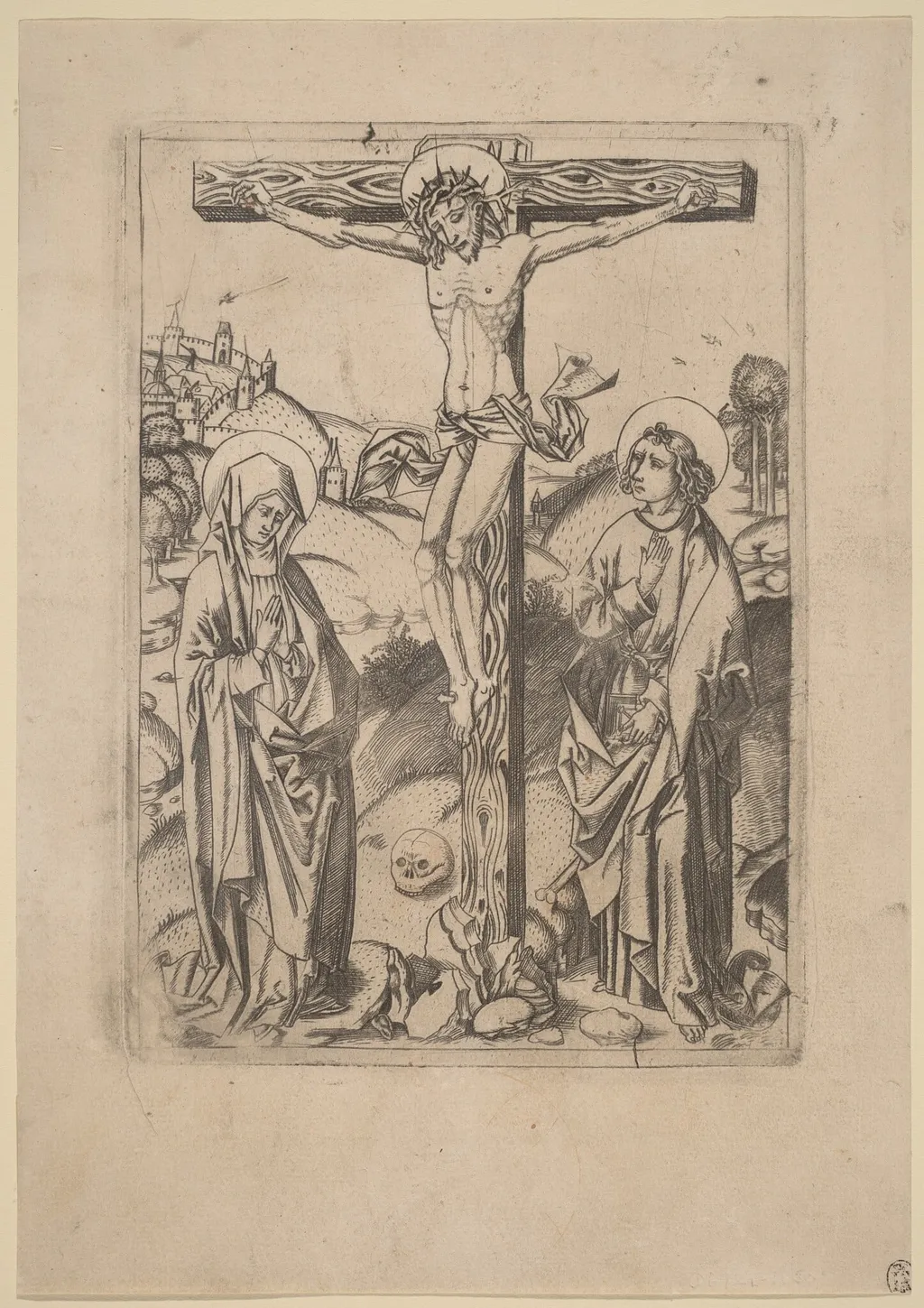
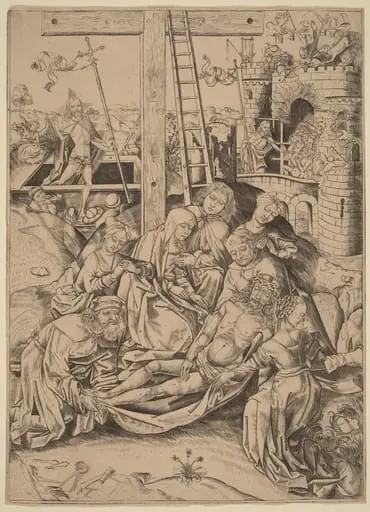
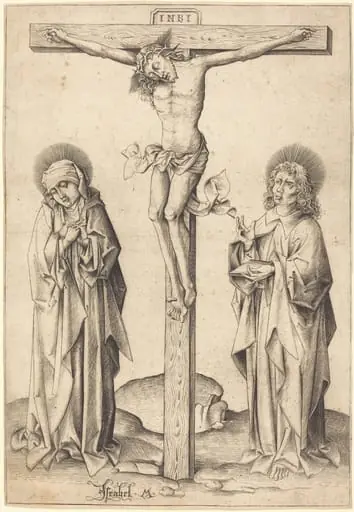
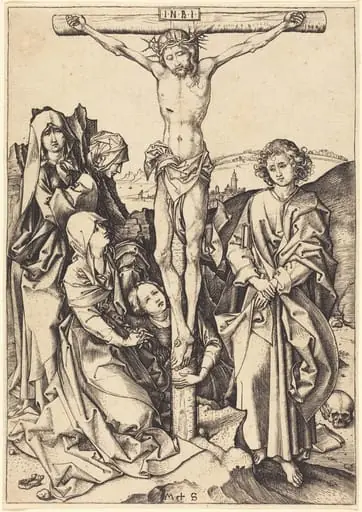
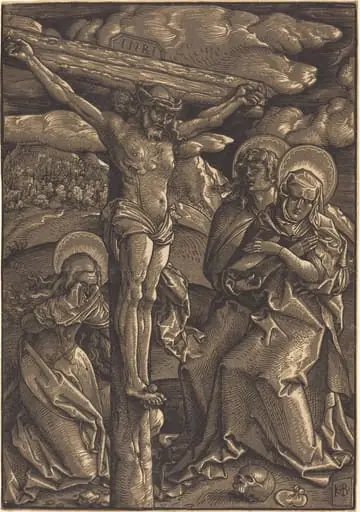
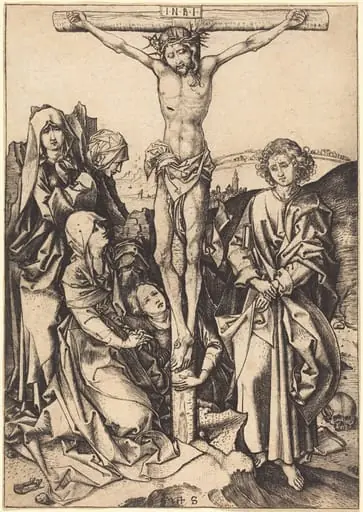
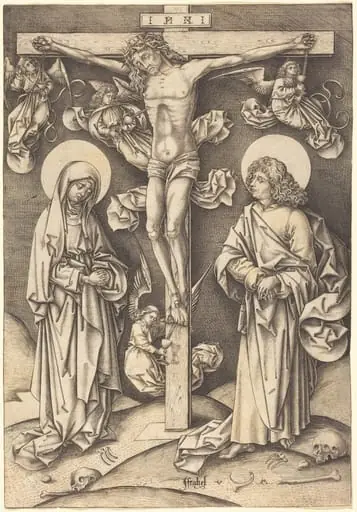
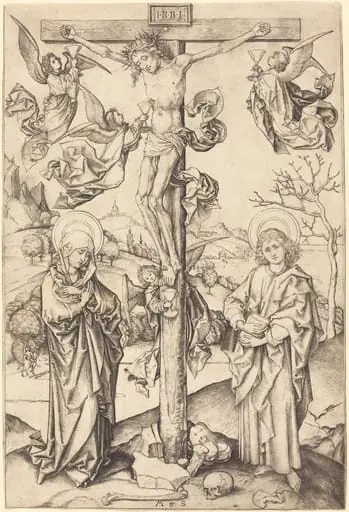
The Crucifixion is an ink print by the Renaissance artist Netherlandish 15th Century. It dates from 1485 and is held in the collection of the National Gallery of Art.
About this work
Overview
A skull and a small dog at the base anchor the composition in symbolic and domestic detail, reinforcing the scene’s solemnity without overt embellishment.
This engraving depicts the crucifixion of Christ as a tightly composed religious scene, rendered in fine linear detail typical of early printmaking. The central figure is shown in agony on the cross, flanked by two attendants whose postures suggest contrasting responses to the event. A skull and a small dog at the base anchor the composition in symbolic and domestic detail, reinforcing the scene’s solemnity without overt embellishment.
Subject & Meaning
The scene centers on Christ’s sacrifice, with the skull beneath the cross alluding to Golgotha, the place of the skull, and the traditional belief that Adam was buried there. The two figures below—cloaked in contemplation and holding a tool in quiet vigil—may represent witnesses or symbolic figures like the Virgin Mary and John the Evangelist. The dog, often a symbol of loyalty or earthly presence, adds a quiet humanizing note to the sacred moment.
Technique & Style
The artist employed sharp, controlled lines and graded shading to model form and convey emotional weight. The body of Christ is rendered with anatomical precision, while the faces of the figures express grief and awe through subtle facial contours and directional gaze. The contrast between the dark, dense cross and the lighter, textured ground enhances spatial depth, characteristic of Northern European printmaking traditions of the period.
History & Provenance
Though the artist’s identity is not specified, the style aligns with 15th- or early 16th-century Northern European engravers who produced devotional prints for private worship. Such works were widely circulated among clergy and laypeople, serving as aids for meditation. The print’s survival suggests it was carefully preserved, likely in a religious or scholarly collection.
Context
Engravings like this were part of a broader movement in late medieval Europe to make sacred narratives accessible through reproducible imagery. Unlike painted altarpieces, prints could be owned and studied in domestic settings, deepening personal devotion. The inclusion of symbolic elements—such as the skull and the dog—reflects a cultural habit of embedding theological meaning in everyday details.
Legacy
This print exemplifies how early printmakers translated complex theological themes into intimate, portable formats. Its emphasis on emotional expression and symbolic detail influenced later generations of religious illustrators. Though not attributed to a major name, it stands as a representative artifact of the era’s devotional visual culture, valued for its quiet intensity and technical discipline.
Artist & collection

Artist
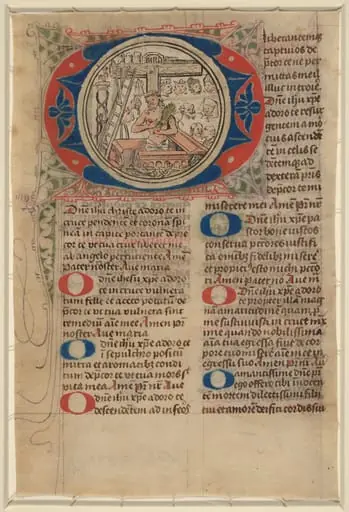
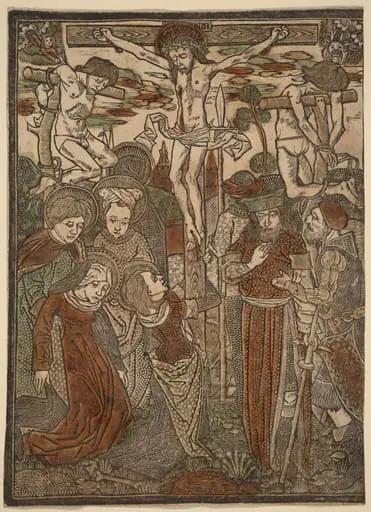
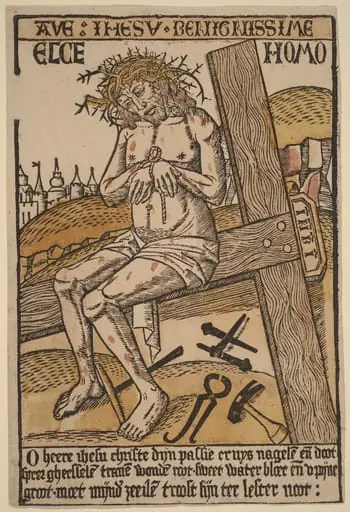
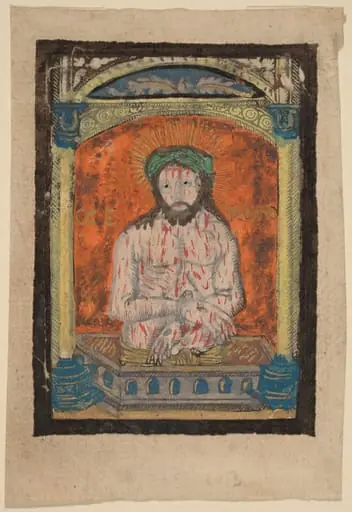
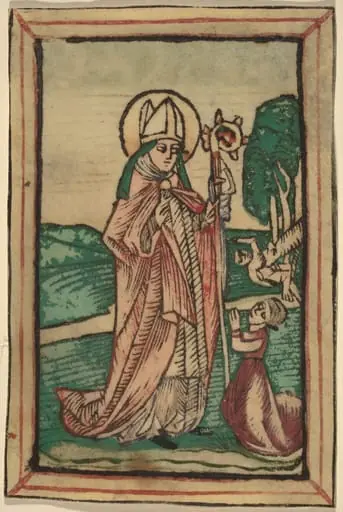
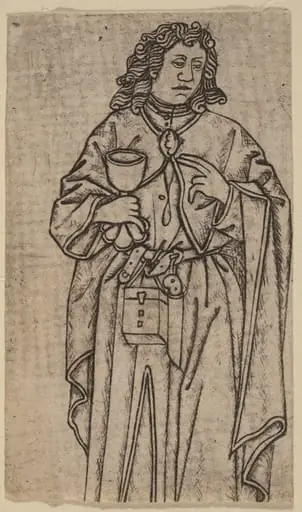
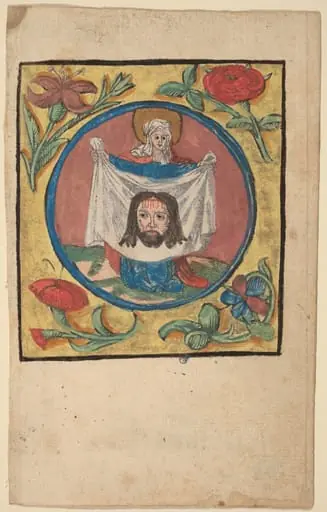
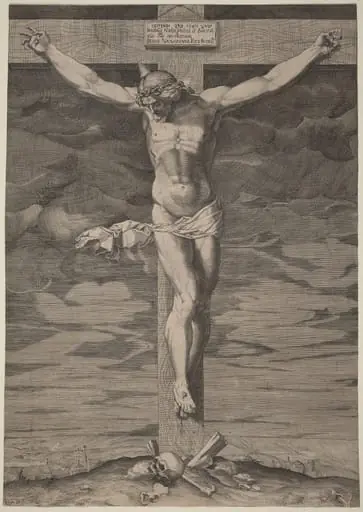
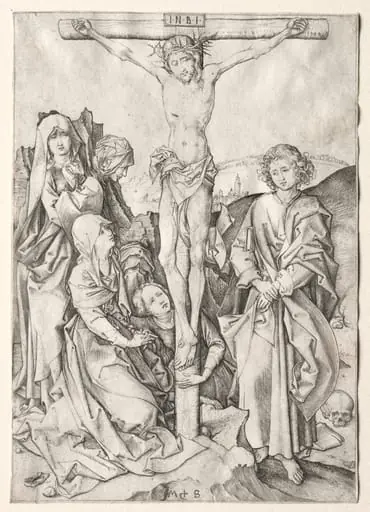
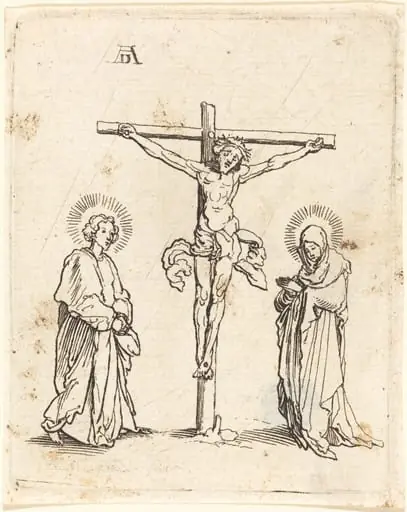
These prints show Christ’s suffering in bold, hand-colored images from 15th-century Northern Europe.