Artwork
The Lamentation
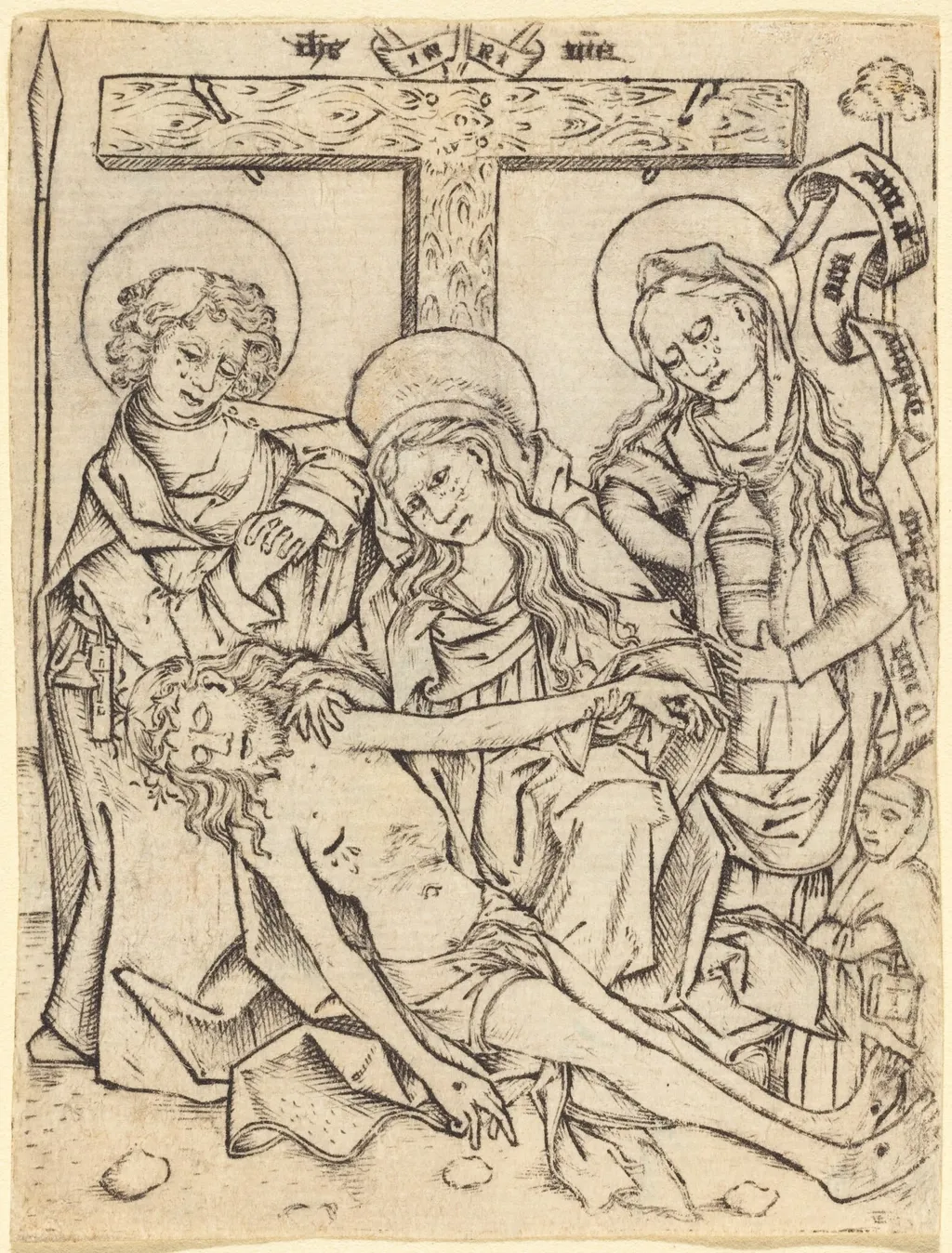
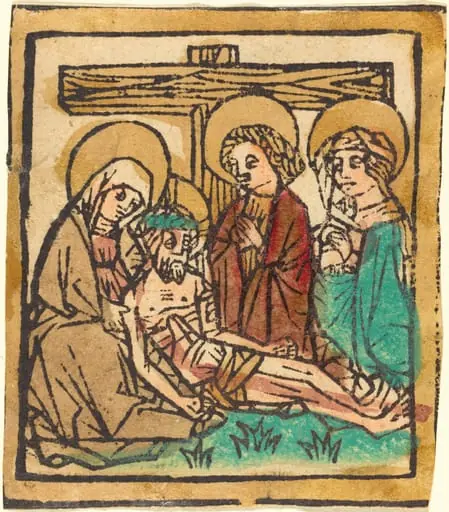
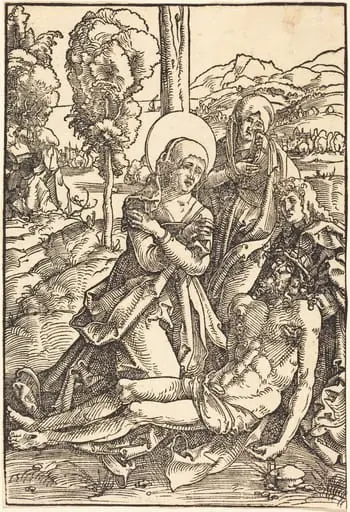
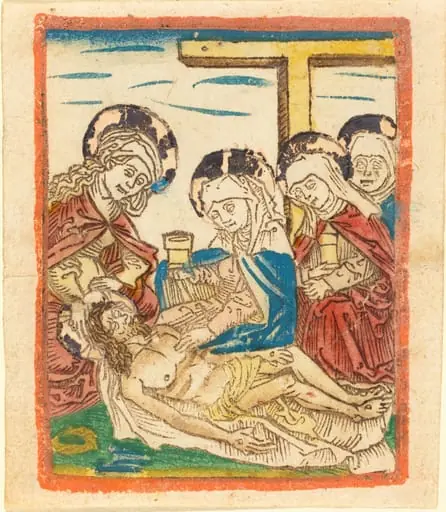
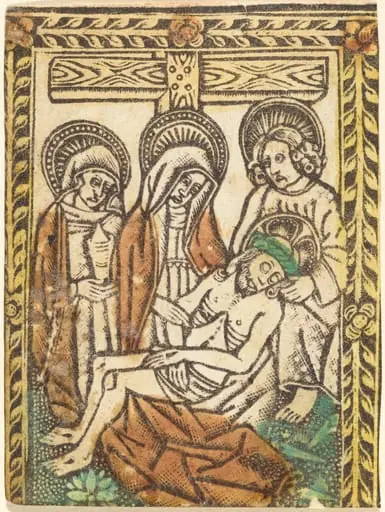
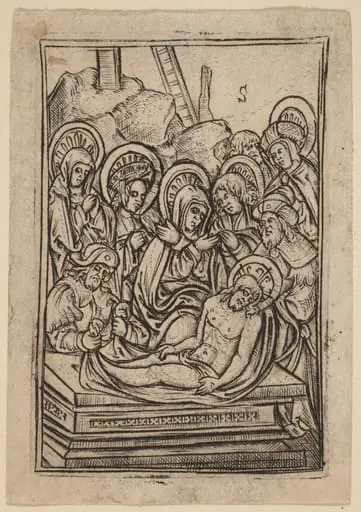
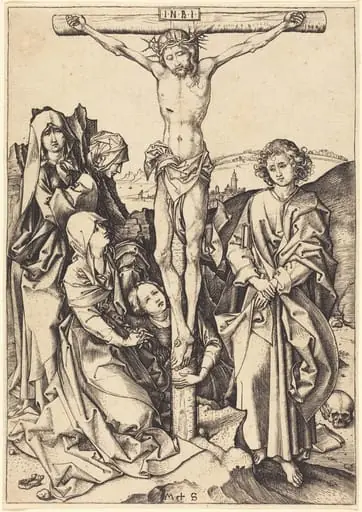
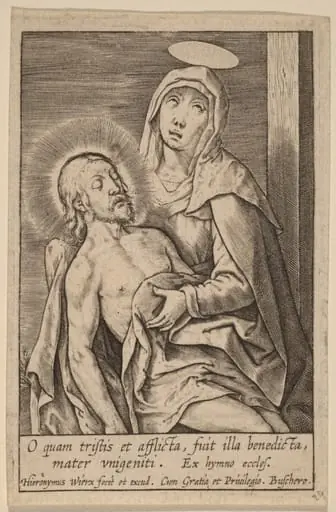
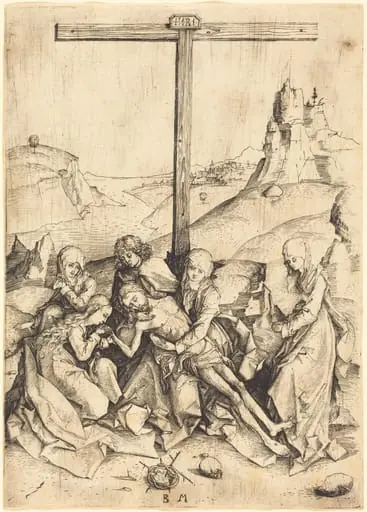
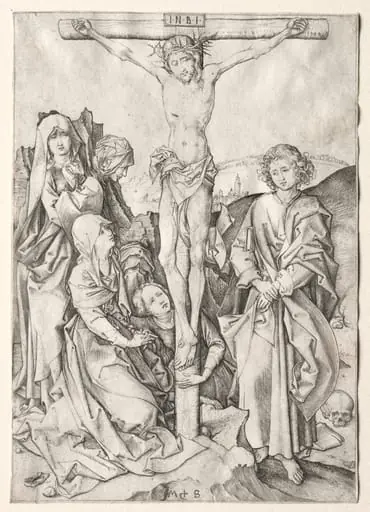
The Lamentation is an ink print by the Renaissance artist German 15th Century. It dates from 1475 and is held in the collection of the National Gallery of Art. This engraving depicts the moment after Christ’s death, with mourners gathered around his body.
About this work
Overview
This engraving depicts the moment after Christ’s death, with mourners gathered around his body. Executed through meticulous incisions on a metal plate, the work uses fine, layered lines to convey emotion and spatial depth. The composition centers on a close-knit group, their forms emerging from a shadowed background that enhances the intimacy of the scene.
Subject & Meaning
The scene captures the grief of Christ’s followers, with Mary cradling his lifeless form and John the Baptist kneeling in silent sorrow. The absence of overt drama emphasizes quiet mourning, suggesting a personal, contemplative moment rather than a public spectacle. The figures’ proximity and stillness reinforce themes of loss and devotion.
Technique & Style
The artist employed cross-hatching—overlapping fine lines—to model volume and texture, creating subtle gradations of light and shadow. Edges shift from soft to sharp, guiding the viewer’s eye toward the central figures. The metal plate’s precision allowed for intricate detail, while the darkened periphery isolates the mourners in a hushed, enclosed space.
History & Provenance
Though the artist’s identity is not recorded, the work aligns with early Northern European printmaking traditions of the late 15th or early 16th century. Engravings like this were often produced for private devotion or scholarly circulation, reflecting a growing market for religious imagery outside church commissions.
Context
During this period, engraved religious scenes became accessible to a broader audience through print reproduction. Unlike painted altarpieces, these small-scale works could be owned and studied privately, fostering personal meditation on sacred narratives. The emphasis on emotional restraint reflects broader devotional trends of the time.
Legacy
This engraving exemplifies how printmakers translated emotional depth into linear precision, influencing later generations of artists working in graphic media. Its quiet intensity contributed to the evolution of religious imagery in print, prioritizing introspection over spectacle and setting a precedent for intimate devotional art.
Artist & collection

Artist
This 15th-century German artist carved vivid religious scenes into metal and wood, then hand-painted them in bright, symbolic colors.

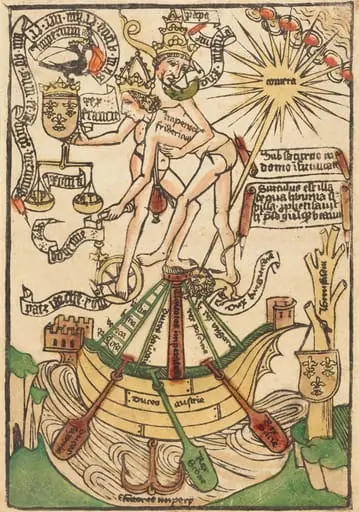 Allegory of the Meeting of Pope Paul II and Emperor Frederick III
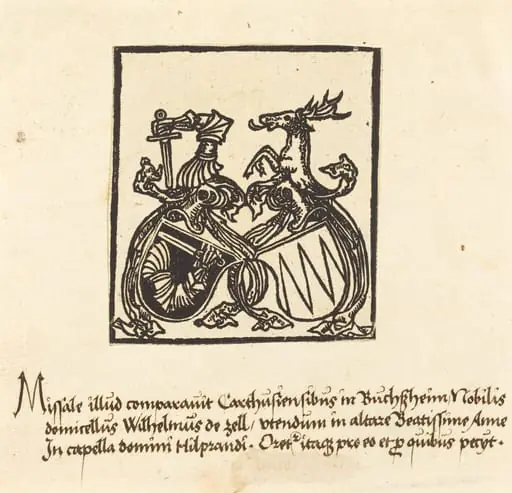 Bookplate of Wilhelm von Zell
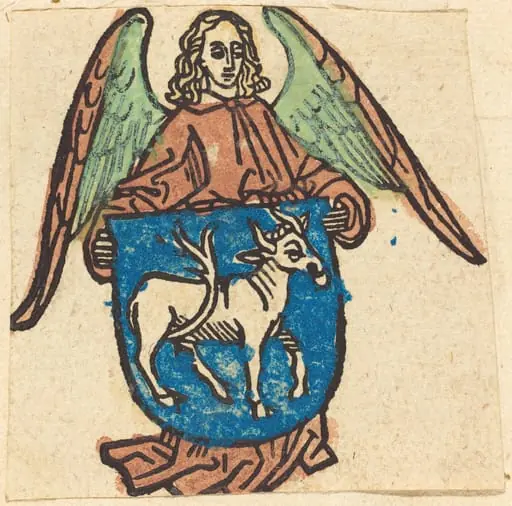 Bookplate of Hilprand Brandenburg of Bibrach
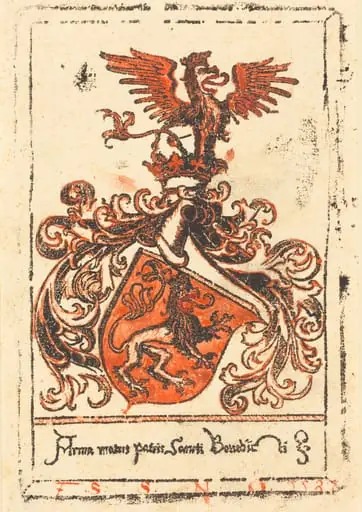 Bookplate of the Abbey of Ottobeuren
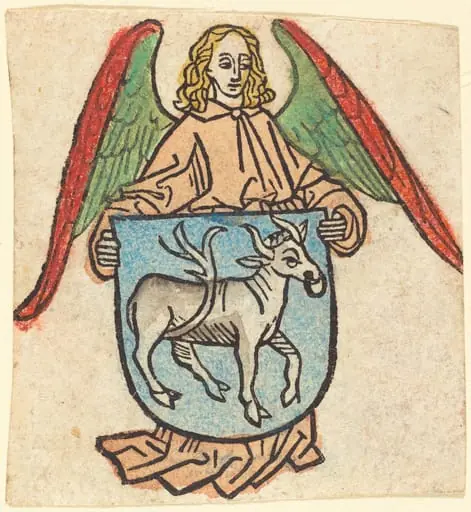 Bookplate of Hilprand Brandenburg of Bibrach
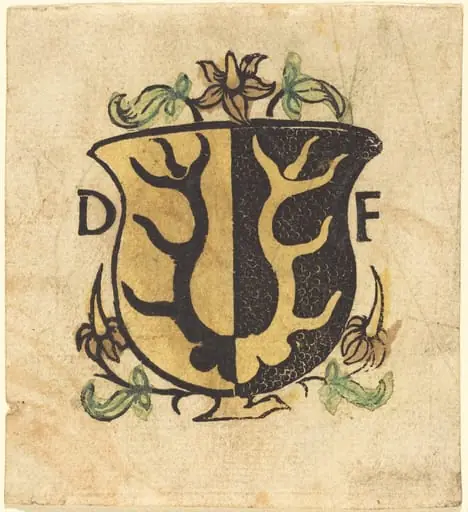 Bookplate of Dominicus Frauenfelder
![Studies for Six Figures (sheet from a model book) [recto], by German 15th Century](https://artifactworldgallery.com/img/german-15th-century--studies-for-six-figures-sheet-from-a-model-book-recto--4837429e0755bc3f-w320.webp) Studies for Six Figures (sheet from a model book) [recto]
Studies for Six Figures (sheet from a model book) [recto]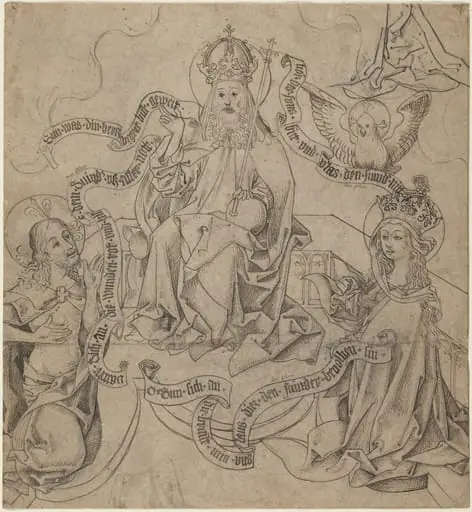 Christ and Mary Interceding with God the Father