Artwork
Vue du Chateau et d'une Partie de la Ville de Versailles
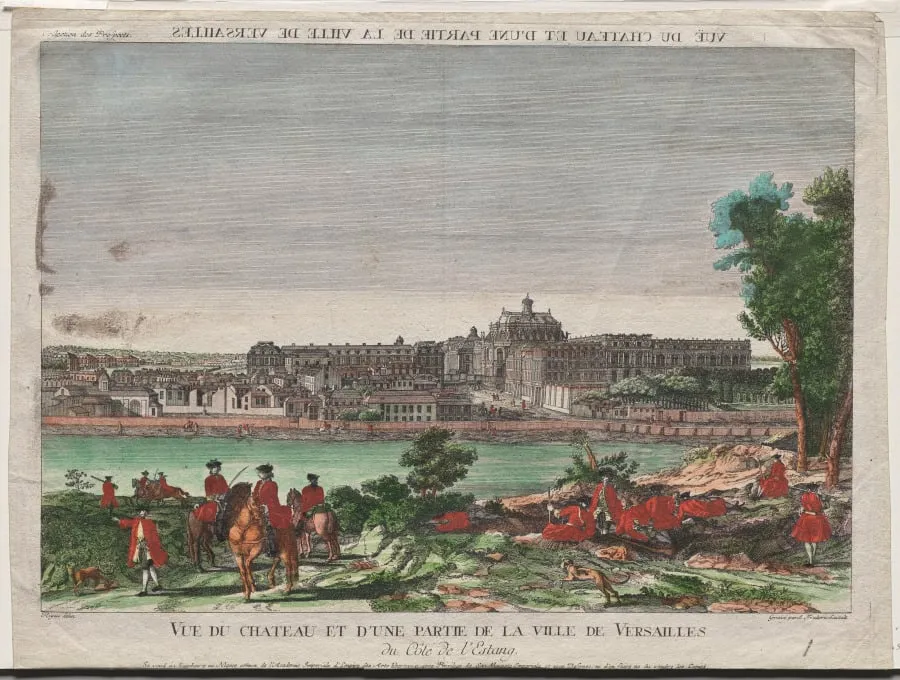
Vue du Chateau et d'une Partie de la Ville de Versailles is a print by the Romanticist artist Balthasar Friedrich Leizelt. It dates from 1785 and is held in the collection of the Cleveland Museum of Art. The work is a hand‑colored print that presents a perspective scene of the Palace of Versailles, its gardens, and the adjacent town.
About this work
Overview
The work is a hand‑colored print that presents a perspective scene of the Palace of Versailles, its gardens, and the adjacent town. It belongs to the genre of optical views, a type of image designed to be examined through a small device that creates a three‑dimensional illusion for the viewer.
Subject & Meaning
The composition centers on the royal château, rendered on the left, with the expansive gardens spreading outward and the settlement of Versailles visible in the background. By depicting the grandeur of the palace and its surroundings, the image reflects the 18th‑century fascination with monumental architecture and the cultivated landscape surrounding the French court.
Technique & Style
Executed as an etching and engraving that was subsequently hand‑colored, the print was intended to be placed in a wooden frame equipped with a convex lens and a mirror. When viewed through this apparatus, the flat surface produces a stereoscopic effect, giving the impression of depth and volume that mimics a three‑dimensional scene.
History & Provenance
Optical views flourished in Europe during the latter half of the 1700s, catering both to aristocratic collectors who displayed them in private salons and to a broader public who paid modest fees to experience them in street exhibitions. The popularity of these devices waned quickly after the emergence of photography, which offered a more efficient means of capturing realistic perspective.
Context
The print reflects a period when visual entertainment merged with technological novelty, offering a precursor to modern immersive media. Its production aligns with a broader trend of creating portable, interactive artworks that combined artistic skill with mechanical ingenuity, a practice that appealed to Enlightenment audiences eager for scientific and aesthetic experimentation.
Artist & collection

Artist
Balthasar Friedrich Leizelt was a German artist and copperplate engraver working from Augsburg.

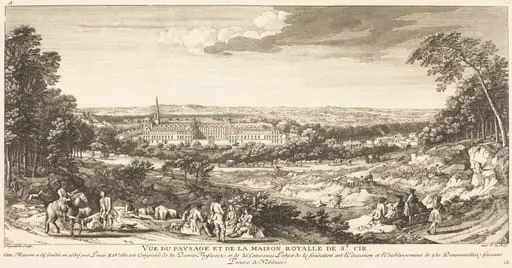 Vue du Paysage de la Maison Royalle de Saint Cir
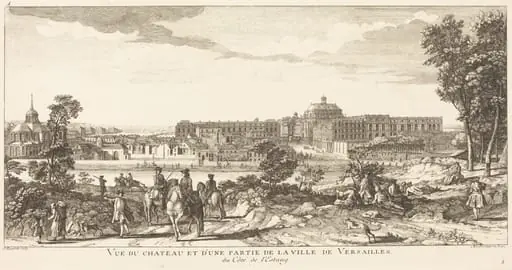 Vue du Chateau et d'une Partie de la Ville deVersailles
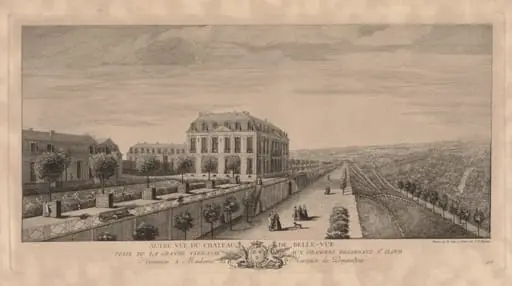 Chateau Bellevue
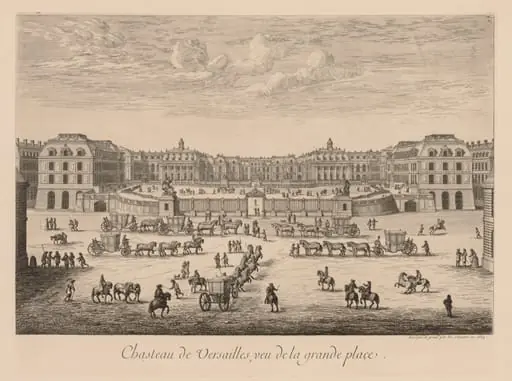 Vue du Château de Versailles, vu de la Grande Place
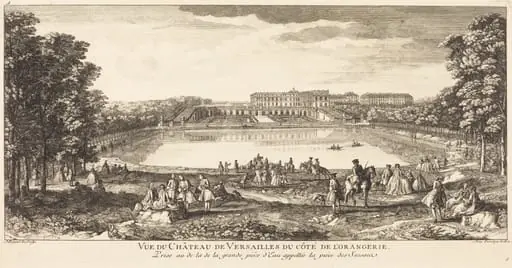 Vue du Chateau de Versailles du Cote de l'Orangerie
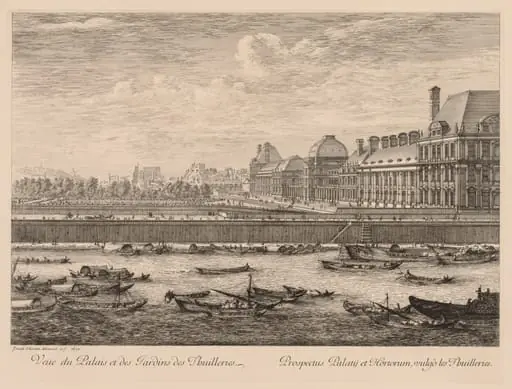 Vue du palais et des jardins des Tuileries, du côté du quai
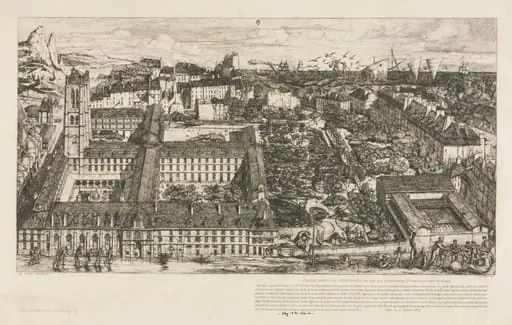 Henry IV College
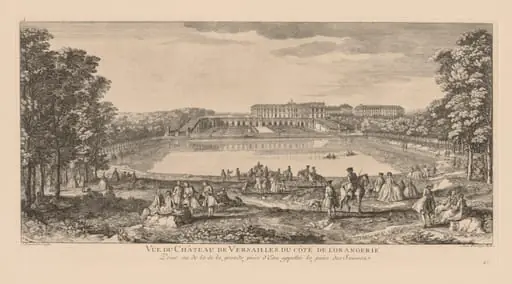 Vue du Château du Versailles, du côté de l'Orangerie, prise au delà de la pièce d'eau des Suisses