Artwork
Vue du Chateau de Versailles du Cote de l'Orangerie
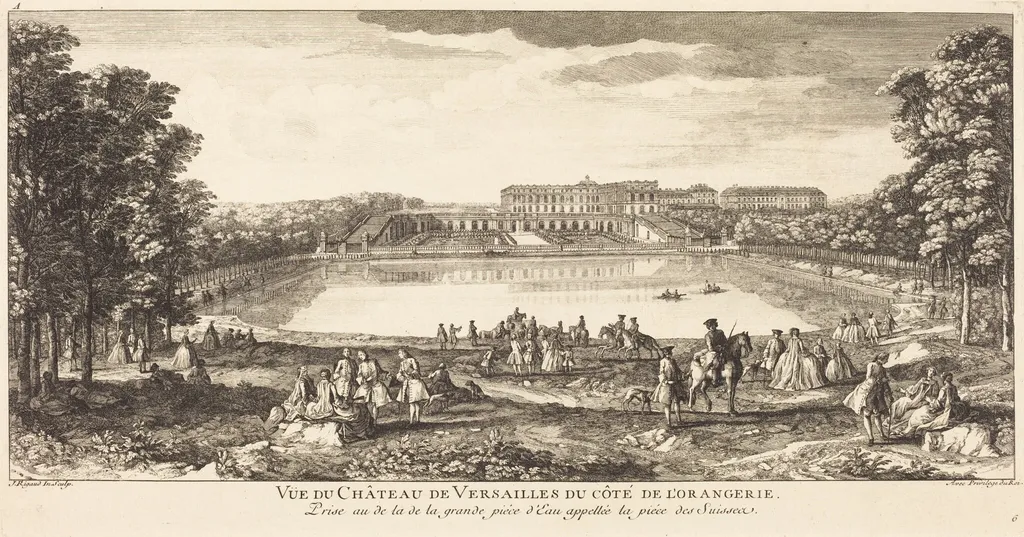
Vue du Chateau de Versailles du Cote de l'Orangerie is an ink print by the Baroque artist Jean-Baptiste Rigaud. It dates from 1746 and is held in the collection of the National Gallery of Art.
About this work
Overview
The composition emphasizes symmetry and detail, characteristic of 18th-century topographical prints intended to document elite landscapes with precision.
Created in 1746 by Jean-Baptiste Rigaud, this print depicts the Palace of Versailles from the perspective of the Orangery side. Executed in etching and engraving, it captures the architectural grandeur of the palace alongside its formal gardens and water features. The composition emphasizes symmetry and detail, characteristic of 18th-century topographical prints intended to document elite landscapes with precision.
Subject & Meaning
The scene portrays the palace grounds as a stage for aristocratic leisure: figures in contemporary dress stroll, converse, and ride along the Grand Canal. Their activities suggest the court’s ritualized social life, where movement through space was both recreation and performance. The orderly arrangement of people and structures reflects the ideals of control and hierarchy embedded in Versailles’ design.
Technique & Style
Rigaud employed fine, controlled lines typical of etching and engraving to render textures—from the ripples of water to the folds of fabric and the branching of trees. The meticulous detail conveys a sense of realism, while the balanced composition and shallow depth align with conventions of architectural representation in early modern printmaking, prioritizing clarity over dramatic perspective.
History & Provenance
The print was produced during the reign of Louis XV, a period when Versailles remained the center of French political and cultural life. Rigaud, known for his topographical works, likely created this as part of a series documenting royal residences. Its survival in institutional collections suggests it was valued for its documentary function rather than as fine art.
Context
In mid-18th century France, prints like this served as visual records for those unable to visit Versailles. They reinforced the palace’s image as a symbol of royal authority and cultivated taste. The inclusion of courtiers in leisure reflects the era’s emphasis on spectacle and the performance of nobility, even in private moments within the garden.
Legacy
Rigaud’s print contributes to a broader tradition of French architectural documentation. While not widely exhibited today, it remains a reference for scholars studying how Versailles was visually represented in its own time. Its technical precision and social observation offer insight into the intersection of art, power, and public perception in the ancien régime.
Artist & collection


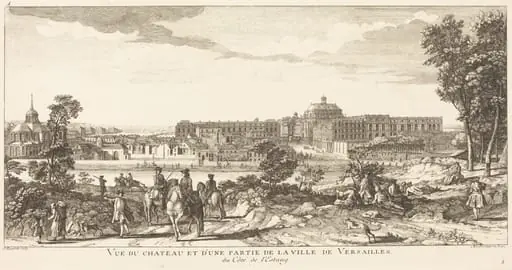 Vue du Chateau et d'une Partie de la Ville deVersailles
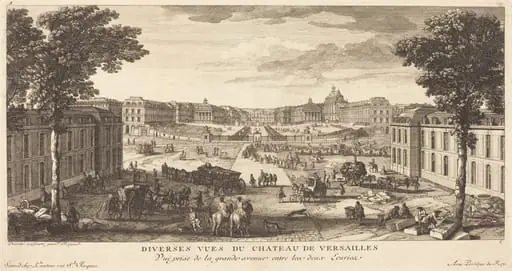 Vue Prise de la grande avenue entre les deux Ecuries
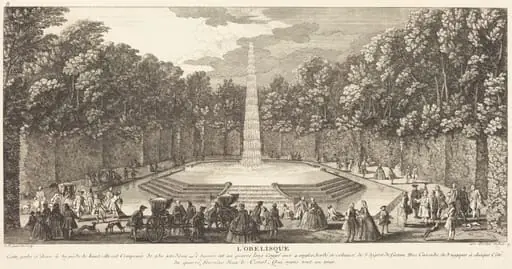 L'Obelisque
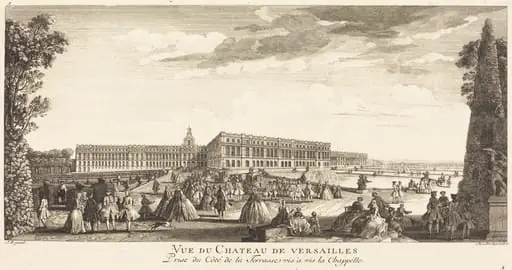 Vue du Chateau de Versailles Prise du Cote dela Terrasse vis a vis la Chapelle
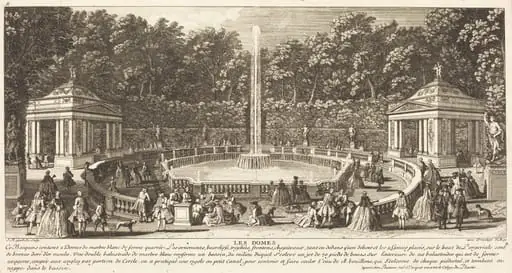 Les Domes
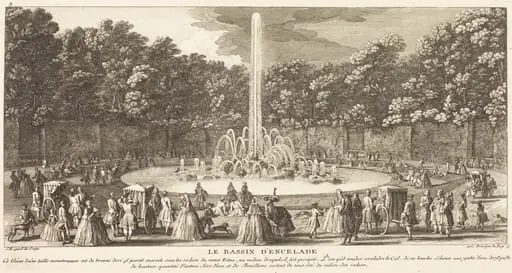 Le Bassin d'Encelade
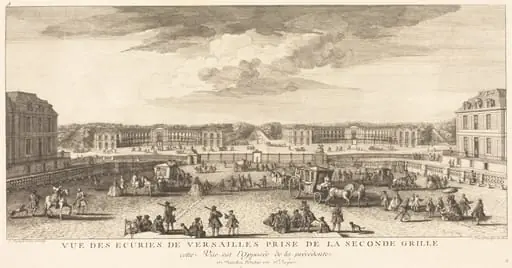 Vue des Ecuries de Versailles Prise de la Seconde Grille
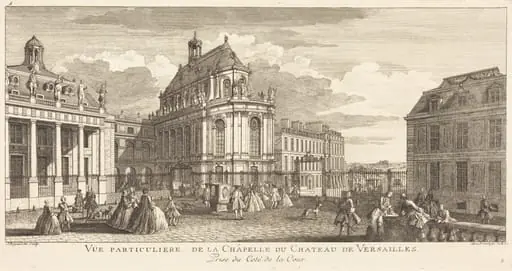 Vue Particuliere de la Chapelle du Chateau deVersailles
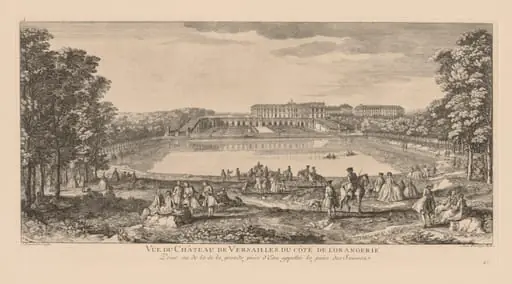 Vue du Château du Versailles, du côté de l'Orangerie, prise au delà de la pièce d'eau des Suisses
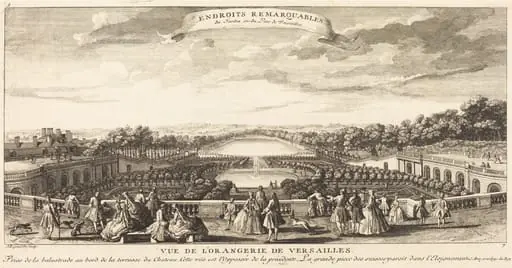 Vue de l'Orangerie de Versailles
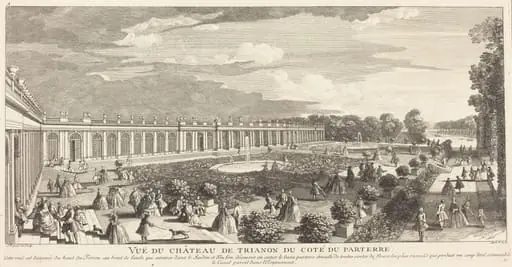 Vue du Chateau de Trianon du Cote du Parterre
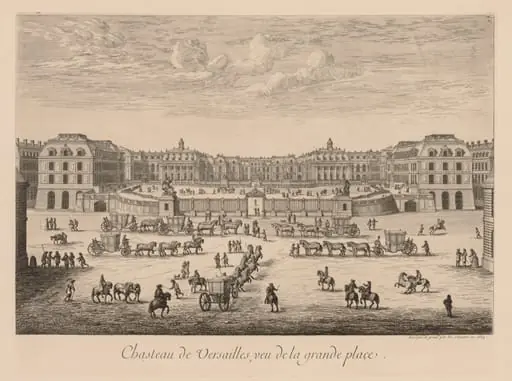 Vue du Château de Versailles, vu de la Grande Place
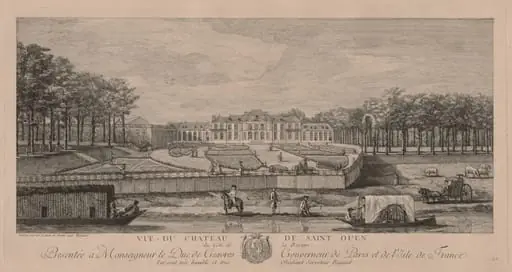 The Chateau of Saint Ouen
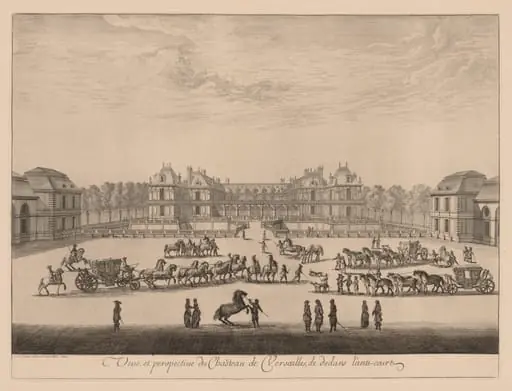 Vue et perspective du Château de Versailles, de dedans l'anti-cour
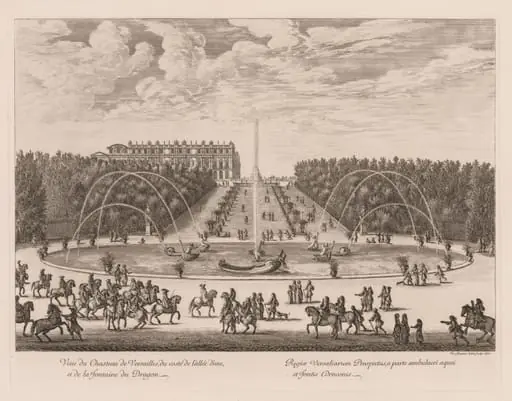 Vue du Château de Versailles, du côté de l'allée et de la fontaine du Dragon
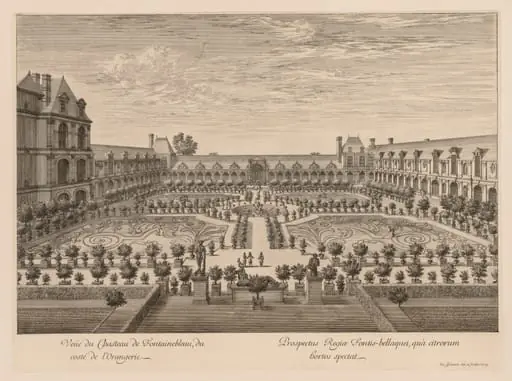 Vue du Château de Fontainebleau, du côté de l'Orangerie
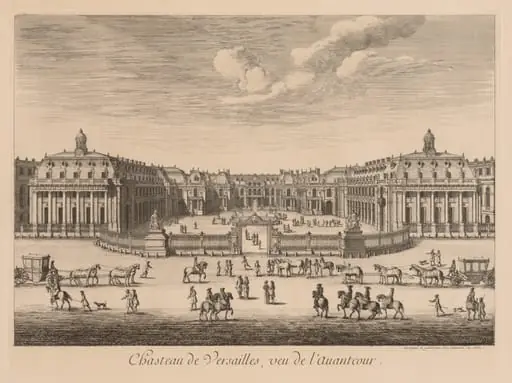 Vue du Château de Versailles, vu de l'avant-cour
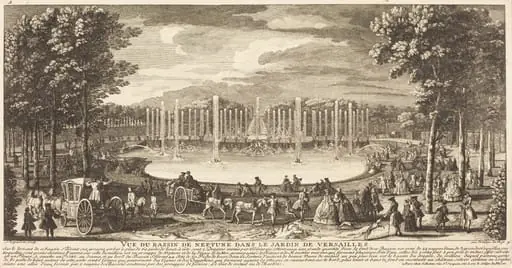 Vue du Bassin de Neptune dans le Jardin de Versailles