Artwork
Vue du Chateau et d'une Partie de la Ville deVersailles
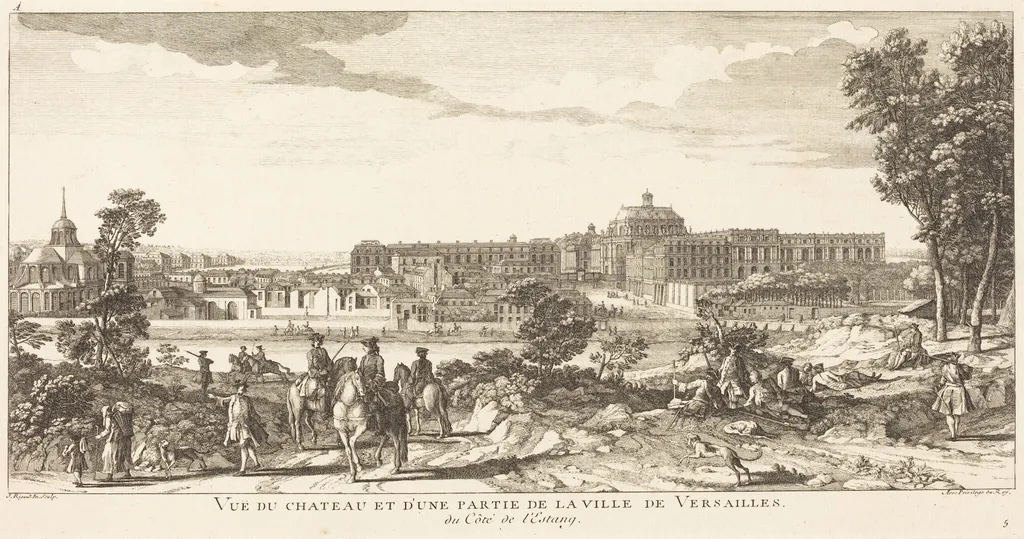
Vue du Chateau et d'une Partie de la Ville deVersailles is an ink print by the Baroque artist Jean-Baptiste Rigaud. It dates from 1746 and is held in the collection of the National Gallery of Art.
About this work
Overview
Created in 1746 by Jean-Baptiste Rigaud, this print depicts the Palace of Versailles and its surrounding urban landscape. Executed in etching and engraving, it presents a detailed aerial view that captures the scale and order of the royal complex. The composition balances architectural grandeur with human activity, offering a precise record of the site’s layout during the mid-eighteenth century.
Subject & Meaning
Smaller structures, formal gardens, and pathways extend outward, suggesting the palace’s role as both residence and administrative center.
The scene centers on the Château de Versailles, its symmetrical wings and central dome dominating the horizon. Smaller structures, formal gardens, and pathways extend outward, suggesting the palace’s role as both residence and administrative center. Figures on horseback and foot near a rocky edge imply daily movement within the grounds, reinforcing the site’s function as a lived-in seat of power rather than a static monument.
Technique & Style
Rigaud employed fine, controlled lines typical of engraved prints to render texture and spatial depth. The contrast between the sharply defined architecture and softer, atmospheric sky creates a sense of distance. Etching allowed for delicate shading in foliage and water, while engraving defined structural edges, combining precision with subtle tonal variation to enhance realism.
History & Provenance
Commissioned during the reign of Louis XV, the print served as a documented representation of Versailles at its peak. It was likely produced for aristocratic collectors or institutional use, reflecting the monarchy’s interest in promoting its image through visual media. The work’s survival in multiple archives suggests it was widely circulated among European elites familiar with French court culture.
Context
In the mid-1700s, Versailles remained the political and cultural heart of France, though its influence was beginning to face scrutiny. Prints like Rigaud’s contributed to a growing genre of topographical imagery that recorded royal residences with documentary intent. Such works bridged art and cartography, appealing to those interested in geography, architecture, and the mechanics of power.
Legacy
Rigaud’s print endures as a reliable visual source for understanding Versailles’ pre-revolutionary layout. Its technical clarity and compositional balance influenced later topographical artists and provided reference for restoration efforts. Though not widely exhibited today, it remains a key item in historical collections studying eighteenth-century French urban and royal representation.
Artist & collection


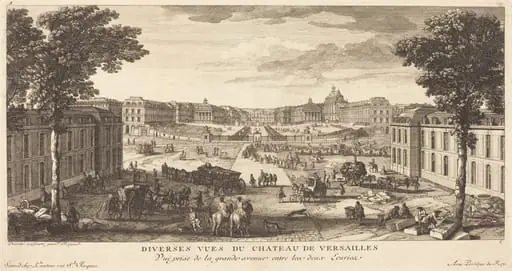 Vue Prise de la grande avenue entre les deux Ecuries
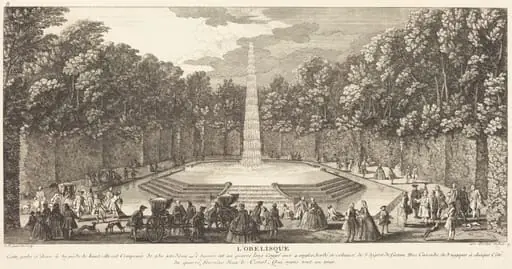 L'Obelisque
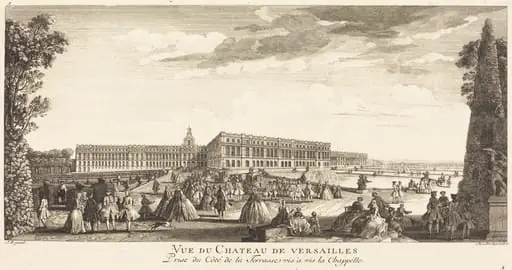 Vue du Chateau de Versailles Prise du Cote dela Terrasse vis a vis la Chapelle
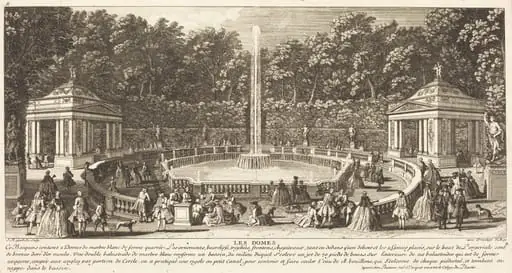 Les Domes
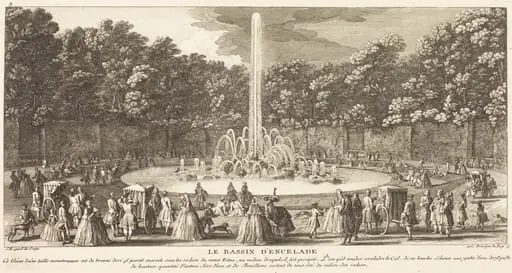 Le Bassin d'Encelade
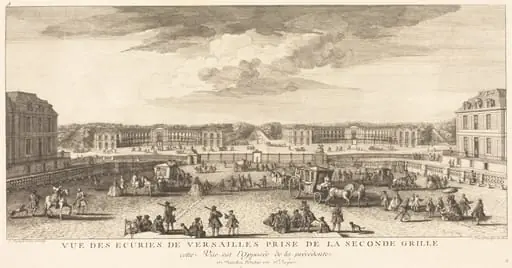 Vue des Ecuries de Versailles Prise de la Seconde Grille
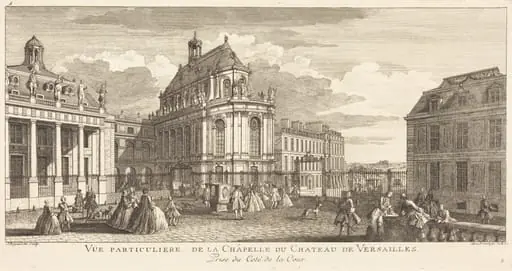 Vue Particuliere de la Chapelle du Chateau deVersailles
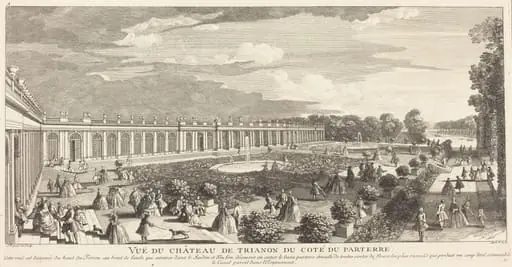 Vue du Chateau de Trianon du Cote du Parterre
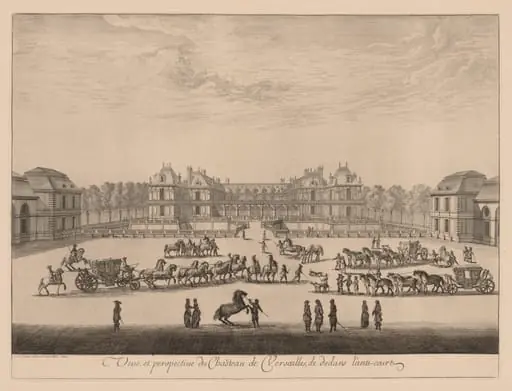 Vue et perspective du Château de Versailles, de dedans l'anti-cour
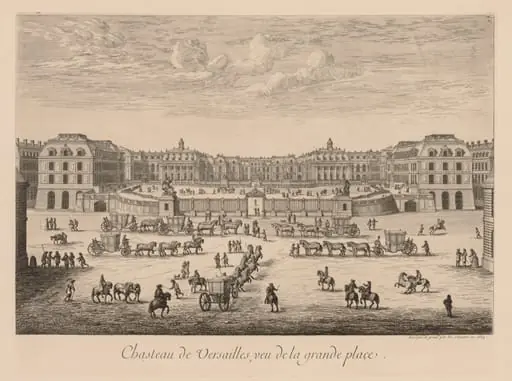 Vue du Château de Versailles, vu de la Grande Place
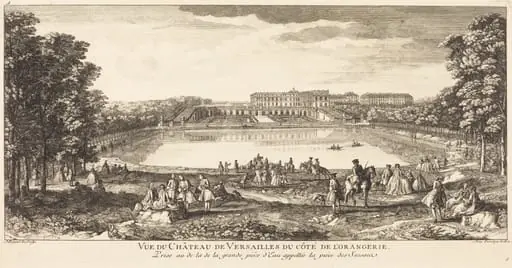 Vue du Chateau de Versailles du Cote de l'Orangerie
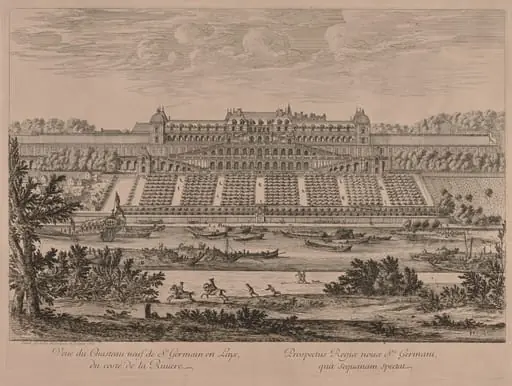 Chateau of St. Germain en Laye from the River
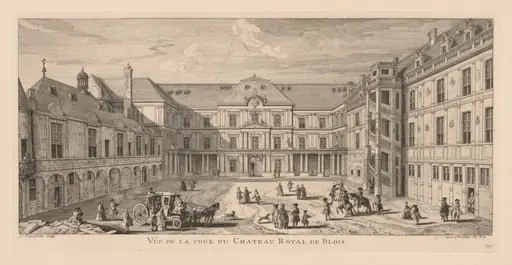 Vue de la cour du Château de Blois
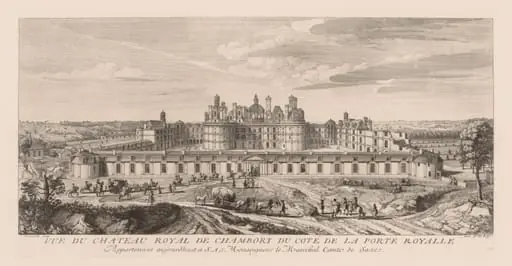 Vue du Château royal de Chambord, du côte de la Porte royale
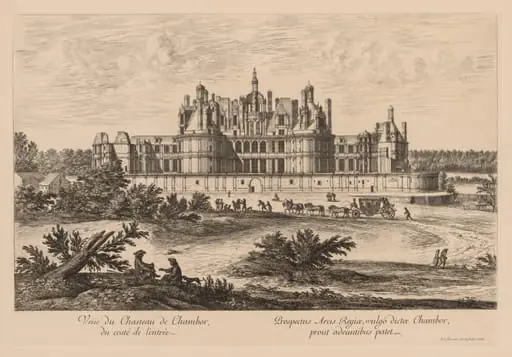 Vue du Château de Chambord, du côté de l'entrée
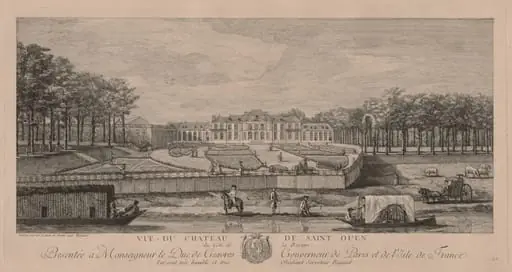 The Chateau of Saint Ouen