Artwork
Saint Jerome
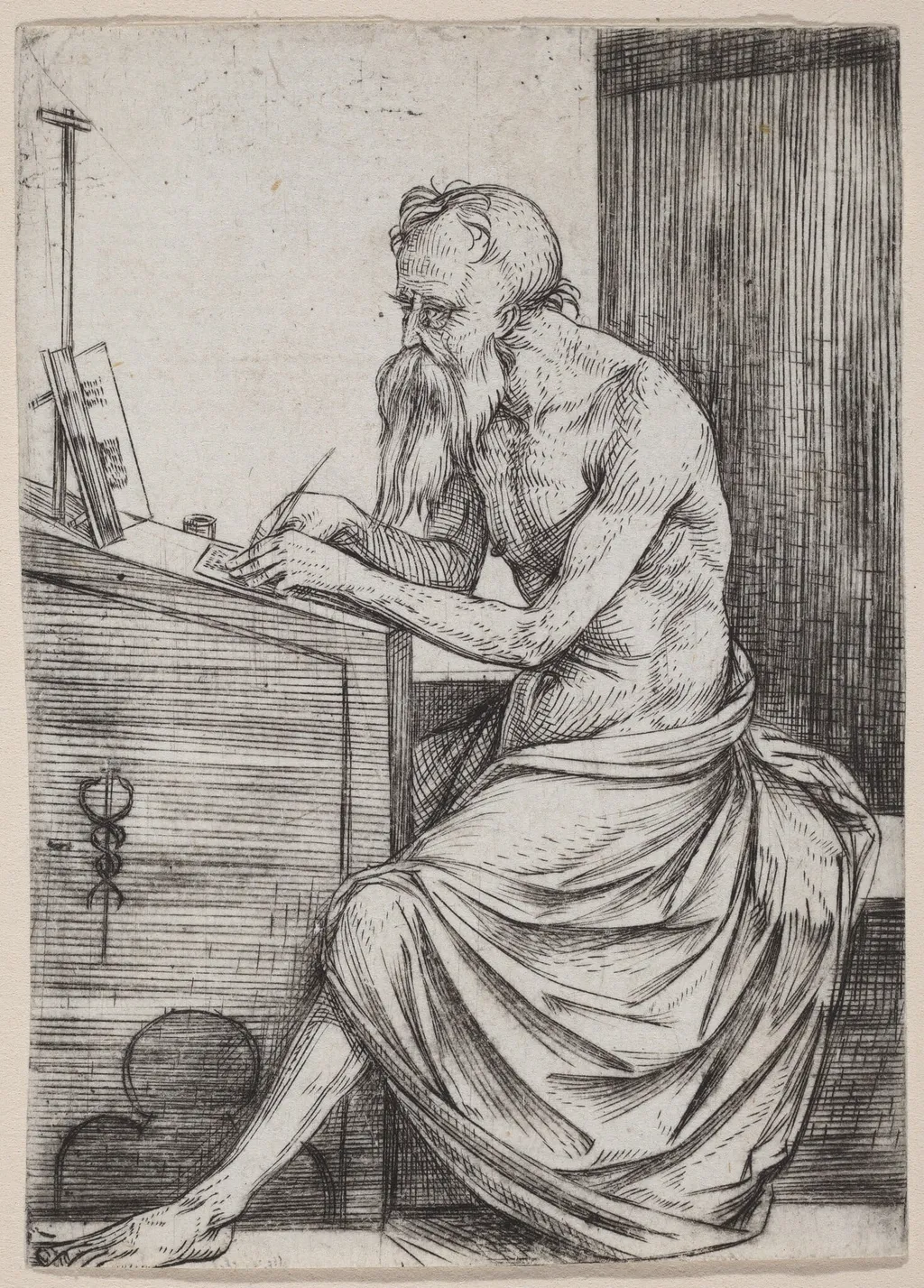
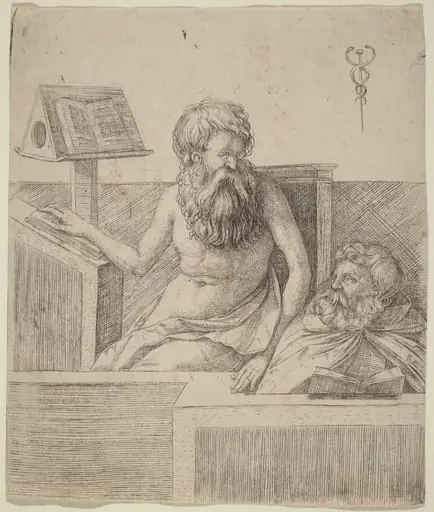
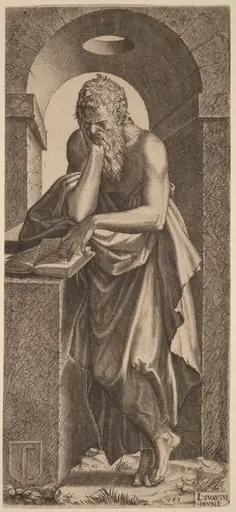
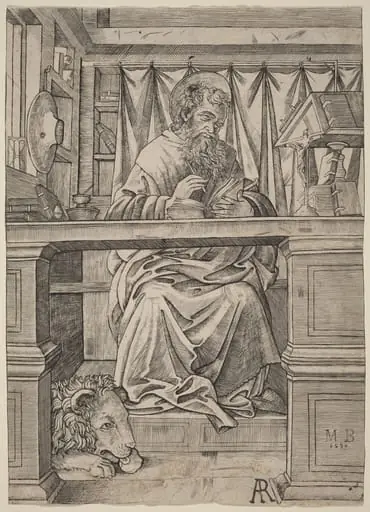
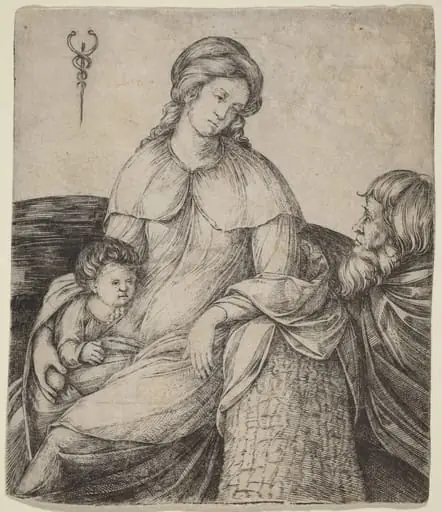
Saint Jerome is an ink print by the Renaissance artist Jacopo de' Barbari. It dates from 1502 and is held in the collection of the National Gallery of Art.
About this work
Overview
Saint Jerome is an engraving on laid paper created by Jacopo de' Barbari around 1502. This print exemplifies the artist's meticulous style, reflecting his role as a pioneering Italian Renaissance figure in Northern Europe.
Subject & Meaning
The engraving portrays Saint Jerome, a revered Christian figure, engaged in writing at a desk. Symbolic elements include a cross, books/papers, and the saint's attire, conveying devotion and scholarly pursuits.
Technique & Style
Executed in precise, detailed lines characteristic of Barbari's technique, the black-and-white engraving showcases his influence on Northern European printmaking. The composition features a contemplative Saint Jerome in a simple, yet expressive, interior setting.
History & Provenance
Created after Barbari's 1500 move from Venice to Germany, Saint Jerome marks an early instance of Italian Renaissance artistic presence in Northern Europe. The work's provenance is not detailed here, but its creation period situates it within Barbari's formative Northern European years.
Context
As one of Barbari's surviving prints, Saint Jerome contributed to the evolution of engraving techniques in Northern Europe, bridging Italian and Northern artistic practices.
Artist & collection
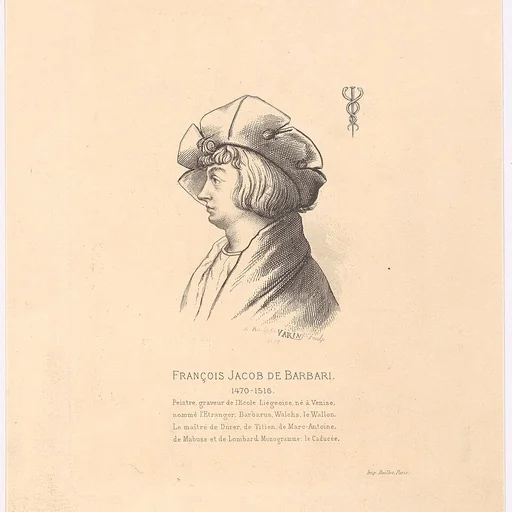
Artist
Jacopo de' Barbari, sometimes known or referred to as de'Barbari, de Barberi, de Barbari, Barbaro, Barberino, Barbarigo or Barberigo (c.

![View of Venice [lower right block], by Jacopo de' Barbari](https://artifactworldgallery.com/img/jacopo-de-barbari--view-of-venice-lower-right-block--371460ae957995b9-w320.webp)