Artwork
Saint Simon
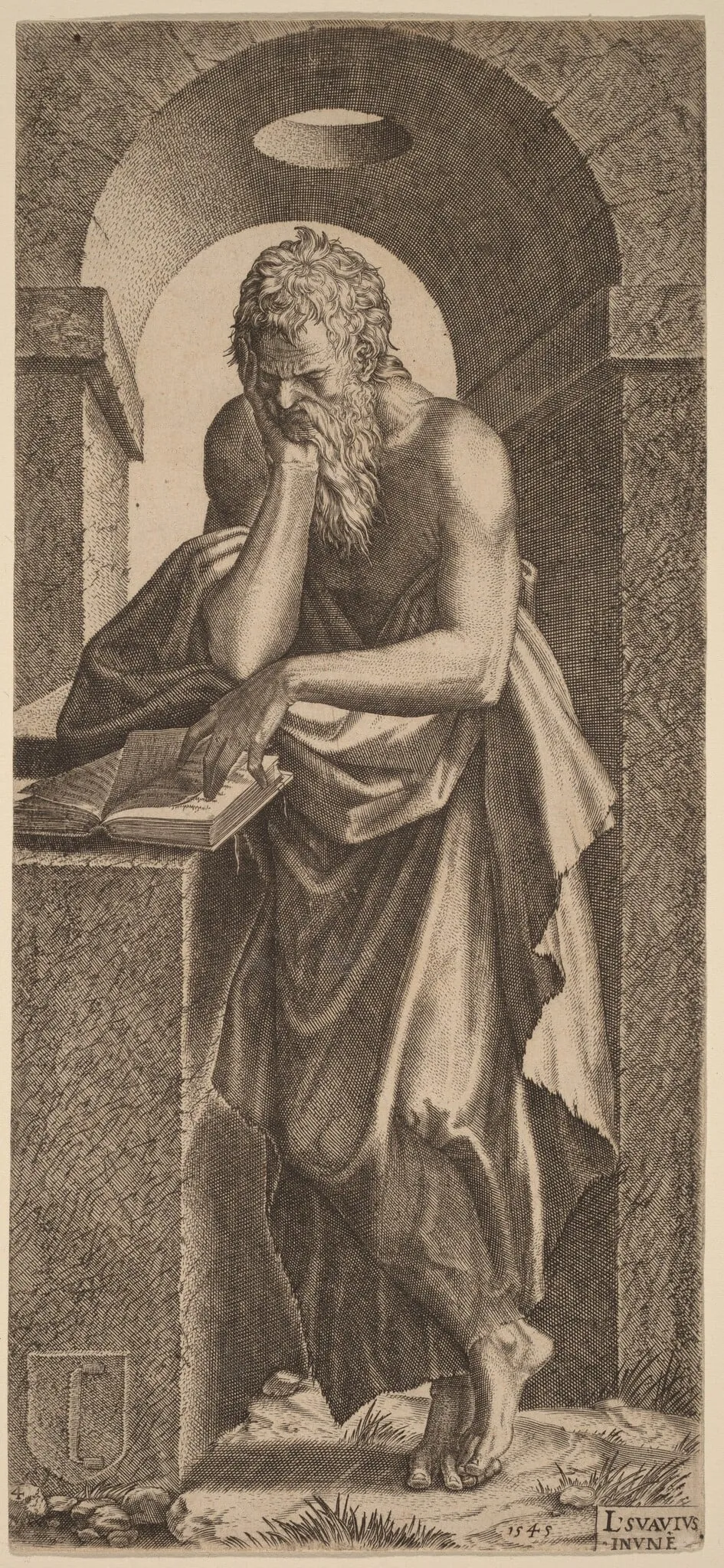
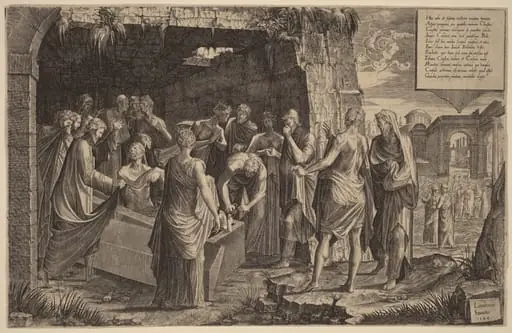
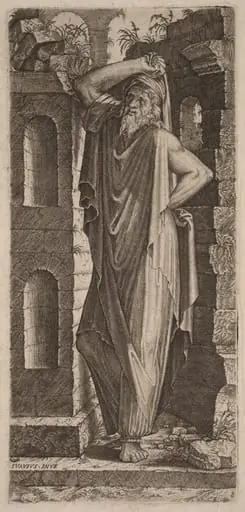
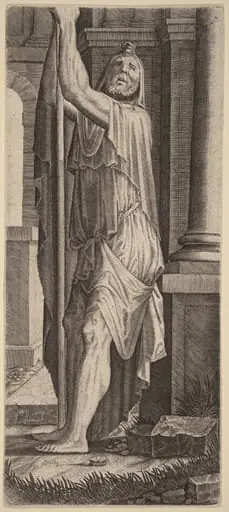
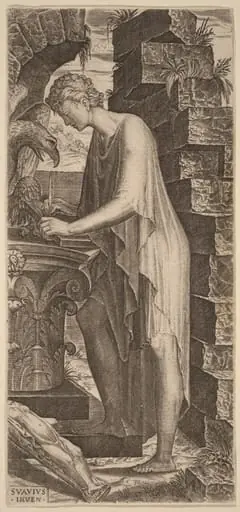
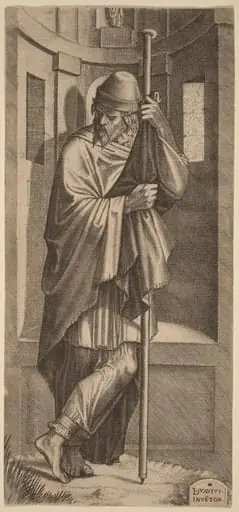
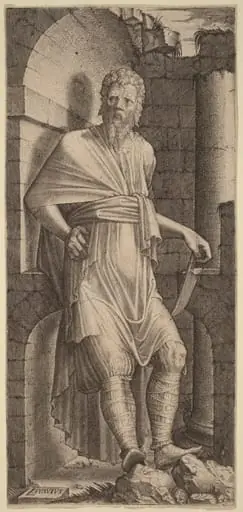
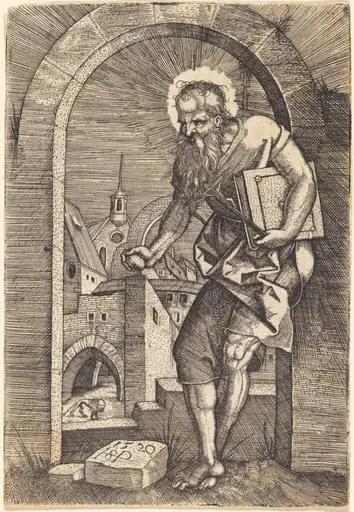
Saint Simon is an ink print by the Renaissance artist Lambert Suavius. It dates from 1545 and is held in the collection of the National Gallery of Art.
About this work
Overview
Created in 1545 by Lambert Suavius, this engraving on laid paper depicts Saint Simon, one of the twelve apostles.
Created in 1545 by Lambert Suavius, this engraving on laid paper depicts Saint Simon, one of the twelve apostles. Produced as a devotional image, it was likely intended for inclusion in printed religious texts. The work demonstrates the precision of early printmaking, with fine lines carved into a metal plate and transferred to paper through inked pressure, a technique common in mid-16th-century Northern Europe.
Subject & Meaning
Saint Simon is portrayed standing, holding a book—symbolizing his teachings—and a saw, an attribute tied to his traditional martyrdom by being sawn apart. The tool’s realistic, almost utilitarian appearance contrasts with the saint’s halo and robes, grounding the sacred figure in tangible human experience. This blend of symbolism and naturalism reflects a shift toward more relatable representations of saints in Protestant and Catholic devotional culture.
Technique & Style
Suavius employed fine-line engraving to render subtle textures: the folds of fabric, the grain of the book, and the wrinkles on Simon’s face. The metal plate was incised with a burin, then inked and pressed onto damp paper, yielding crisp, detailed impressions. The restrained use of tone and emphasis on linear clarity reveal a mastery of the medium, characteristic of skilled printmakers working in the decades after Dürer.
History & Provenance
The print originates from a period when religious imagery was widely disseminated through printed books, especially in regions affected by the Reformation. While specific early ownership records are scarce, similar engravings by Suavius appear in devotional collections from the mid-1500s. The work’s survival suggests it was valued for personal or communal worship, rather than as a standalone artwork.
Context
In the 1540s, religious prints served both instructional and contemplative roles, particularly as the Church and reformers alike recognized the power of images for teaching doctrine. Suavius’s depiction of Saint Simon aligns with contemporary efforts to visualize apostolic figures with recognizable attributes, helping viewers connect with biblical narratives through familiar, humanized forms amid shifting theological landscapes.
Legacy
Though Lambert Suavius is not widely known today, his engravings contribute to a broader understanding of how religious imagery was produced and consumed in the 16th century. This print exemplifies the quiet, detailed craftsmanship that sustained devotional practice beyond grand altarpieces, preserving a visual language that bridged the sacred and the everyday in early modern Europe.
Artist & collection