Artwork
Anno Domini MCMXVI Post Christum Natum
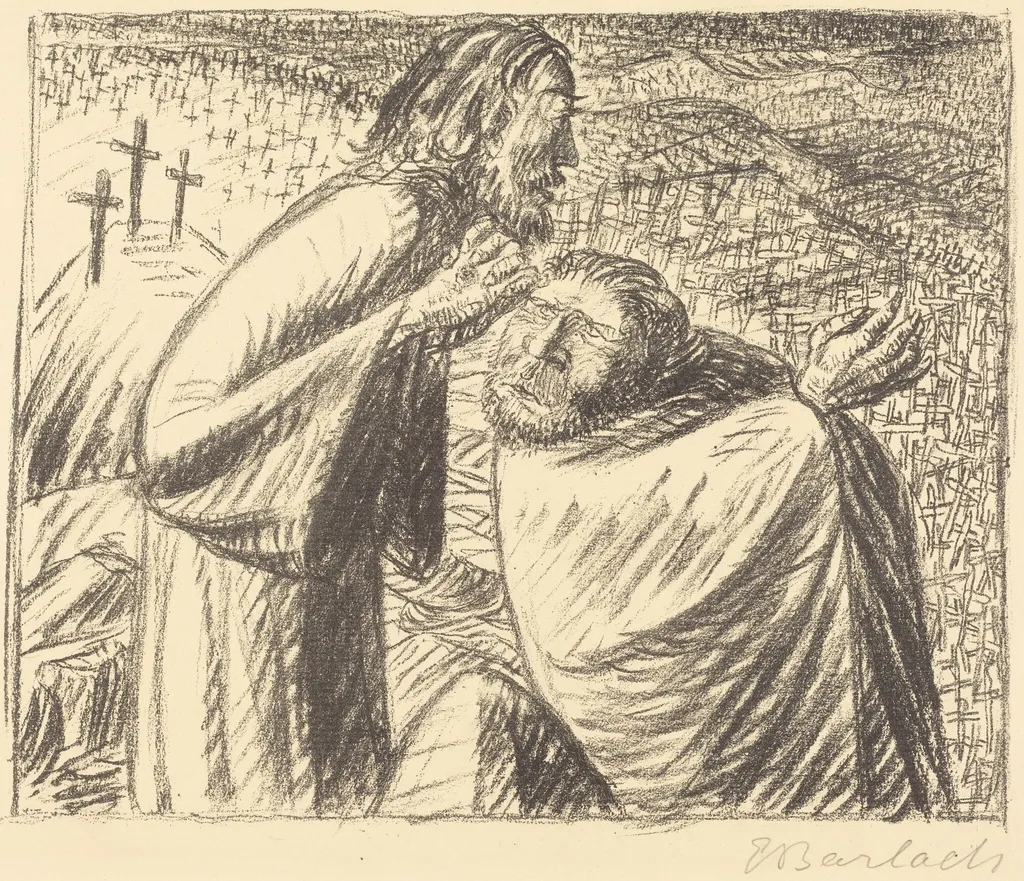
Anno Domini MCMXVI Post Christum Natum is an ink print by Ernst Barlach. It dates from 1916 and is held in the collection of the National Gallery of Art.
About this work
Overview
Its somber tone and restrained palette reflect a moment of personal and cultural reckoning, distinct from his earlier, more nationalistic views.
Ernst Barlach produced this lithograph in 1916, during the height of World War I. As a German artist engaged in multiple media, he used printmaking to explore spiritual and human themes emerging from the war. The work’s title, combining Latin liturgical phrases, signals its religious framing. Its somber tone and restrained palette reflect a moment of personal and cultural reckoning, distinct from his earlier, more nationalistic views.
Subject & Meaning
A bearded figure stands over a prone man, hands resting gently on the latter’s head, as if offering solace or prayer. Behind them, a row of wooden crosses marks a burial ground. The composition evokes a quiet ritual—perhaps a blessing for the dead, or a moment of mourning. The absence of violence or spectacle shifts focus to dignity in death, suggesting spiritual continuity amid the war’s carnage.
Technique & Style
Barlach employed lithography to achieve soft gradations of gray and deep shadow, enhancing the work’s meditative mood. Lines are deliberate but not aggressive; forms are simplified yet emotionally resonant. The blending of Realist detail—like the texture of fabric and cross shapes—with Expressionist distortion in posture and scale creates a tension between the earthly and the transcendent.
History & Provenance
Created in 1916, the print emerged from Barlach’s personal transformation as he turned against the war’s brutality. It entered the National Gallery of Art’s collection through established acquisition channels, likely as part of broader efforts to document early 20th-century German printmaking. Its preservation reflects its significance within the artist’s evolving oeuvre and the cultural memory of wartime trauma.
Context
In 1916, Germany was deep in war fatigue, and artists like Barlach began questioning patriotic narratives. This work aligns with a growing body of anti-war imagery emerging from the front lines and home front alike. Unlike propaganda art, it avoids heroism, instead focusing on quiet grief and ritual—echoing broader shifts in European art toward introspection and moral inquiry.
Legacy
The lithograph stands as an early indicator of Barlach’s later, more overtly pacifist works. Its restrained emotion and spiritual gravity influenced postwar German artists seeking to reconcile art with human suffering. Though not widely exhibited at the time, its inclusion in major collections has cemented its role as a quiet but enduring testament to the moral weight of loss during the Great War.
Artist & collection
Artist
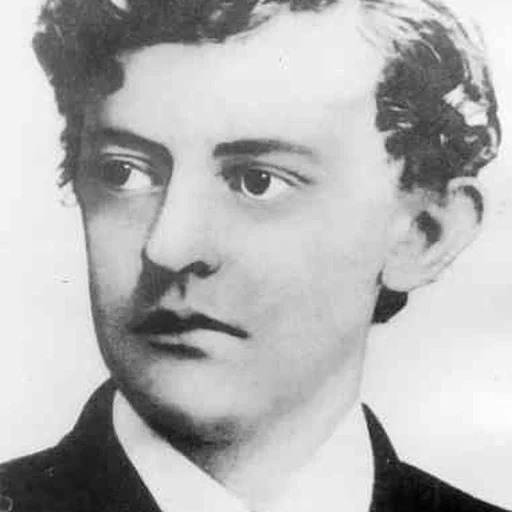
Ernst Heinrich Barlach (2 January 1870 – 24 October 1938) was a German expressionist sculptor, medallist, printmaker and writer.

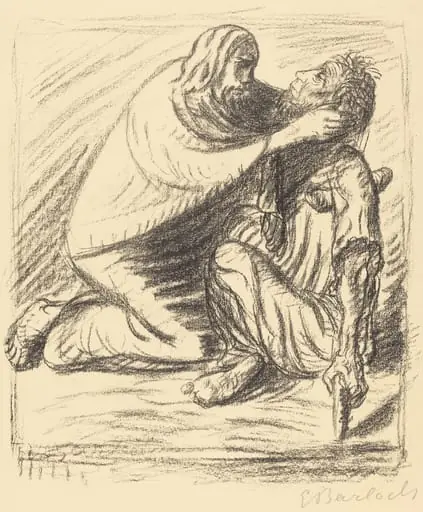 Blessed are the Merciful
 Le Christ portant sa croix (7e planche) (Christ Carrying the Cross) (seventh plate)
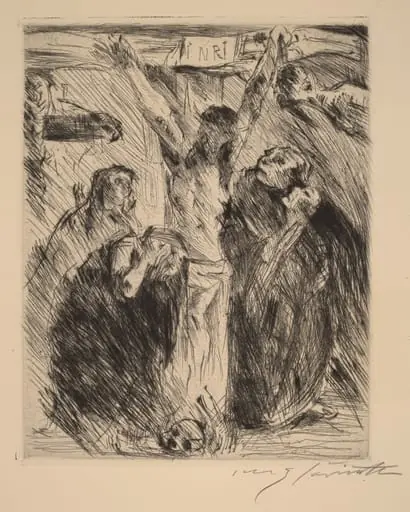 Kreuzigung, nach dem Altarbild in Tölz (Crucifixion, after the Altarpiece at Tölz)
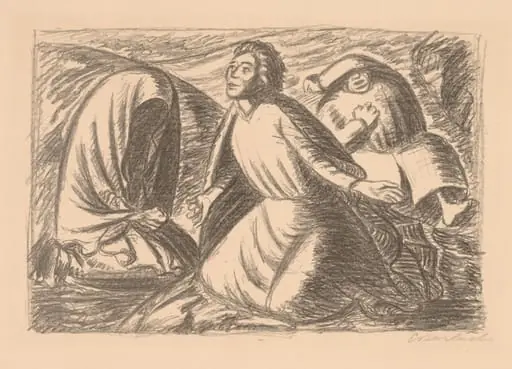 Hope and Despair II
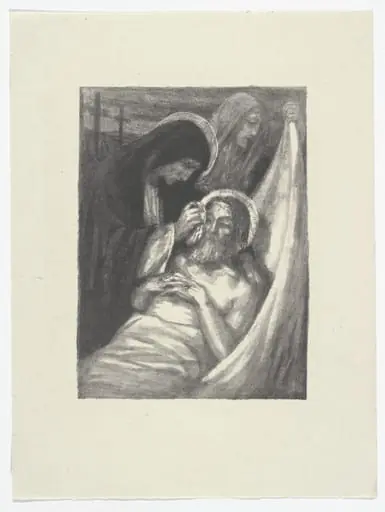 Untitled
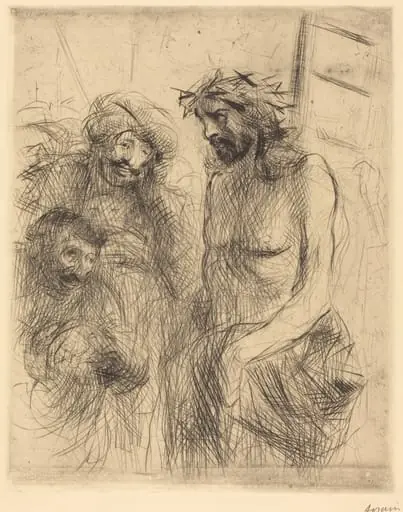 Le Christ aux outrages (The Mocking of Christ)
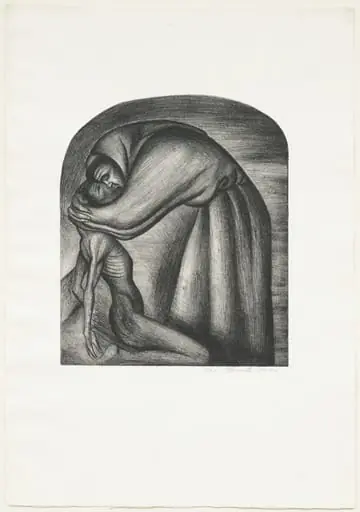 Untitled
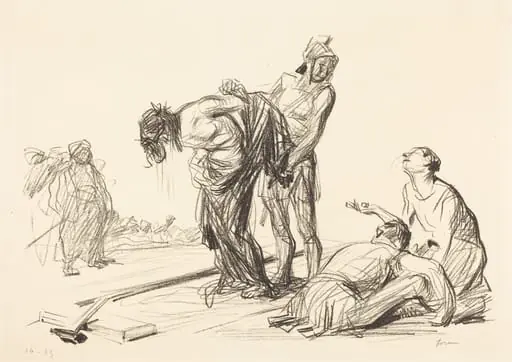 Le Christ dépouillé de se vêtements (Christ Stripped of His Clothes)
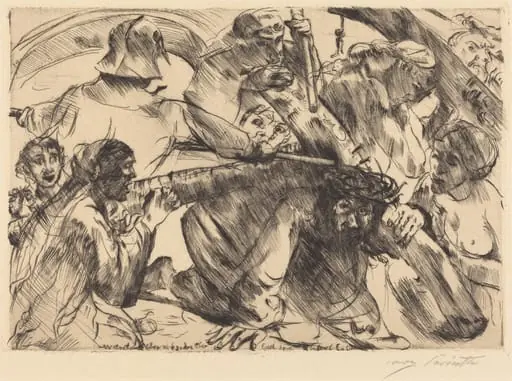 Christ Bearing the Cross (Kreuztragung)
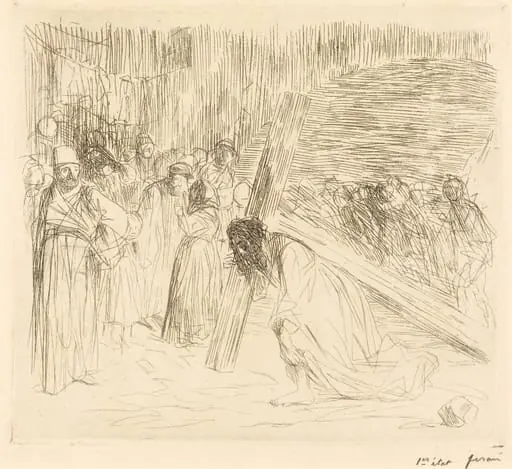 Le Christ portant sa croix (5e planche) (Christ Carrying the Cross) (fifth plate)
 Untitled
 La fraction du pain (The Breaking of the Bread)