Artwork
Untitled
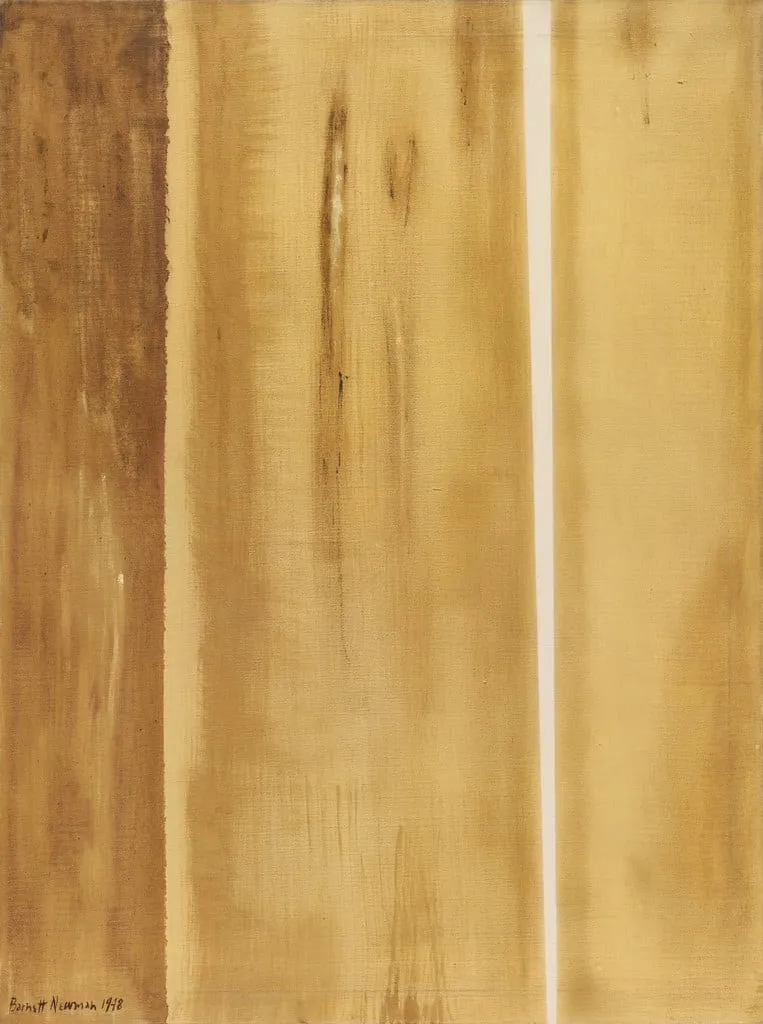
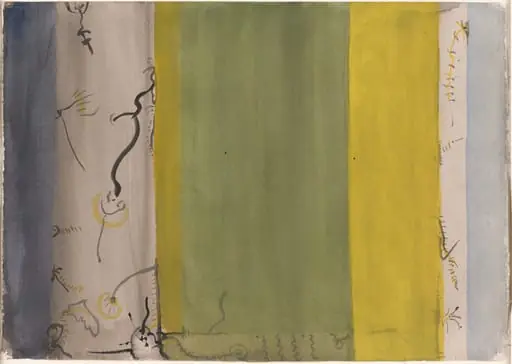
Untitled is an oil painting by the Abstract Expressionist artist Barnett Newman. It dates from 1948 and is held in the collection of the Museum of Modern Art.
About this work
Overview
The composition reduces visual elements to bare essentials, emphasizing spatial tension and material presence over representational content.
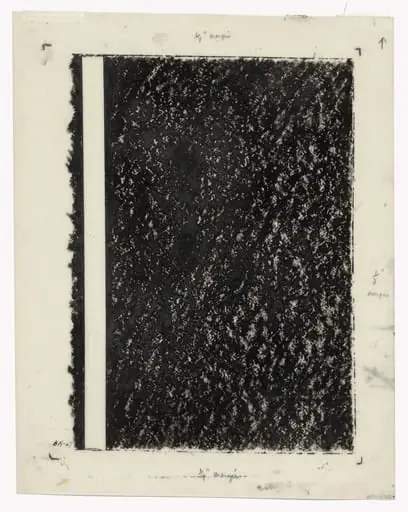
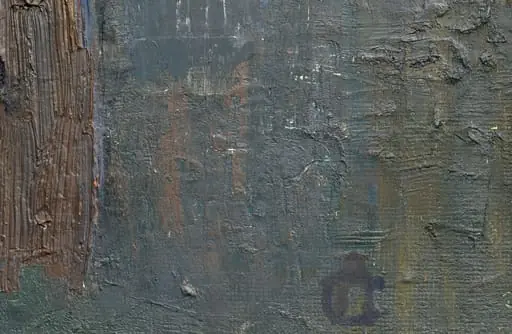
Painted in 1948, this oil on canvas work by Barnett Newman is part of his early exploration into large-scale abstraction. It consists of three vertical panels, with the central one dominated by a single thin vertical line. The composition reduces visual elements to bare essentials, emphasizing spatial tension and material presence over representational content. The painting is held in the collection of The Museum of Modern Art.
Subject & Meaning
The work resists narrative or symbolic interpretation, instead inviting contemplation through its stark geometry. The central vertical line, often called a 'zip,' functions as a structural and spiritual divider, suggesting presence without form. The surrounding fields of brown and yellow evoke atmosphere rather than landscape, creating a meditative space where color and edge become the subject.
Technique & Style
Newman applied oil paint in thin, even layers, allowing the canvas texture to show through in places. The edges of the panels appear deliberately raw, rejecting polished finish in favor of tactile immediacy. The dark vertical line was likely painted with a fine brush or ruler, creating a crisp yet subtle interruption in the pale field. This method reflects his interest in the physicality of paint and the act of marking.
History & Provenance
Created during a period when Newman was refining his signature style, this painting emerged from his shift away from figurative elements toward pure abstraction. It entered The Museum of Modern Art’s collection in the late 1940s, shortly after its completion, reflecting early institutional recognition of his radical approach. Its preservation has allowed ongoing study of his evolving use of scale and color.
Context
In the postwar American art scene, Newman’s work stood apart from the gestural energy of peers like Pollock. His focus on stillness, verticality, and color as emotional carriers aligned with contemporary philosophical interests in existentialism and the sublime. This painting reflects a broader movement toward abstraction as a vehicle for inner experience rather than external representation.
Legacy
This work helped define the color field tradition, influencing later artists who prioritized immersive color and minimal structure. Its quiet intensity challenged conventions of composition and finish, expanding the possibilities of what painting could convey. The 'zip' became a recurring motif in Newman’s oeuvre and a touchstone for discussions on abstraction’s capacity for resonance.
Artist & collection
Artist
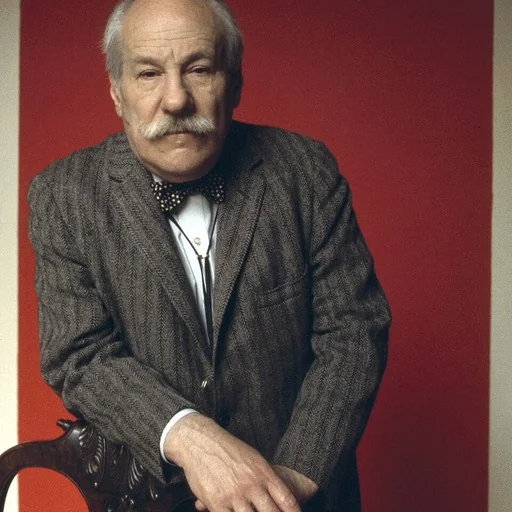
Barnett Newman (January 29, 1905 – July 4, 1970) was an American painter. He has been critically regarded as one of the major figures of abstract expressionism, and one of the foremost color field painters. His…




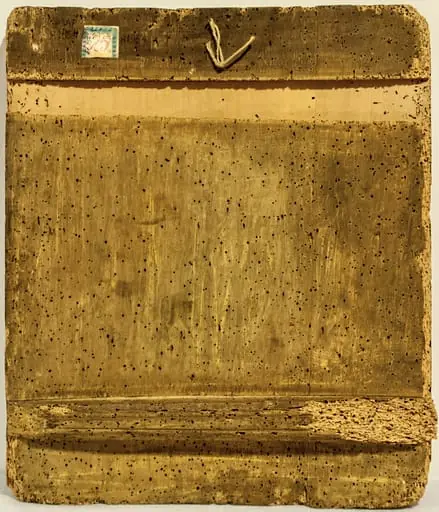 Suprafața icoanei este împărțită în trei registre suprapuse, de dimensiuni egale, încadrate în chenare(unul lat și două înguste). În registrul superior sunt redați, 3/4: Maica Domnului a Patimilor (cu 7 săbii înfipte inimă), Sfântul Nicolae și Sfântul Haralambie; Aureolele trasate cu o linie îngustă depășesc linia chenarului. Registrul II: Sfinți trei ierarhi - Grigore Bogoslov, Vasile cel Mare și Ioan Zlotoust ( în dialog, ținând Evanghelii în mână), veșminte arhierești. Central este redată Învierea, în reprezentarea iconografică a creștinilor ortodocși a coborârii lui Iisus la Iad, zdrobind prțile acestuia, pentru a salva sufletele binecredincioșilor din gura gheenei(stânga), în fundal, Noe și Ilie. Ultima casetă a acestui registru, Sfântul Daniil având crucea în mâna dreaptă și un rotulus în stânga; Registrul inferior: suită de sfinți: Sf. Muceniță. Elisaveta, Sf. Muceniță. Dotinia(?), Sf. Cuvios Miron, Sf. Muc. Feodor, Sf. Apostol Petru, patriarhul Nifon , Sf. Apostol Pavel, Sf. Prorooc Ioan, Sf. Cuvioasă Ksenia, Sf. Mucenică Ulita și sfântul mucenic Kirik. Fond auriu cu incizii, motive florale ample, borduri perlate la veșminte; Inscripții în dreptul fiecărui personaj și a fiecărei scene, cu litere chirilice. Cromatica: fond auriu (foiță aplicată pe grund), roșu, verde deschis, albastru, alb, negru.
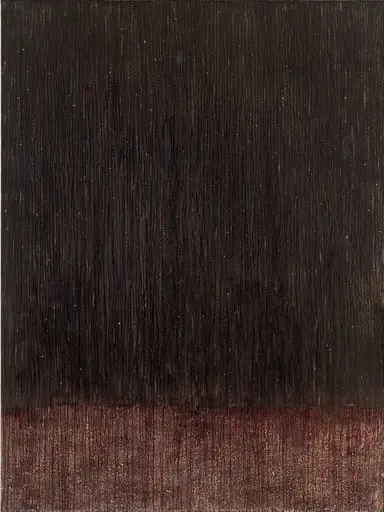 Untitled
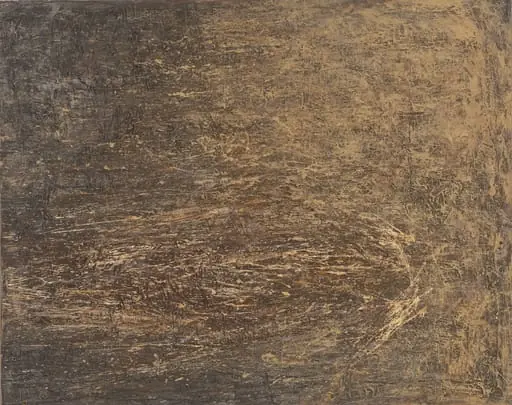 Χωρίς Τίτλο
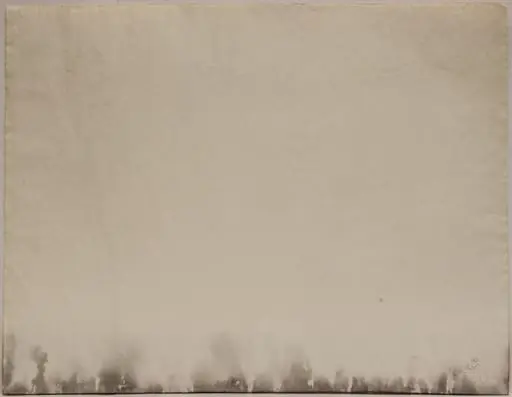 Câmp fertil
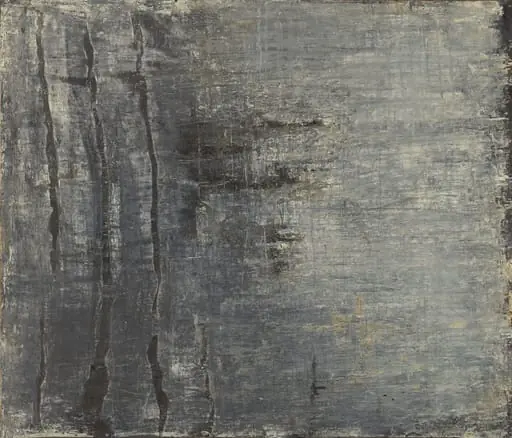 Χωρίς Τίτλο
 Icoae jo
 Untitled
 Untitled
 Piesa este o icoană împărătească ce a fost amplasată în biserică, în cadrul iconostasului sau în interiorul unuei troițe. Sunt redați, conform canoanelor bizantine, sfinții împărați Constatin și Elena, în picioare, sub brațele crucii Răstignirii descoperită de împărăteasa Elena la Ierusalim. Cei doi împărați sunt îmbrăcați în veșminte împărătești, cu coroane pe cap. Împăratul tânăr, cu părul castaniu, ondulat, înveșmântat cu mantie roșie decorată cu motive fitomorfe stilizate, tunică bleu cu galon lat, decorat cu motive fitomorfe. În mâna dreaptă ține un sceptru. Împărăteasa poartă mantie verde și tunica roșie, pe sub coroană o eșarfă albă.În mâna stângă ține cuiele Răstignirii. Pe capătul crucii se află inscripția INRI, iar peste brațele orizontale o eșarfă albă pe care este scris textul "Prin acest semn vei învinge", care i s-a revelat împăratului Constantin. Fond bleu închis, cu o linie de chenar albă, subțire, la fel cu inscripția scrisă în partea de sus. Paleta cromatică este variată, dar nu foarte armonioasă, culorile reci. Pictura este realizată de un pictor contemporan cu școală, autorul picturii unor biserici și icoane. Rama este profilată, lată, alcătuită din patru stinghii îmbinate oblic la colțuri, bătută în cuie metalice,culoare brun roșcat. În partea de sus este adăugată o porțiune semicirculară, cu margine din placaj îngust, montat transversal. Pe fondul bleu închis al acesteia este pictat un heruvim cu aripile întinse, chip sobru, cu păr blond, ochi negri, gura roșie. În partea de jos a piesei, două cuie mari de fier cu care era fixată. Face parte din același iconostas sau troiță cu nr. 50546.
 PEISAJ CU CAI