Artwork
Bisham Abbey, on the Thames
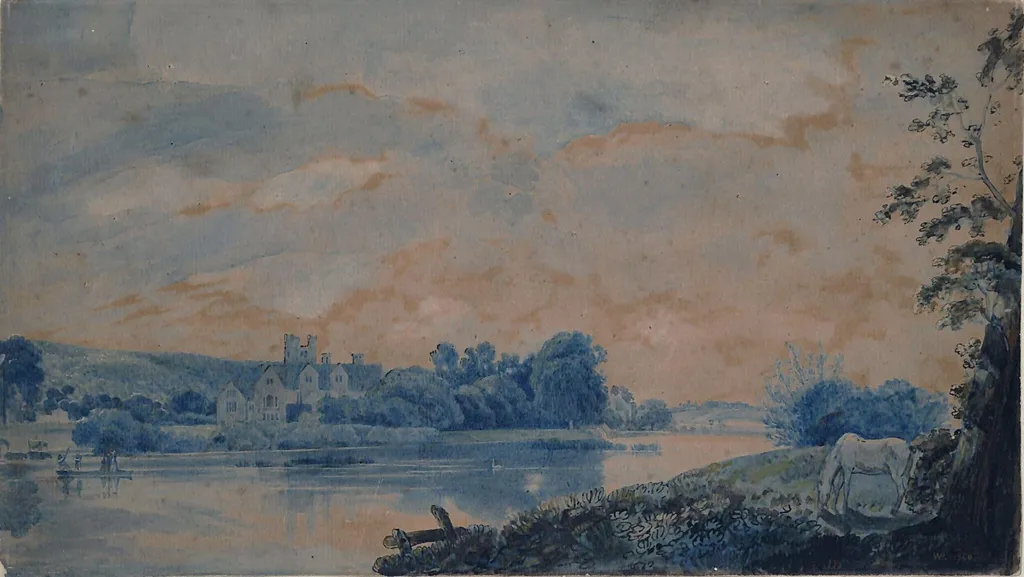
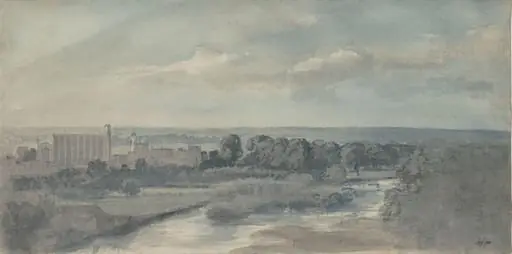
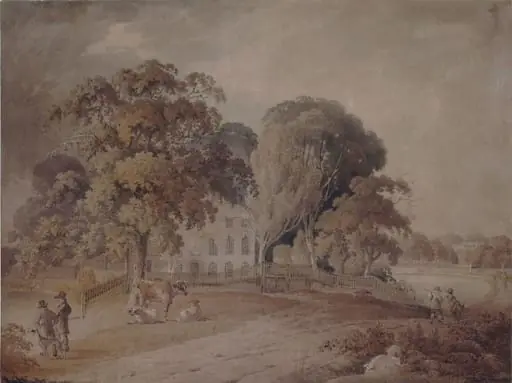
Bisham Abbey, on the Thames is a watercolor work on paper by the Rococo painting artist William Pether. It dates from 1769 and is held in the collection of the Victoria and Albert Museum. Painted in 1769, this watercolour by Pether captures Bisham Abbey on the River Thames with quiet precision.
About this work
Overview
Painted in 1769, this watercolour by Pether captures Bisham Abbey on the River Thames with quiet precision. The work bears the artist’s monogram and the year of completion, anchoring it in the late eighteenth century. Rendered in delicate washes, the scene conveys a tranquil evening atmosphere, emphasizing the interplay of light and landscape rather than architectural detail.
Subject & Meaning
The composition centers on Bisham Abbey, a historic manor house with distinctive towers, positioned along the riverbank. Figures strolling near the shore and a solitary cow grazing by the rocks suggest quiet human and animal presence. The scene avoids grandeur, instead offering a contemplative view of rural life and the enduring presence of the abbey within its natural setting.
Technique & Style
Pether employed loose, translucent watercolour washes to evoke the soft glow of dusk. The sky and water are rendered with fluid, atmospheric strokes, allowing hues to bleed subtly into one another. Branches at the frame’s edges create a natural vignette, while minimal detail in the architecture directs focus toward the fading light and the river’s reflective surface.
History & Provenance
The painting is dated and signed by the artist, indicating it was likely made as a personal record or commissioned view of the estate. Bisham Abbey, long associated with English nobility, was a known subject for topographical artists of the period. The work’s survival suggests it remained in private hands, possibly within local circles connected to the abbey.
Context
Created during the transition from Georgian topography to early Romantic sensibility, the painting reflects a growing interest in landscape as a mood rather than a record. While not overtly dramatic, its emphasis on light and atmosphere aligns with emerging trends that valued emotional resonance over strict documentation of architecture.
Legacy
Pether’s work contributes to a body of Thames valley imagery that documented England’s historic estates through intimate, observational means. Though not widely exhibited in his lifetime, such watercolours laid groundwork for later landscape traditions, influencing how natural light and quiet rural scenes were rendered in British art.
Artist & collection
Artist
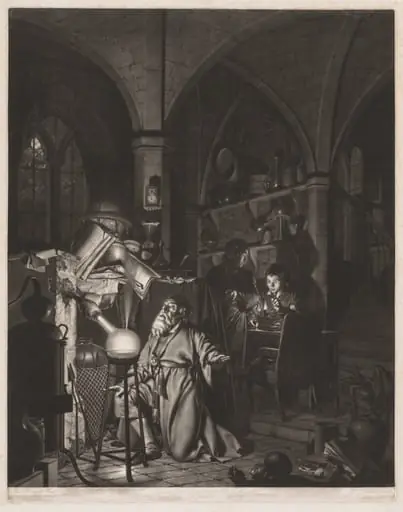
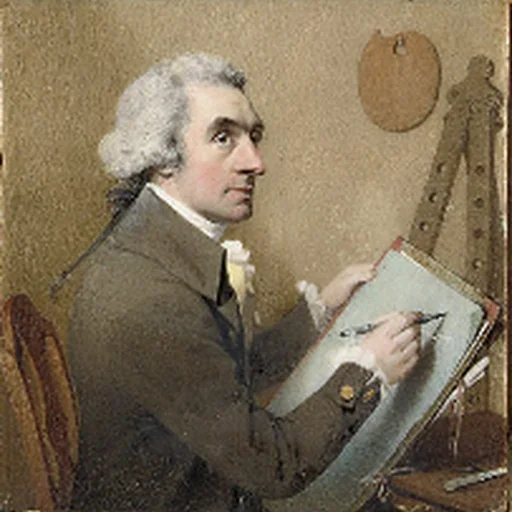
William Pether (c. 1739 – 19 July 1821) was primarily an English mezzotint engraver, but also decorated porcelain, made oil paintings and pastel drawings, and invented gadgets.