Artwork
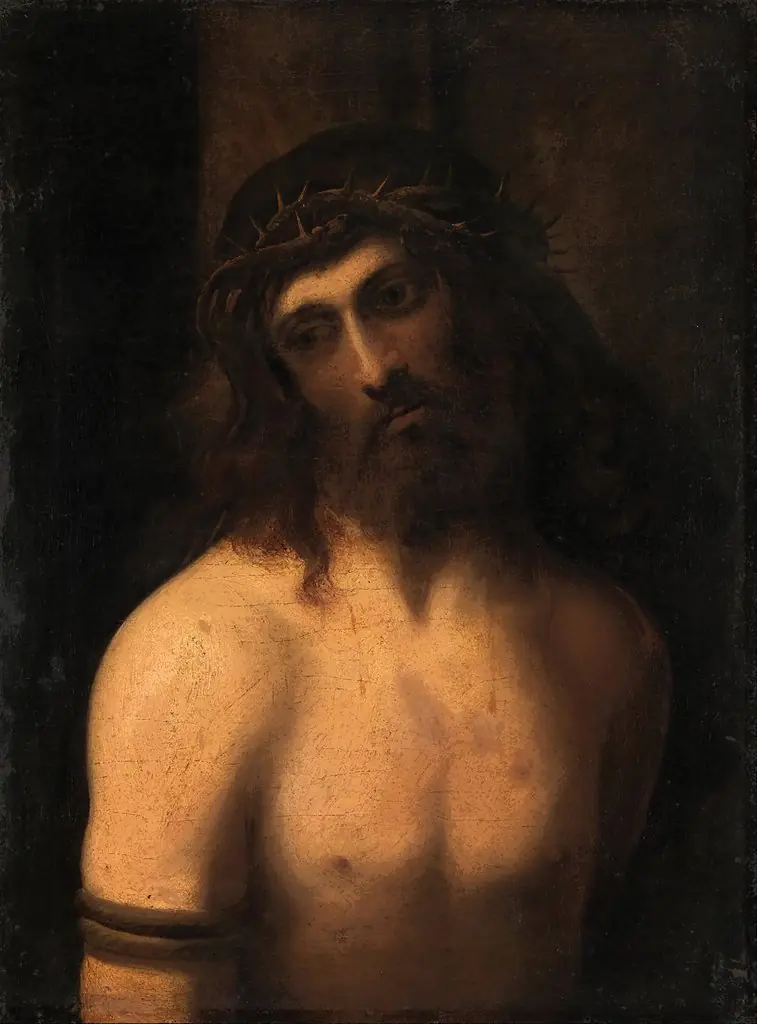
Christ at the scourge column
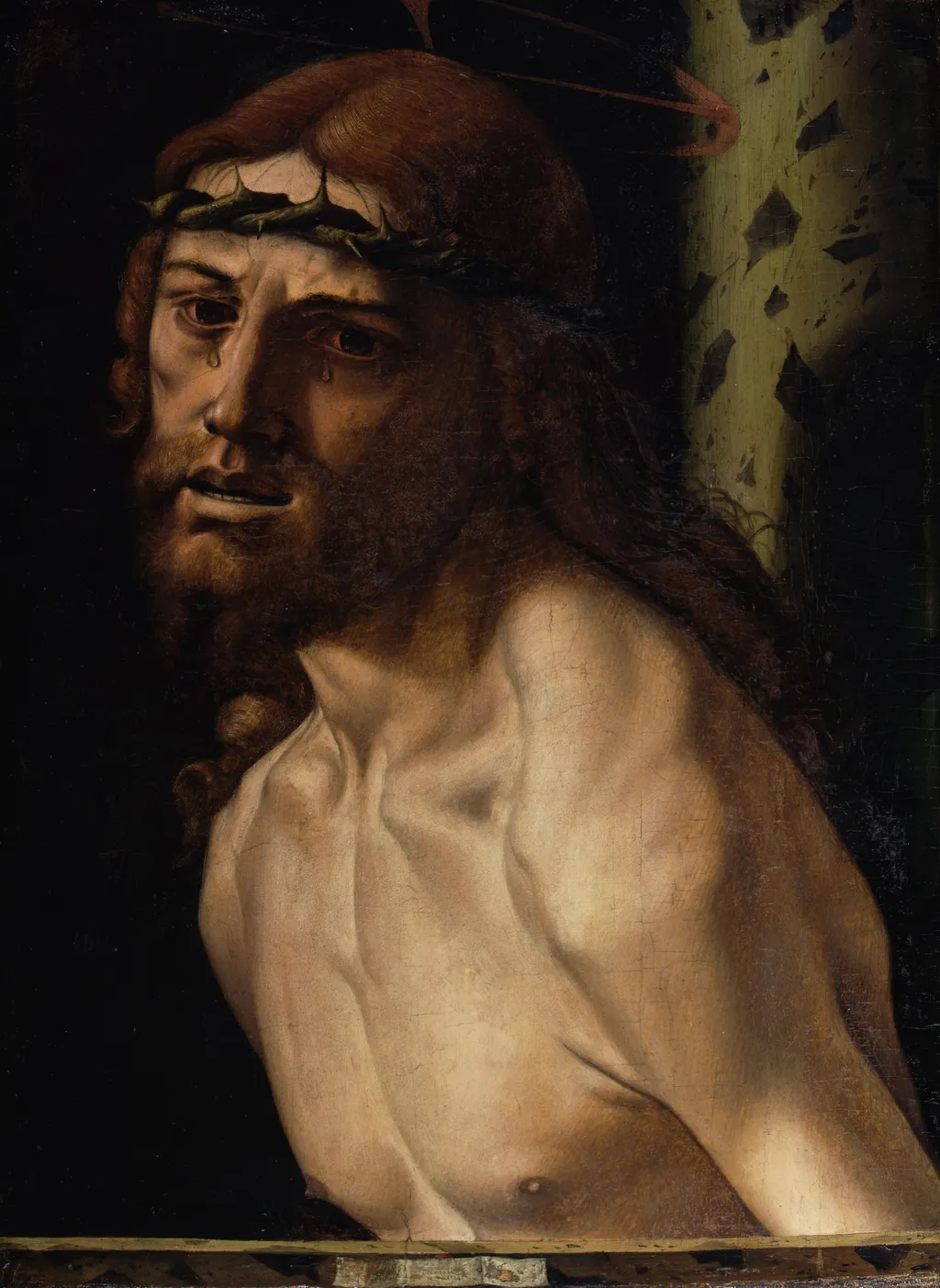
Christ at the scourge column is a paint painting by the Early Renaissance artist Bartolomeo Montagna. It dates from 1499 and is held in the collection of the Gemäldegalerie Berlin.
About this work
Overview
Bartolomeo Montagna’s *Christ at the Scourge Column* is an oil painting executed in 1499. Created during the early Renaissance, the work presents a solitary figure of Christ subjected to flagellation, rendered with a restrained palette and careful attention to form. The painting is part of the Gemäldegalerie’s collection in Berlin, where it is displayed among other works of the period.
Subject & Meaning
The composition portrays Jesus bound to a rough wooden column, his head bowed and crowned with thorns, embodying the moment of his physical suffering before crucifixion. This episode, frequently depicted in late‑medieval and Renaissance art, serves as a visual meditation on sacrifice, redemption, and the human vulnerability of the divine.
Technique & Style
Montagna employs a subtle chiaroscuro, allowing light to strike one side of Christ’s torso and face while deepening the shadows in the hollows, which gives the figure a palpable three‑dimensionality. The soft modeling of flesh and the restrained handling of drapery reflect the influence of Giovanni Bellini, while the inclusion of marble‑like architectural elements hints at the artist’s characteristic spatial constructions.
History & Provenance
Originally produced in Vicenza, where Montagna spent most of his career, the painting entered the German market in the 19th century before being acquired by the Gemäldegalerie, Berlin. Its documented provenance traces a path from private collections in northern Italy to the museum’s holdings, where it has been conserved and studied as a representative example of Montagna’s oeuvre.
Context
Created at the close of the 15th century, the work reflects the broader shift toward naturalistic representation and emotional expressiveness in Italian art.
Created at the close of the 15th century, the work reflects the broader shift toward naturalistic representation and emotional expressiveness in Italian art. Montagna’s synthesis of Venetian colorism, inherited from Bellini, with his own architectural motifs illustrates the cross‑regional dialogues that defined the early Renaissance, positioning the painting within a network of devotional images circulating across northern Italy.
Artist & collection
Artist
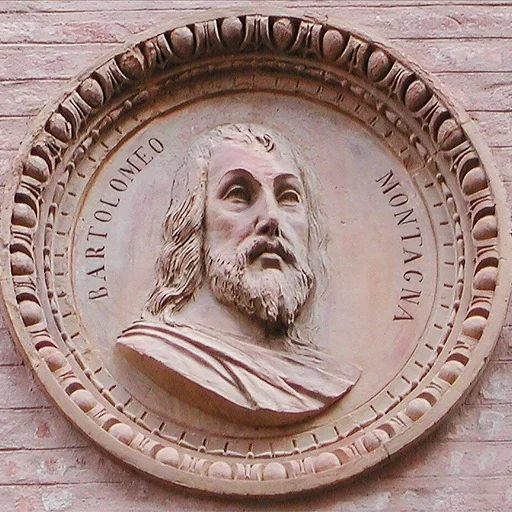
Bartolomeo (or Bartolommeo) Montagna (UK: , US: , Italian: ; 1450?– 11 October 1523) was an Italian Renaissance painter who mainly worked in Vicenza.

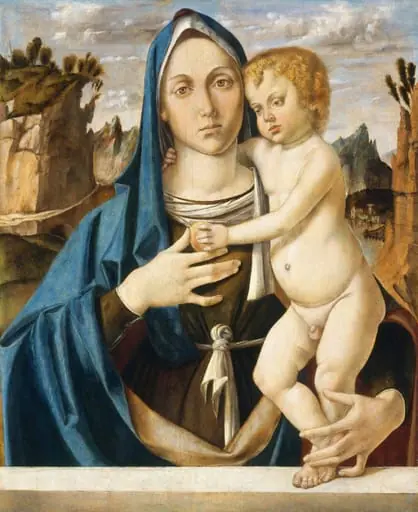 Madonna and Child
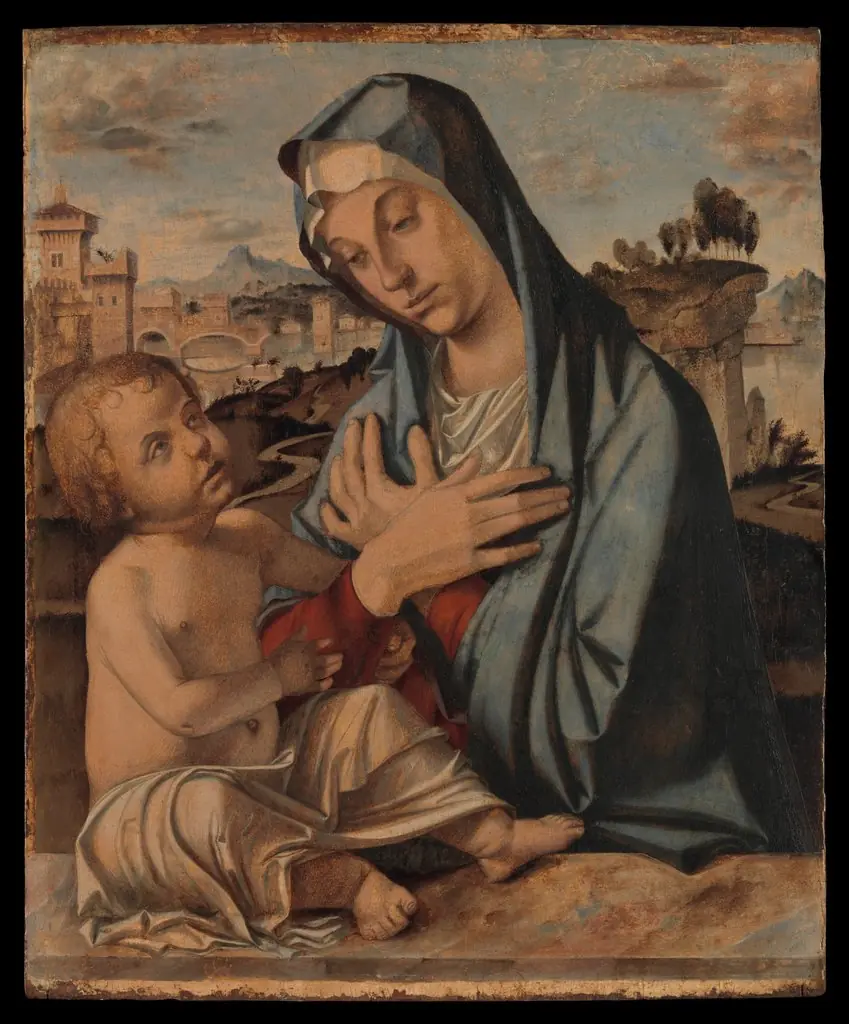 Madonna Adoring the Child
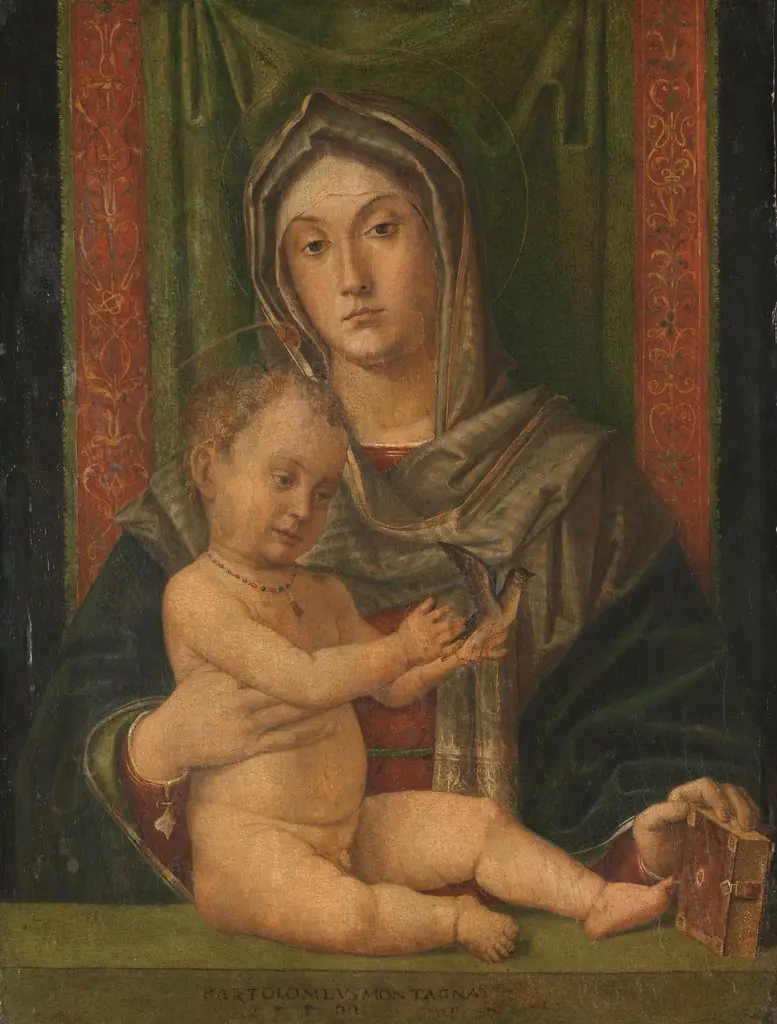 Virgin and Child
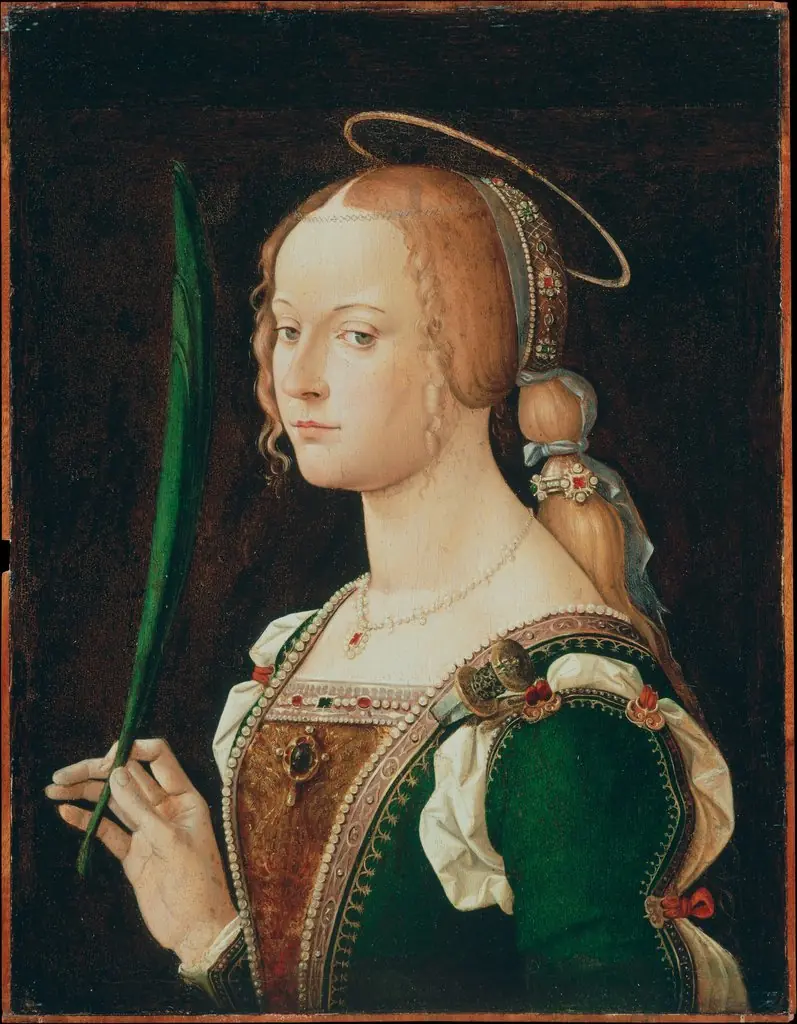 Saint Justina of Padua
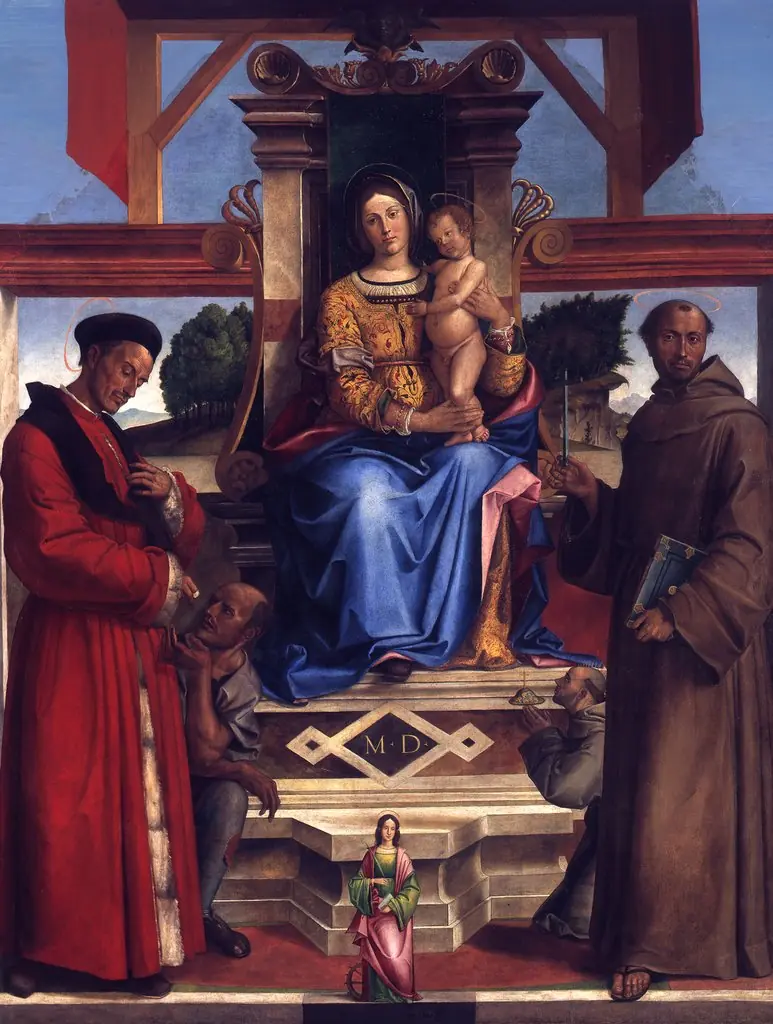 The Virgin and Child Enthroned and St. Homobonus, Francis of Assisi, Catherine of Alexandria and the Donor Bernadino da Feltre (Death 1494)
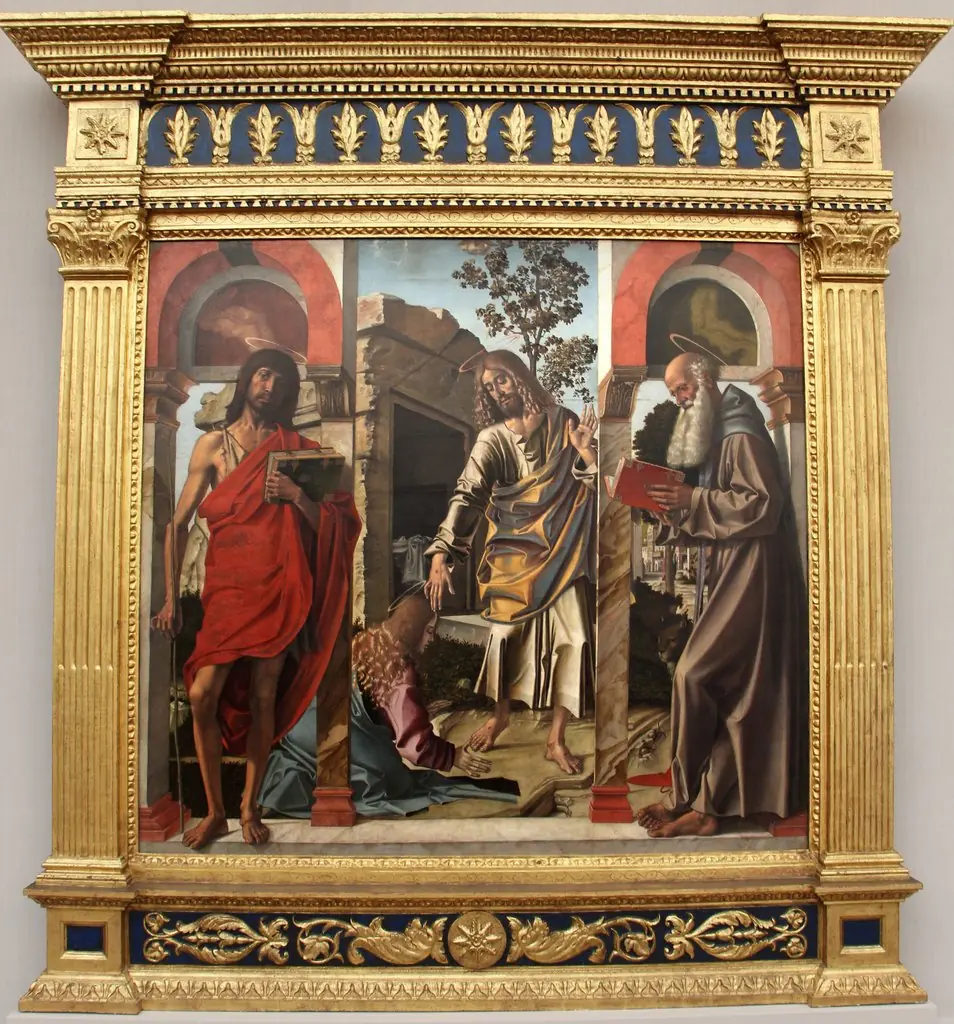 Noli me tangere between Saints John the Baptist and Jeronimo
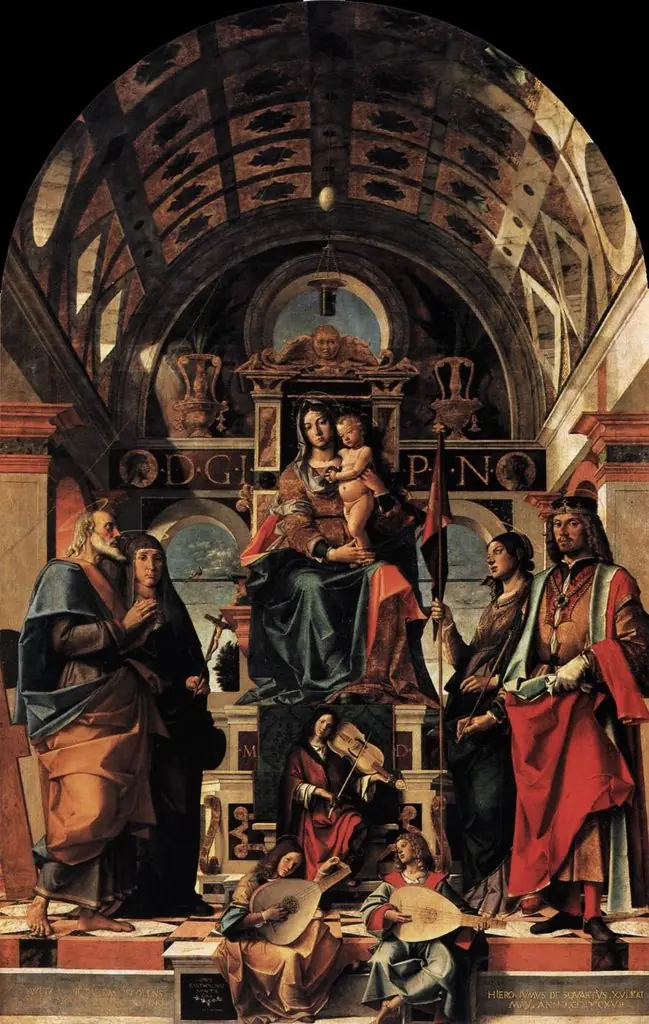 Madonna and Child enthroned with Saints
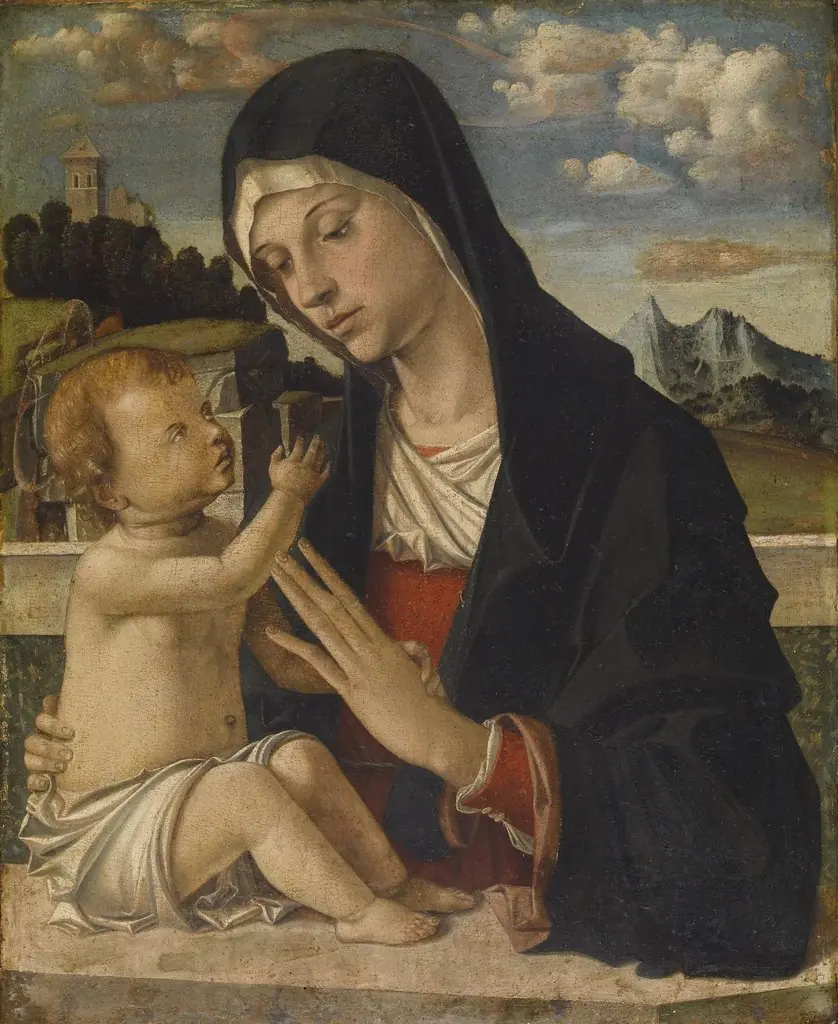 Madonna and Child