Artwork
Ecce Homo
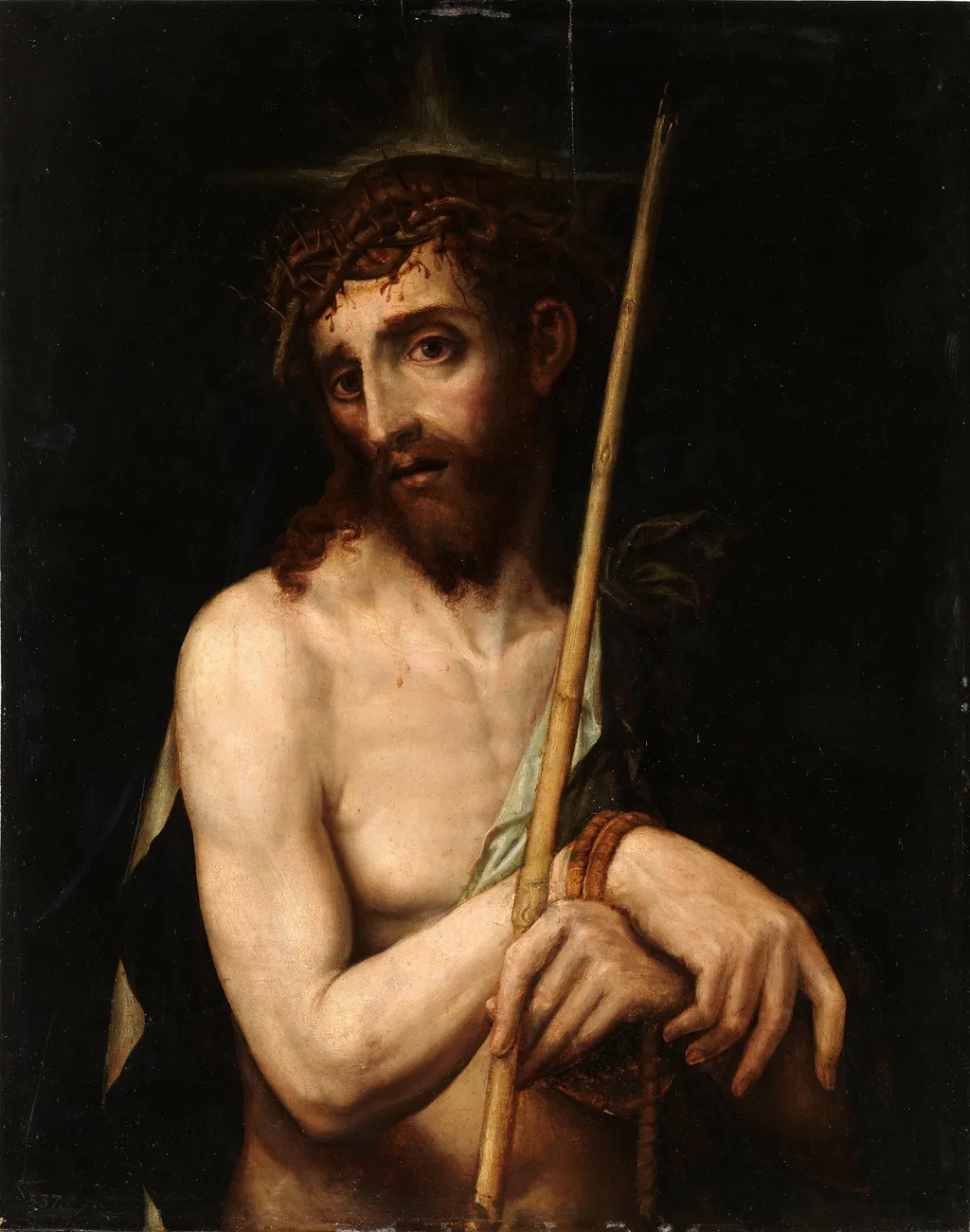
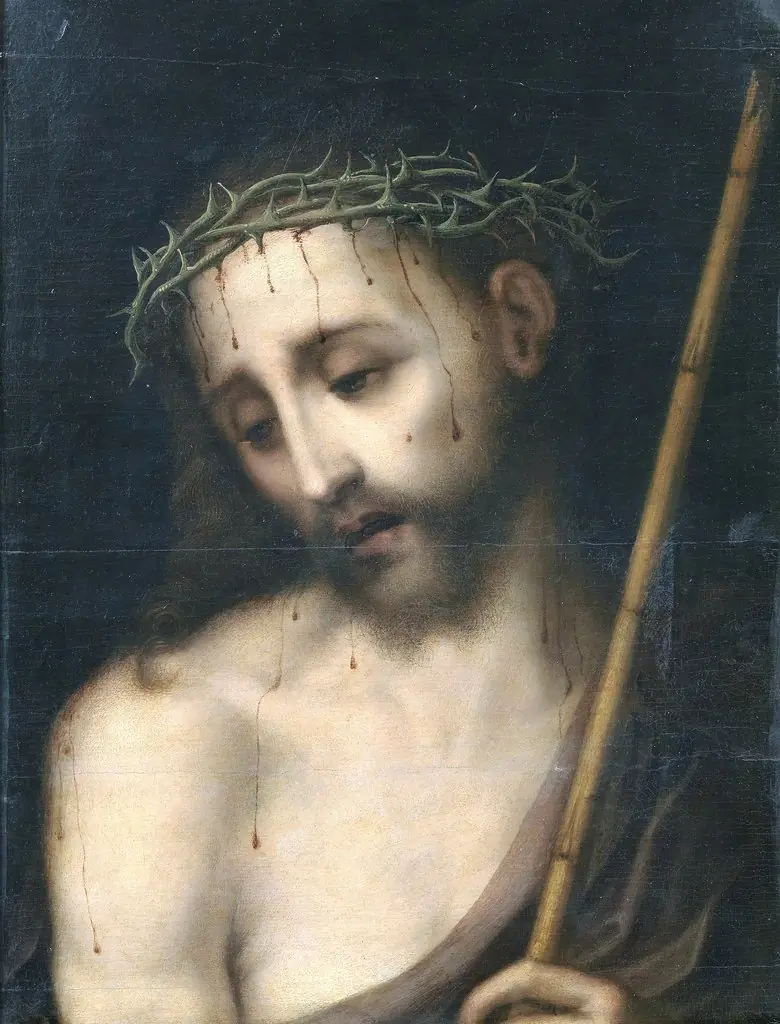
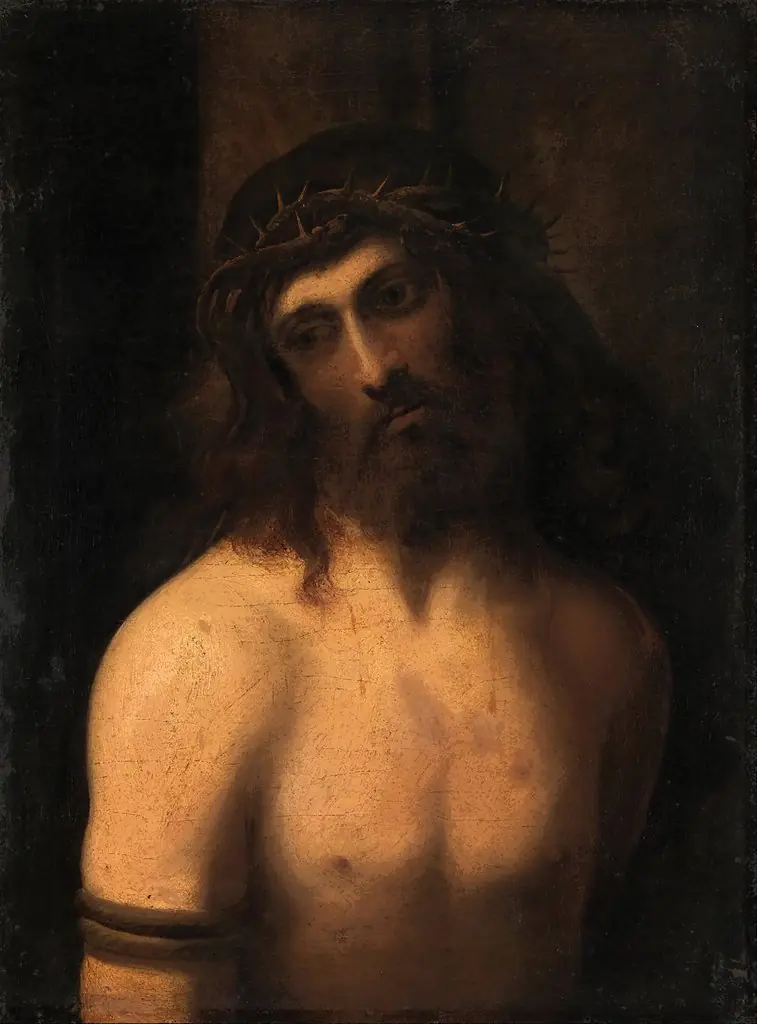
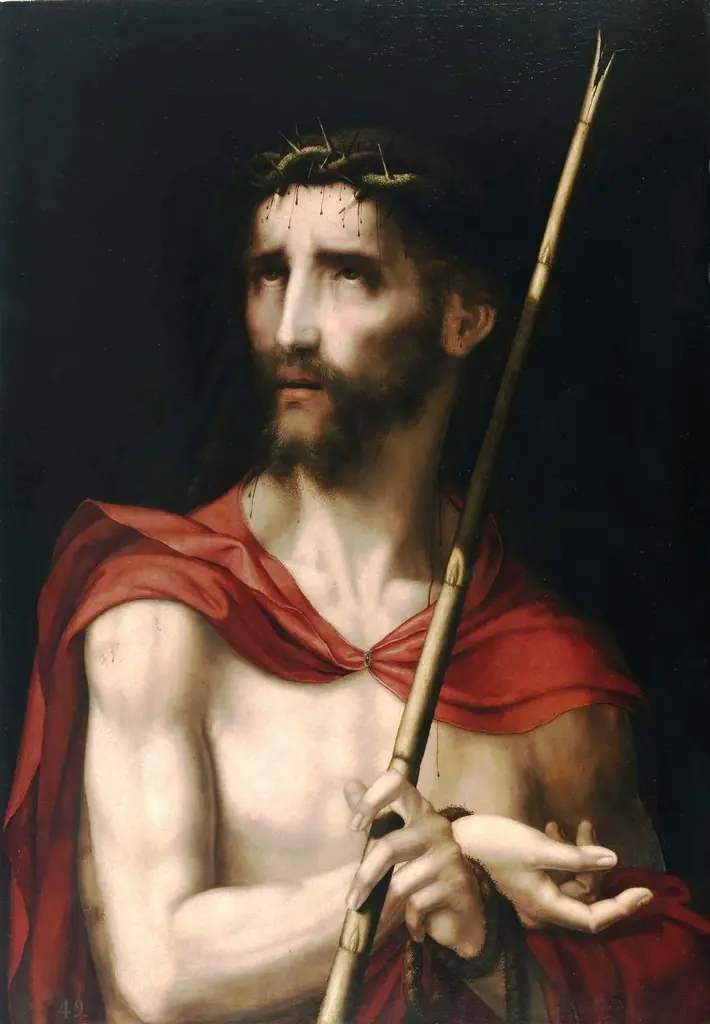
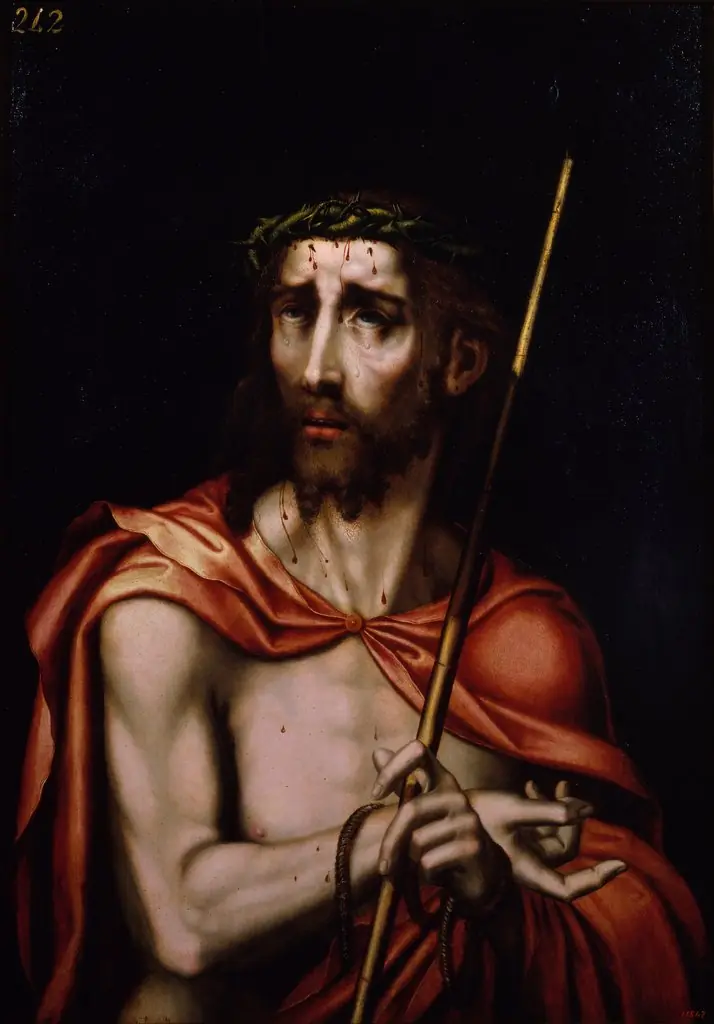
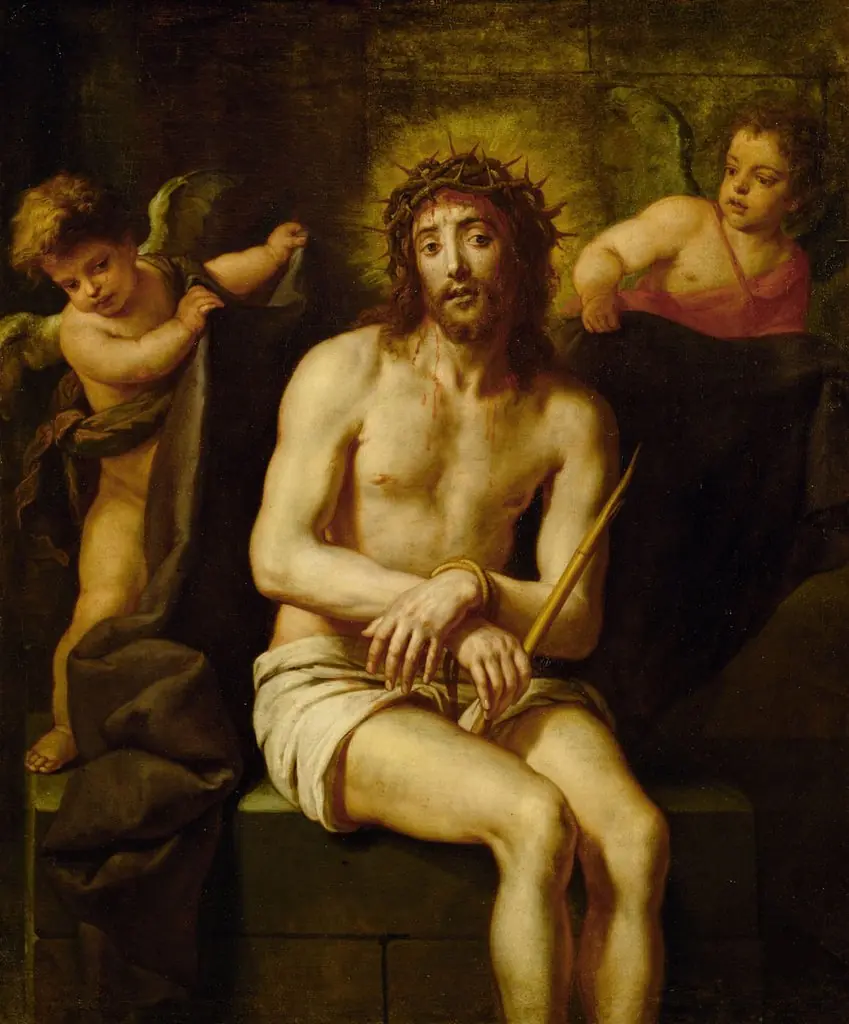
Ecce Homo is an oil painting by the Early Renaissance artist Luis de Morales. It dates from 1501 and is held in the collection of the Museo del Prado.
About this work
Overview
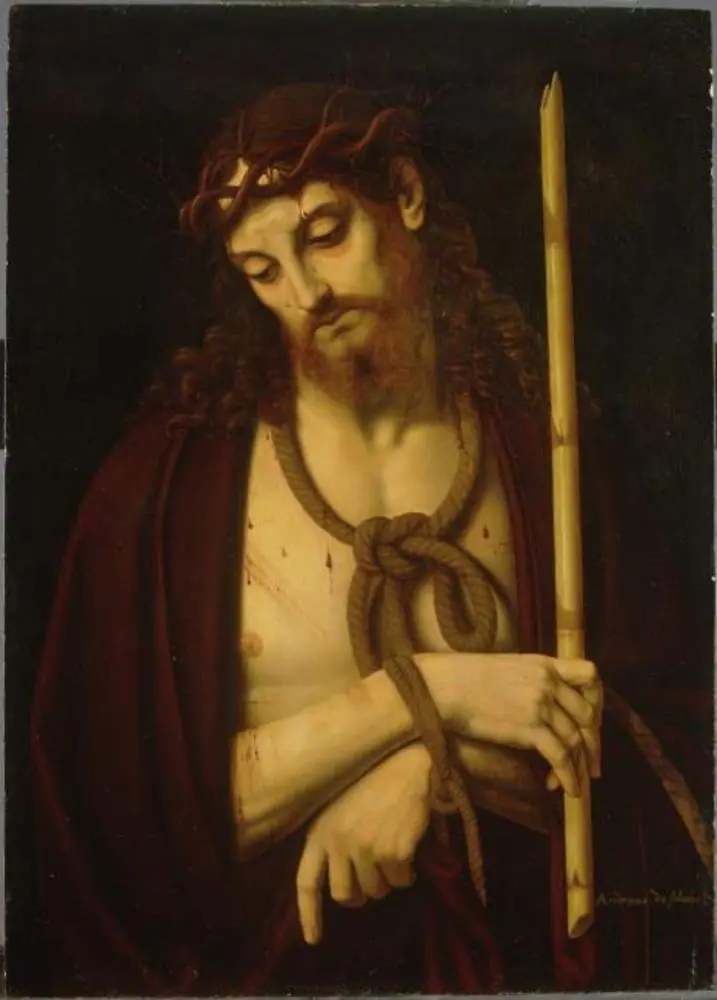
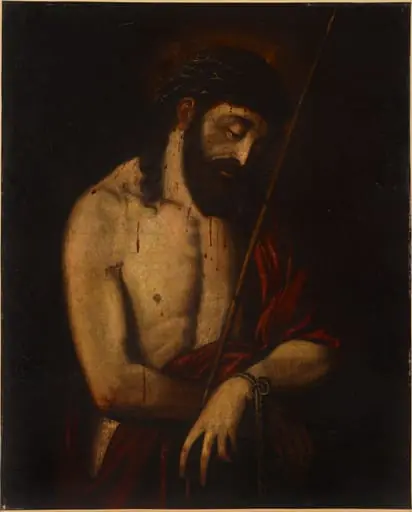
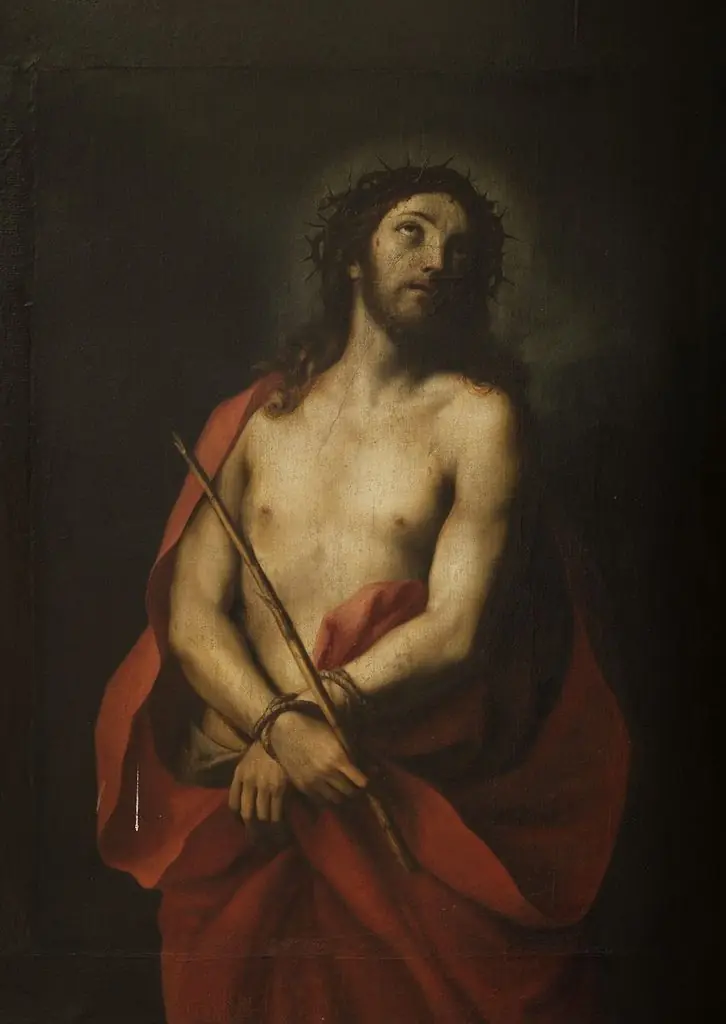
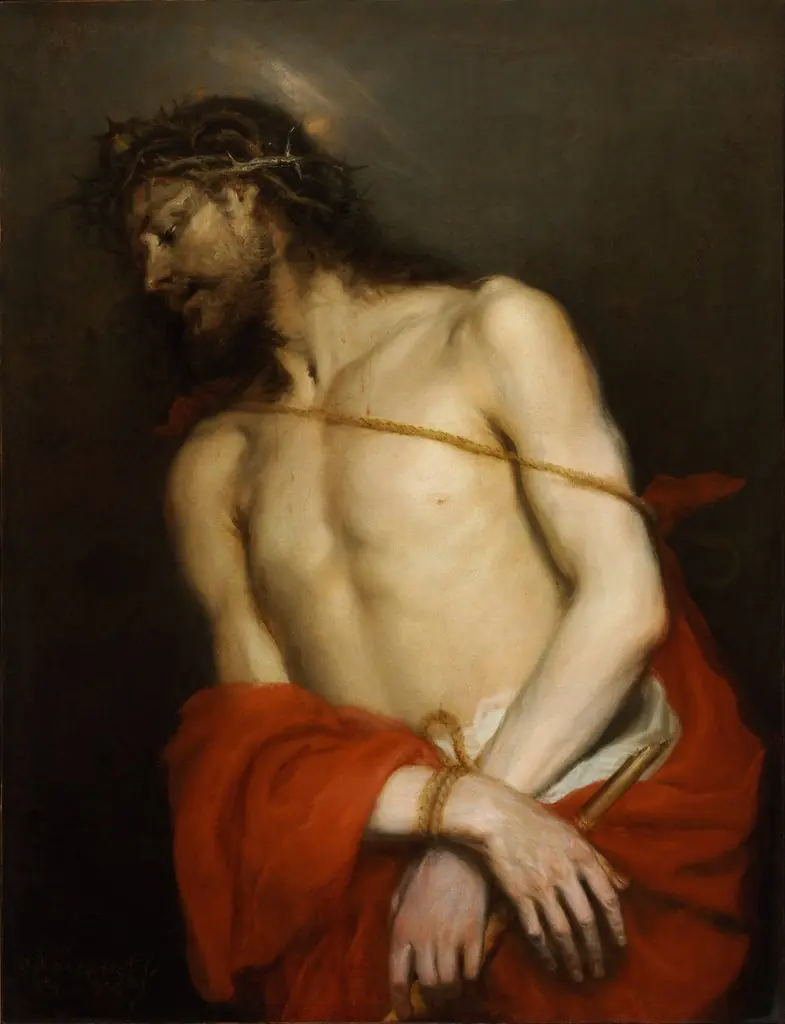
Luis de Morales, a Spanish painter of the early 16th century often called “El Divino,” executed the oil painting *Ec Homo* in 1501. The work belongs to the early Renaissance period and is currently housed in Madrid’s Museo del Prado. It presents a solitary figure of Christ rendered with a solemn, introspective mood.
Subject & Meaning
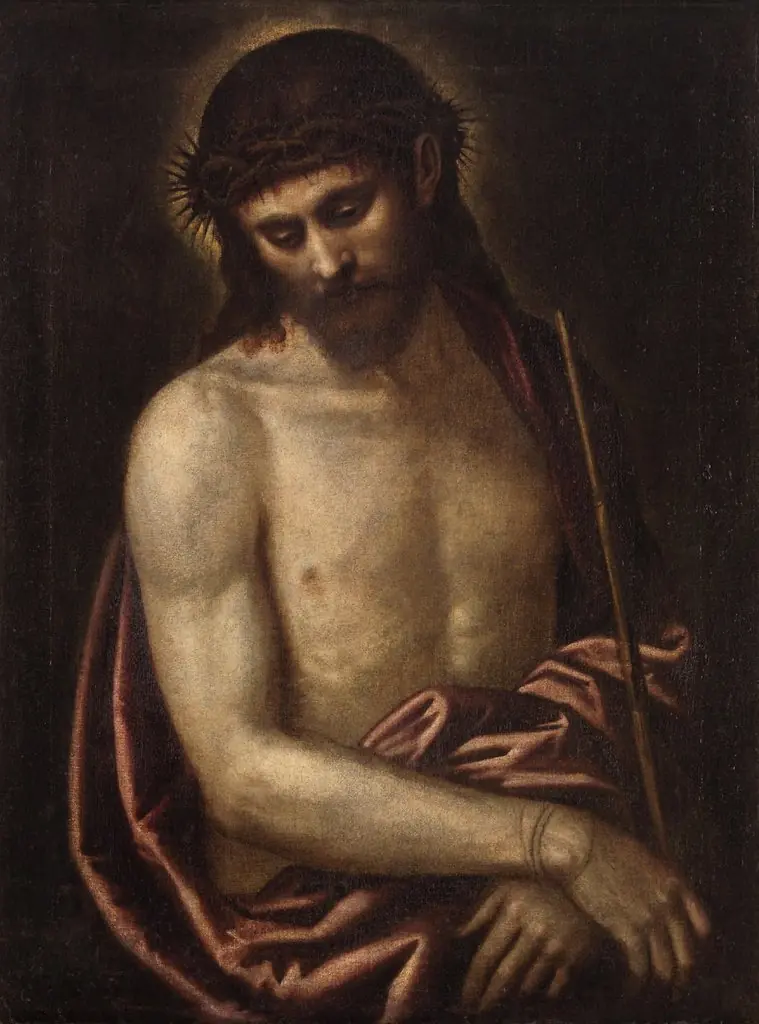
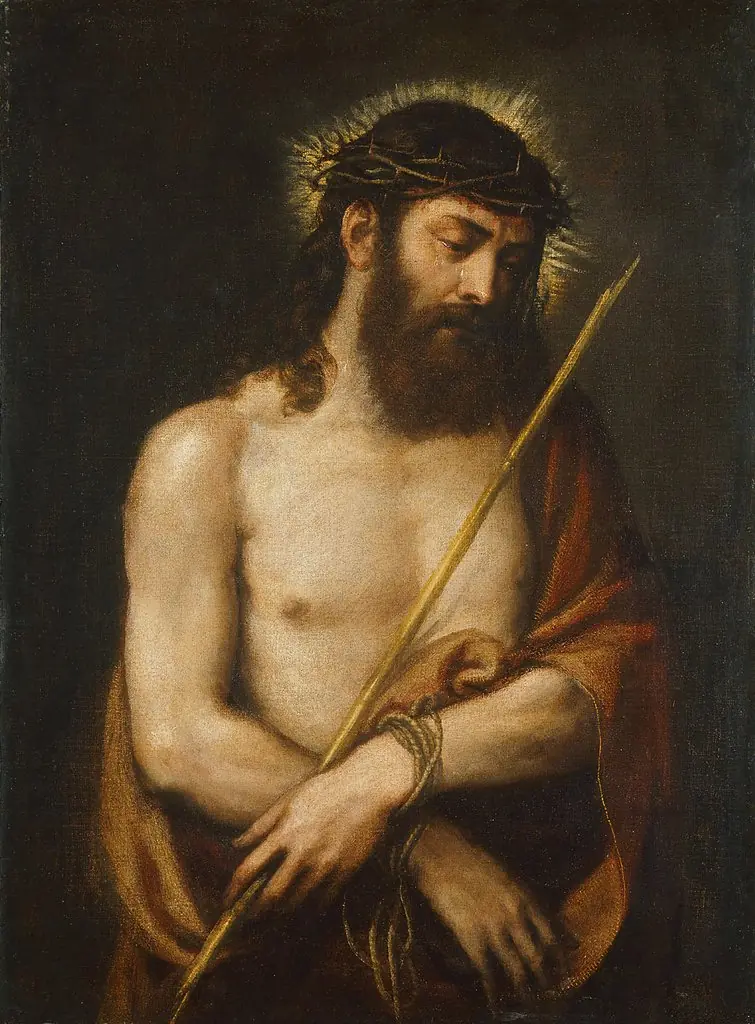
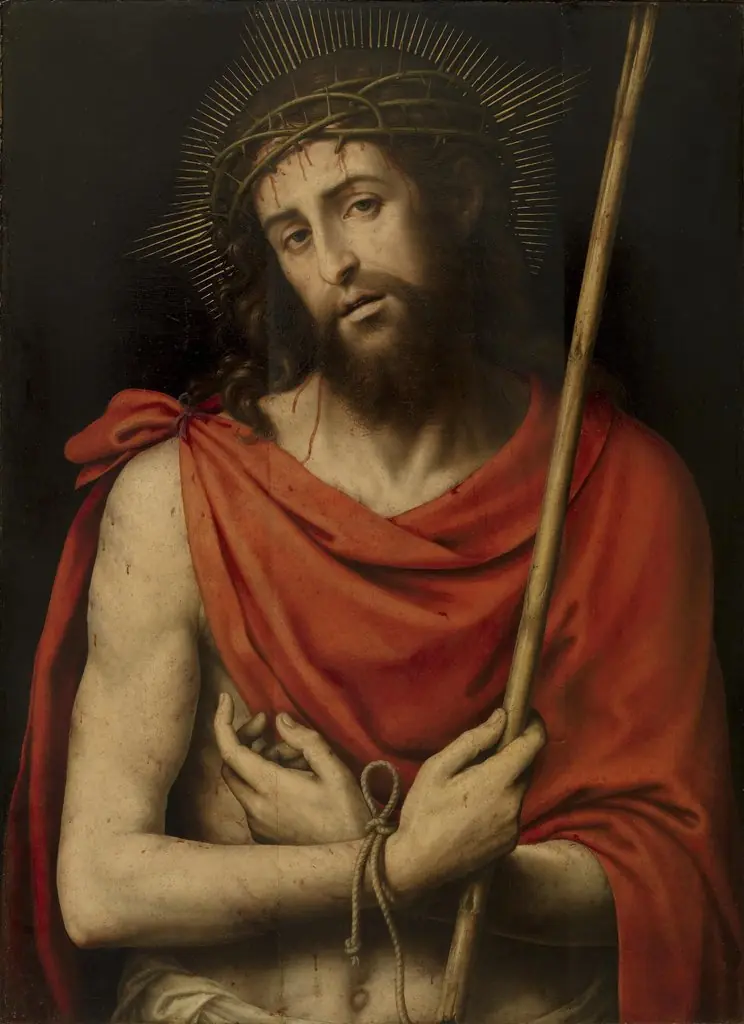
The canvas portrays Jesus crowned with thorns, his torso uncovered and a white cloth draped over his left shoulder. He holds a staff in his right hand, his gaze turned slightly leftward, and his beard and long hair frame a face marked by resignation. The composition emphasizes the suffering and humility associated with the biblical “Ecce Homo” moment.
Technique & Style
Morales employs a pronounced chiaroscuro, juxtaposing deep shadows with illuminated flesh to give the figure a three‑dimensional presence. The dark background recedes, directing focus to the lit central figure. The handling of oil paint shows the influence of Raphael’s compositional balance and the Lombard tradition linked to Leonardo, especially in the subtle modelling of light on skin.
History & Provenance
Created in 1501, the painting entered the Spanish royal collections before being transferred to the Museo del Prado, where it remains on display. Throughout his career Morales was celebrated for devout religious subjects, and *Ec Homo* exemplifies his reputation for spiritually charged imagery within the broader context of Spanish Renaissance art.
Own this work as a print
Artist & collection
Artist
Luis de Morales (1509 – 9 May 1586) was a Spanish painter active during the Spanish Renaissance in the 16th century.