Artwork
Ecce Homo
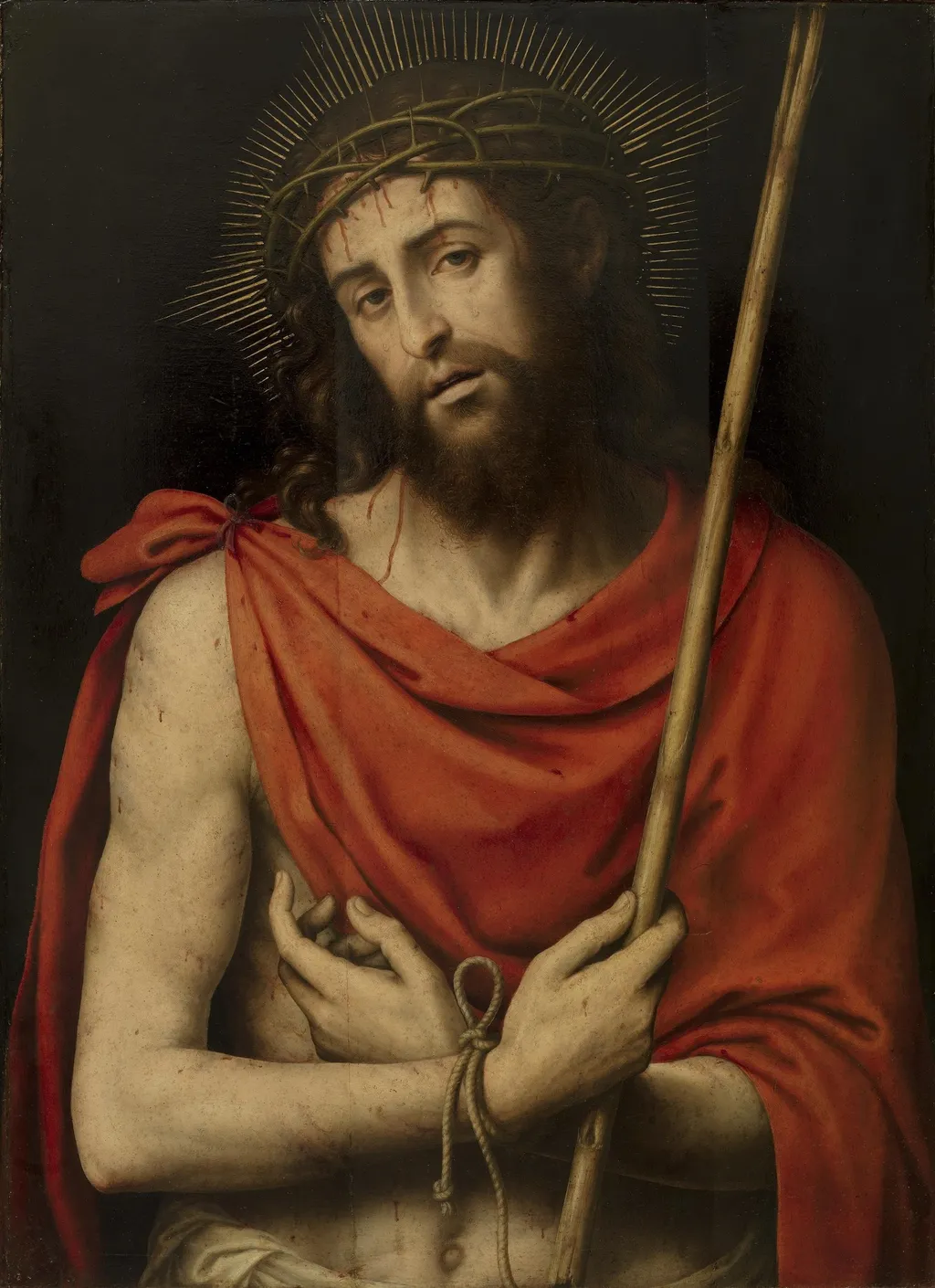
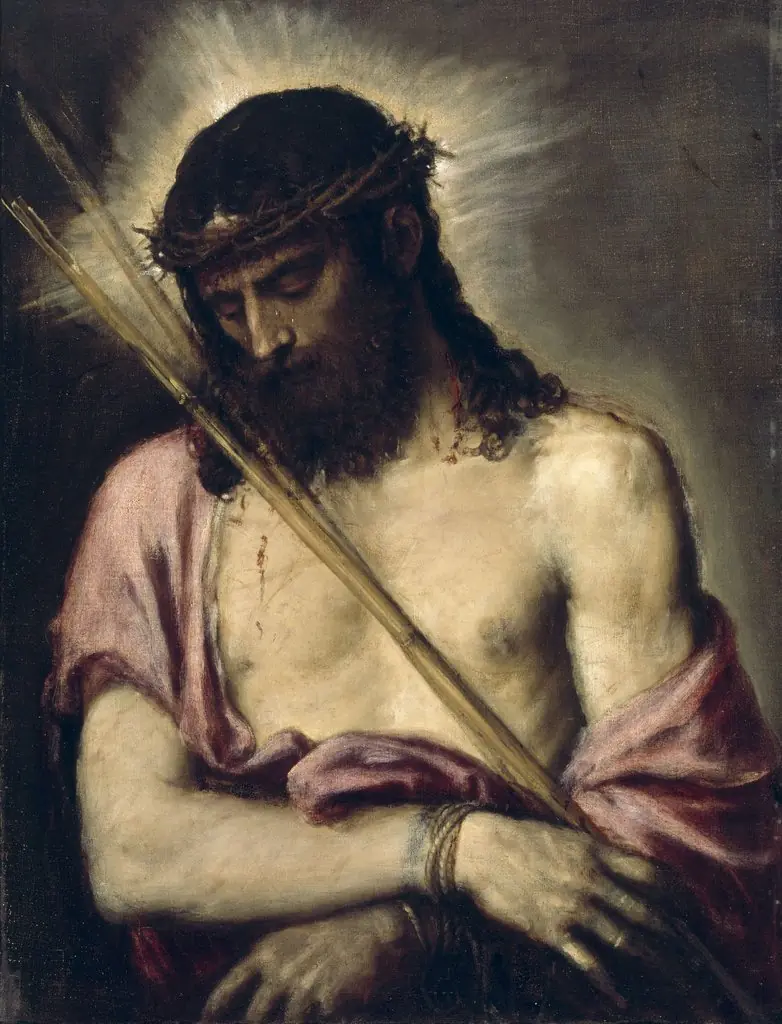
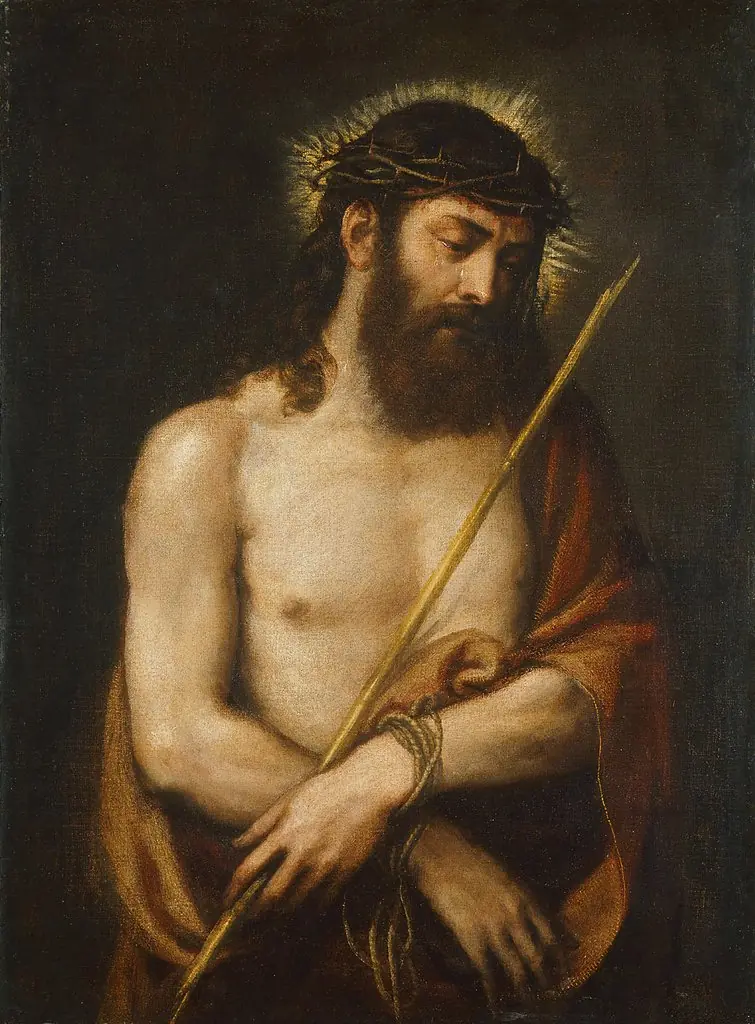
Ecce Homo is an oil painting by the Mannerist artist Juan de Juanes. It dates from 1570 and is held in the collection of the Museo del Prado.
About this work
Overview
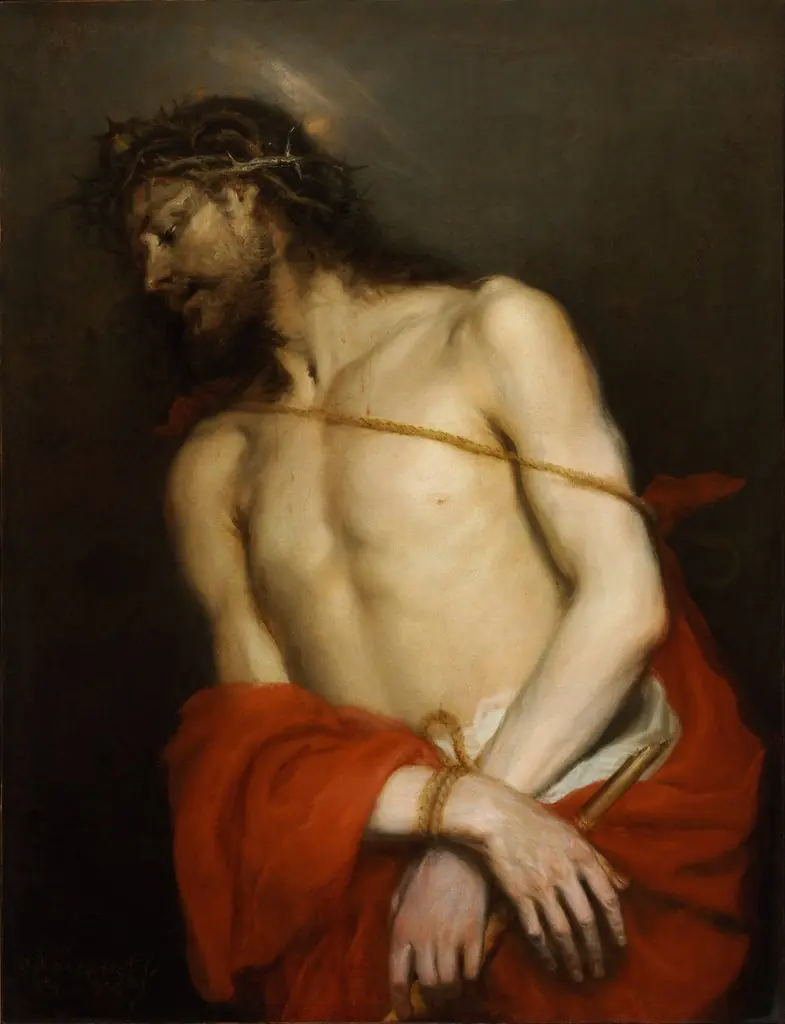
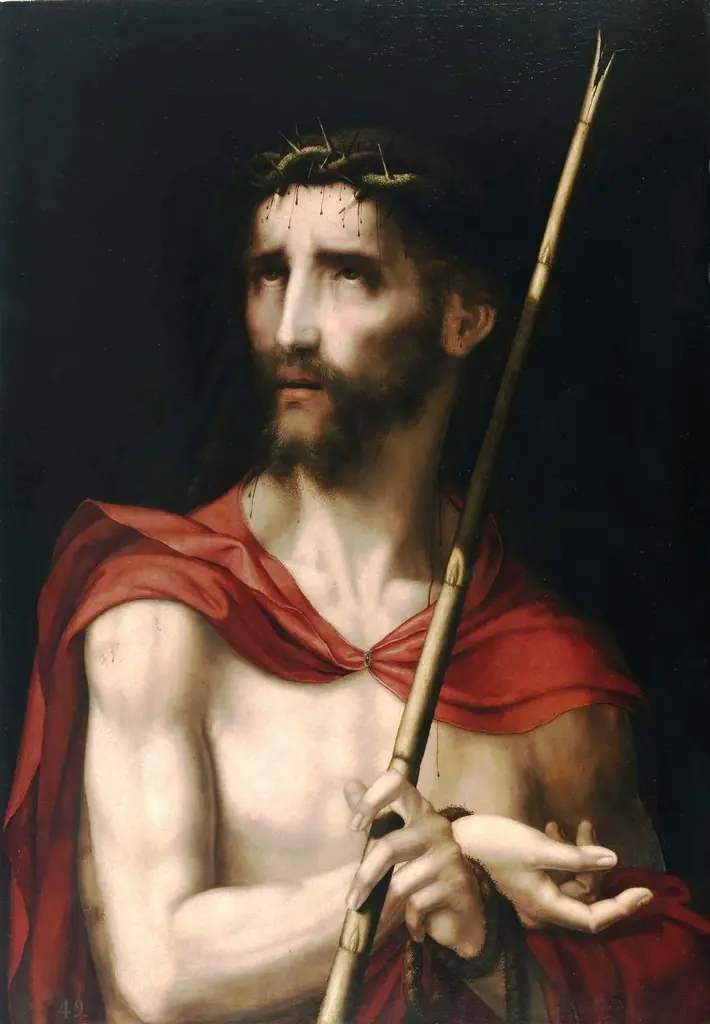
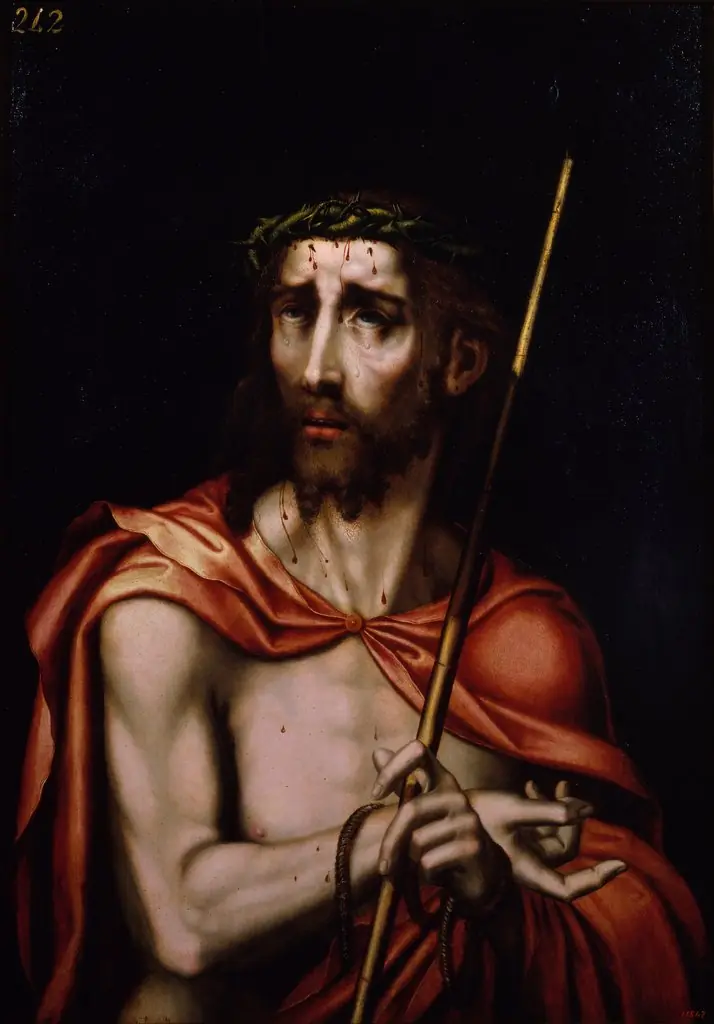
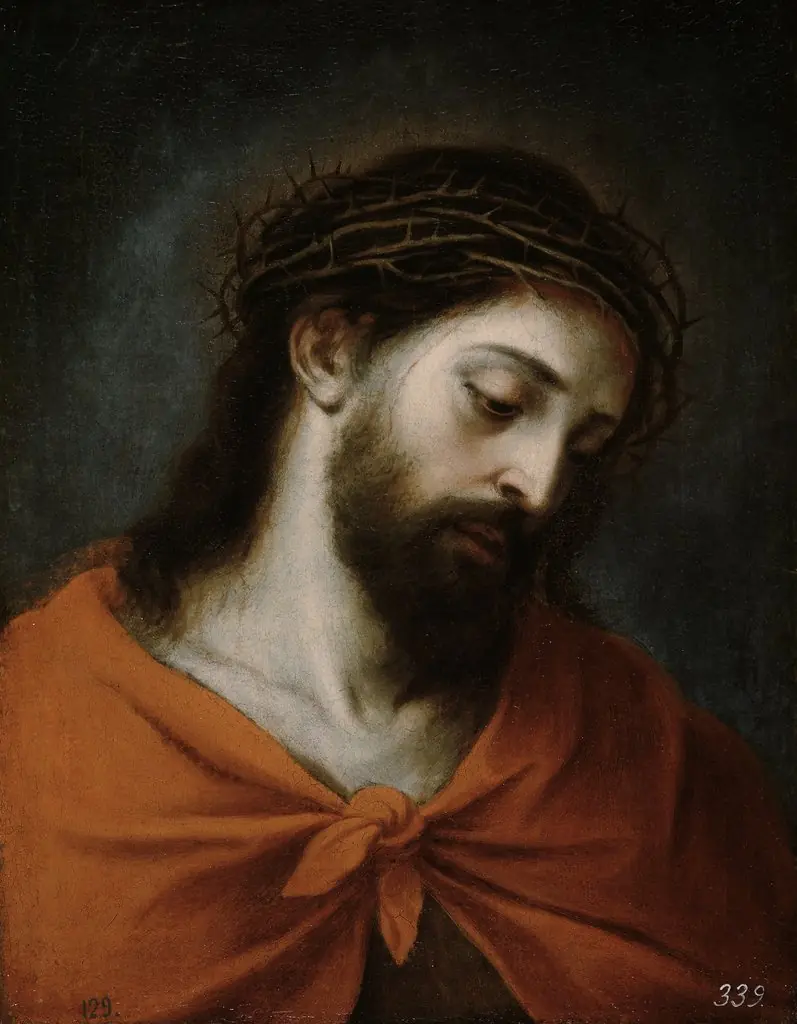
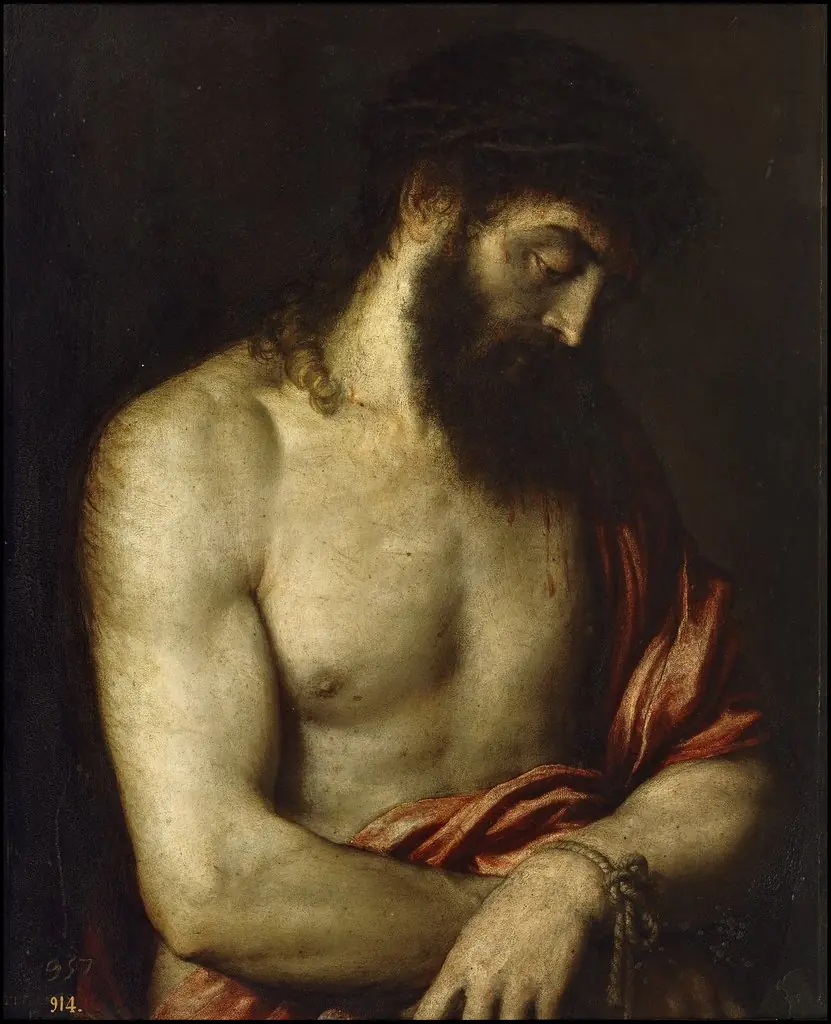
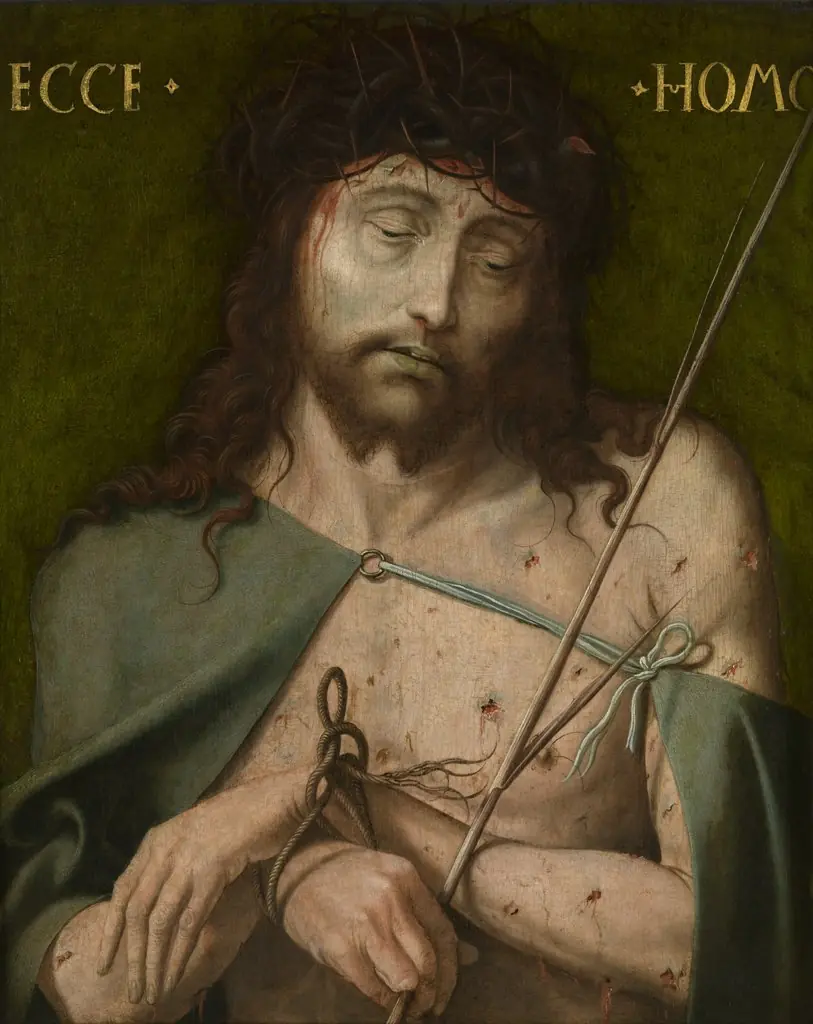
Created in 1570, this oil painting titled *Ecce Homo* presents a solitary figure of Christ presented before the crowd. The composition centers on the suffering saint, whose bruised forehead and bloodied arm convey the physical torment of the Passion. The work resides in the Museo del Prado, where it forms part of the museum’s Spanish Renaissance holdings.
Subject & Meaning
The image shows Jesus wearing a crown of thorns and a red mantle that falls over his left shoulder, while a staff rests in his right hand. He grasps his own left arm, emphasizing his wounded body, and a golden halo of rays encircles his head, signifying his divine status. The somber tone invites contemplation of sacrifice and humiliation.
Technique & Style
Executed in oil on canvas, the painter employs a stark chiaroscuro, setting the figure against a deep, almost black background that heightens the luminosity of the flesh and cloth. The handling of light on the skin and the delicate rendering of the thorns reflect the influence of Mannerist elongation and the refined brushwork typical of the Valencian school.
History & Provenance
The work is attributed to Juan de Juanes, the Spanish name of Vicente Juan Masip, a prominent artist of the Valencian Renaissance. Active in the mid‑16th century, he was known for religious subjects rendered with emotional intensity. *Ecce Homo* entered the Prado’s collection through the museum’s acquisition of Spanish Baroque and Renaissance paintings in the 19th century.
Own this work as a print
Artist & collection
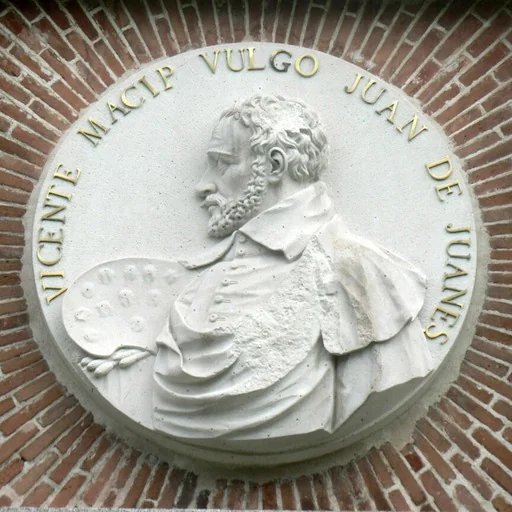
Artist
Vicente Juan Masip (also known as Joan de Joanes) (1507 – 1579) was a Spanish painter of the Renaissance period.