Artwork
Ecce Homo
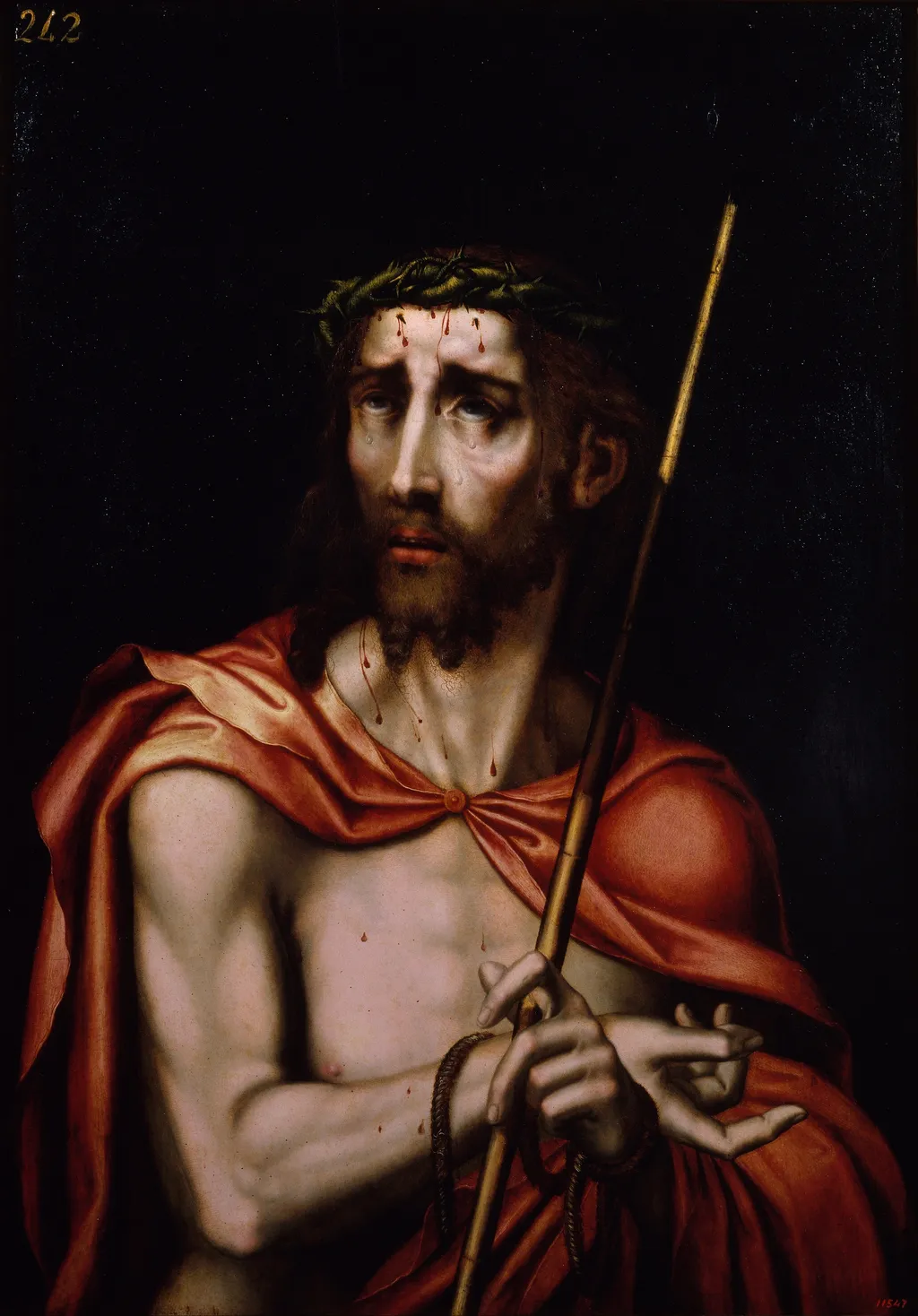
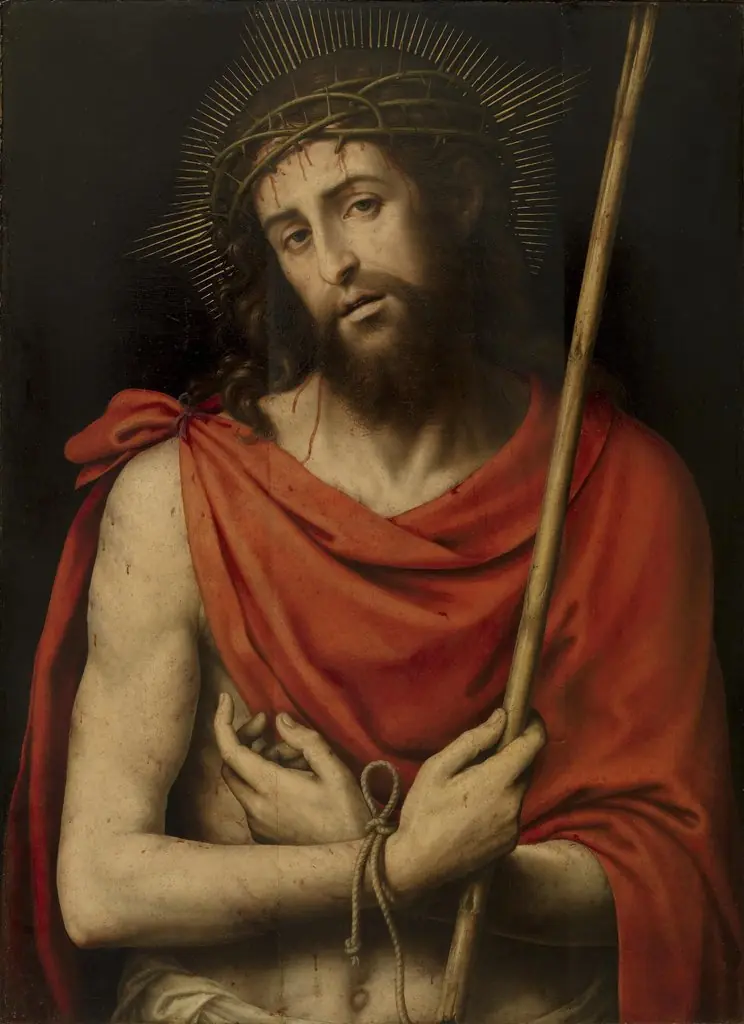
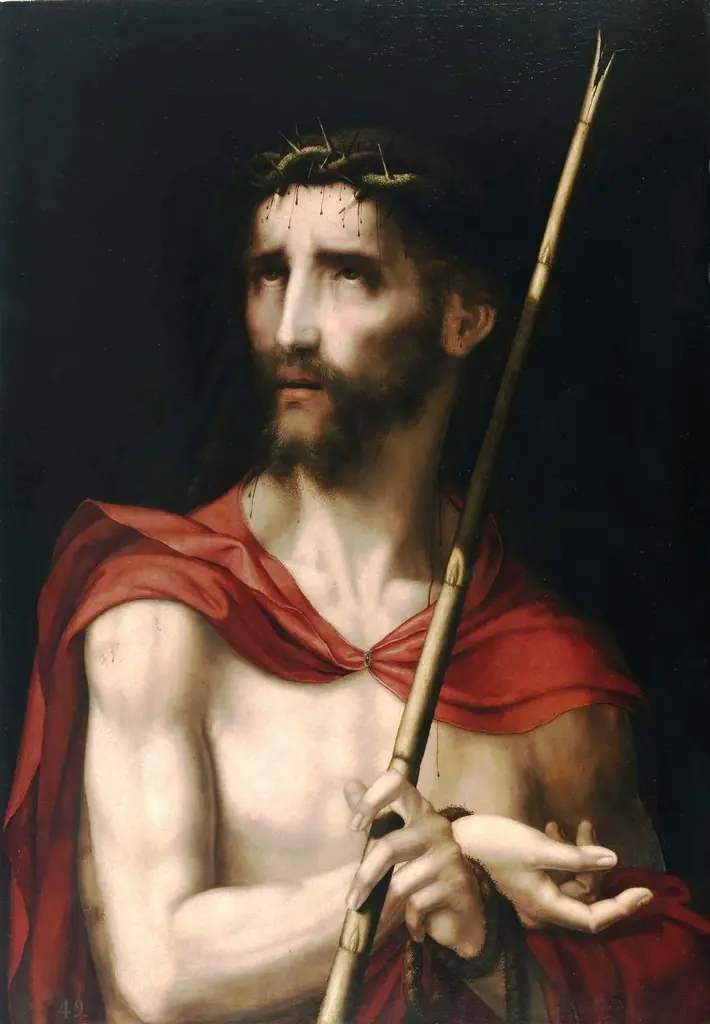
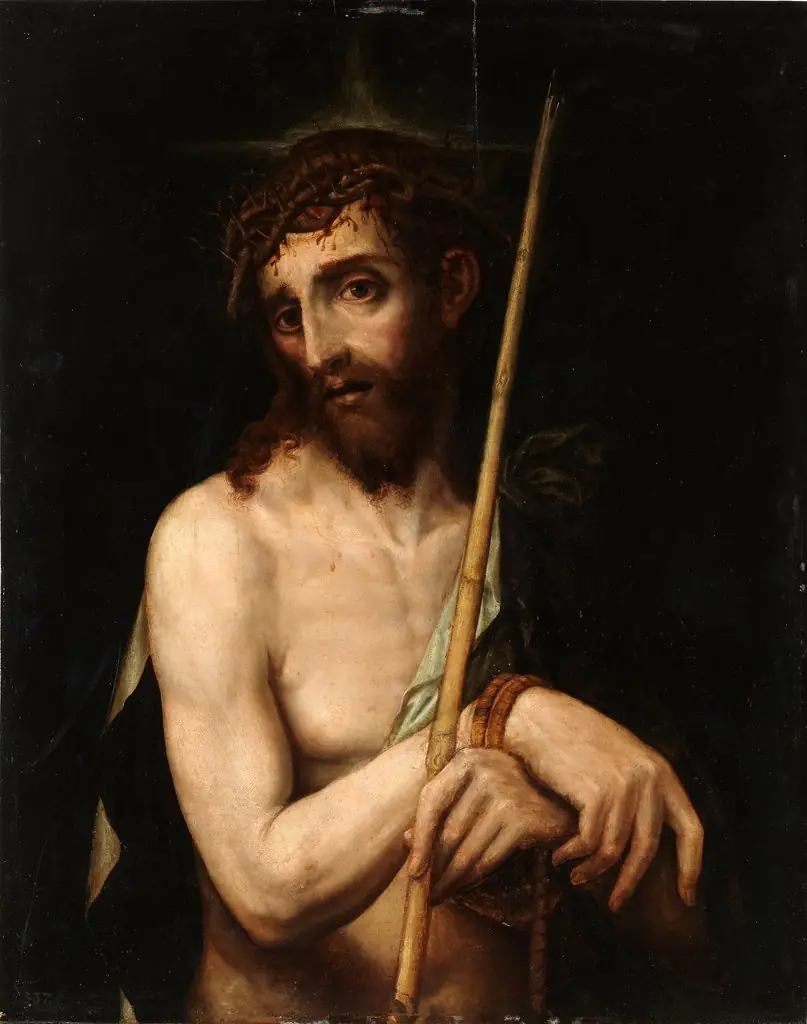
Ecce Homo is an oil painting by the Mannerist artist Luis de Morales. It dates from 1570 and is held in the collection of the Museu Nacional d'Art de Catalunya.
About this work
Overview
Executed with meticulous detail and emotional restraint, it reflects the artist’s devotion to religious themes and his alignment with Mannerist sensibilities.
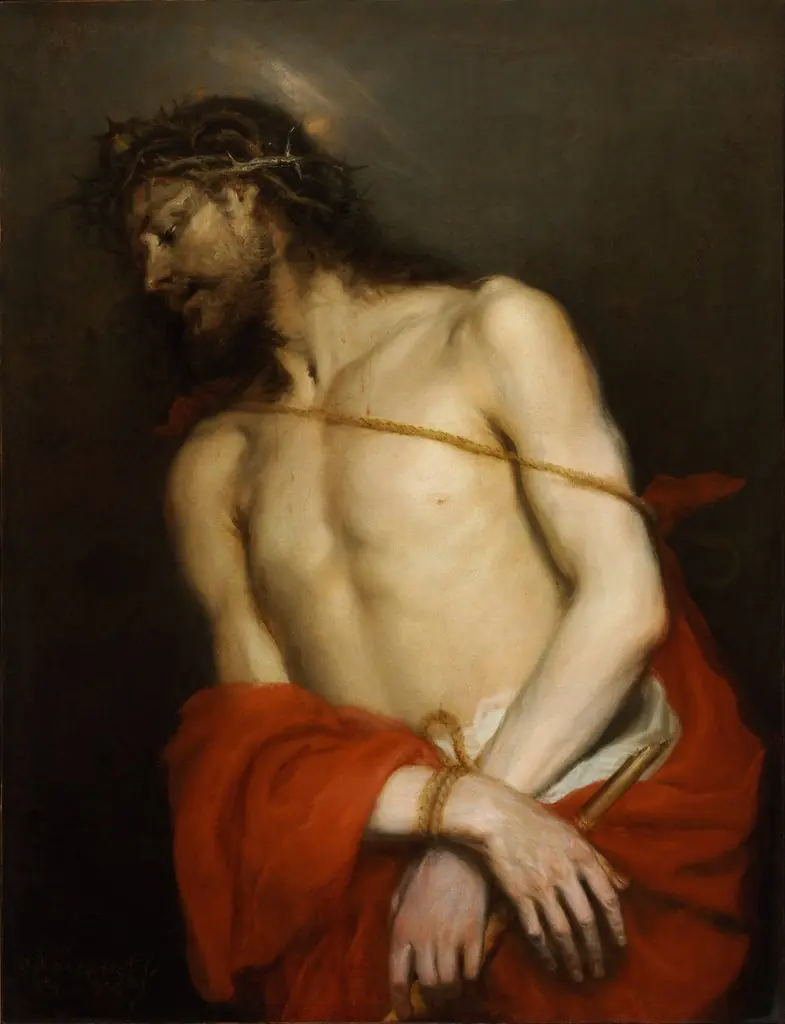
Painted in 1570 by Spanish artist Luis de Morales, known as 'El Divino,' this oil-on-panel work presents a solitary figure of Christ in moments after his condemnation. Executed with meticulous detail and emotional restraint, it reflects the artist’s devotion to religious themes and his alignment with Mannerist sensibilities. The painting resides today in the Museu Nacional d'Art de Catalunya, where it remains a quiet testament to 16th-century Spanish piety.
Subject & Meaning
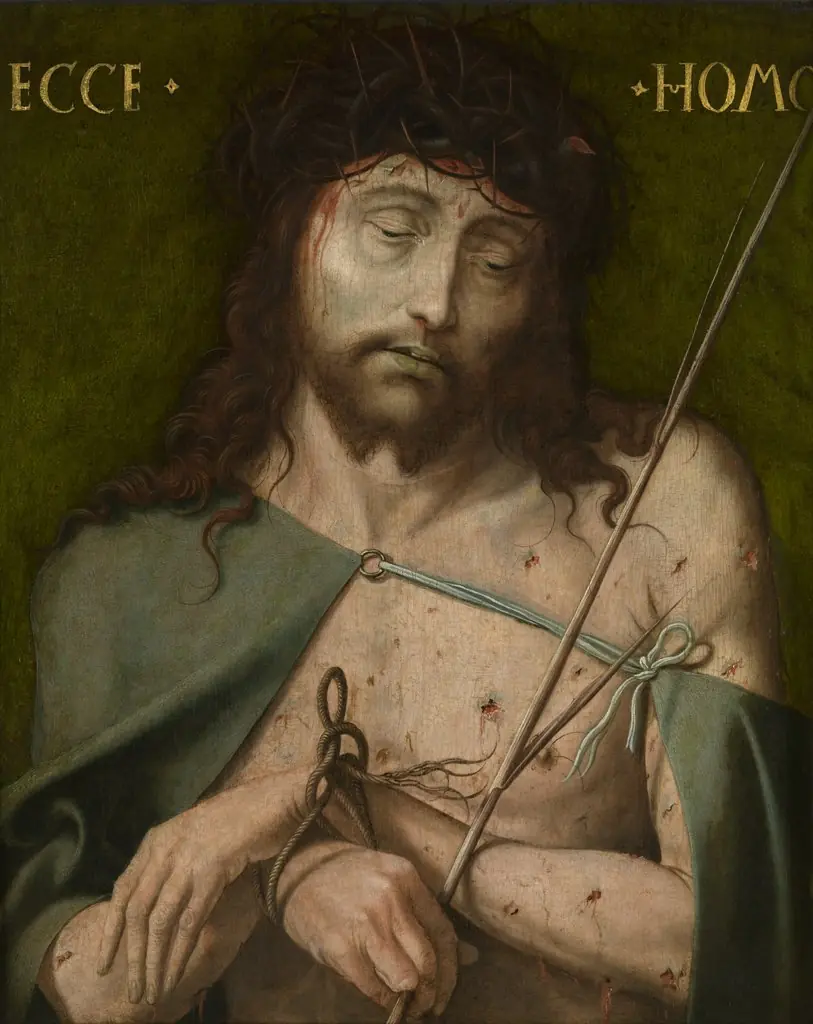
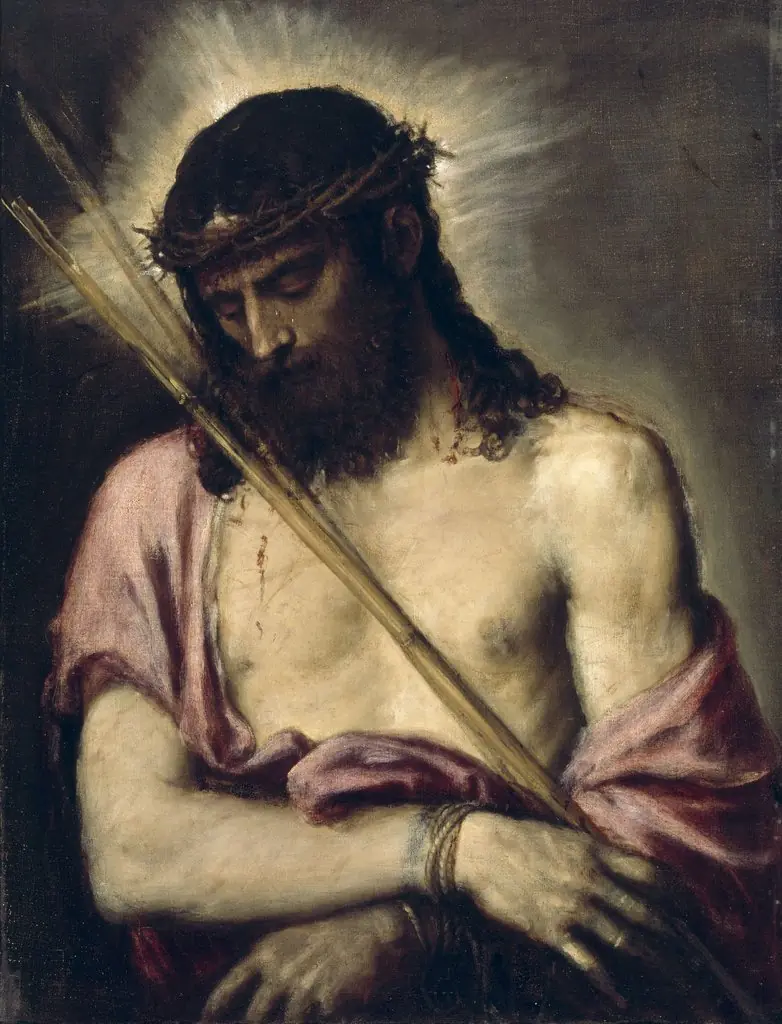
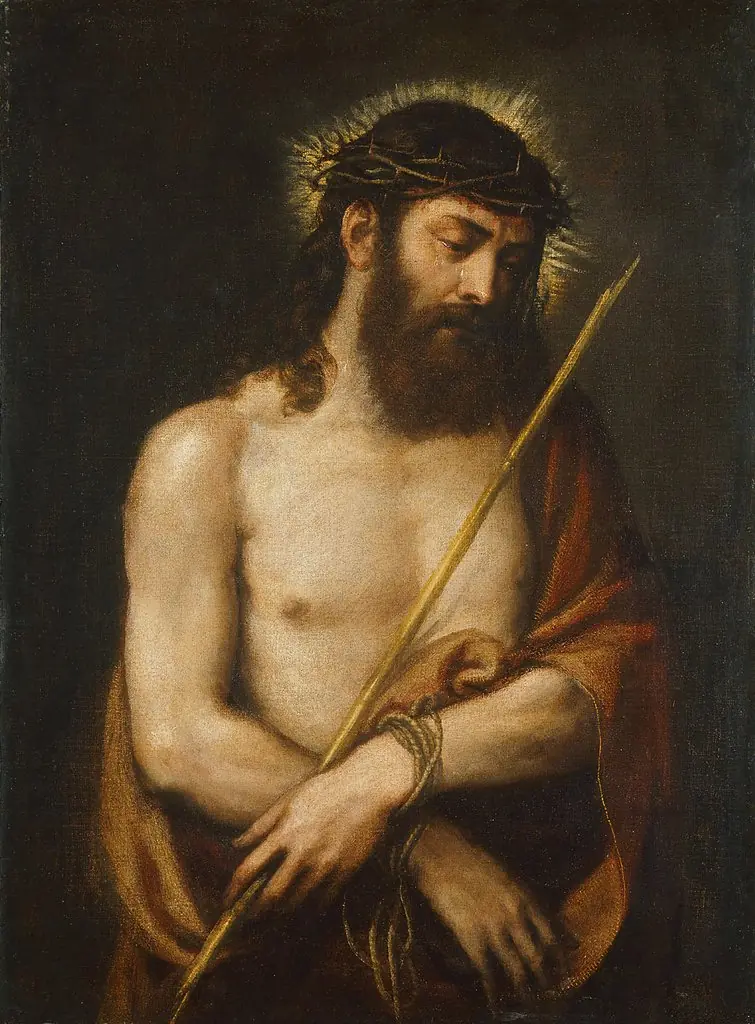
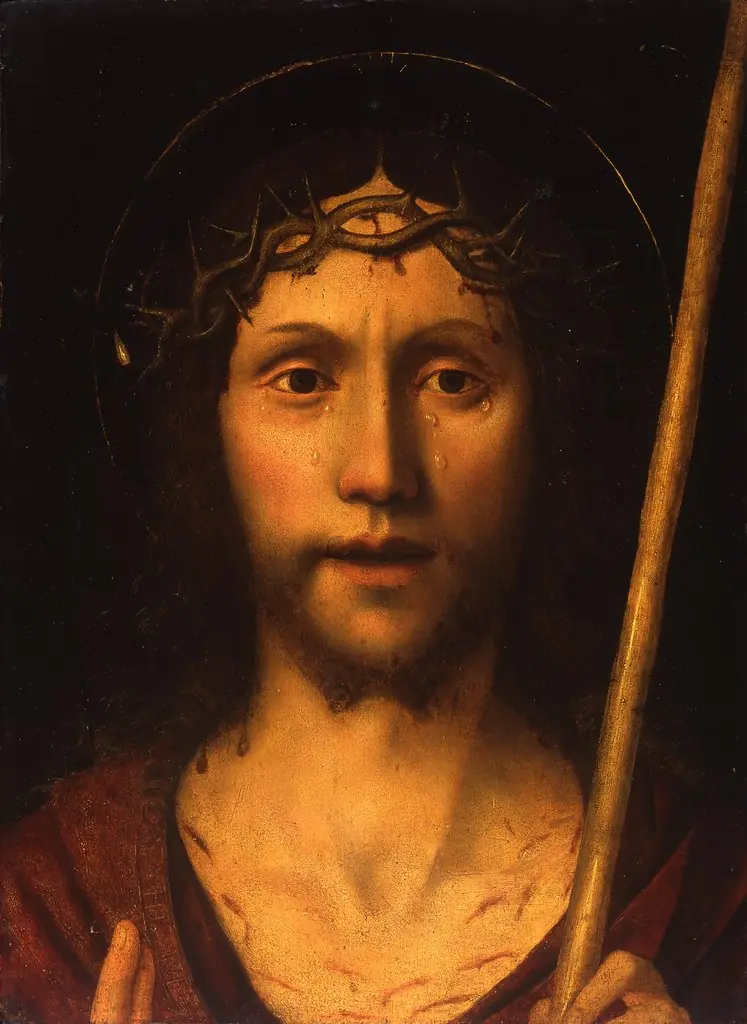
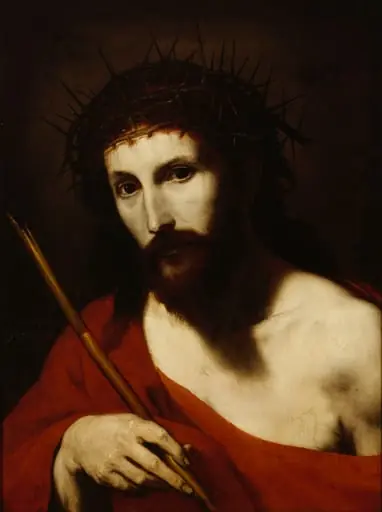
The figure is Christ, portrayed at the moment Pilate presents him to the crowd with the words 'Ecce Homo.' His crown of thorns, bound hands, and the spear held loosely in his left hand signify suffering and resignation. The downward gaze and parted lips suggest inner torment and silent endurance. The composition avoids dramatic spectacle, instead emphasizing introspection and spiritual weight, aligning with devotional practices of the time.
Technique & Style
Morales employed oil paint to achieve subtle gradations of tone, using chiaroscuro to model the figure’s pale skin against a near-black background. The texture of the thorns, the dampness of the hair, and the folds of the red cloth are rendered with precise, almost tactile detail. His style blends the soft modeling of Lombard painting with the emotional intensity characteristic of Spanish religious art, avoiding overt Mannerist exaggeration in favor of quiet realism.
History & Provenance
Created during Morales’s mature period, the painting was likely commissioned for private devotion rather than public display. It entered the collection of the Museu Nacional d'Art de Catalunya in the 19th century, having passed through Spanish ecclesiastical and noble hands. Its survival in good condition reflects its sustained reverence, though little documentation exists about its early ownership or exhibition history.
Context
In mid-16th-century Spain, religious imagery served as a tool for spiritual reflection amid the Counter-Reformation. Morales’s focus on Christ’s humanity—his suffering, stillness, and dignity—resonated with contemporary devotional trends that prioritized personal connection over theatricality. His work stood apart from Italian Mannerism by tempering complexity with solemnity, reflecting Spain’s unique religious climate.
Legacy
Morales’s *Ecce Homo* exemplifies a distinctly Spanish approach to sacred imagery: restrained, intimate, and psychologically acute. While not widely copied, its influence can be seen in later Spanish painters who favored emotional depth over grandeur. The painting endures as a quiet anchor in the history of Iberian religious art, valued for its unadorned humanity rather than its technical virtuosity.
Own this work as a print
Artist & collection
Artist
Luis de Morales (1509 – 9 May 1586) was a Spanish painter active during the Spanish Renaissance in the 16th century.