Artwork
Ecce Homo
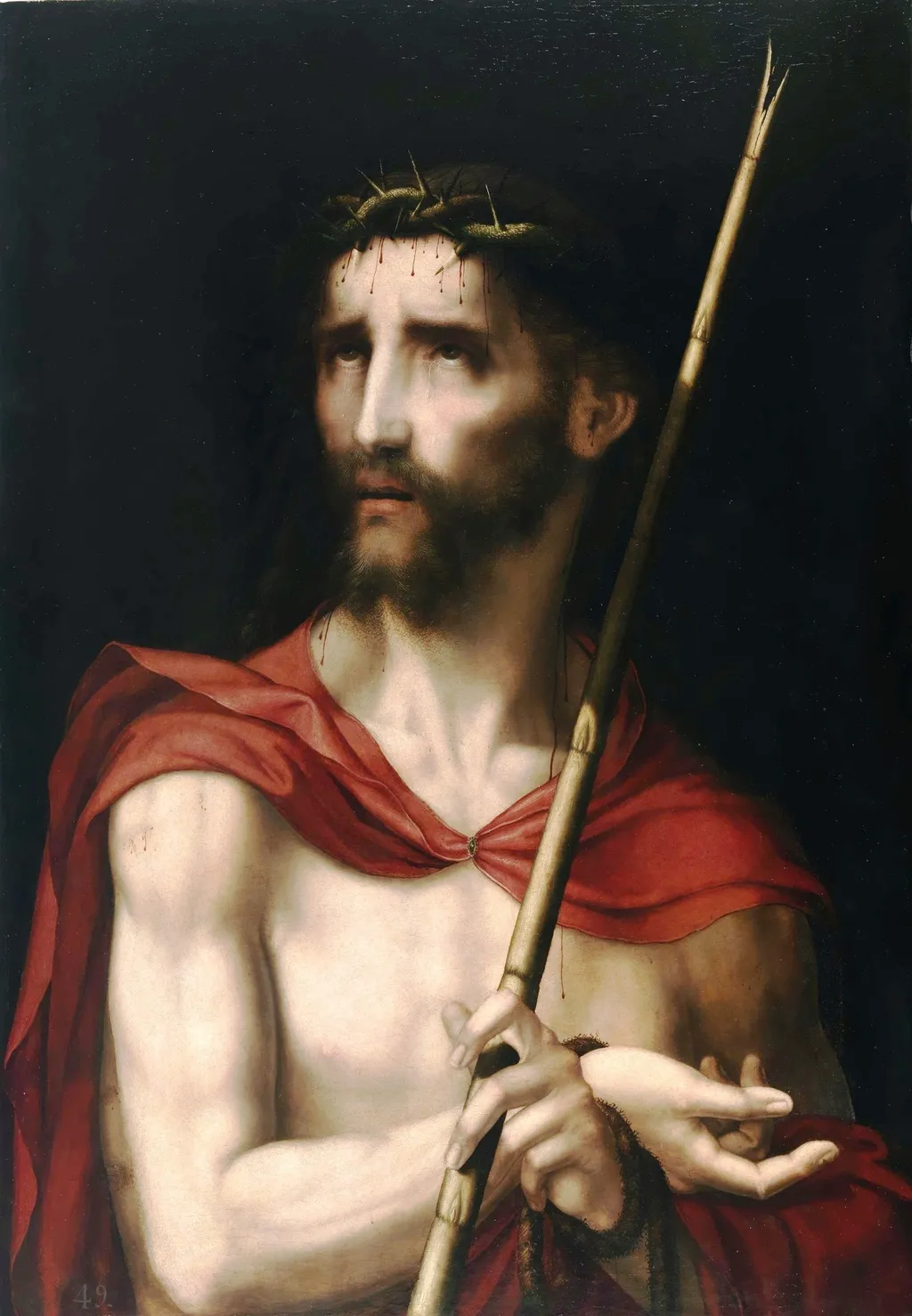
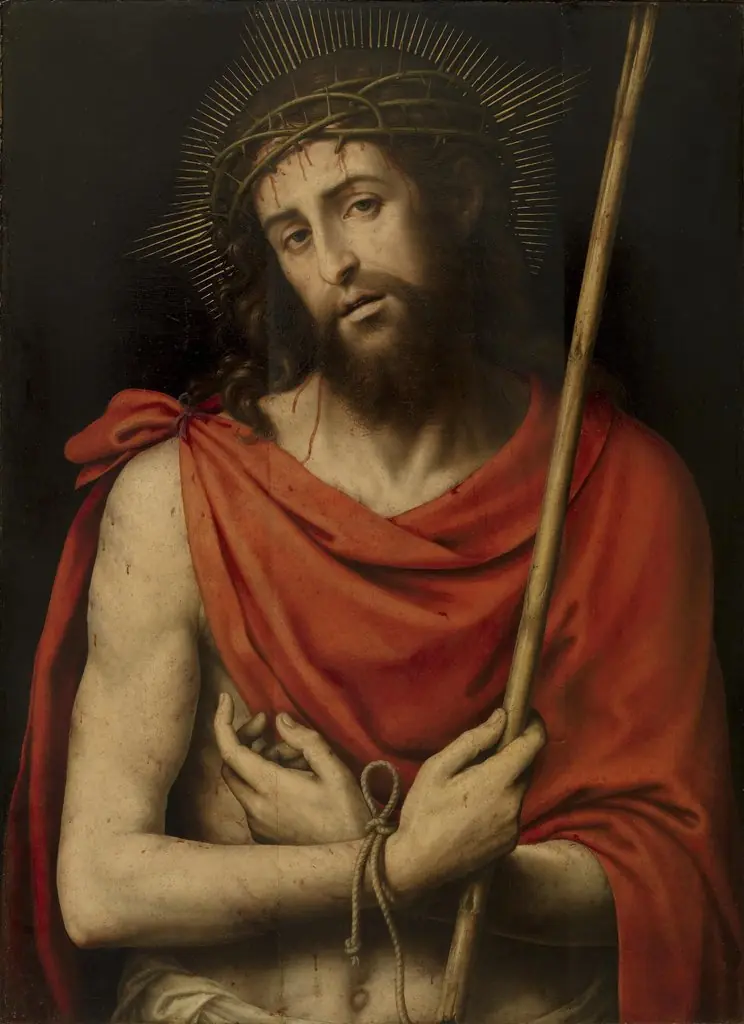
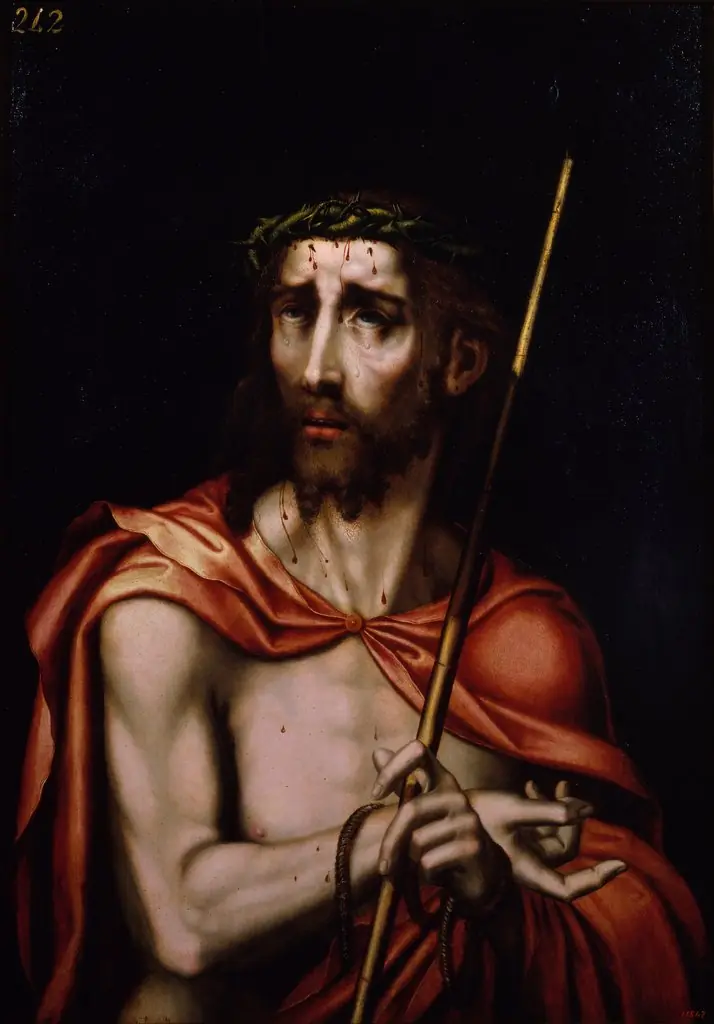
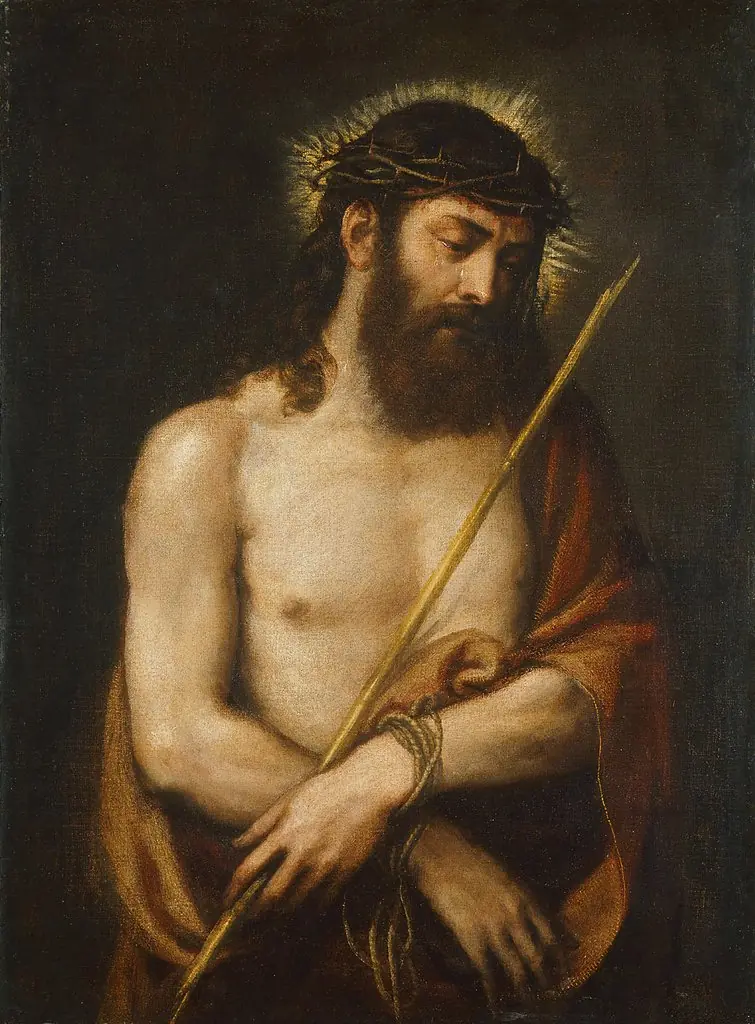
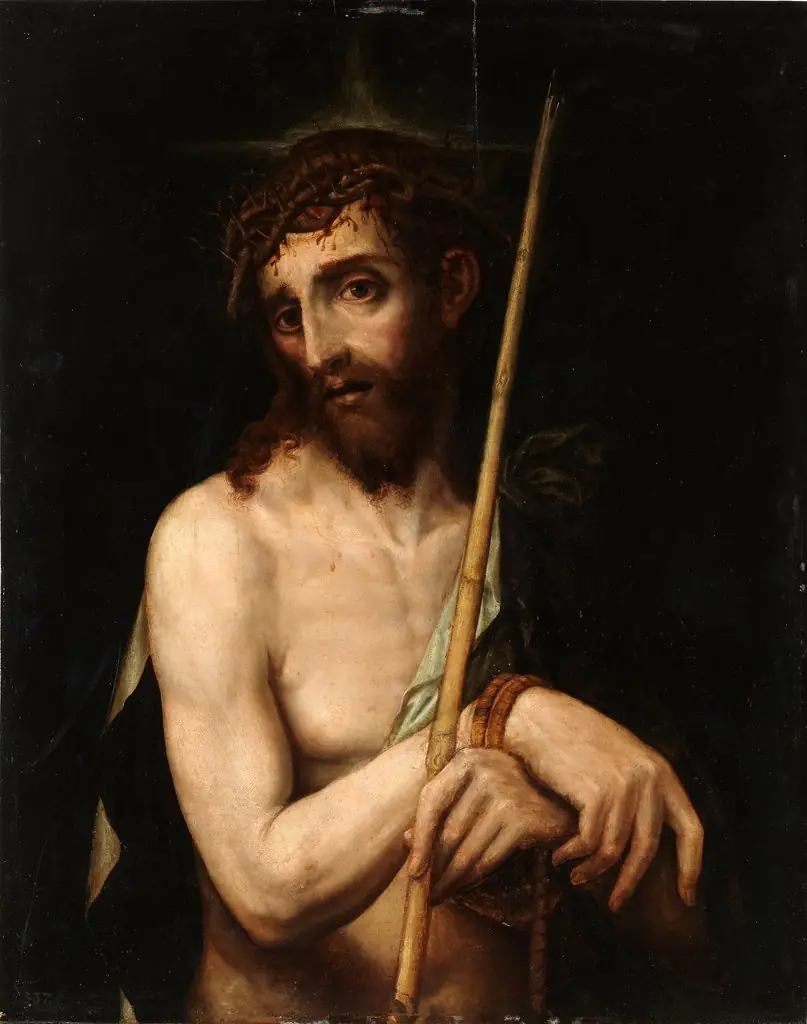
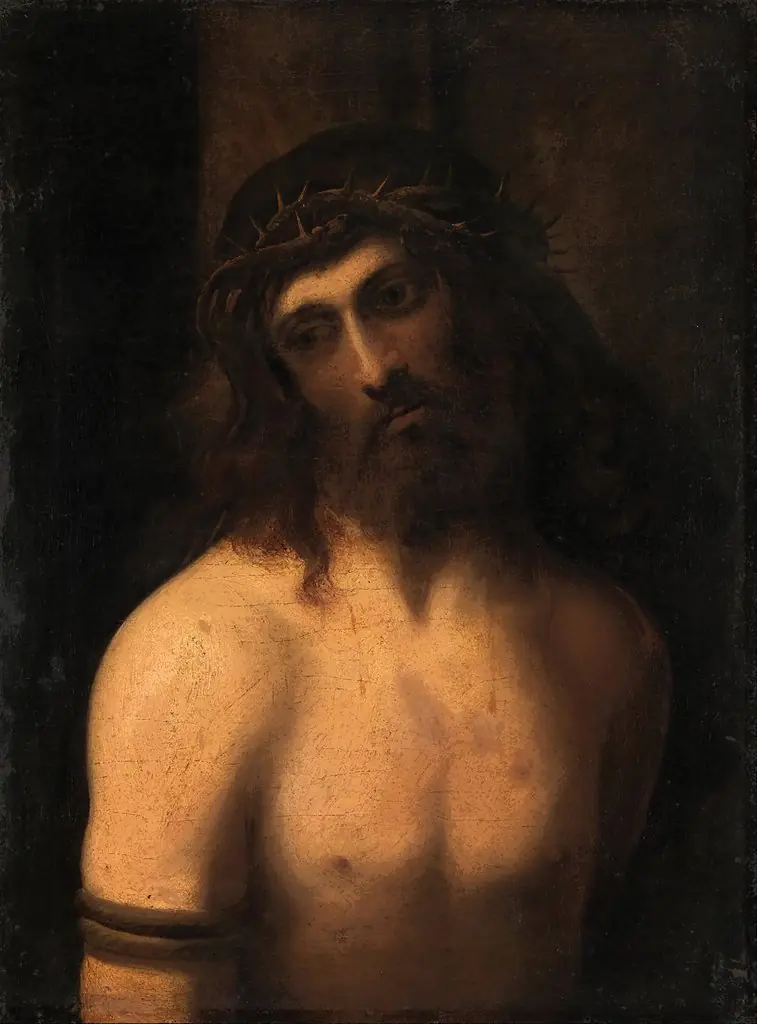
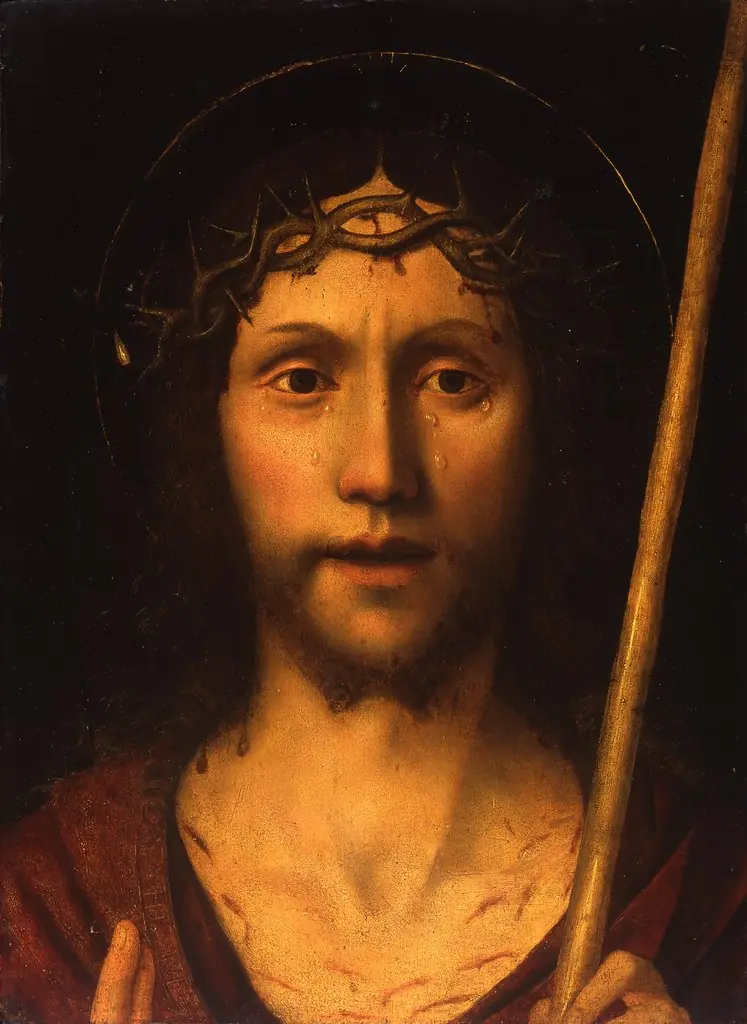
Ecce Homo is an oil painting by the Mannerist artist Luis de Morales. It dates from 1560 and is held in the collection of the Museo del Prado.
About this work
Overview
Luis de Morales, a 16th‑century Spanish painter nicknamed “El Divino,” executed the oil painting *Ecce Homo* around 1560. The work is held in the Museo del Prado and exemplifies the artist’s focus on intensely devotional subjects, particularly scenes from Christ’s Passion.
Subject & Meaning
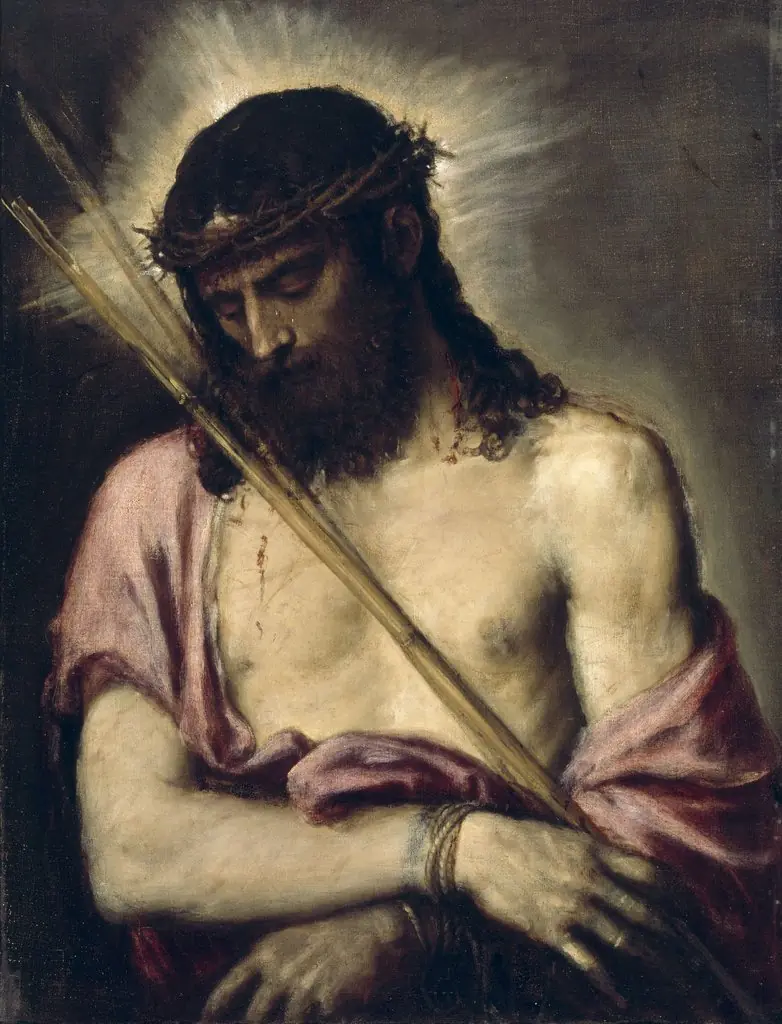
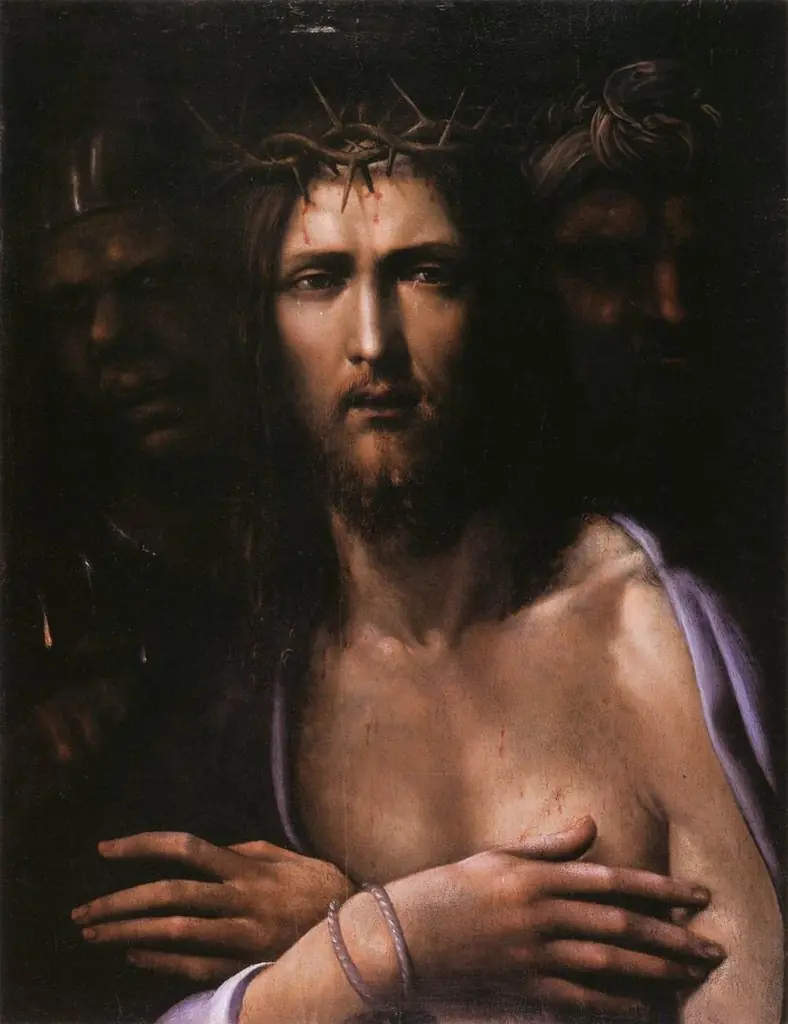
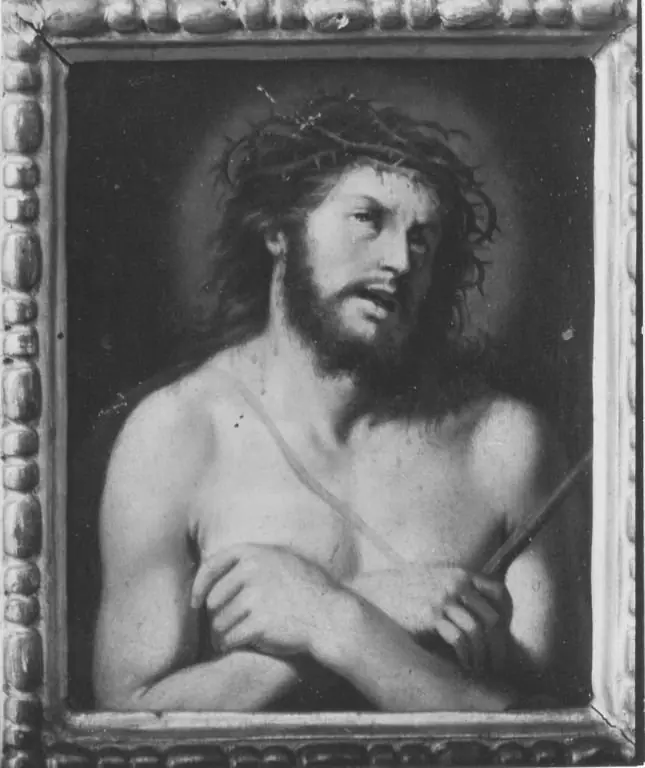
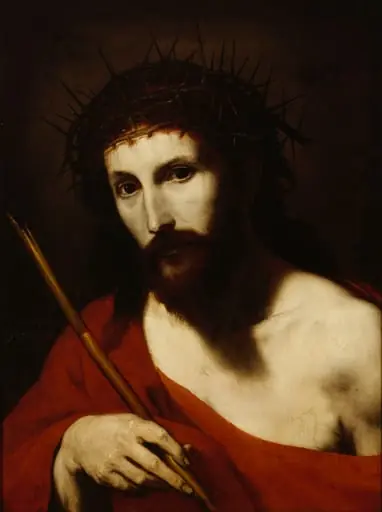
The canvas presents a half‑naked Christ crowned with thorns, his bruised face marked by a trickle of blood. He clutches a reed in his right hand while his left hand touches it, his gaze lowered and mouth slightly ajar, evoking the humility and suffering associated with the “Ecce Homo” moment.
Technique & Style
Morales employs strong chiaroscuro, lighting the figure from the left against a dark background, which gives the body and the red cloth a three‑dimensional presence. The surface combines impasto brushwork with delicate glazing, creating a tactile texture and a subtle inner glow typical of late‑Renaissance Spanish Mannerism.
History & Provenance
Created during the Spanish Renaissance, the painting entered the Prado’s collection at an unspecified date, where it remains a representative example of Morales’s religious oeuvre. Its provenance reflects the artist’s reputation for producing spiritually resonant images for ecclesiastical patrons.
Context
*Ecce Homo* belongs to a broader tradition of Passion imagery that flourished in 16th‑century Spain, a period marked by Counter‑Reformation emphasis on vivid, affective depictions of Christ’s suffering. Morales’s work aligns with this devotional climate, offering a contemplative focal point for viewers.
Own this work as a print
Artist & collection
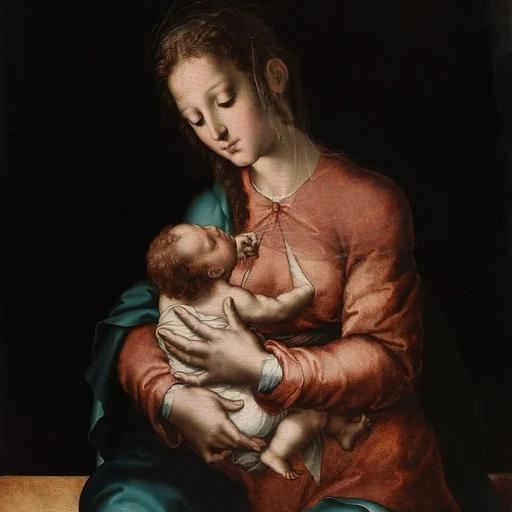
Artist
Luis de Morales (1509 – 9 May 1586) was a Spanish painter active during the Spanish Renaissance in the 16th century.