Artwork
Sibylla Phrygia
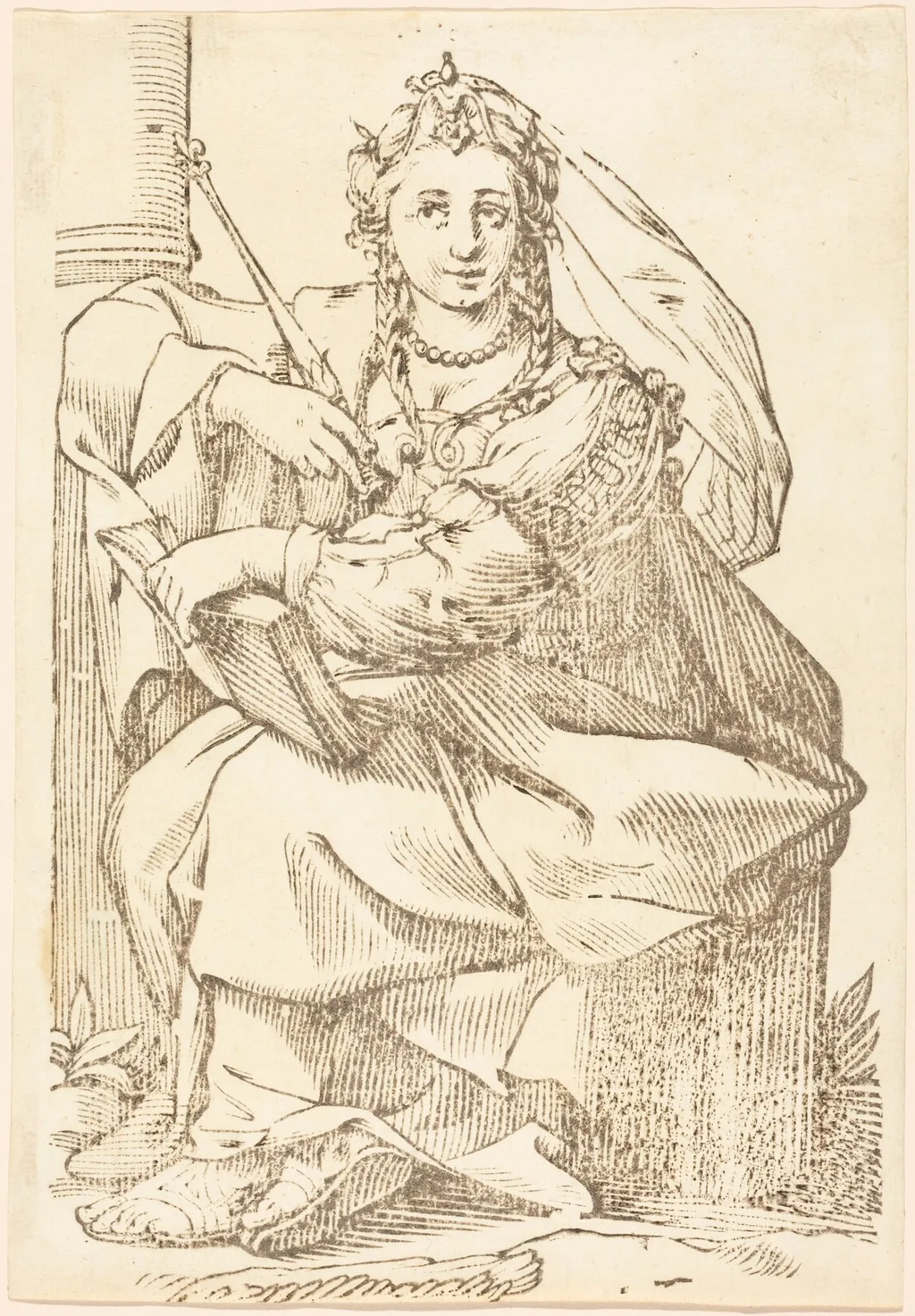
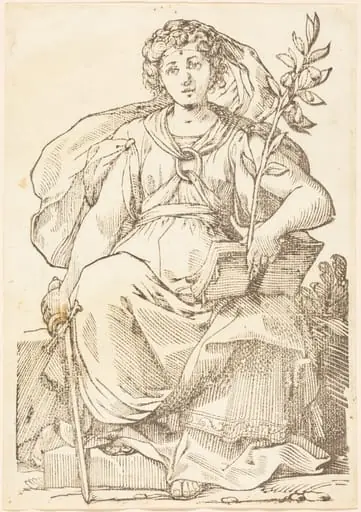
Sibylla Phrygia is an ink print by the Baroque artist Paul Maupin. It dates from 1625 and is held in the collection of the National Gallery of Art.
About this work
Overview
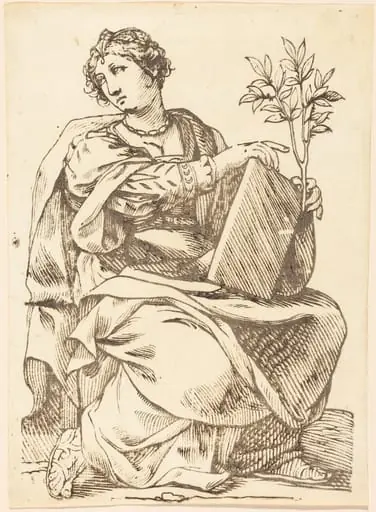
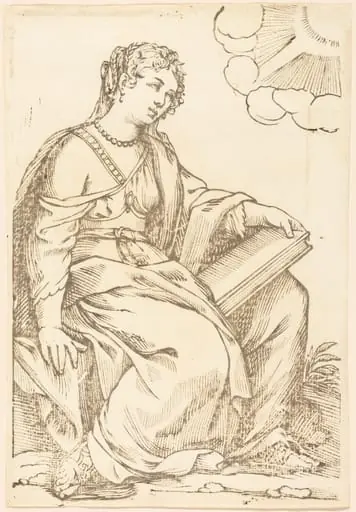
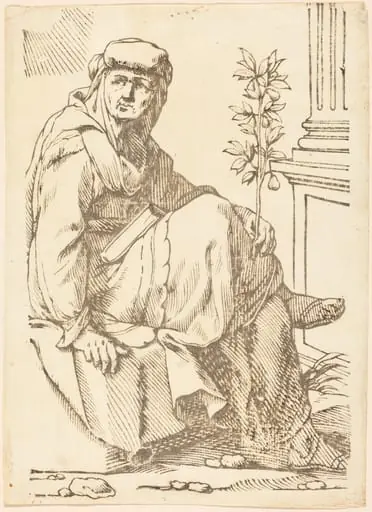
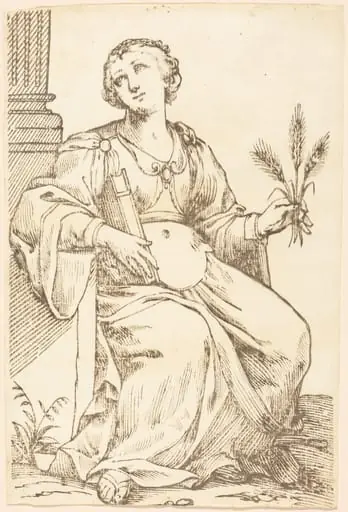
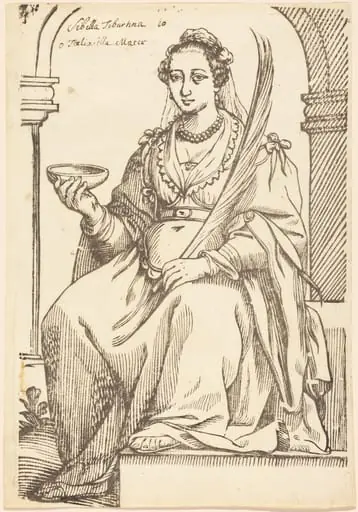
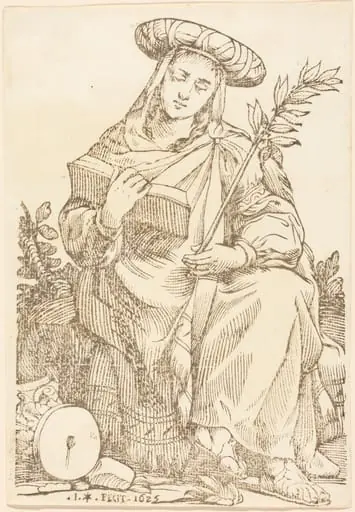
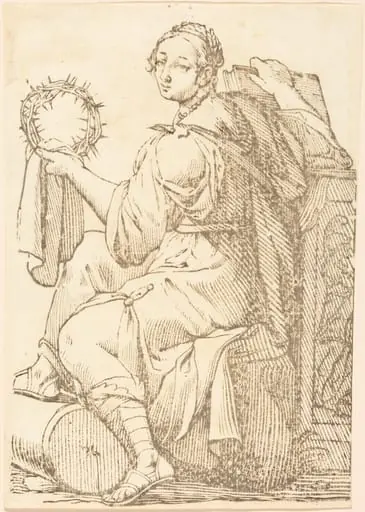
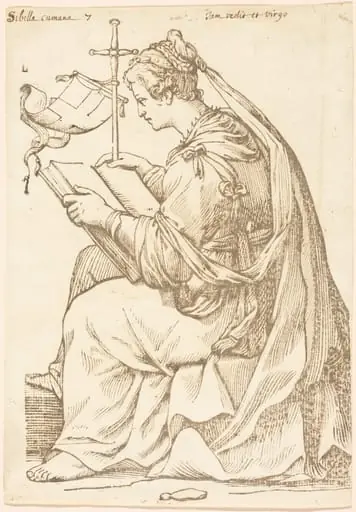
Sibylla Phrygia is a woodcut print made around 1625 by Paul Maupin on laid paper. The image depicts a seated female figure, rendered in the distinctive linear style of early 17th-century printmaking. The composition is restrained, focusing on the figure against a minimal background, emphasizing her symbolic presence rather than narrative detail.
Subject & Meaning
The figure represents the Phrygian Sibyl, one of the ancient prophetic women of classical tradition. Her crown and ornate necklace suggest divine authority, while the staff and scroll signify her role as a conduit of oracular knowledge. Her composed expression conveys solemn wisdom, aligning with Renaissance interpretations of sibyls as bearers of sacred truth beyond pagan origins.
Technique & Style
Executed in woodcut, the image relies on bold, incised lines to define form and texture. The roughness of the medium is evident in the uneven edges and tactile quality of the lines, particularly in the folds of the robe and the suggestion of foliage. This technique prioritizes clarity and symbolic weight over fine detail, characteristic of Northern European printmaking of the period.
History & Provenance
The print’s early history is undocumented, but its style and subject align with devotional and scholarly print cycles circulating in early 17th-century Europe. Likely produced for private collectors or academic circles interested in classical antiquity and Christian typology, it reflects a broader interest in sibylline prophecy during the Reformation era.
Context
In the decades following the Reformation, images of sibyls were frequently paired with Old Testament prophets in theological art, symbolizing the universality of divine revelation. The Phrygian Sibyl, often linked to prophecies of Christ’s coming, appeared in liturgical and humanist contexts, bridging classical and Christian traditions in visual culture.
Legacy
Though not widely reproduced, Sibylla Phrygia contributes to a modest but persistent tradition of sibyl imagery in print. Its restrained aesthetic and symbolic clarity reflect a shift toward intellectualized religious iconography, influencing later depictions of female prophets in Northern European art without becoming a widely recognized archetype.
Artist & collection