Artwork
Sibylla Persica
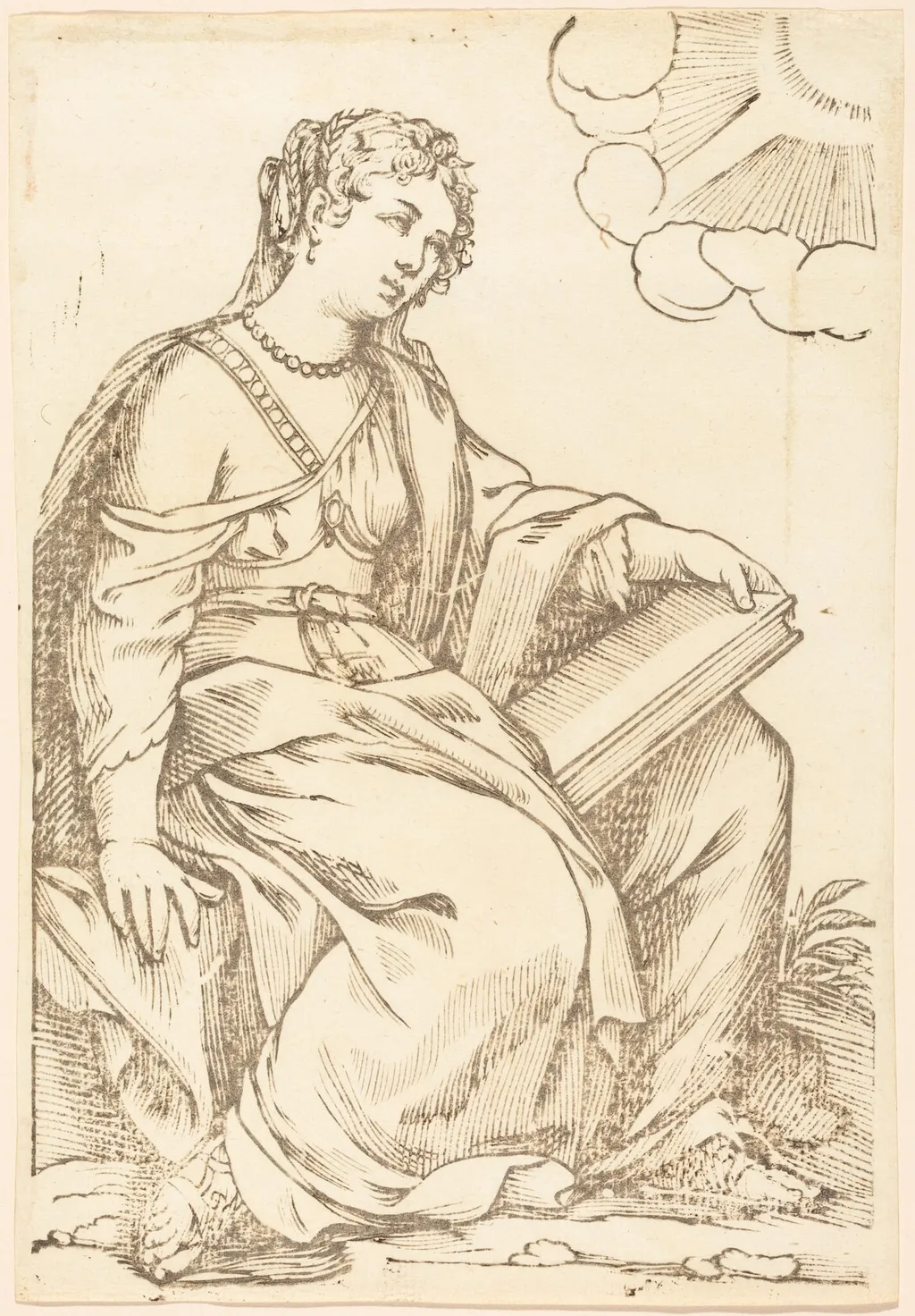
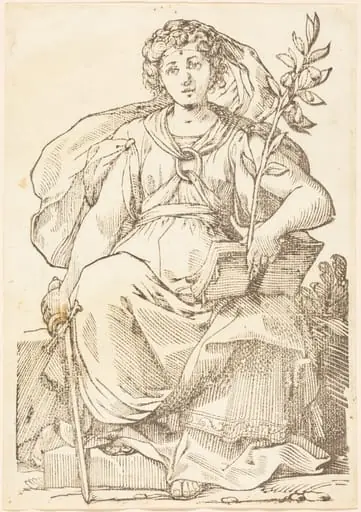
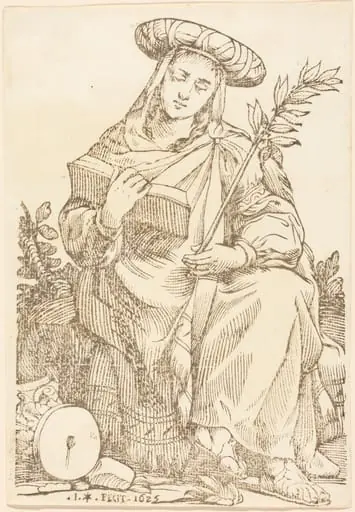
Sibylla Persica is an ink print by the Baroque artist Paul Maupin. It dates from 1625 and is held in the collection of the National Gallery of Art.
About this work
Overview
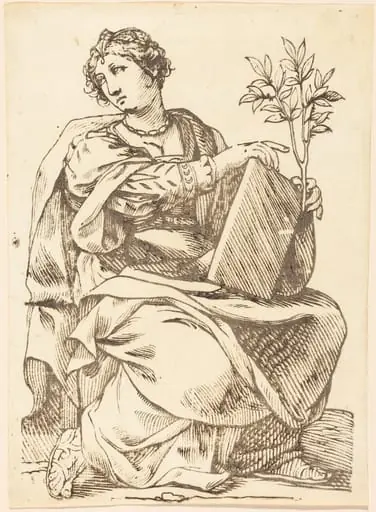
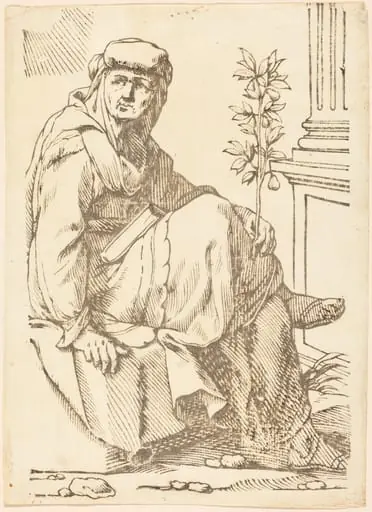
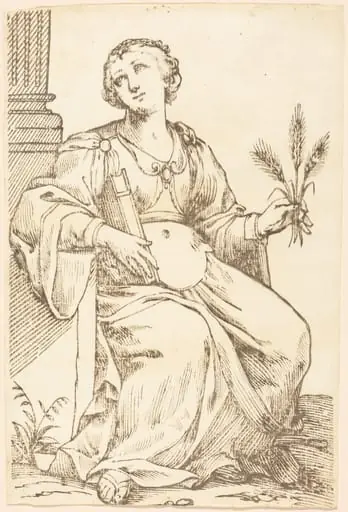
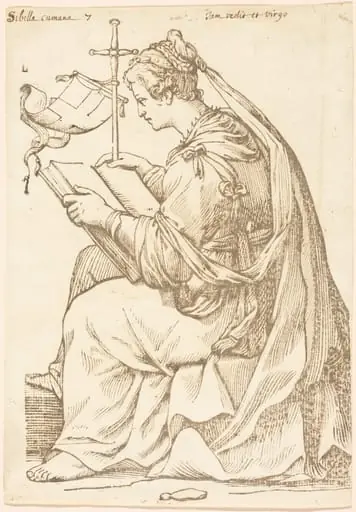
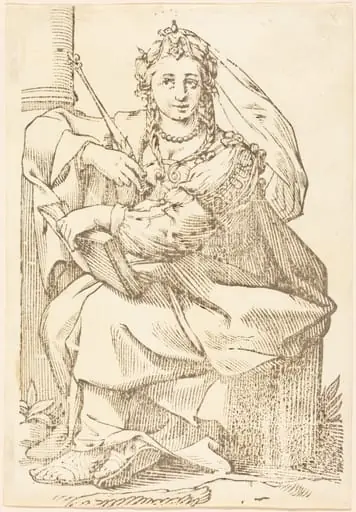
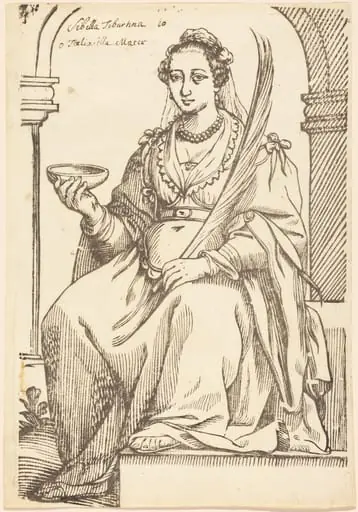
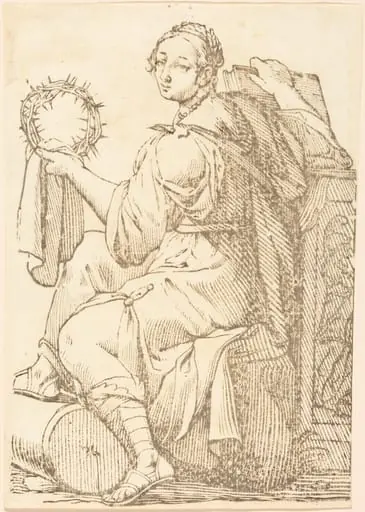
Sibylla Persica is a woodcut on laid paper created by Paul Maupin around 1625. The print depicts a serene scene of a woman in contemplation, surrounded by natural elements.
Subject & Meaning
The subject, Sibylla Persica, is portrayed in a state of introspection, indicated by her downward gaze and contemplative expression. Her attire—a flowing robe, necklace, and headpiece—and the book in her lap suggest a figure of wisdom or prophecy.
Technique & Style
Executed as a woodcut, the work features subtle shading and texture, with a soft, gentle light emanating from the upper right, characteristic of Baroque's expressive use of chiaroscuro.
History & Provenance
Created circa 1625 by Paul Maupin, a notable Baroque artist, the woodcut reflects the stylistic influences of its time, though specific provenance details are not provided.
Context
Sibylla Persica sits within the broader context of Baroque art, where themes of contemplation and the use of light to evoke emotion were prevalent.
Artist & collection