Artwork
Jain Ascetic Walking Along a Riverbank
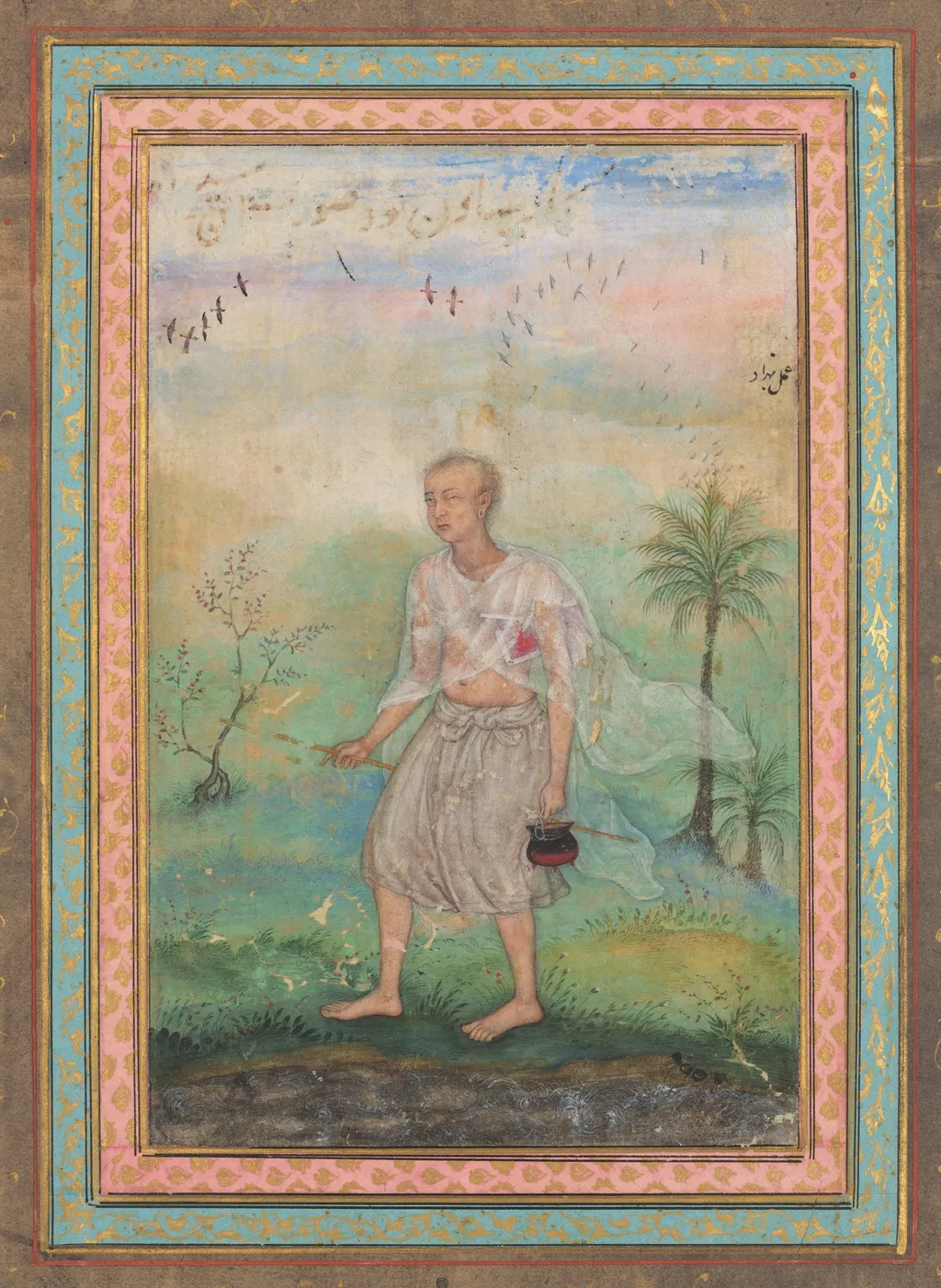
Jain Ascetic Walking Along a Riverbank is an unspecified painting by the Mughal Painting artist Basawan. It dates from 1600 and is held in the collection of the Cleveland Museum of Art. Created around 1600 by the Indian painter Baswan, this small-scale work depicts a solitary ascetic strolling beside a river.
About this work
Overview
Created around 1600 by the Indian painter Baswan, this small-scale work depicts a solitary ascetic strolling beside a river.
Created around 1600 by the Indian painter Baswan, this small-scale work depicts a solitary ascetic strolling beside a river. The figure is barefoot, clad in a simple white robe, and carries a modest pot and a walking stick. The surrounding landscape features a wet, grassy bank, a flowering tree, a palm, and a pale sky dotted with birds, all framed by decorative borders of pink, blue and gold motifs.
Subject & Meaning
The central figure represents a Jain mendicant, embodying the religious ideals of renunciation and humility. His calm, weary expression and modest attire convey a life of ascetic discipline, while the act of walking along the river suggests a contemplative journey toward spiritual purification.
Technique & Style
Executed in tempera on paper, the painting combines precise line work with delicate washes of color. Baswan employs a restrained palette for the figure, contrasting it with the vibrant, swirling border patterns that echo contemporary Mughal decorative motifs. The rendering of water and foliage shows a keen observation of natural detail within a stylized framework.
History & Provenance
The work entered the collection of the Cleveland Museum of Art in the early twentieth century, where it has been catalogued as a notable example of early Mughal painting. Its provenance prior to acquisition is not fully documented, but it is attributed to Baswan based on stylistic analysis and comparative study with his signed works.
Context
Produced during the nascent phase of Mughal artistic synthesis, the painting reflects the period’s integration of Persian courtly aesthetics with indigenous Indian religious themes. Jain ascetics were a common subject in courtly art, illustrating the patron’s interest in diverse spiritual traditions.
Artist & collection
Artist
Basāwan, or Basāvan, was an Indian miniature painter in the Mughal style. He was known by his contemporaries as a skilled colorist and keen observer of human nature, and for his use of portraiture in the illustrations…

 Page from Tales of a Parrot (Tuti-nama): text page
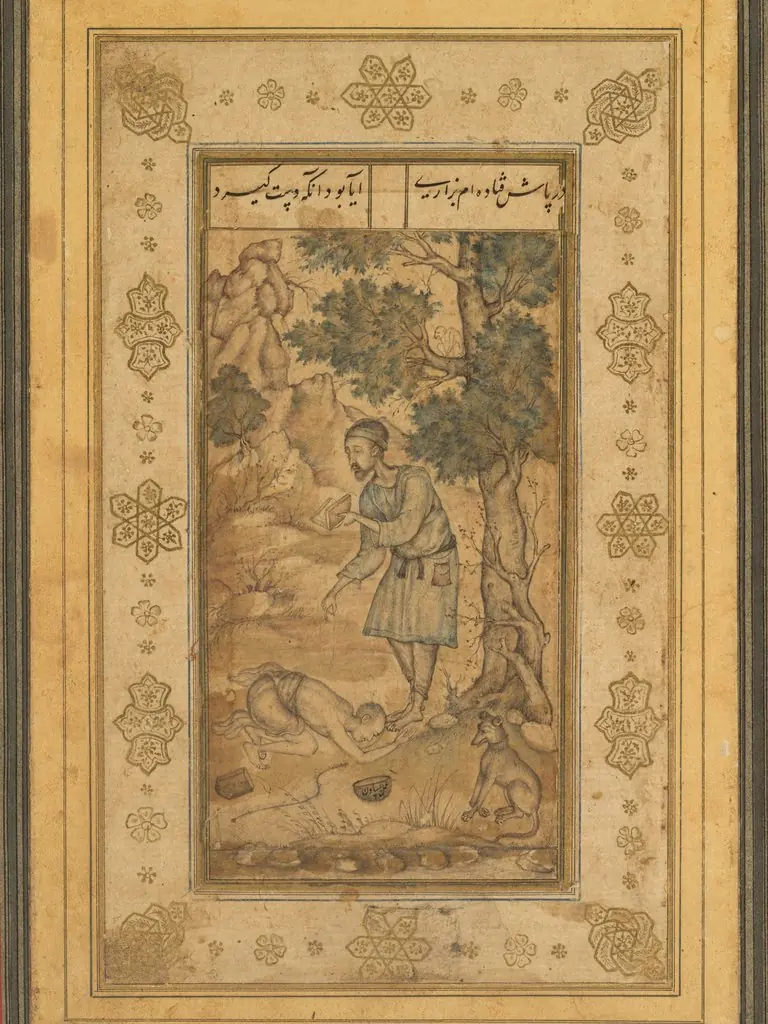 A mendicant bowing before a holy man, from the Prince Salim Album
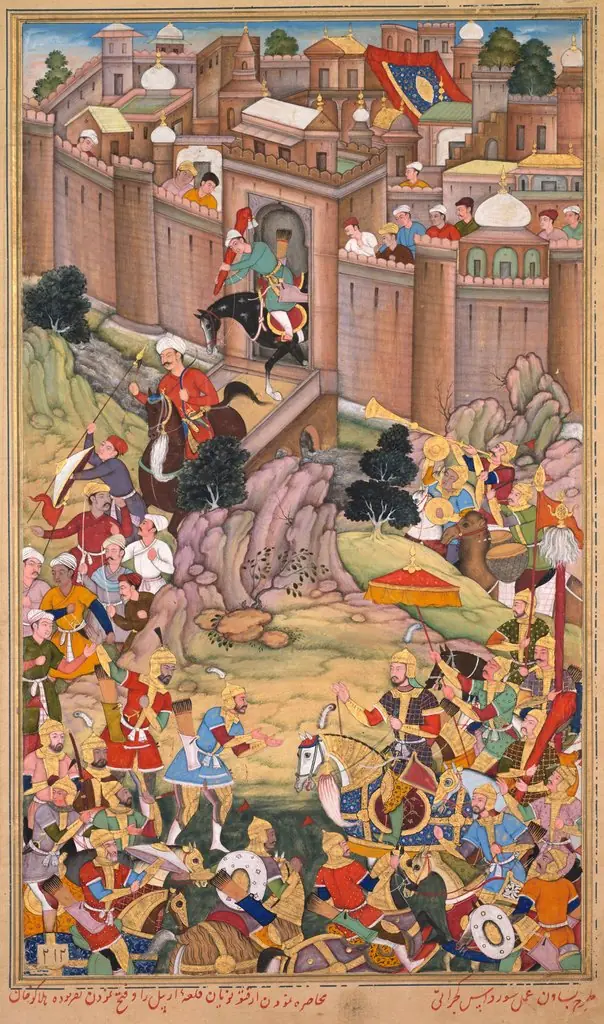 The siege of Arbela in the era of Hulagu Khan, from a Chingiz-nama (Book of Chingiz Khan) of the Jami al-tavarikh (Compendium of Chronicles) of Rashid al-Din (Persian, 1247–1318)
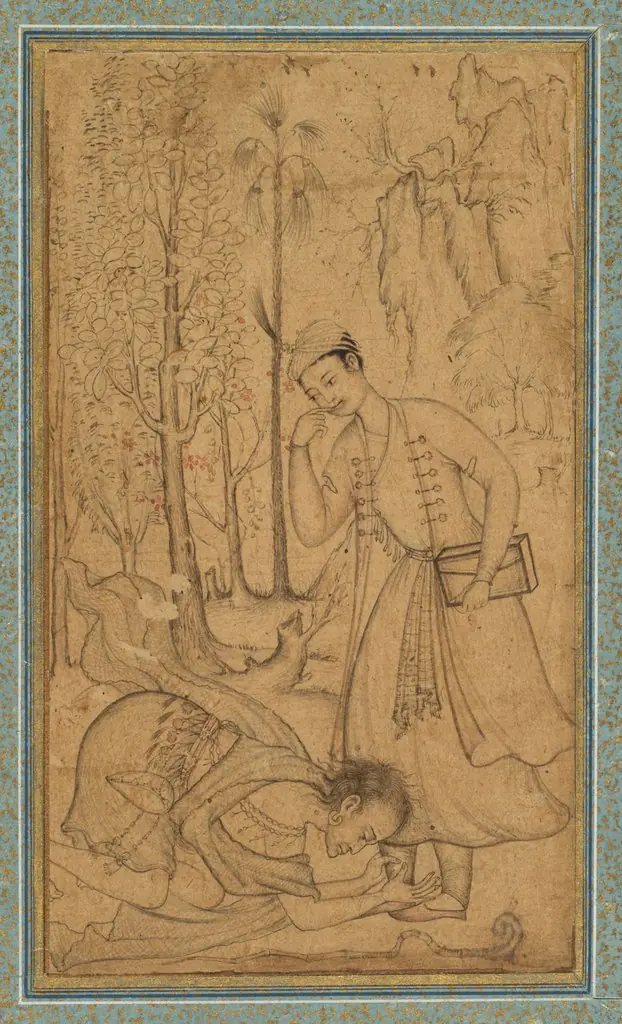 A holy man prostrating himself before a learned prince
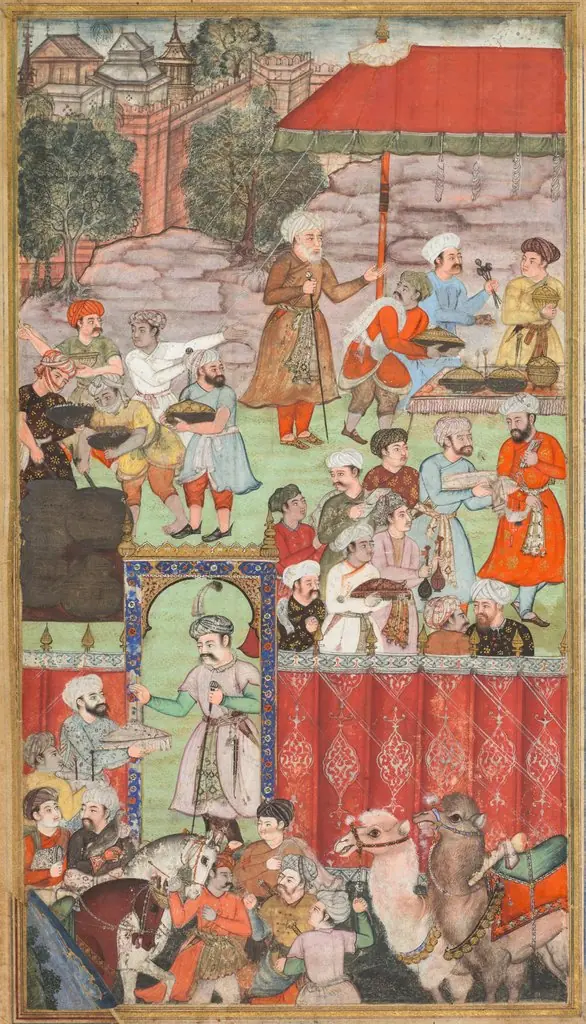 A feast for Babur hosted by his half-brother Jahangir Mirza in Ghazni in May 1505, from a Babur-nama (Memoirs of Babur)
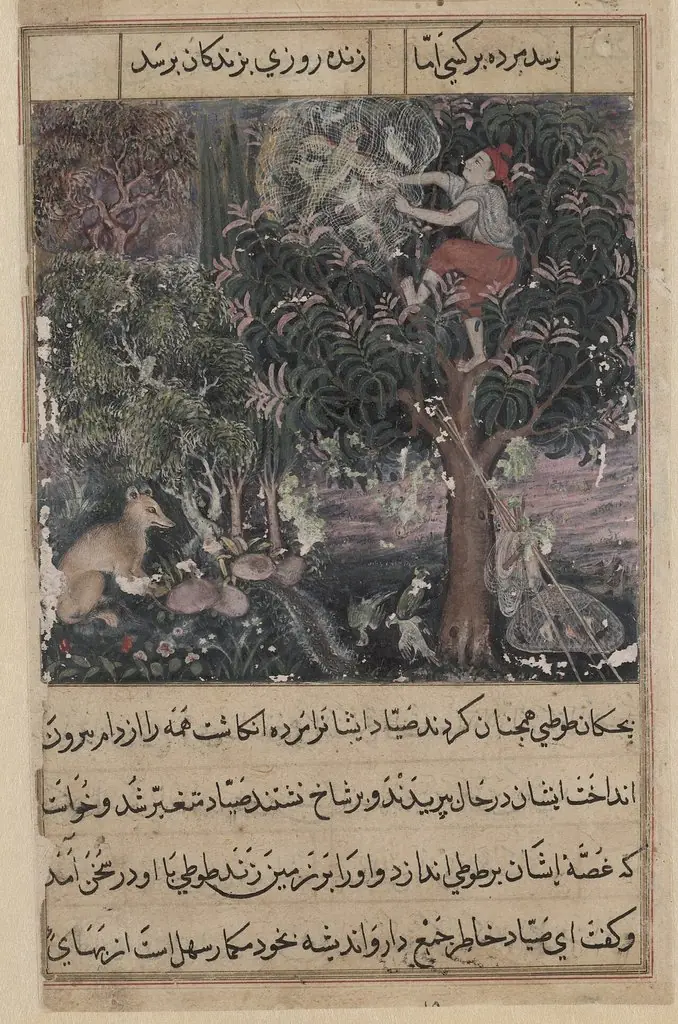 The hunter throws away the baby parrots, who pretend to be dead, and captures the mother, from a Tuti-nama (Tales of a Parrot): Fifth Night
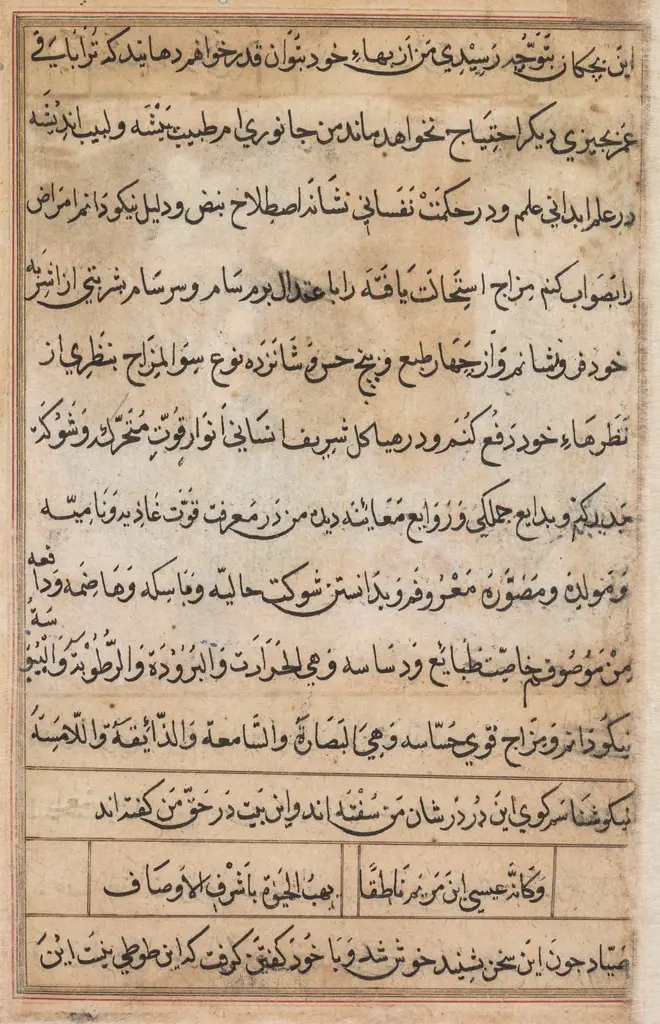 Page from Tales of a Parrot (Tuti-nama): text page
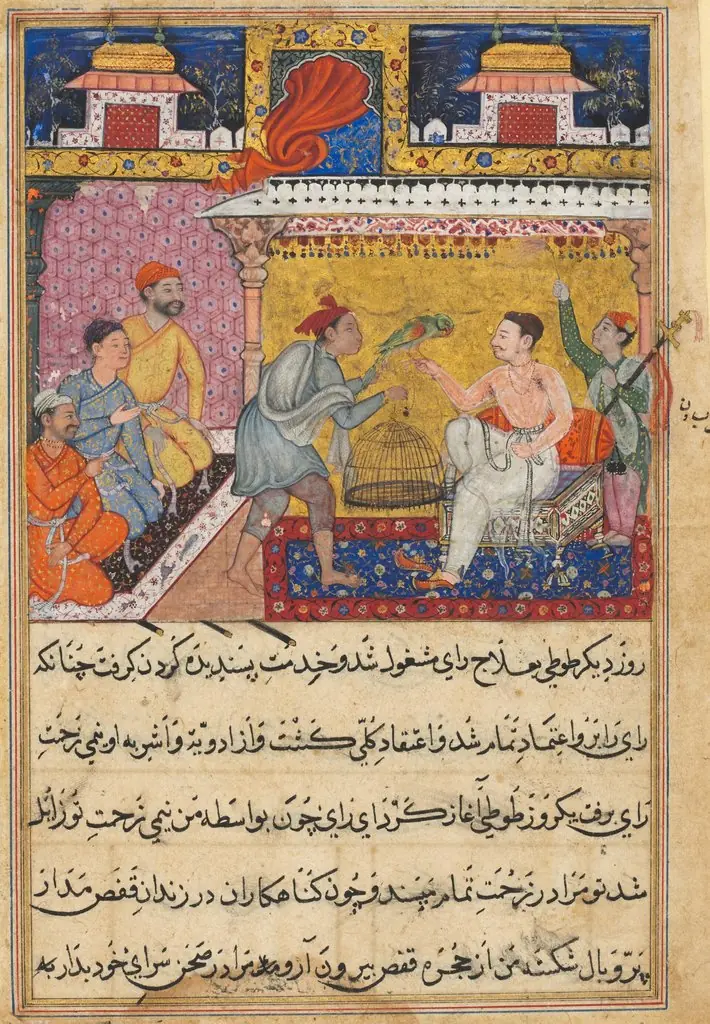 The hunter offers the mother parrot to the king of Kamarupa, from a Tuti-nama (Tales of a Parrot): Fifth Night