Artwork
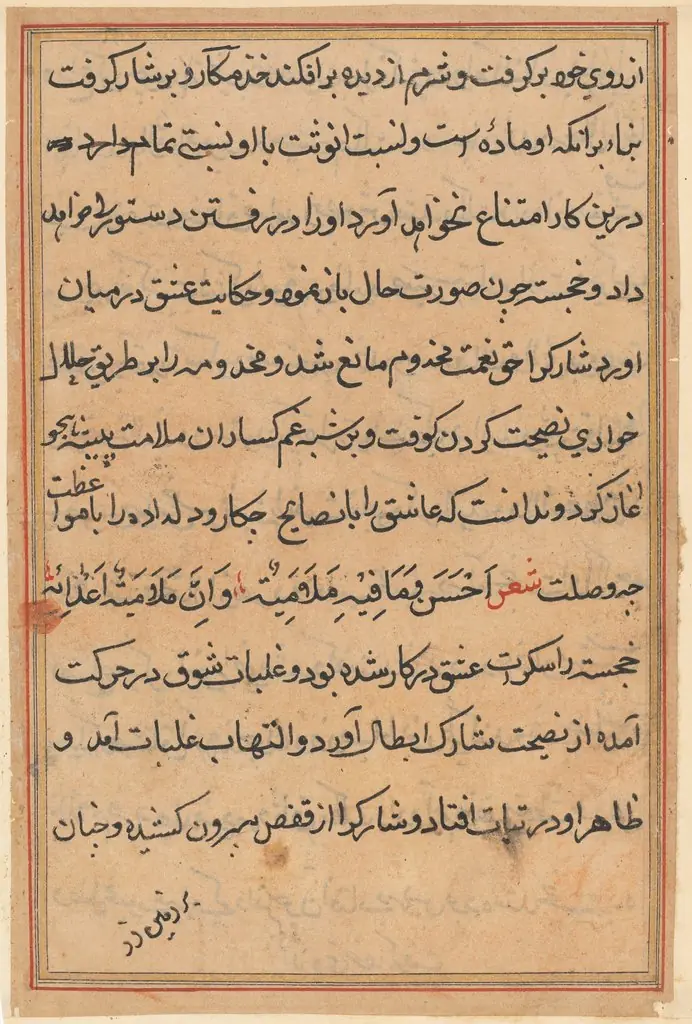
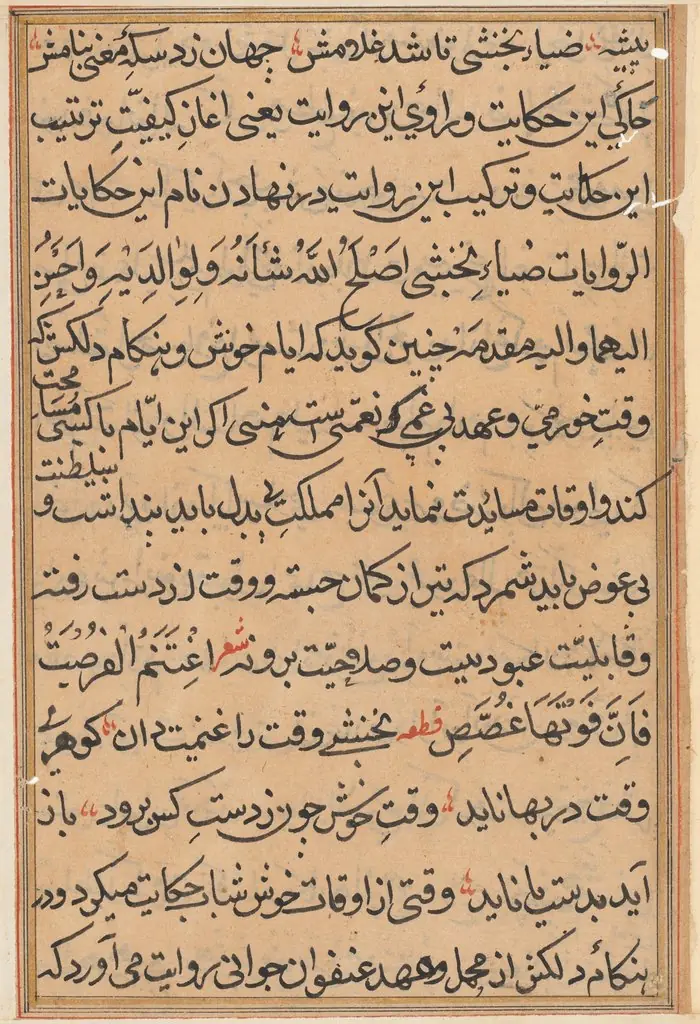
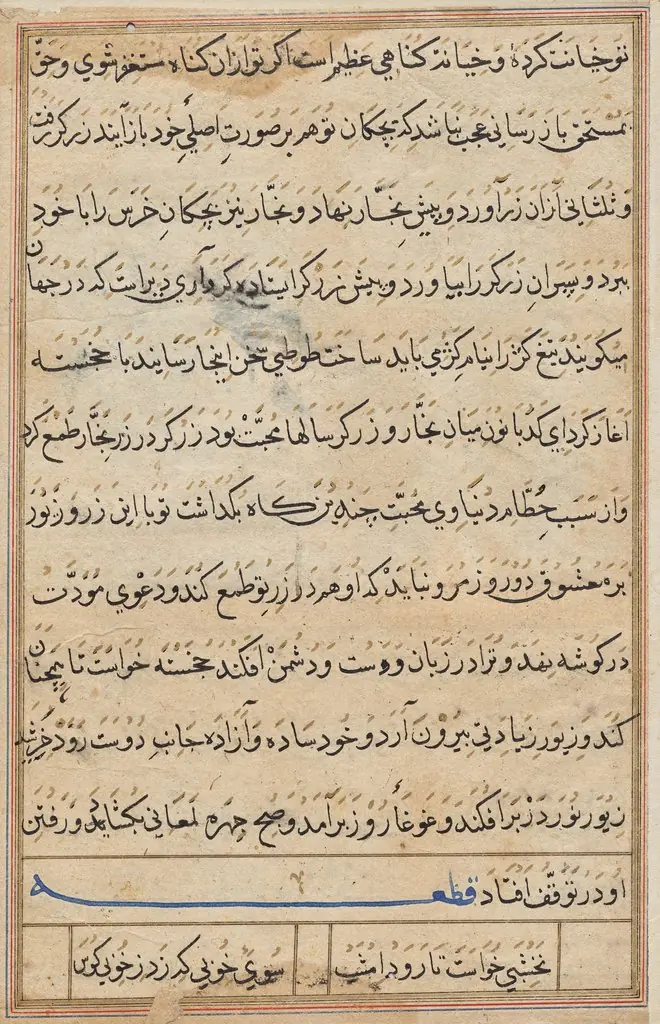
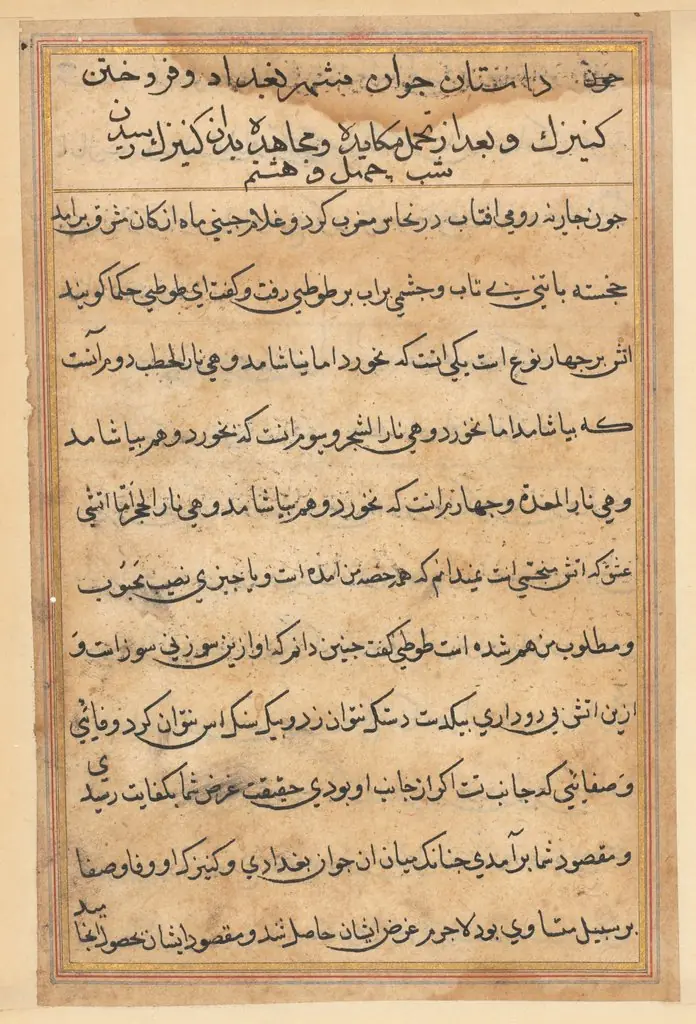
Page from Tales of a Parrot (Tuti-nama): text page
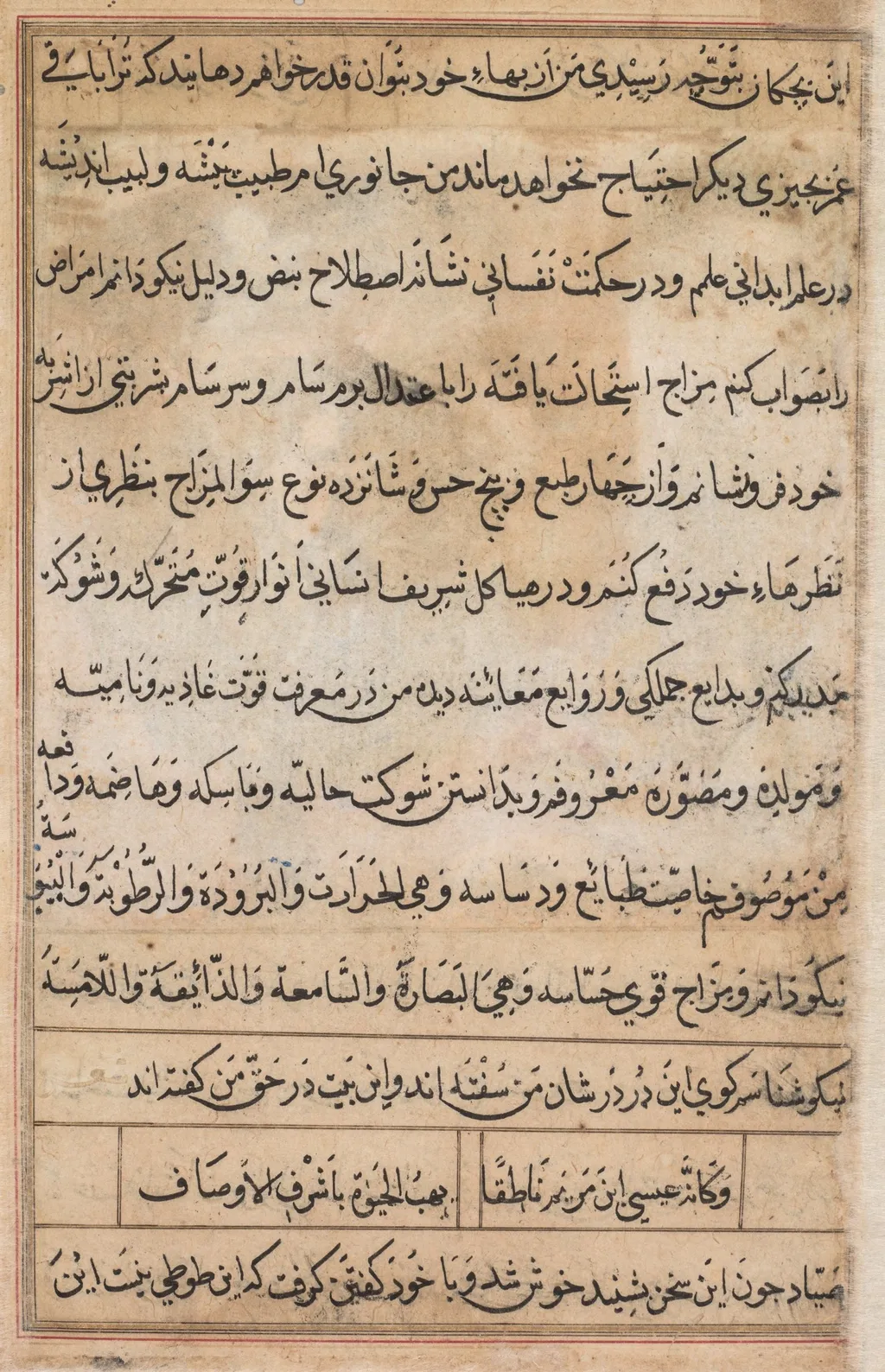
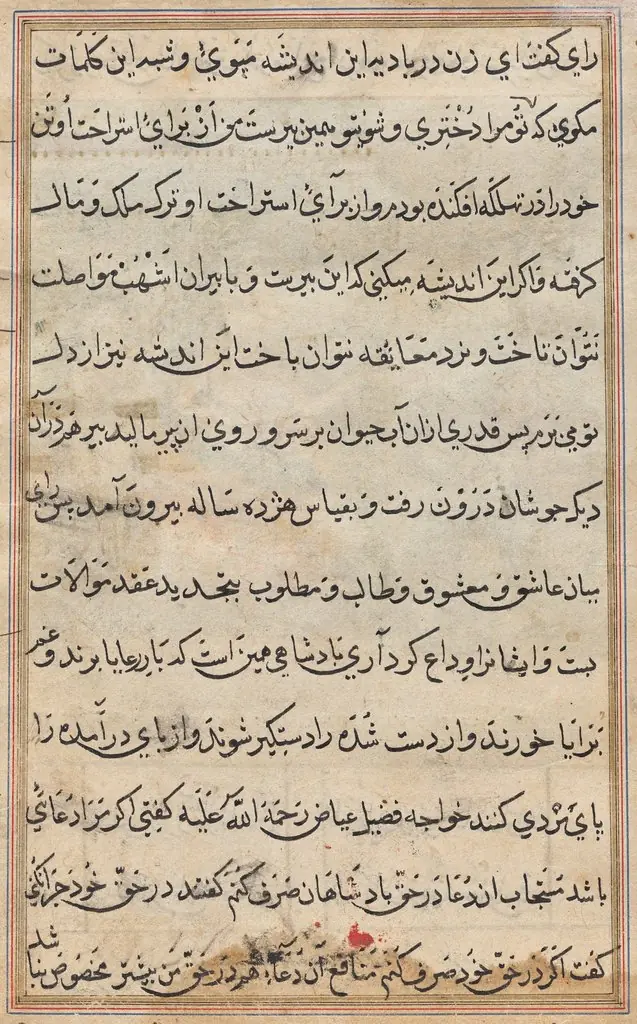
Page from Tales of a Parrot (Tuti-nama): text page is an unspecified painting by the Mughal Painting artist Basawan. It dates from 1560 and is held in the collection of the Cleveland Museum of Art. This illuminated page originates from the 16th‑century Persian manuscript known as the Tales of a Parrot (Tuti‑nama).
About this work
Overview
This illuminated page originates from the 16th‑century Persian manuscript known as the Tales of a Parrot (Tuti‑nama). Executed by the artist Baswan around 1560, it consists of a single sheet of paper densely covered with black calligraphic text, framed at the bottom by a thin red border containing a brief inscription. The piece is part of the collection of the Cleveland Museum of Art.
Subject & Meaning
The page presents a segment of the Tuti‑nama narrative, a moral and didactic collection of stories traditionally illustrated for courtly audiences. The densely packed script conveys the tale’s verses, while the modest red marginal note may identify the section or provide a scribe’s comment, reflecting the work’s function as a literary, rather than purely decorative, object.
Technique & Style
Baswan employed a fine, flowing Persian nastaʿlīq hand, arranging the lines with precise spacing that maximizes the paper’s surface. Variations in size and occasional underlining highlight key words, a common practice to guide readers. The paper’s muted, aged tone and the subtle red border illustrate the restrained palette typical of manuscript pages intended for private reading.
History & Provenance
Created in the mid‑16th century, the page remained within the Persian manuscript tradition before entering the Western art market. It was acquired by the Cleveland Museum of Art, where it now serves as an example of Mughal‑period book production and the work of the noted calligrapher Baswan.
Context
During the Safavid era, illustrated books like the Tuti‑nama blended literary content with sophisticated calligraphy, reflecting elite cultural values. Baswan’s contribution aligns with a broader movement of courtly manuscript production, where textual elegance was prized alongside visual embellishment, offering insight into the intellectual climate of 1560s Persia.
Artist & collection
Artist
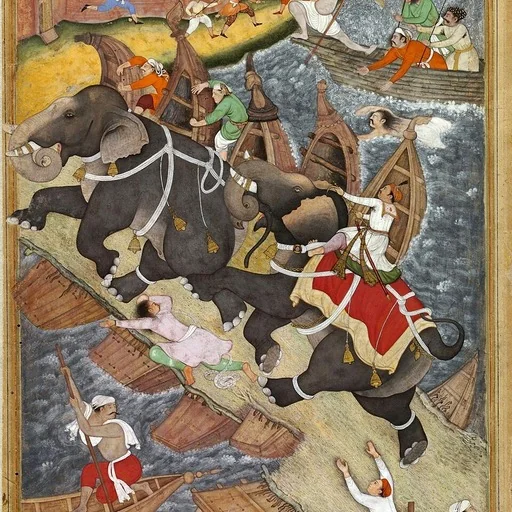
Basāwan, or Basāvan, was an Indian miniature painter in the Mughal style. He was known by his contemporaries as a skilled colorist and keen observer of human nature, and for his use of portraiture in the illustrations…

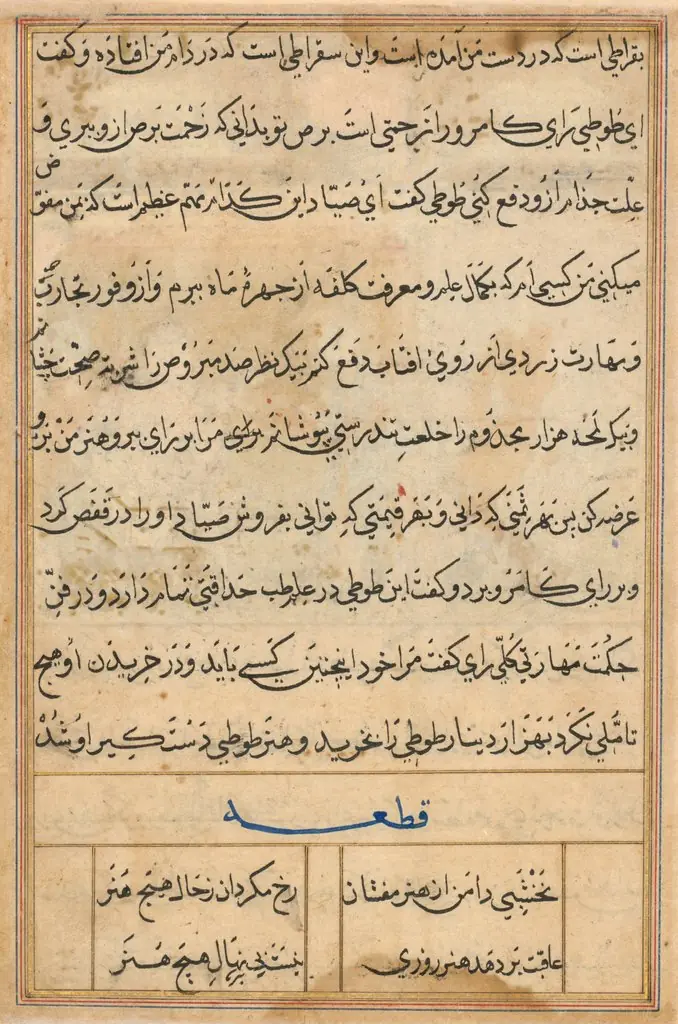 Page from Tales of a Parrot (Tuti-nama): text page
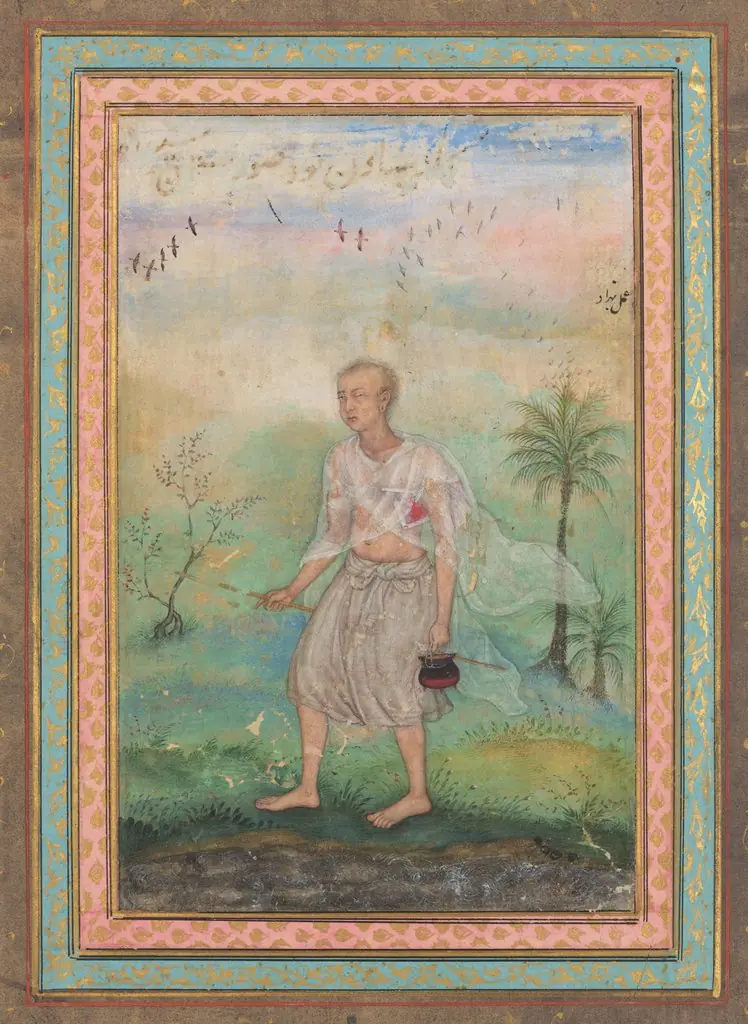 Jain Ascetic Walking Along a Riverbank
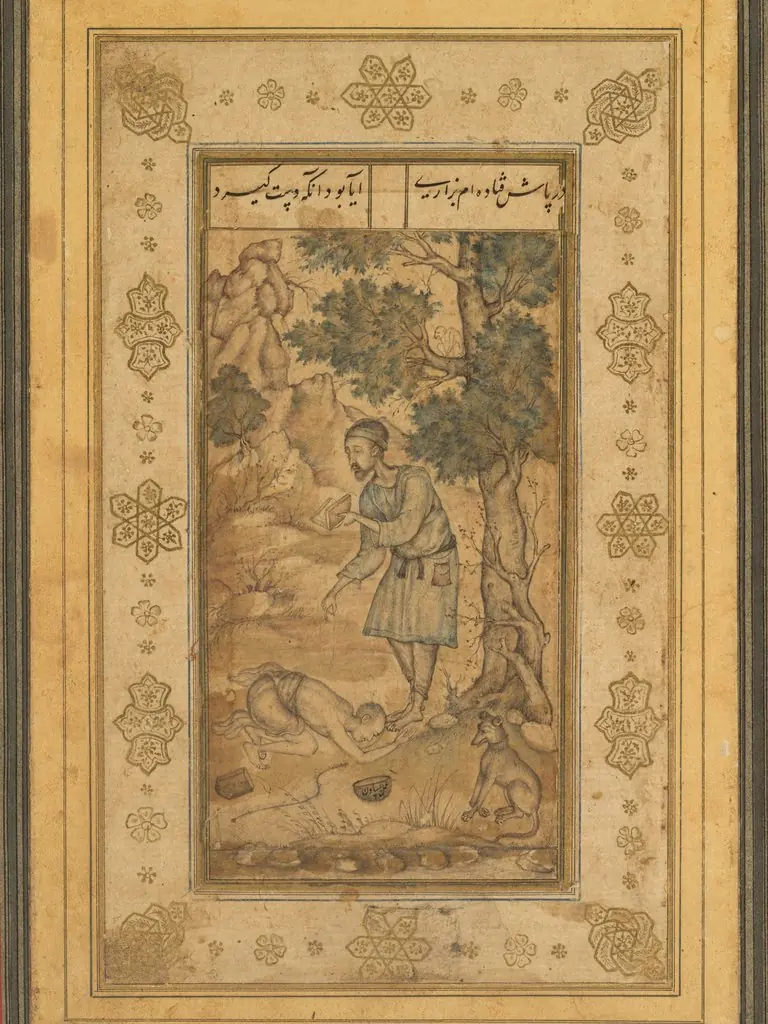 A mendicant bowing before a holy man, from the Prince Salim Album
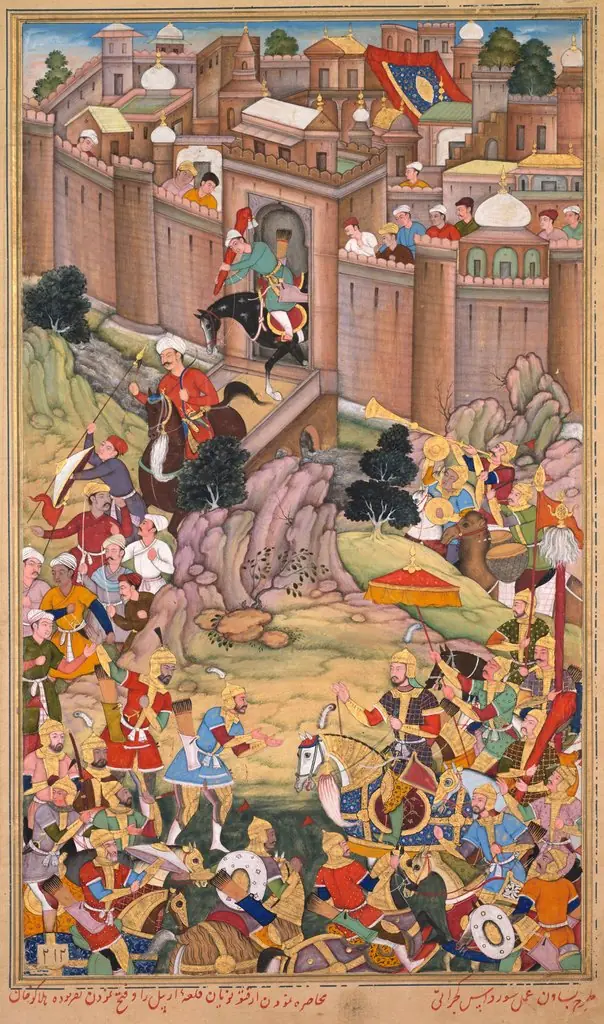 The siege of Arbela in the era of Hulagu Khan, from a Chingiz-nama (Book of Chingiz Khan) of the Jami al-tavarikh (Compendium of Chronicles) of Rashid al-Din (Persian, 1247–1318)
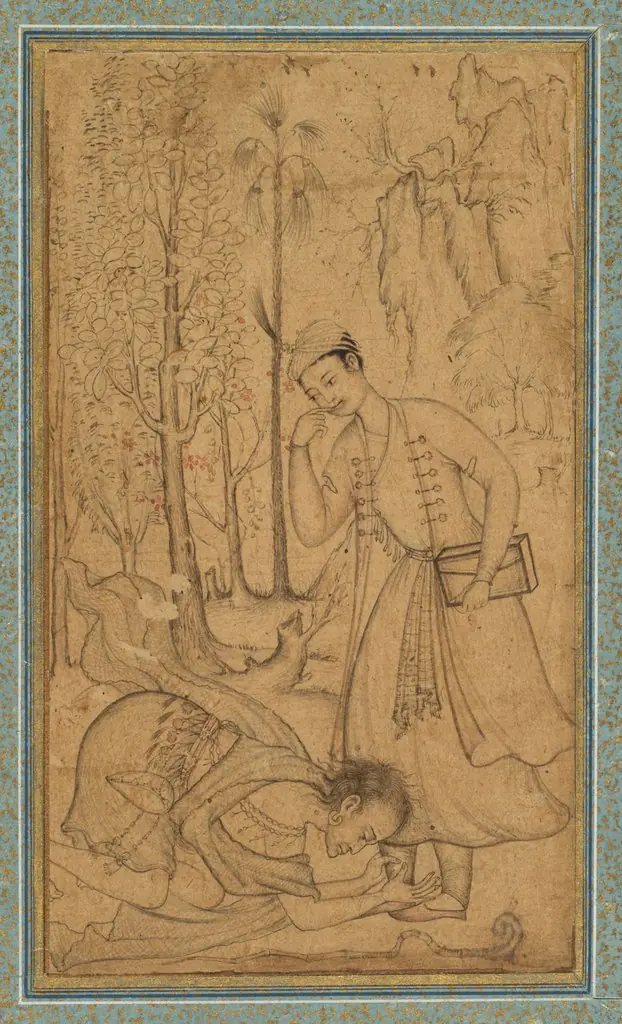 A holy man prostrating himself before a learned prince
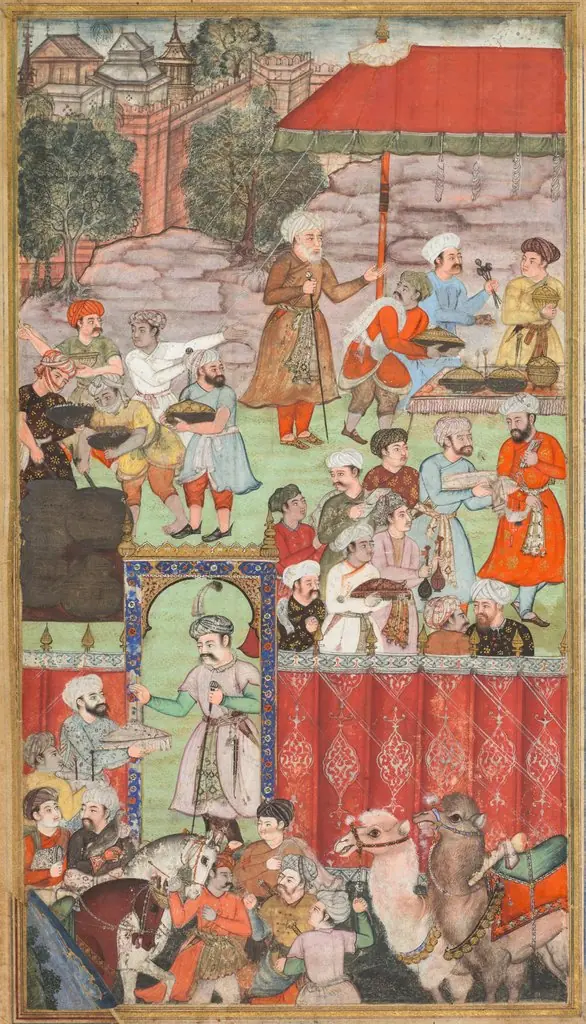 A feast for Babur hosted by his half-brother Jahangir Mirza in Ghazni in May 1505, from a Babur-nama (Memoirs of Babur)
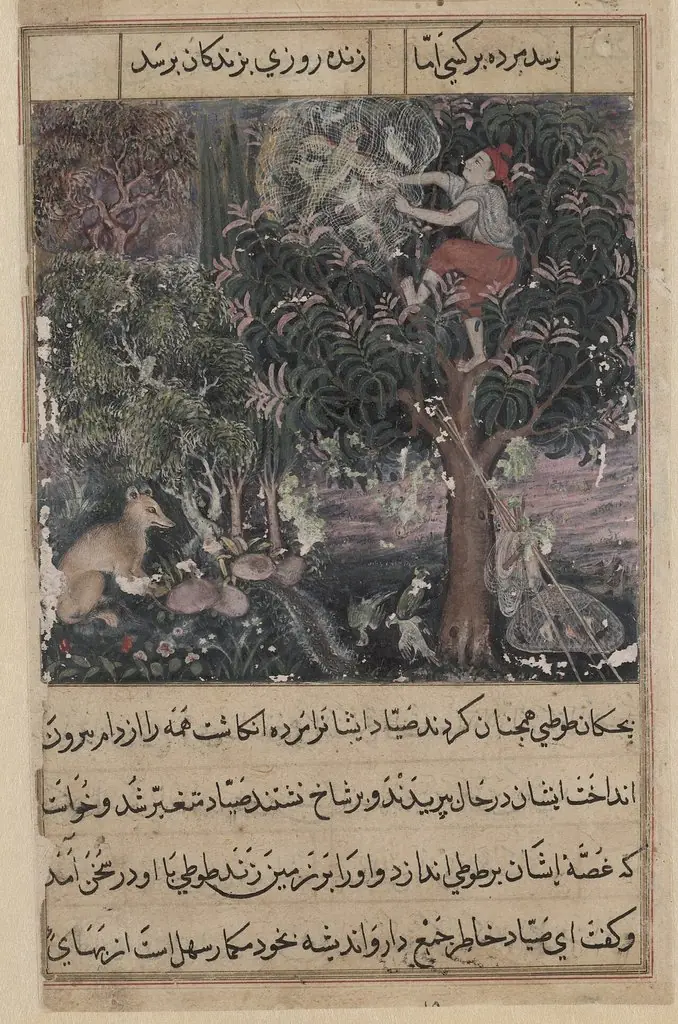 The hunter throws away the baby parrots, who pretend to be dead, and captures the mother, from a Tuti-nama (Tales of a Parrot): Fifth Night
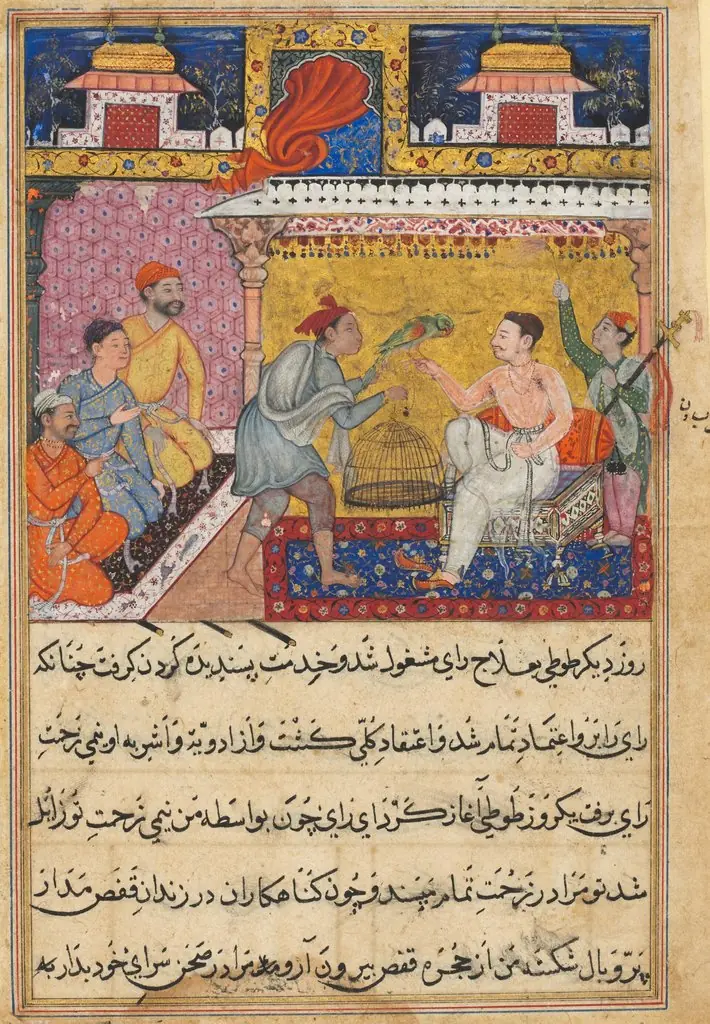 The hunter offers the mother parrot to the king of Kamarupa, from a Tuti-nama (Tales of a Parrot): Fifth Night
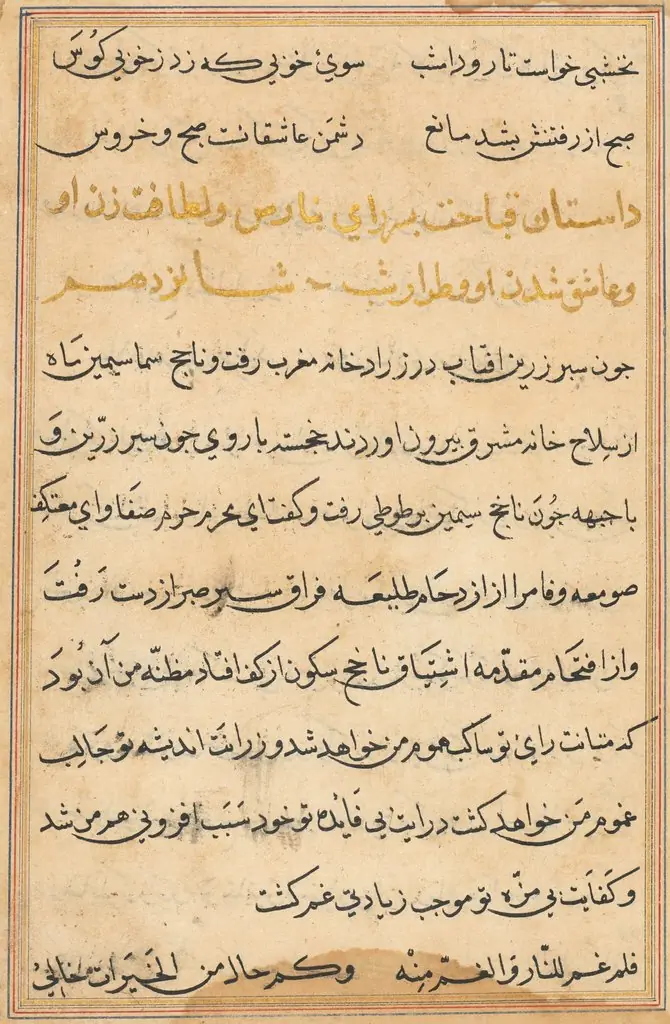 Page from Tales of a Parrot (Tuti-nama): text page
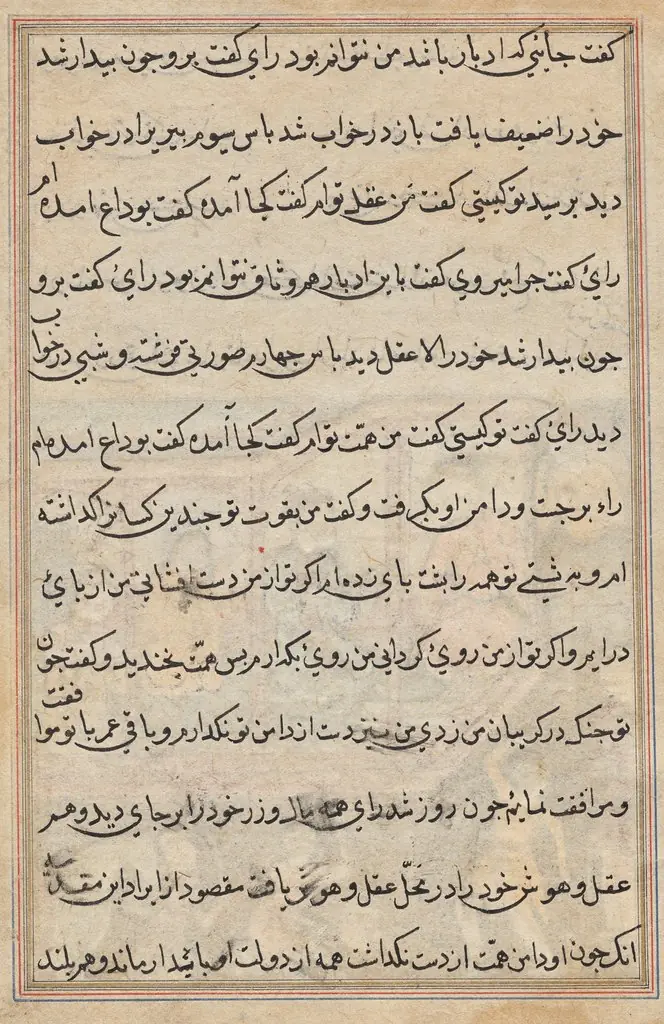 Page from Tales of a Parrot (Tuti-nama): text page
 Page from Tales of a Parrot (Tuti-nama): text page
 Page from Tales of a Parrot (Tuti-nama): text page
 Page from Tales of a Parrot (Tuti-nama): text page
 Page from Tales of a Parrot (Tuti-nama): text page
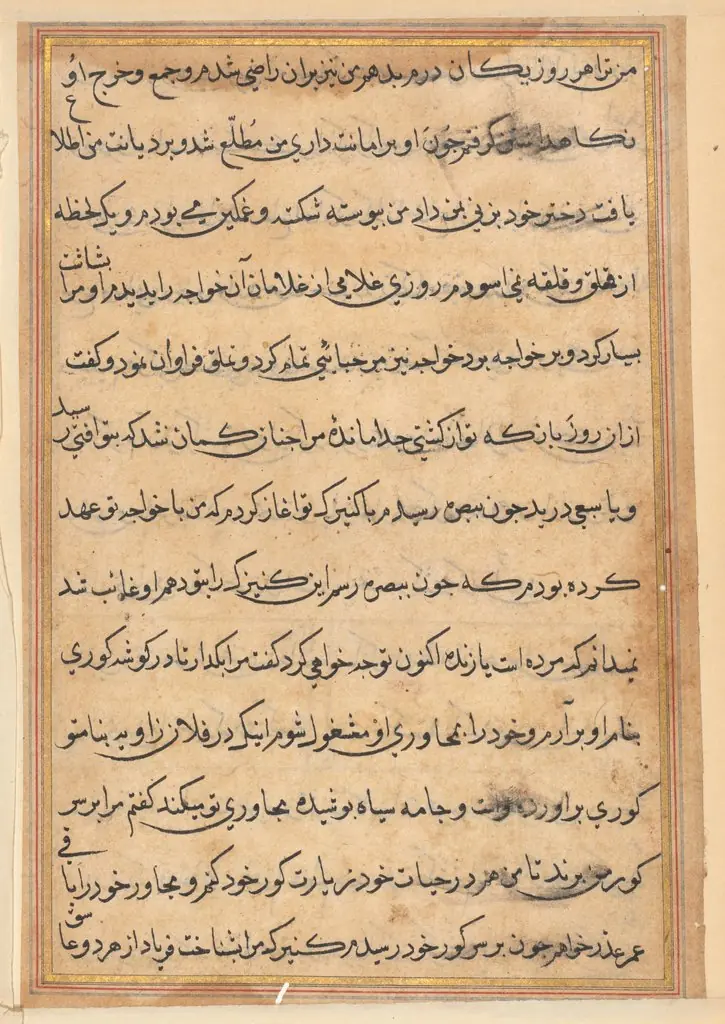 Page from Tales of a Parrot (Tuti-nama): text page
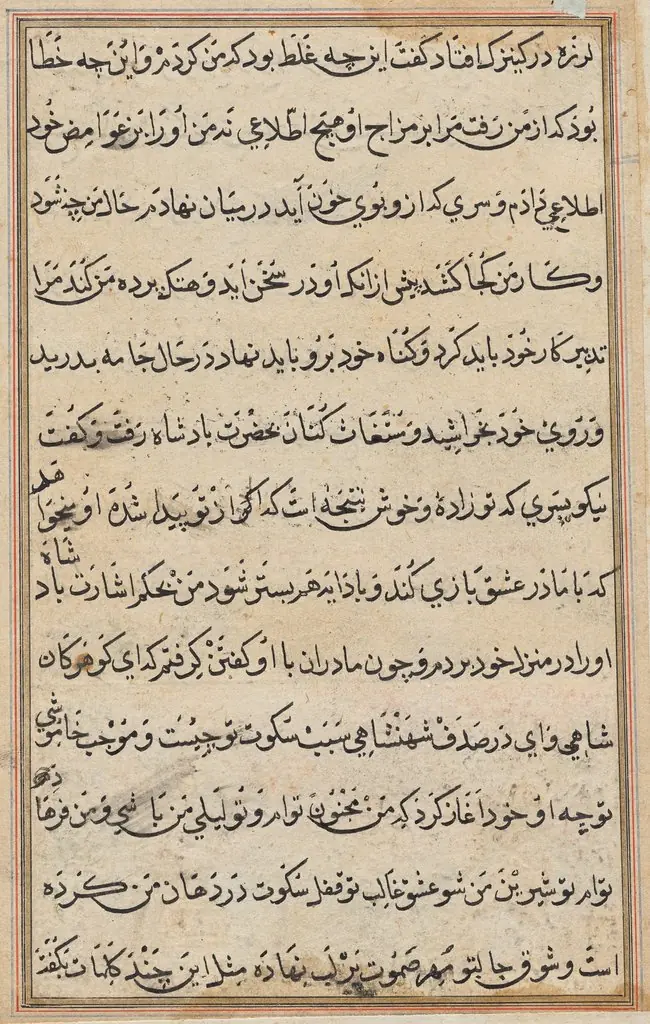 Page from Tales of a Parrot (Tuti-nama): text page
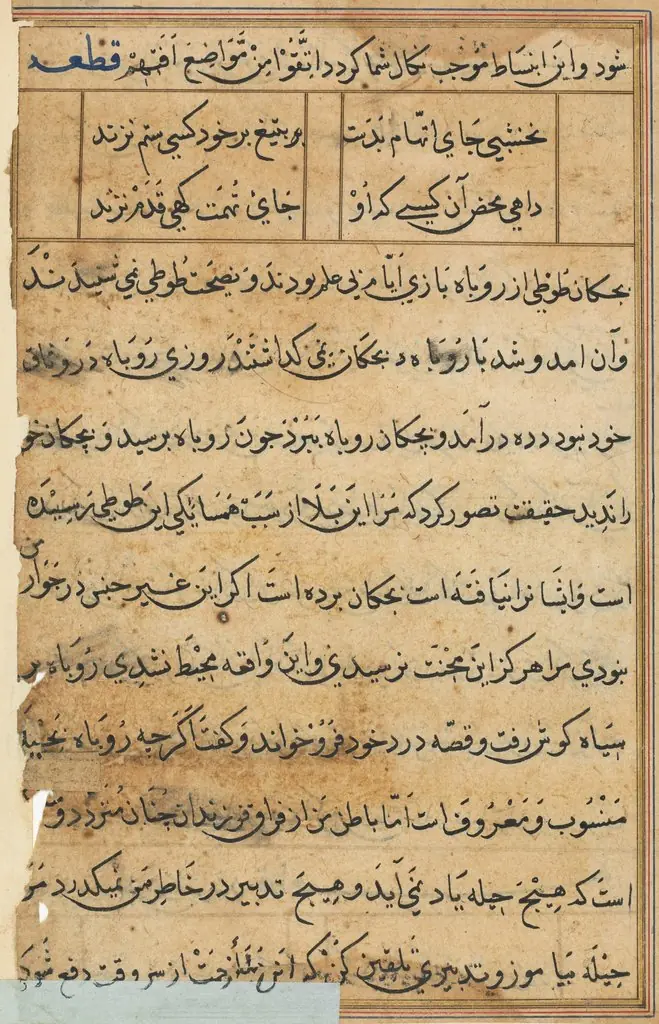 Page from Tales of a Parrot (Tuti-nama): text page
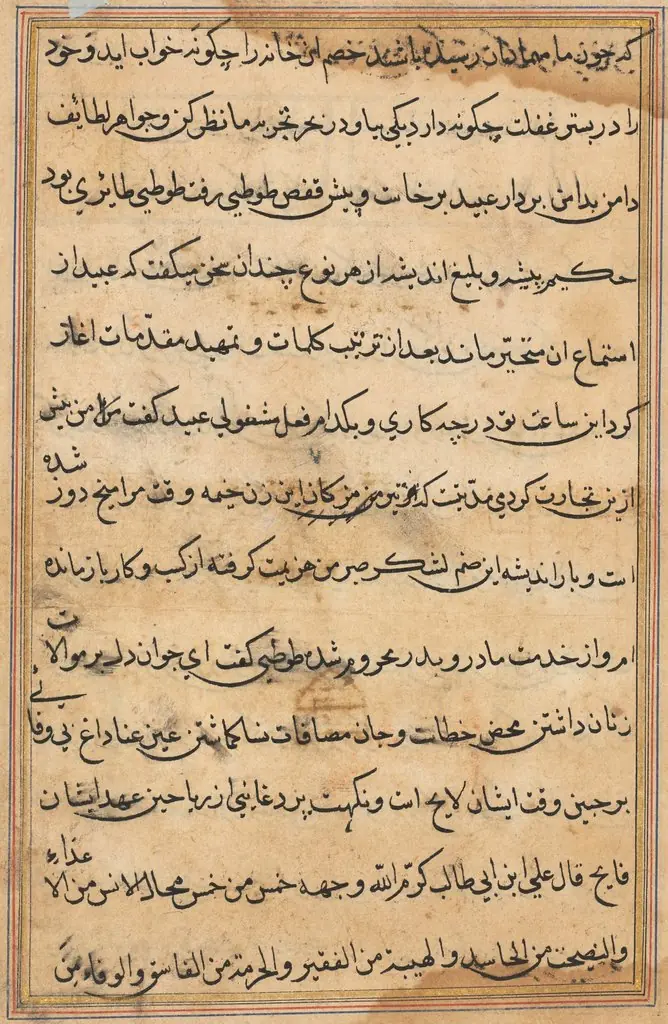 Page from Tales of a Parrot (Tuti-nama): text page
 Page from Tales of a Parrot (Tuti-nama): text page