Artwork
The Immaculate Conception
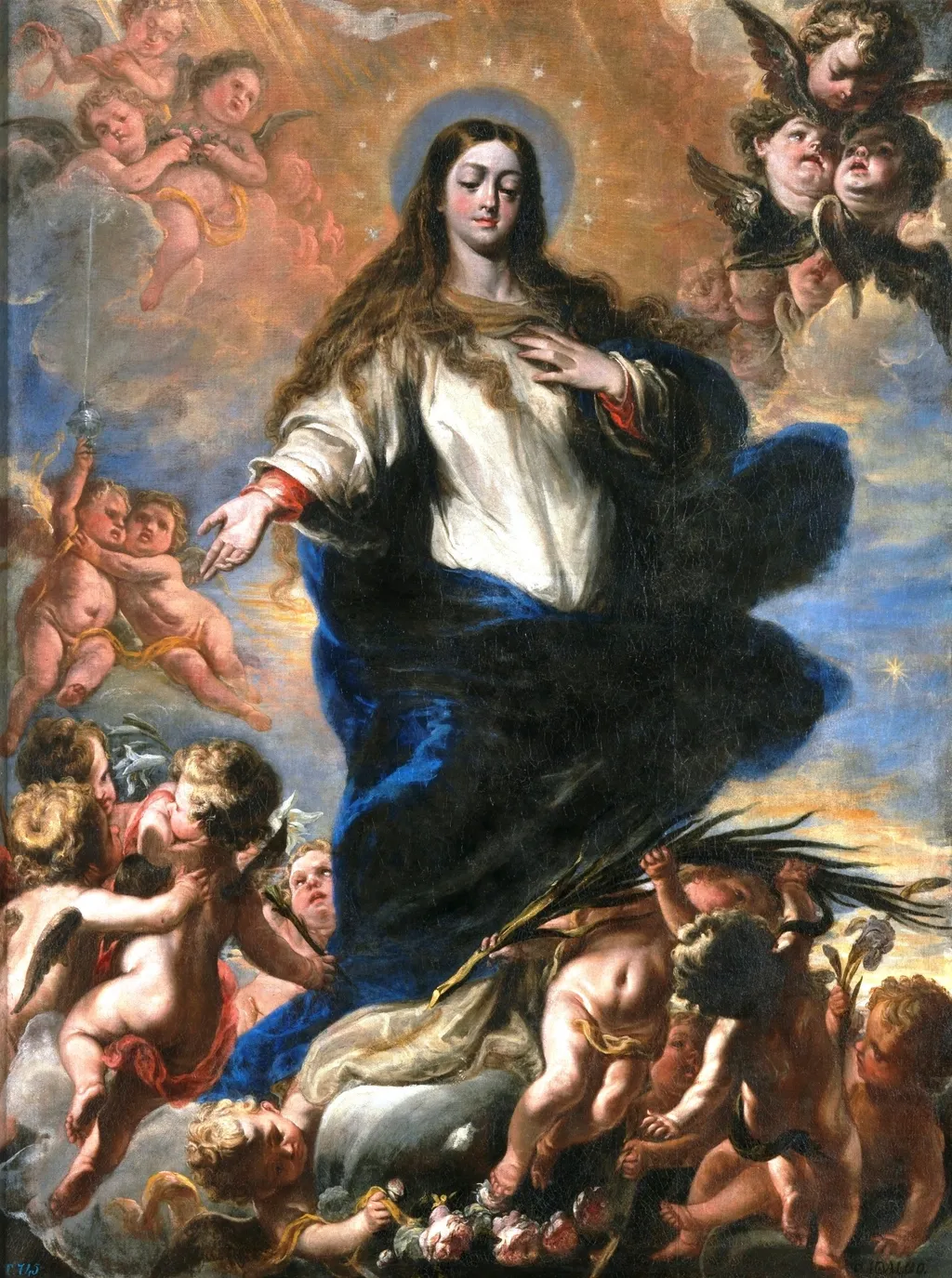
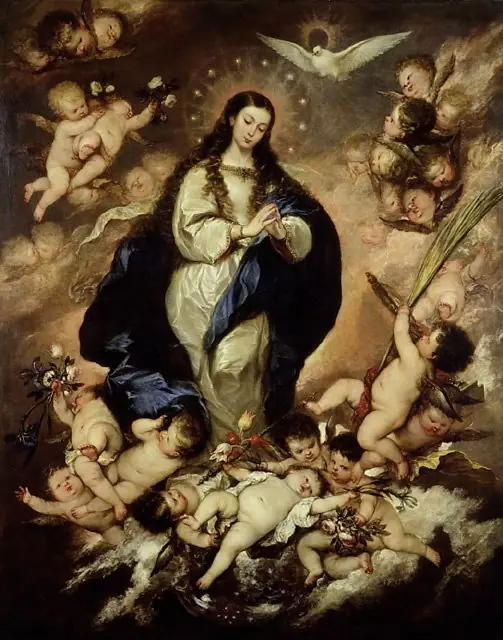
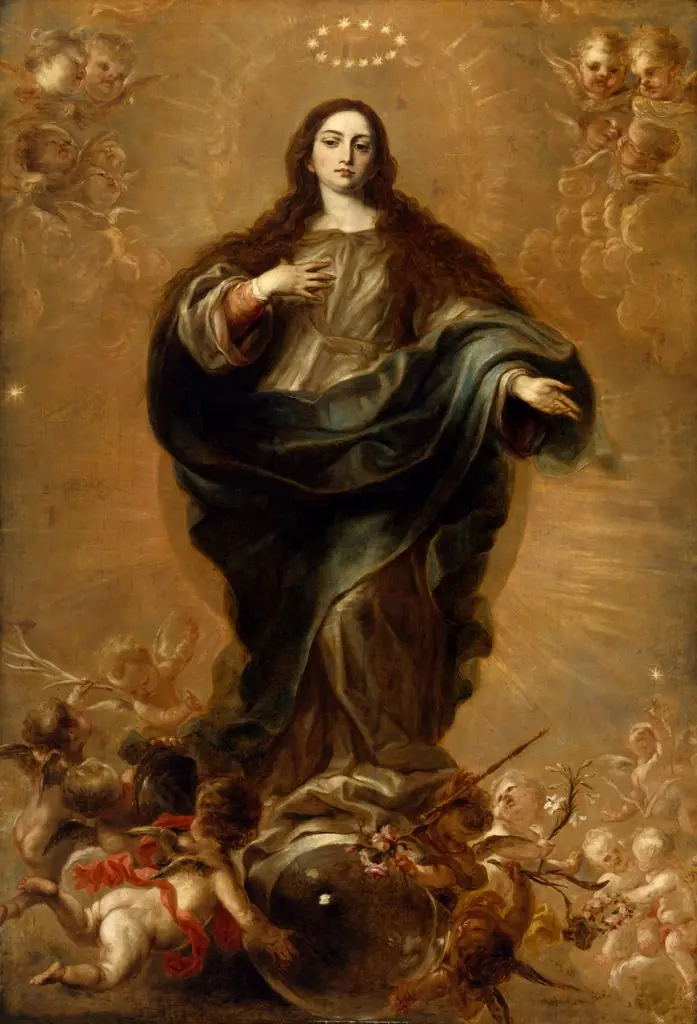
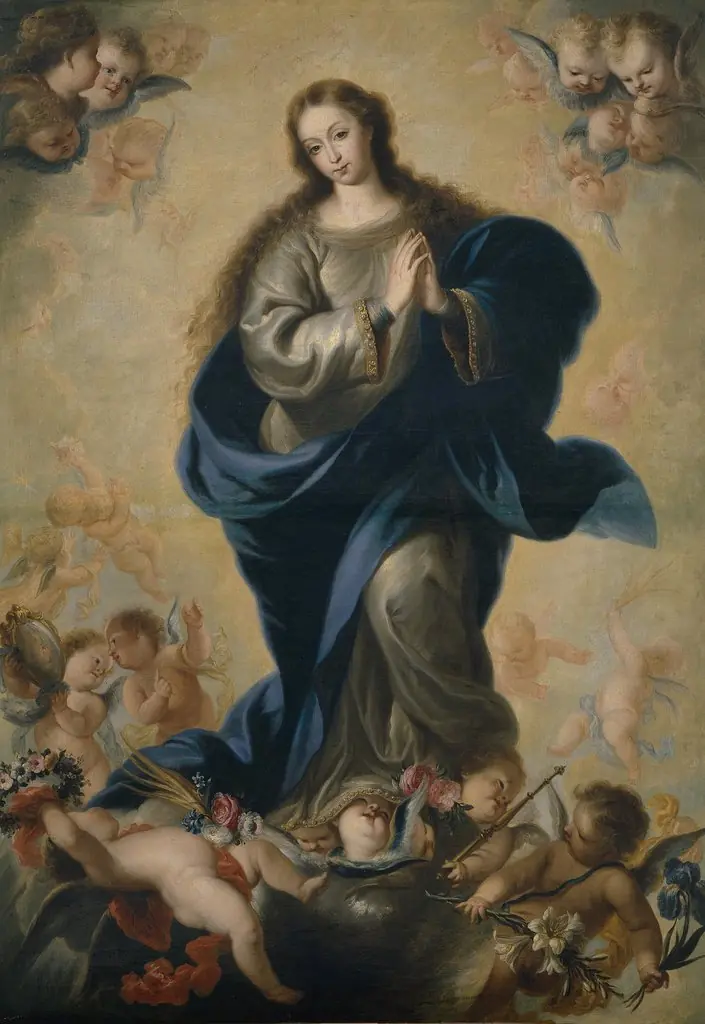
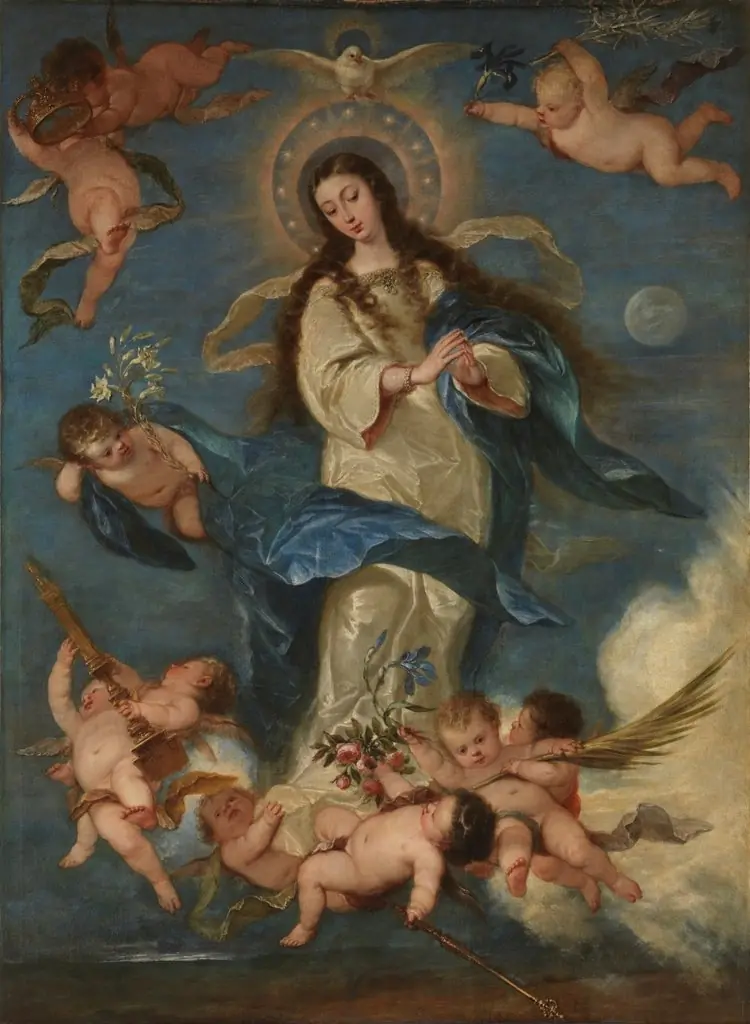
The Immaculate Conception is an oil painting by the Early Baroque Italian artist José García Hidalgo. It dates from 1601 and is held in the collection of the Museo del Prado.
About this work
Overview
Created in 1601 by the Spanish artist José García Hidalgo, known as El Castellano, this oil painting portrays the Catholic doctrine of the Immaculate Conception. The work is part of the early Baroque tradition that emerged in Italy and is presently housed in Madrid’s Museo del Prado.
Subject & Meaning
The composition centers on the Virgin Mary, shown standing amid a host of angels and cherubs. Clothed in a white robe beneath a blue mantle, she places her hands over her chest, a gesture that underscores her purity and divine favor as interpreted in the theological concept of her immaculate birth.
Technique & Style
Hidalgo employs a luminous palette of blues, whites, and golds, allowing the light from a radiant sky to cascade over the figure. Visible brushwork adds texture, while chiaroscuro modelling creates dramatic contrast, directing the viewer’s focus toward Mary and enhancing the emotional intensity typical of early Baroque art.
History & Provenance
The painting entered the collection of the Museo del Prado, where it remains on display. Its attribution to Hidalgo aligns with his activity in the early 17th century, and the work exemplifies the cross‑cultural exchange between Spanish and Italian Baroque practices during that period.
Own this work as a print
Artist & collection
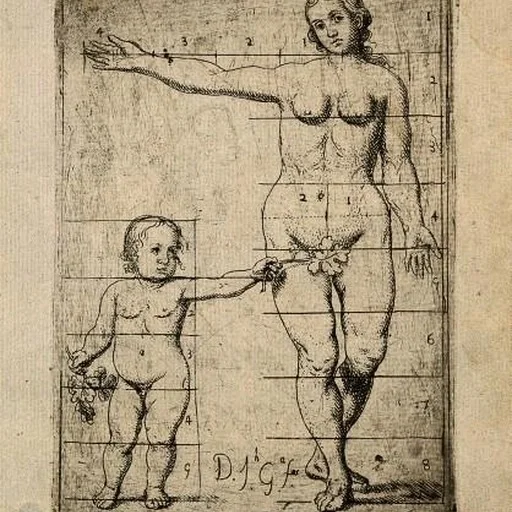
Artist
José García Hidalgo (1645 or 1646 – 1717 or 1719) was a Spanish painter, who wrote notes of his life, but omitted to state where and when he was born.

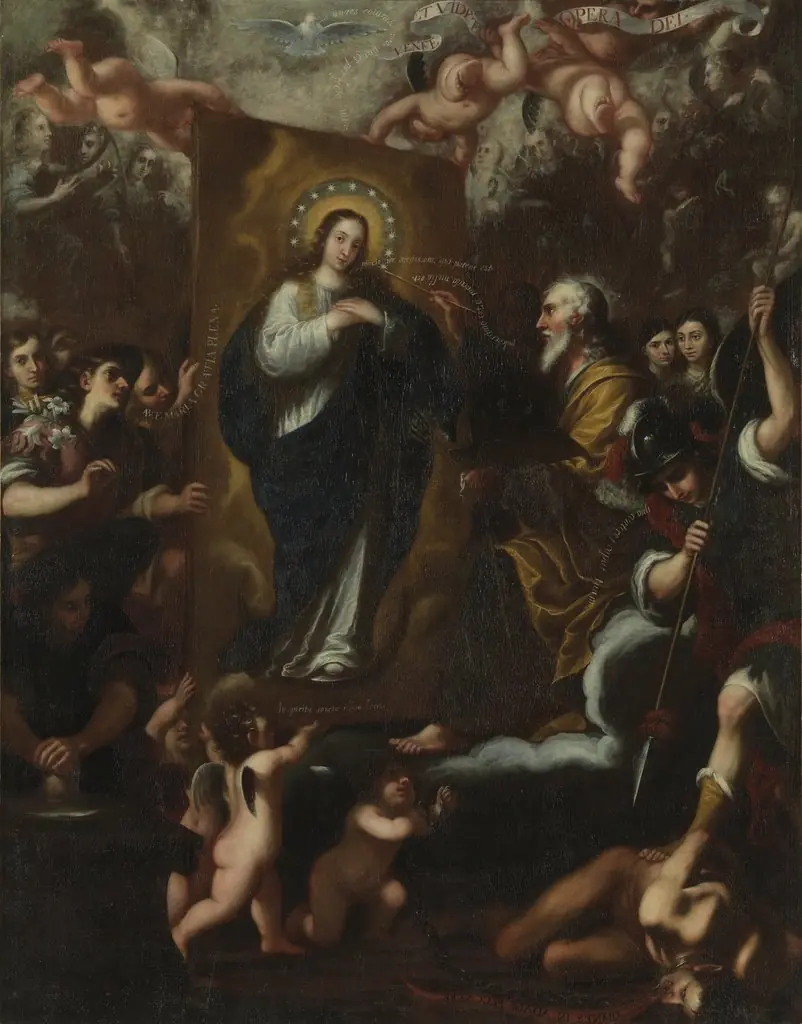 God the Father painting the Immaculate Conception
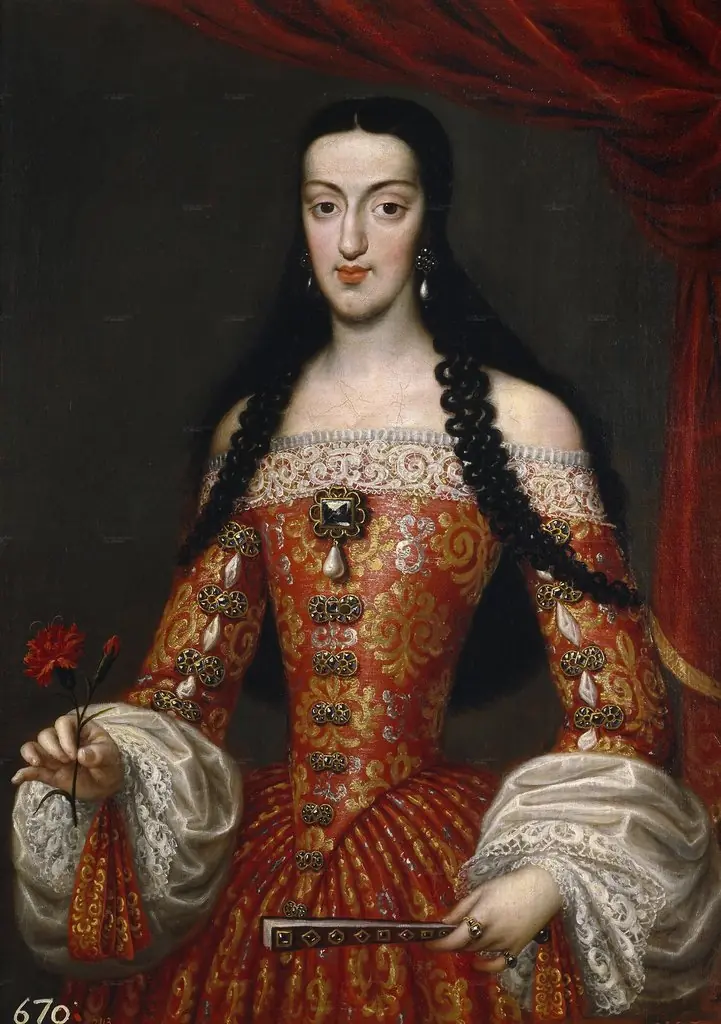 Mary Louise of Orleans, queen of Spain
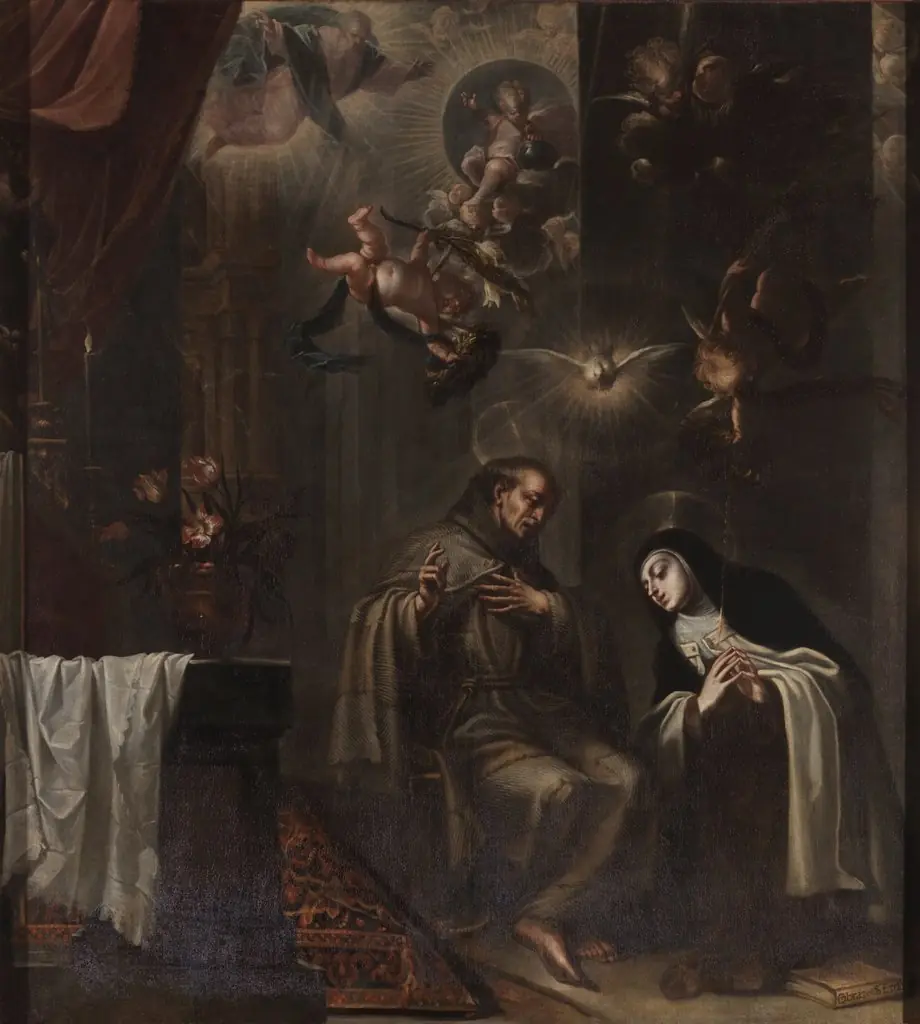 San Pedro de Alcántara confesando a Santa Teresa
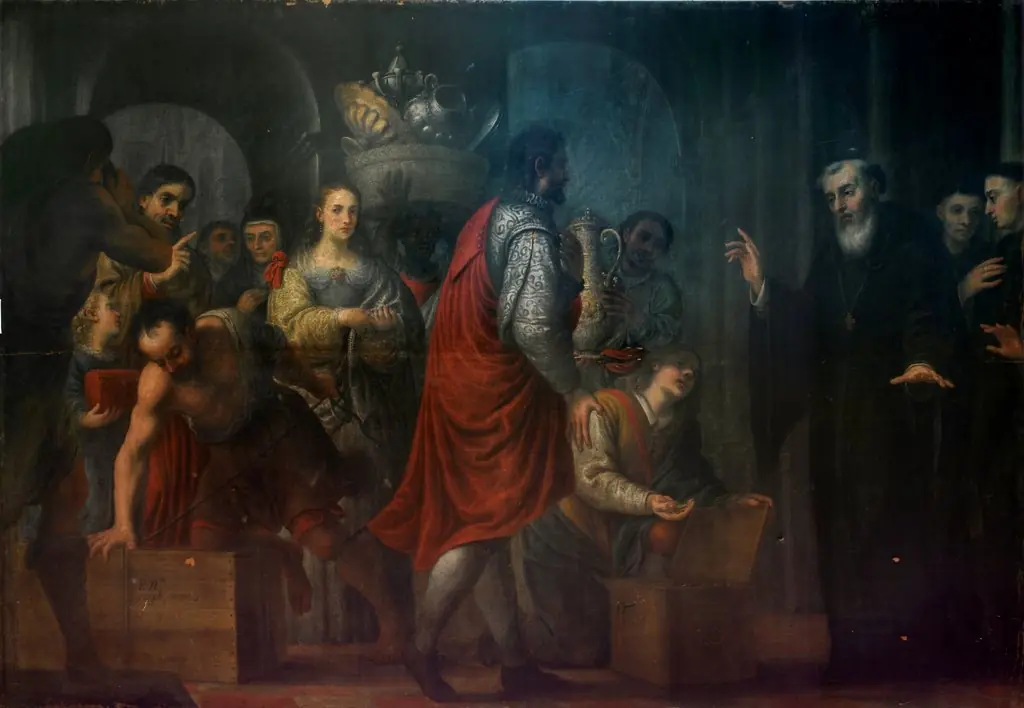 San Agustín recibiendo donaciones de los ricos para entregarlas a los pobres
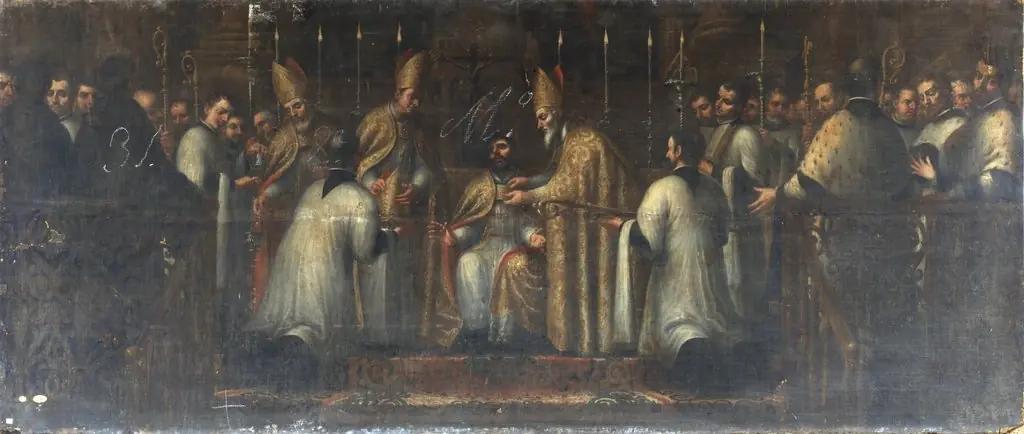 San Agustín discutiendo con el maniqueo Fortunato
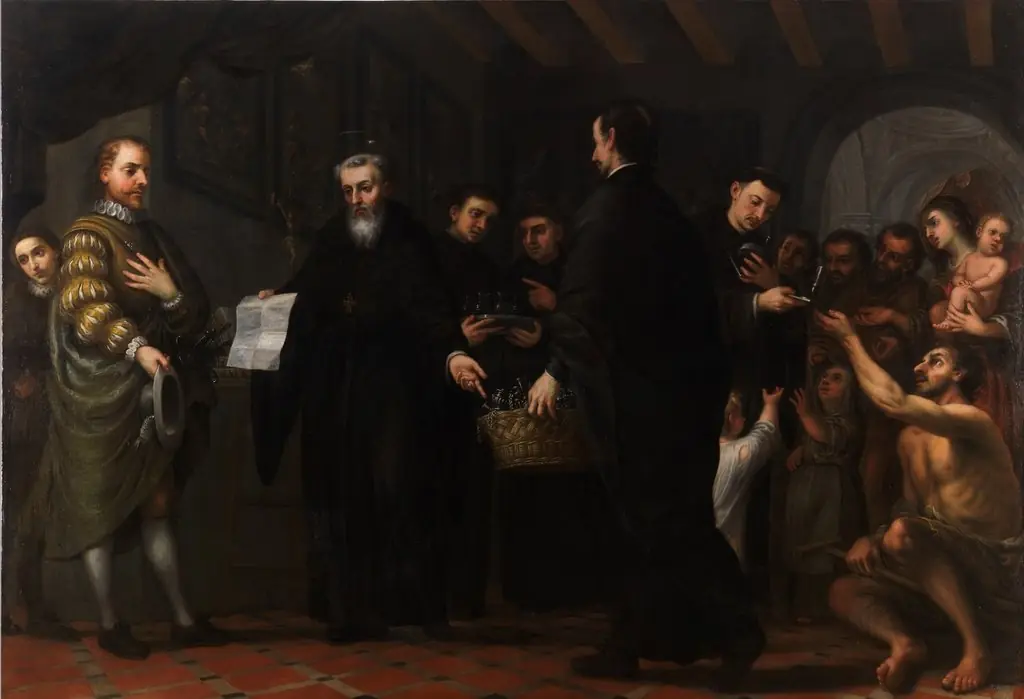 San Agustín repartiendo los bienes de los ricos entre los pobres
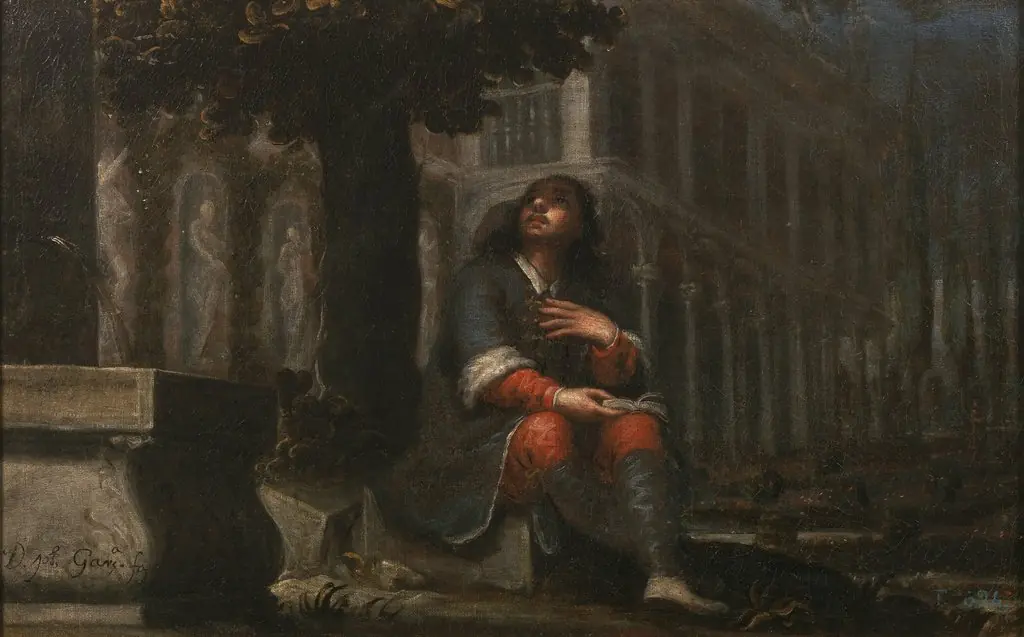 Conversion of Saint Augustin
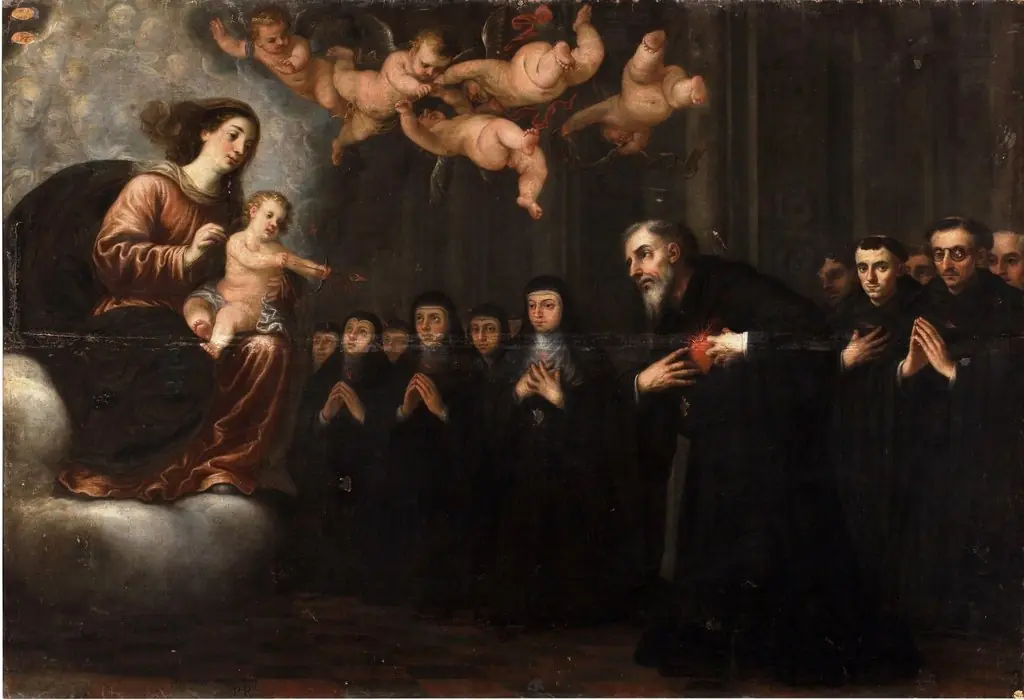 La Virgen y el Niño transverberando el corazón a San Agustín ante la comunidad de agustinos
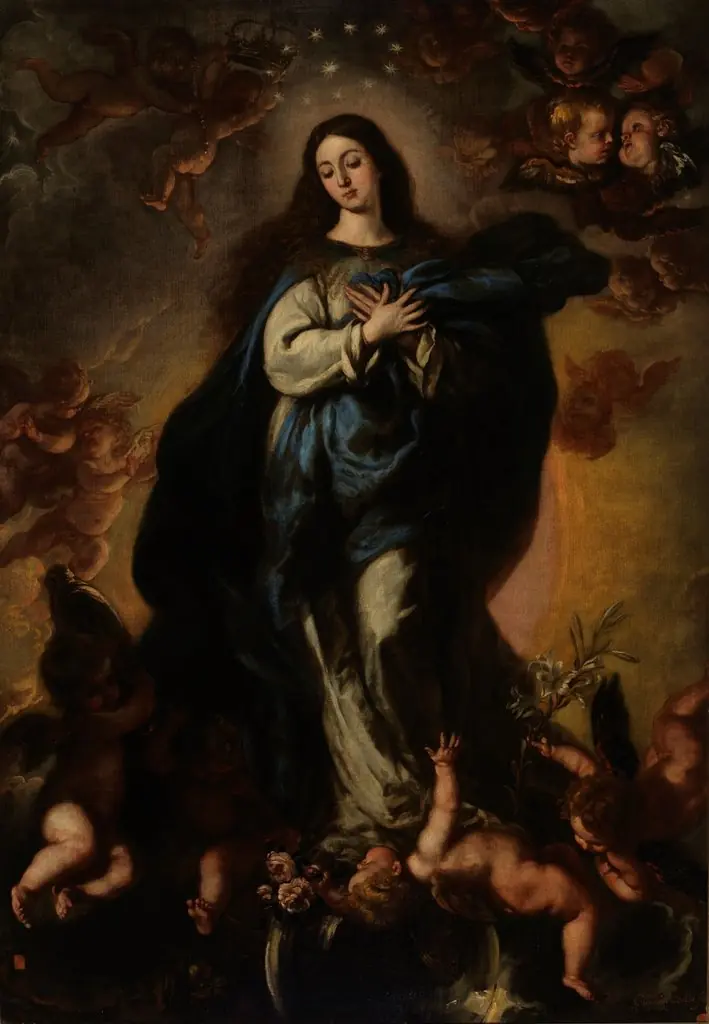 The Immaculate Conception
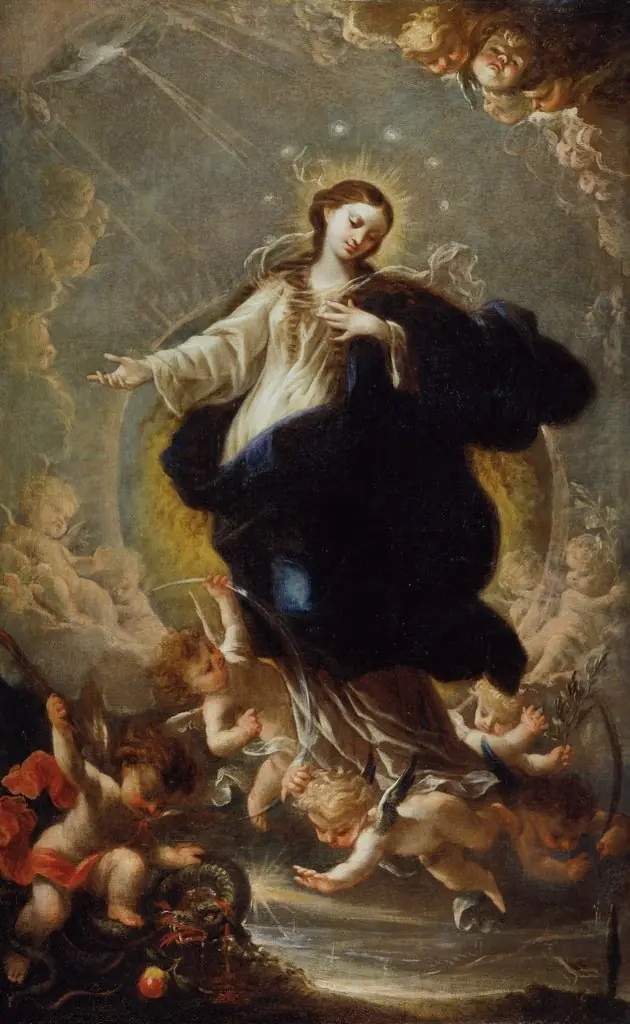 The Immaculate Conception
 The Immaculate Conception
 The Immaculate Conception
 The Immaculate Conception
 The Immaculate Conception
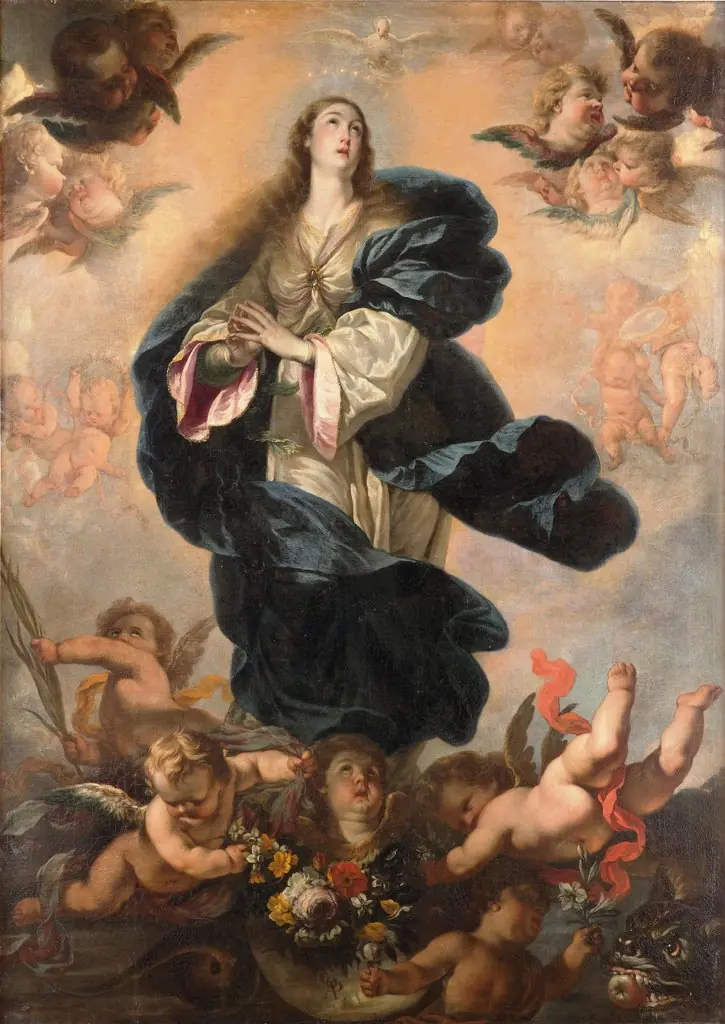 The Immaculate Conception
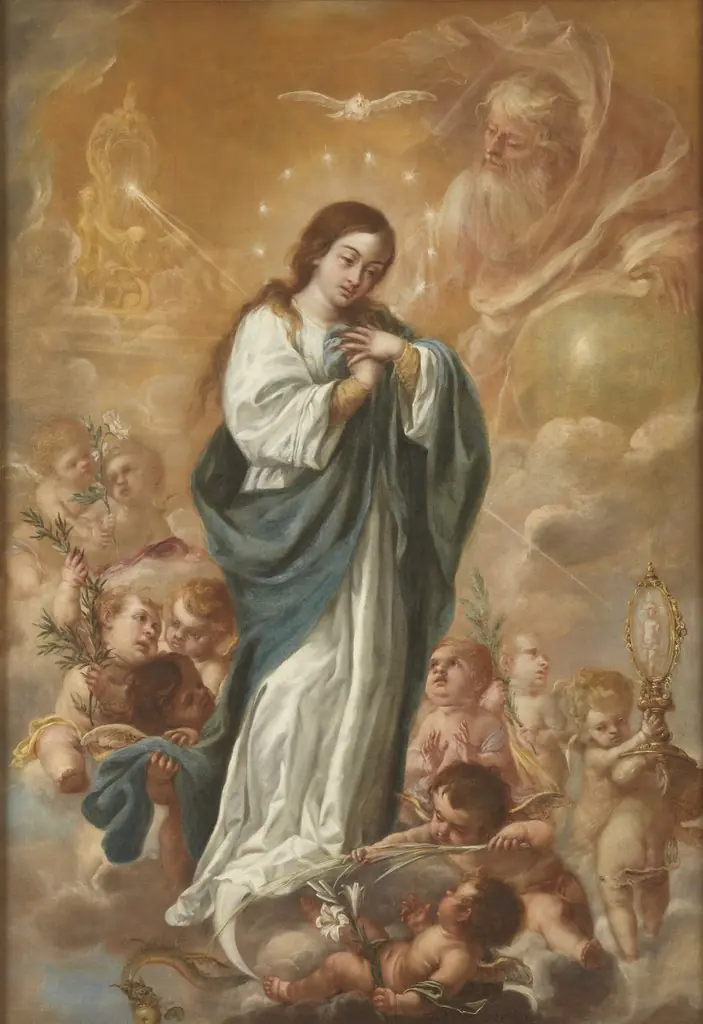 Immaculate Conception
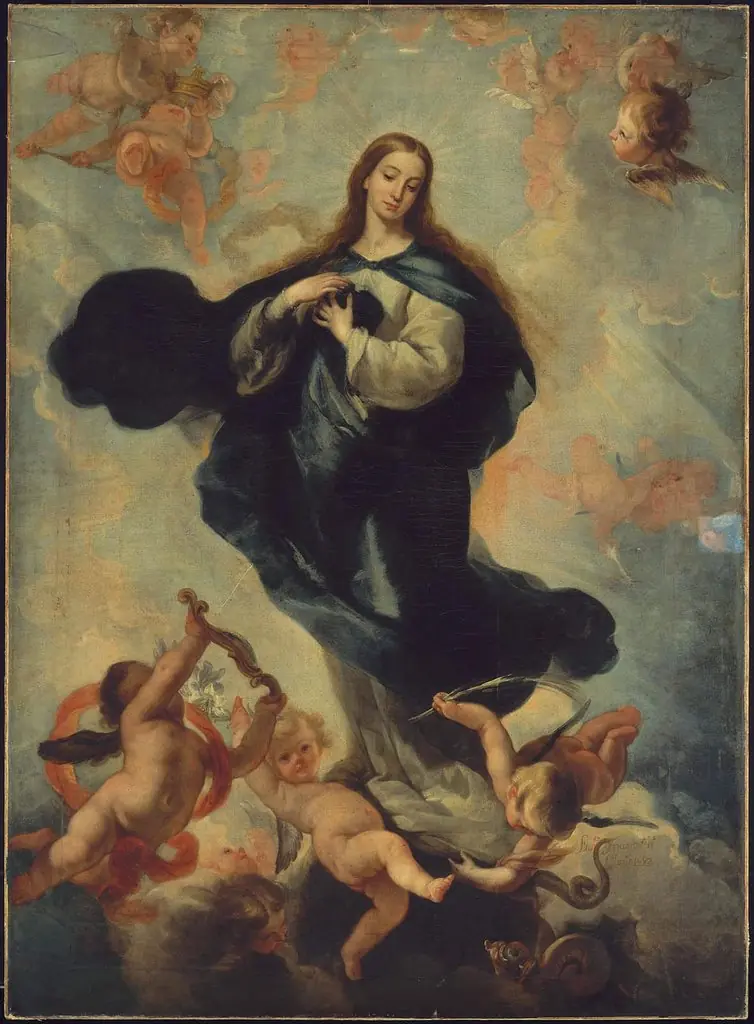 The Virgin of the Immaculate Conception
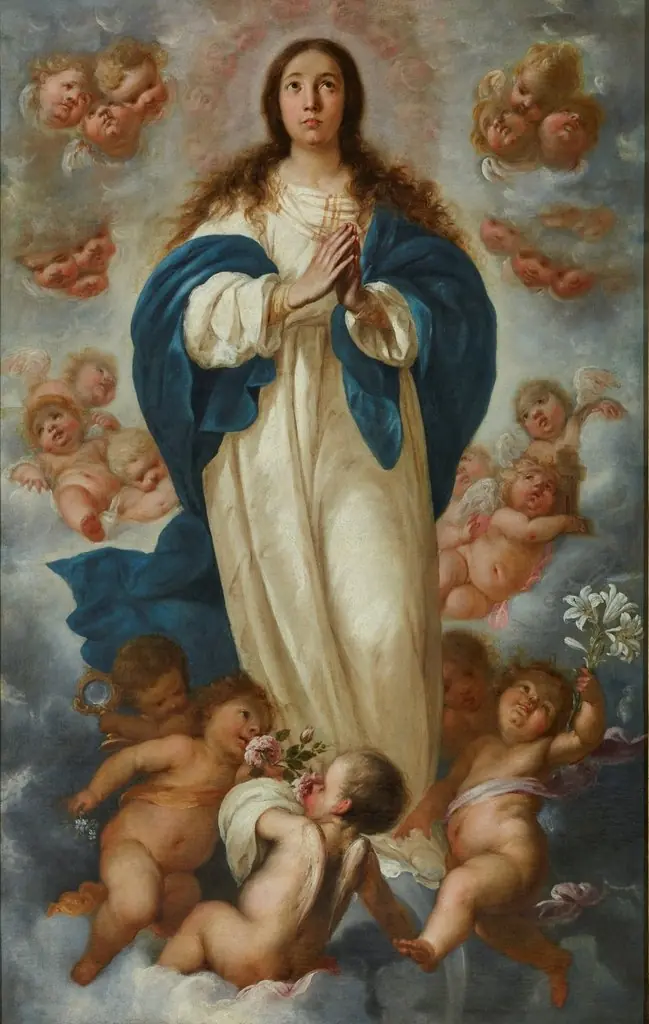 The Immaculate Conception
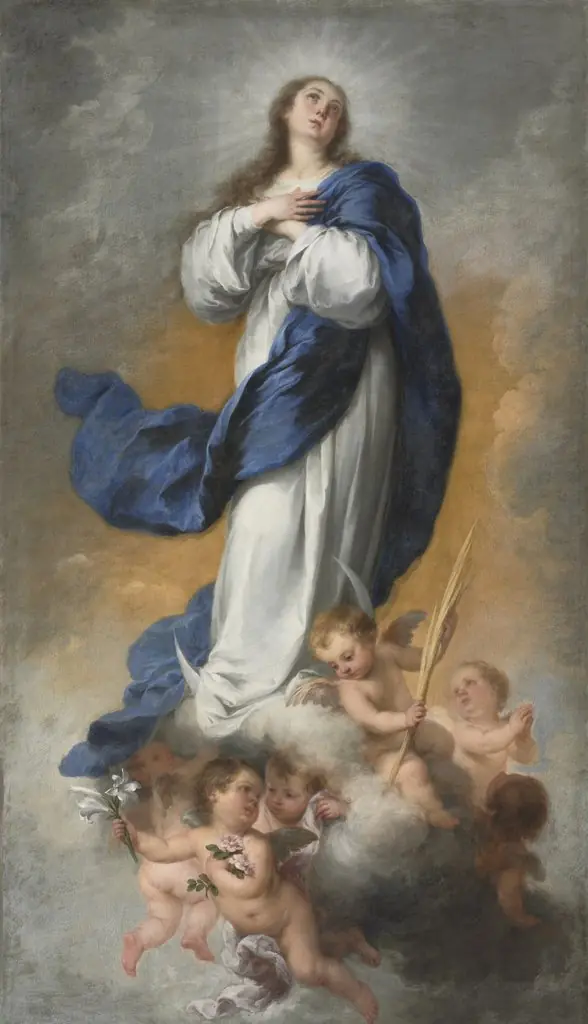 The Immaculate Conception
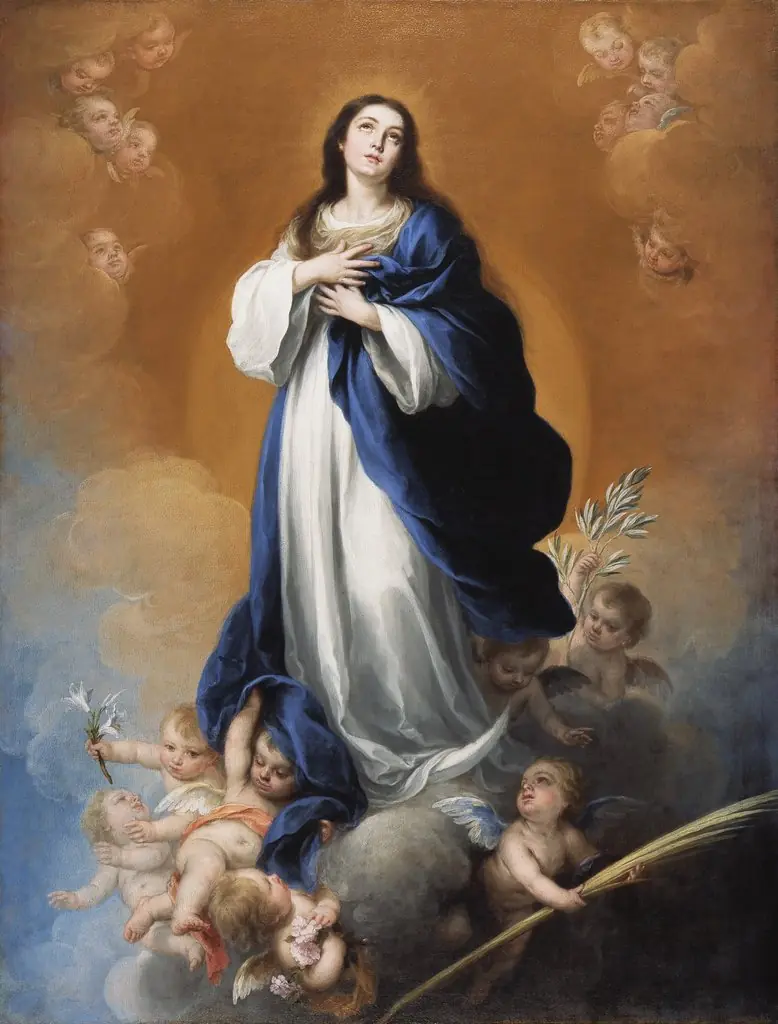 The Immaculate Conception