Artwork
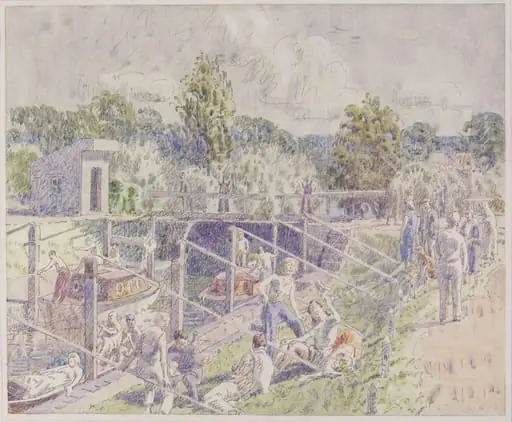
Bridge over the Blackwater at Coggeshall
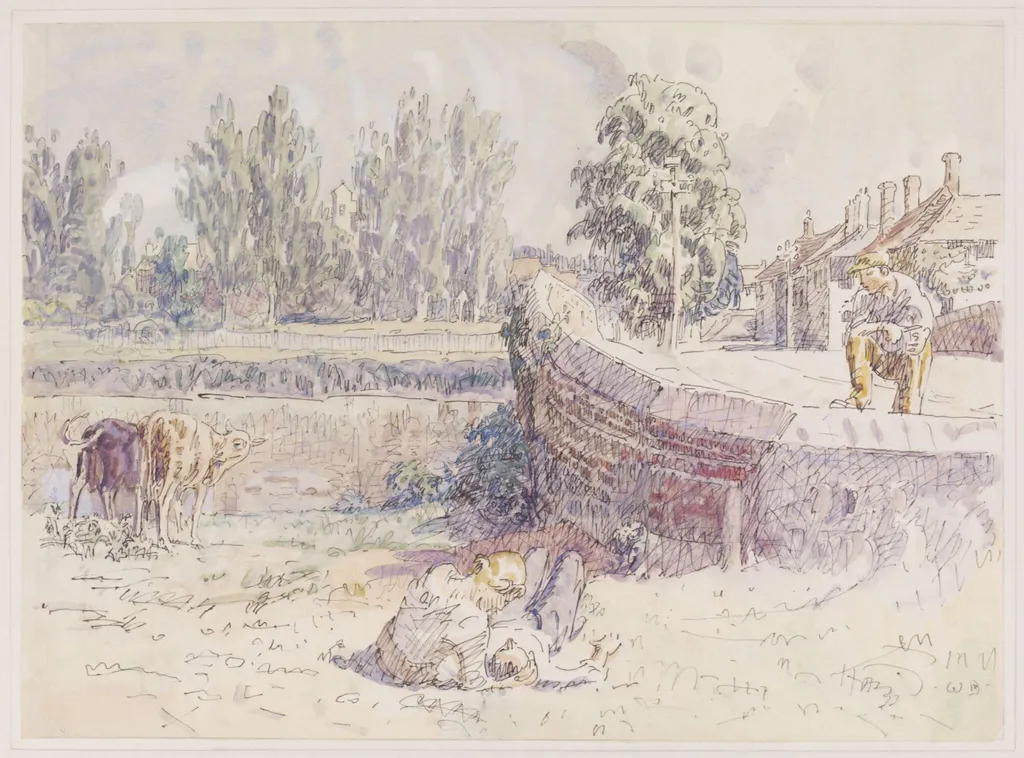
Bridge over the Blackwater at Coggeshall is a watercolor work on paper by Walter Bayes. It dates from 1940 and is held in the collection of the Victoria and Albert Museum.
About this work
Overview
Its calm atmosphere and restrained palette reflect a deliberate departure from Bayes’s usual thematic focus.
Walter Bayes created this watercolour in 1941 as part of the Recording Britain project, which sought to document the nation’s landscapes amid wartime uncertainty. Though best known for urban subjects, this work stands out as a rare pastoral composition, capturing a quiet stretch of the River Blackwater near Coggeshall in Essex. Its calm atmosphere and restrained palette reflect a deliberate departure from Bayes’s usual thematic focus.
Subject & Meaning
The painting depicts a pair of figures resting on the riverbank beneath a modest stone bridge. Their relaxed posture and simple attire evoke classical pastoral motifs, yet their clothing and setting suggest contemporary life. Rather than idealizing rural labor, Bayes presents an intimate, unromanticized moment of respite, subtly reimagining the shepherdess and her swain as ordinary modern individuals in a timeless landscape.
Technique & Style
Bayes employed transparent watercolour washes to build subtle tonal gradations, capturing the soft light and reflective surface of the water. Delicate linework defines the bridge and foliage, while areas of dry brush suggest texture in the grass and earth. The composition is deliberately quiet, with no dramatic focal point—instead, harmony and stillness are achieved through balanced forms and muted hues.
History & Provenance
Commissioned by the Recording Britain scheme in 1941, the work was intended to preserve visual records of at-risk rural sites. Unlike many of Bayes’s urban subjects, which were later altered or lost to bombing and redevelopment, this scene has retained its essential character. The painting remains in public collections, continuing to serve as a documented snapshot of pre-war English countryside life.
Context
Created during World War II, the painting reflects a broader cultural effort to affirm national identity through regional landscapes. While other artists focused on destruction or resilience in cities, Bayes turned to the enduring quietude of the countryside. This work aligns with a wartime impulse to memorialize places perceived as stable and unchanging, offering a counterpoint to the chaos of the era.
Legacy
Though not among Bayes’s most widely exhibited works, this watercolour endures as a quiet testament to his versatility and observational sensitivity. It contributes to the Recording Britain archive’s value as a historical record, illustrating how even modest, uneventful scenes can carry cultural weight. Its preservation underscores the significance of everyday landscapes in collective memory.
Artist & collection
Artist
Walter John Bayes was an English painter and illustrator who was a founder member of both the Camden Town Group and the London Group and also a renowned art teacher and critic.

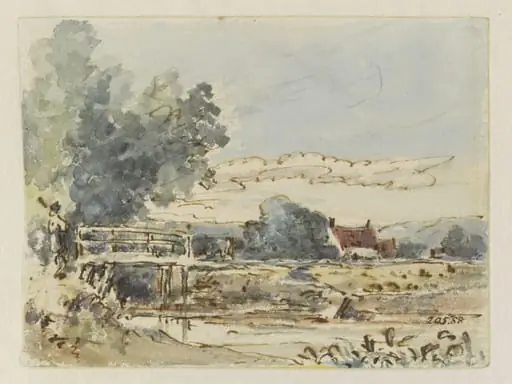 A bridge over a stream, with a cottage behind
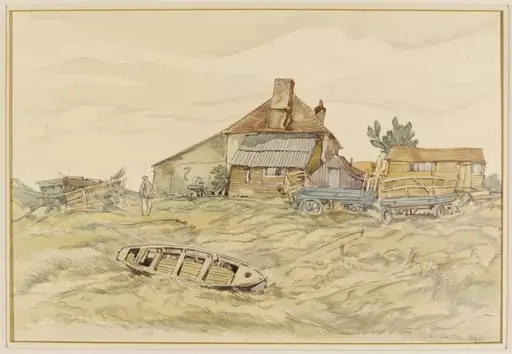 Old Cottages on the Marshes, Winchelsea
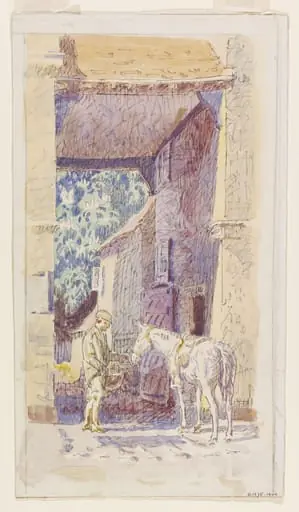 Hotel Entrance, Dedham
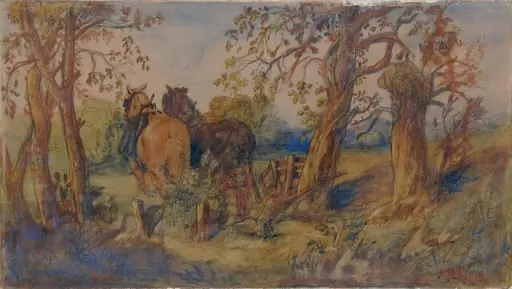 Horses in a Landscape
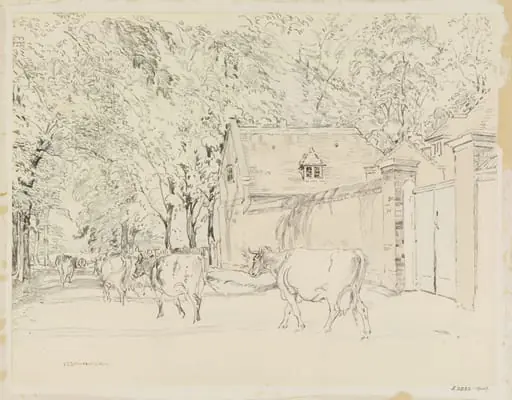 Ham Street, Cows from Manor Farm passing Ham House stables
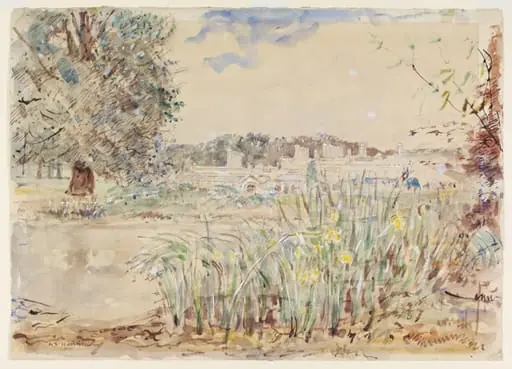 Gunnersbury House, Brentford
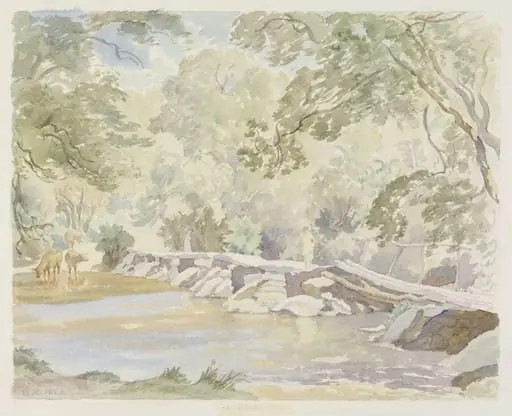 Tarr Steps, Exmoor
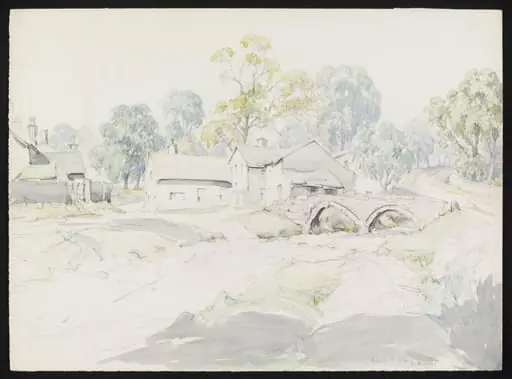 Wycoller Village
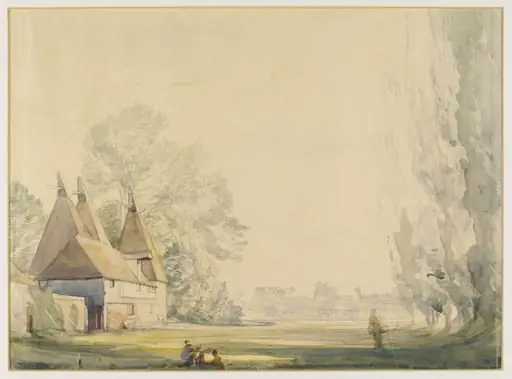 Oast House, Littlebourne
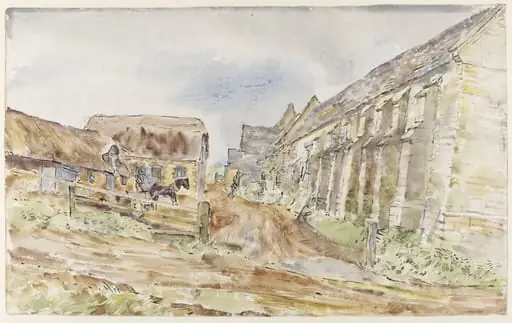 Tithe Barn, Wyke, Nr. Sherborne
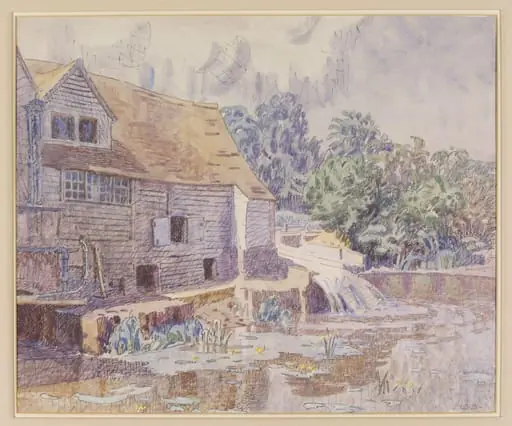 A Mill at Braintree
 The Lock, Old Windsor