Artwork
Regent's Canal Docks, Stepney, London
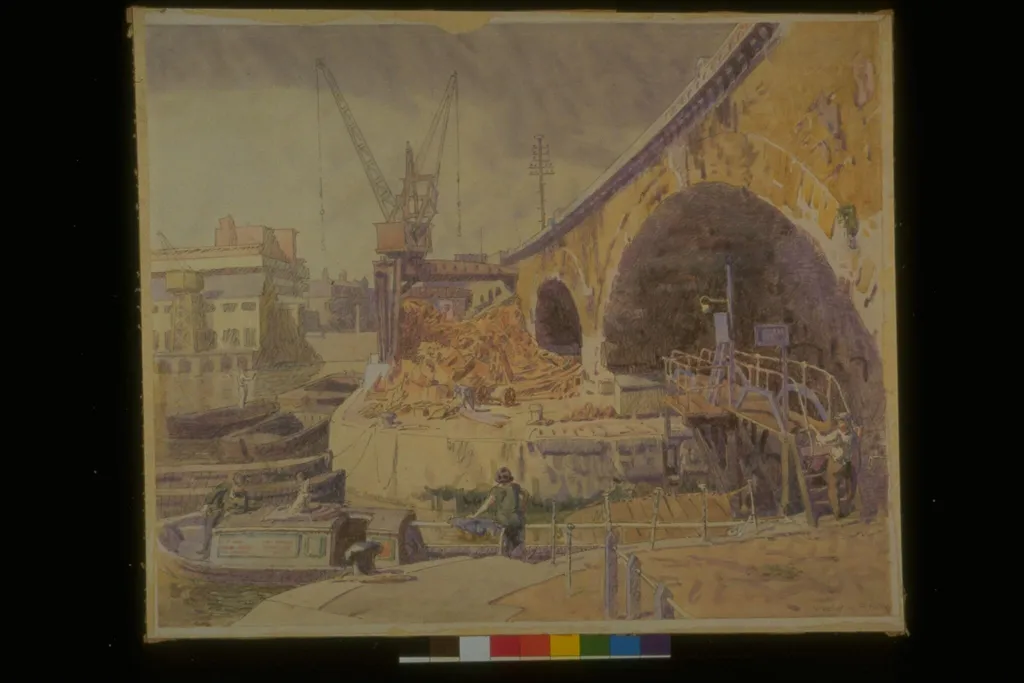
Regent's Canal Docks, Stepney, London is a watercolor work on paper by Walter Bayes. It dates from 1940 and is held in the collection of the Victoria and Albert Museum.
About this work
Overview
This watercolour by Walter Bayes captures the industrial waterfront at Stepney, where the Regent's Canal meets Commercial Road bridge.
This watercolour by Walter Bayes captures the industrial waterfront at Stepney, where the Regent's Canal meets Commercial Road bridge. Created in 1941 as part of the Recording Britain project, the work documents a working dock area during wartime. The scene includes a crane, dockside structures, and figures engaged in routine activity, all rendered with loose, atmospheric brushwork that conveys both movement and the subdued tones of a grey English sky.
Subject & Meaning
The painting portrays a functional dockland, marked by a prominent pile of scrap metal, a visible relic of wartime industry. The presence of workers and vessels suggests ongoing economic activity despite the war’s disruptions. Rather than idealizing the landscape, Bayes presents it as a working, imperfect space—emphasizing resilience and adaptation in the face of national hardship, without overt sentimentality.
Technique & Style
Bayes employs a fluid watercolour technique with layered washes and expressive, uneven brushstrokes to suggest texture and light. The palette—dominated by muted browns, greys, and pale yellows—evokes the soot-laden atmosphere of an industrial zone. Delicate details, such as the figures on the dock and the arched bridge, are rendered with economy, allowing the overall mood to emerge through tone and composition rather than precise definition.
History & Provenance
The work was produced in 1941 under the Recording Britain initiative, a government-backed effort to preserve visual records of the British landscape threatened by wartime damage and urban transformation. Funded by the Pilgrim Trust, the project commissioned over 150 artists to document rural and urban scenes. Bayes’s watercolour was acquired by the Victoria and Albert Museum as part of this collection, where it remains today.
Context
During the early 1940s, London’s docklands were vital to wartime logistics, handling supplies and materials while enduring frequent bombing. The Regent’s Canal served as a key transport route for coal and scrap metal, making Stepney a hub of industrial activity. Bayes’s depiction reflects not only the physical environment but also the quiet persistence of everyday labour amid national crisis.
Legacy
The Recording Britain collection endures as a significant archive of mid-20th-century British life. Bayes’s watercolour contributes to this legacy by offering an unembellished view of industrial England during wartime. Its value lies not in grandeur but in its quiet documentation of ordinary places and routines—preserving a visual record of a landscape that would soon change beyond recognition.
Artist & collection
Artist
Walter John Bayes was an English painter and illustrator who was a founder member of both the Camden Town Group and the London Group and also a renowned art teacher and critic.

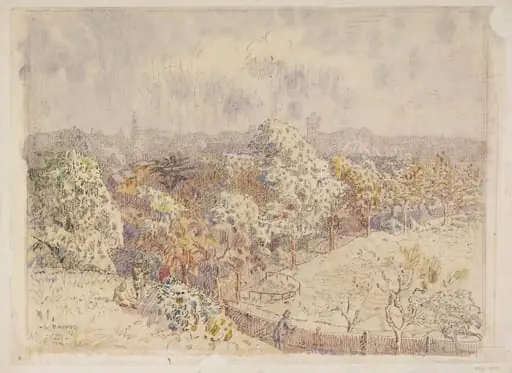
![North Gate [by Thomas Harrison], Chester, by Causer](https://artifactworldgallery.com/img/causer--north-gate-by-thomas-harrison-chester--aa1b0a0e4cef52c8-w320.webp) North Gate [by Thomas Harrison], Chester
North Gate [by Thomas Harrison], Chester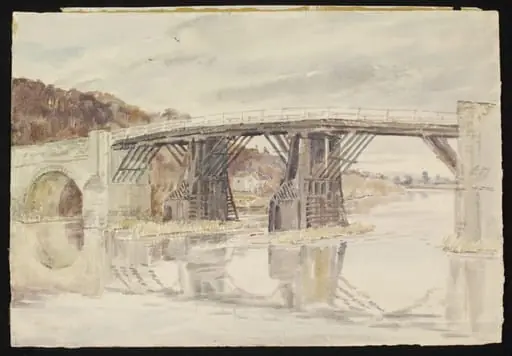 Toll Bridge, Whitney-on-Wye
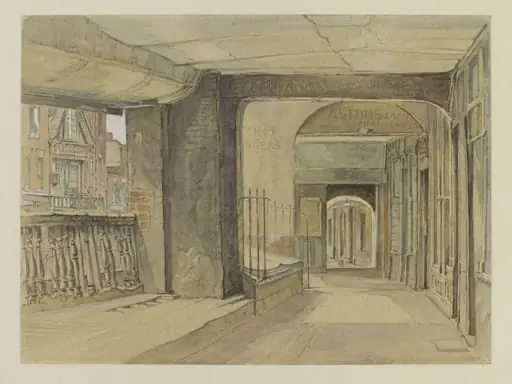 Watergate Street Row, looking West, Chester
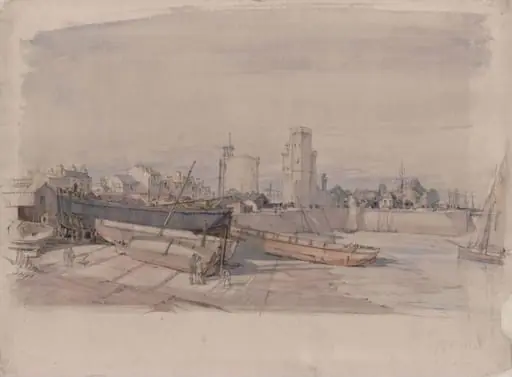 Entrance to the Harbour, La Rochelle
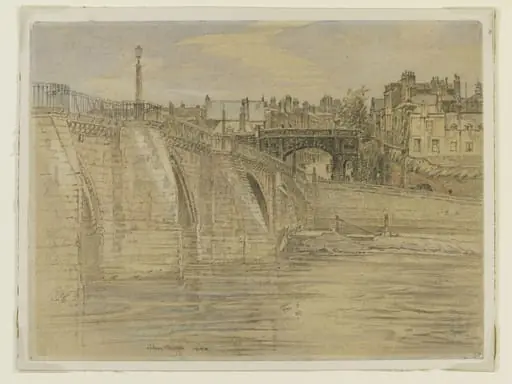 South Bridge Gate and Old Dee Bridge, Chester
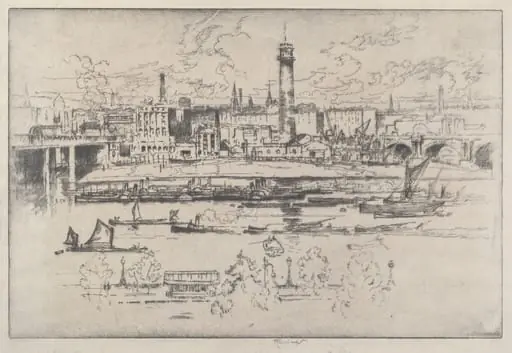 Shot Tower between the Bridges
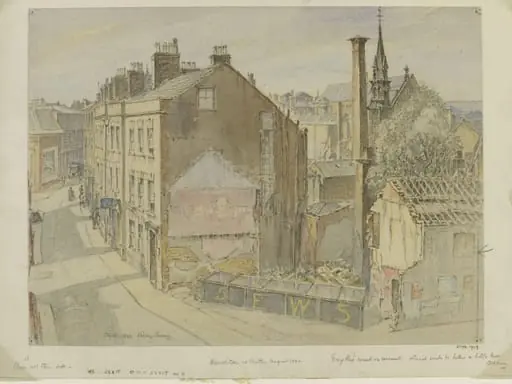 Demolition at Chester 1942
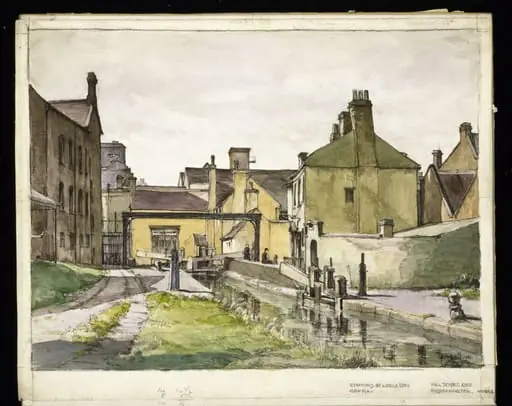 Mill Street Lock, Kidderminster
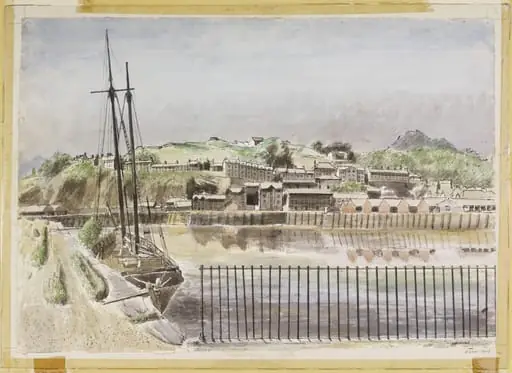 Old Wharves, Portmadoc, Caernarvonshire.
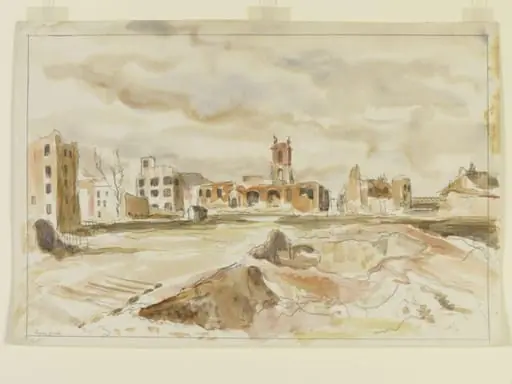 St. Giles, Cripplegate after bombing