Artwork
Interior of Crystal Palace, Italian vestibule
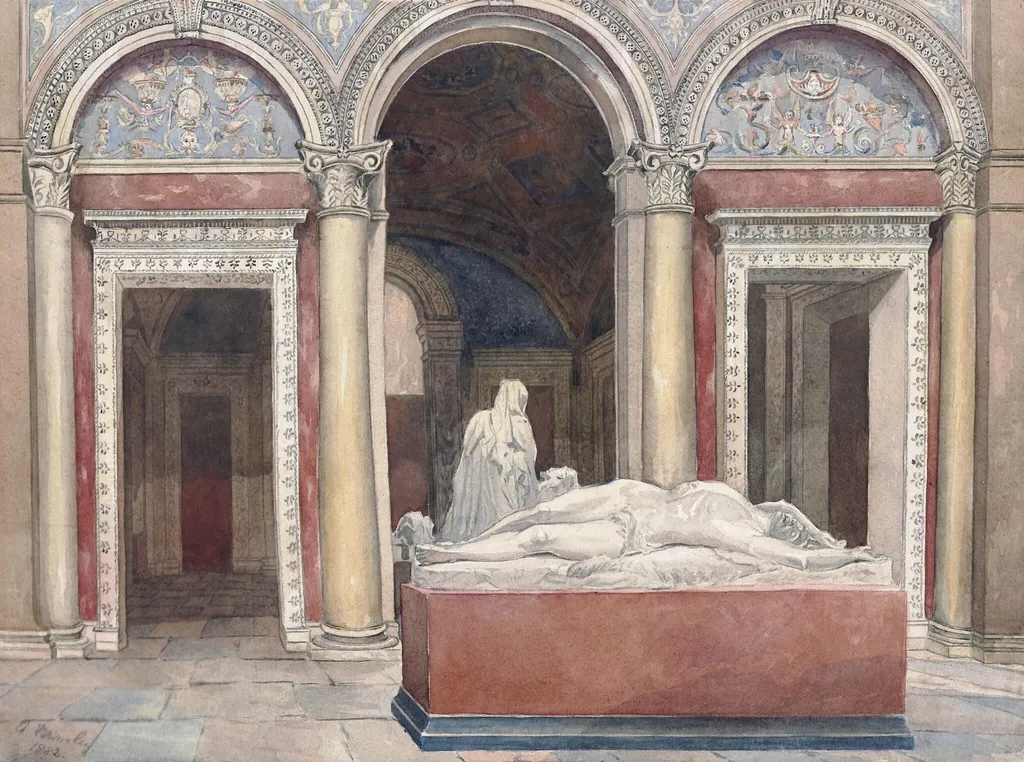
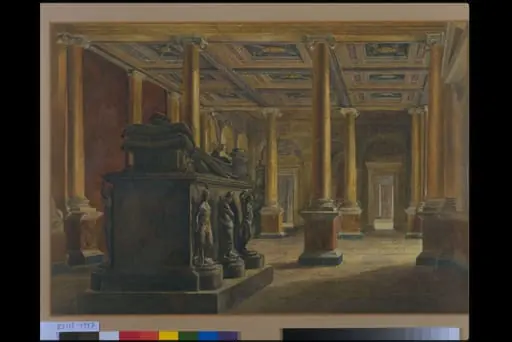
Interior of Crystal Palace, Italian vestibule is a watercolor work on paper by the Impressionist artist Alice Brinsley. It dates from 1882 and is held in the collection of the Victoria and Albert Museum.
About this work
Overview
Alice Brinsley created this watercolour on card in 1882, capturing an interior space within the Crystal Palace at Sydenham. The work is signed and dated by the artist, confirming its origin and timing. It focuses on the Italian vestibule, one of several themed galleries designed to showcase art and architecture in a reconstructed historical style.
Subject & Meaning
The placement of the statue and sarcophagus suggests a contemplative, museum-like atmosphere, emphasizing cultural heritage over narrative drama.
The scene centers on a monumental archway framed by columns, housing a white-robed statue and a red marble sarcophagus in the foreground. The architectural elements evoke classical antiquity, reflecting the Victorian fascination with reviving historical styles. The placement of the statue and sarcophagus suggests a contemplative, museum-like atmosphere, emphasizing cultural heritage over narrative drama.
Technique & Style
Brinsley employed delicate watercolour washes to render fine details in the carved walls and frescoes, using subtle shifts in tone to suggest depth and volume. Light falls selectively across surfaces, enhancing the texture of stone and plaster without overt dramatic contrast. The precision in architectural rendering contrasts with the softness of the medium, creating a quiet, intimate realism.
History & Provenance
The painting documents a specific section of the Crystal Palace’s Fine Art Courts, redesigned by Owen Jones and Matthew Digby Wyatt after the structure’s relocation to Sydenham in 1854. Brinsley’s work is one of several contemporary records made by artists and visitors who documented the palace’s evolving interiors during its later years as a public exhibition space.
Context
The Crystal Palace’s Italian vestibule was part of a broader 19th-century effort to educate the public through immersive architectural reconstructions. Inspired by Renaissance and classical models, these spaces aimed to elevate public taste. Brinsley’s watercolour reflects the era’s interest in art history as a visible, accessible experience rather than an abstract ideal.
Legacy
Though not widely exhibited today, Brinsley’s watercolour remains a valuable record of the Crystal Palace’s interior design during its final decades. It contributes to the visual archive of a structure that once served as a cultural landmark, preserving details of spaces later lost to fire in 1936.
Artist & collection
Artist
Alice Brinsley painted bright watercolours of the Crystal Palace interiors in the 1880s.

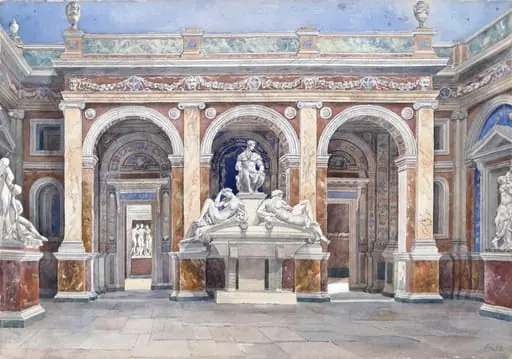
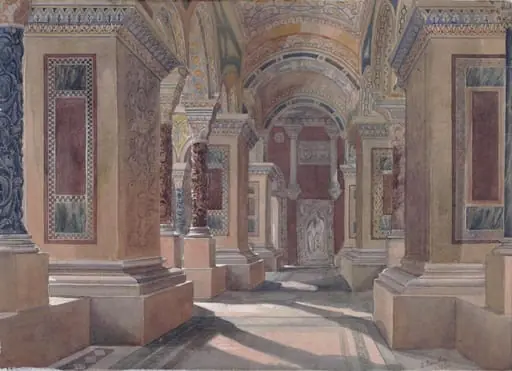
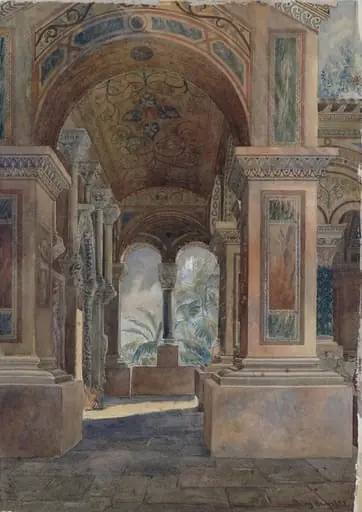
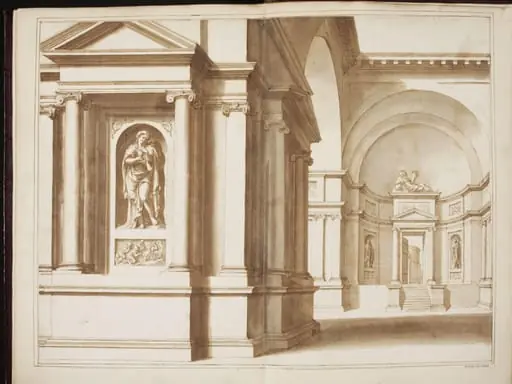 Interior of a Palazzo with Classical Sculptures in Niches and above a Door
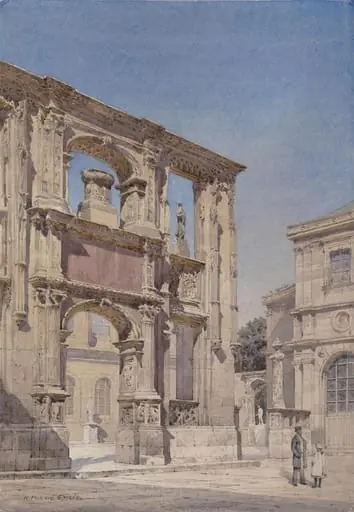 Part of the Chateau de Gaillon re-erected in the court of the Palais des Beaux Arts
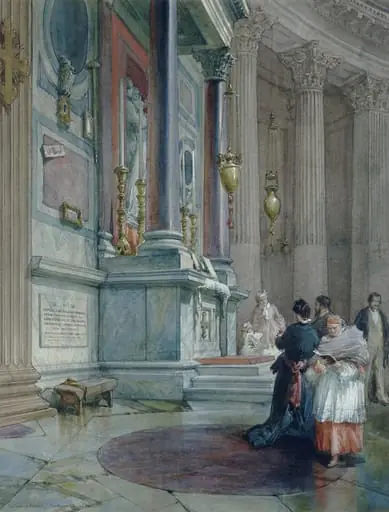 The Tomb of Raphael in the Pantheon, Rome
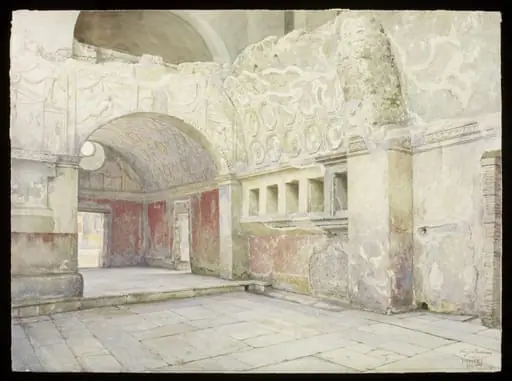 Untitled
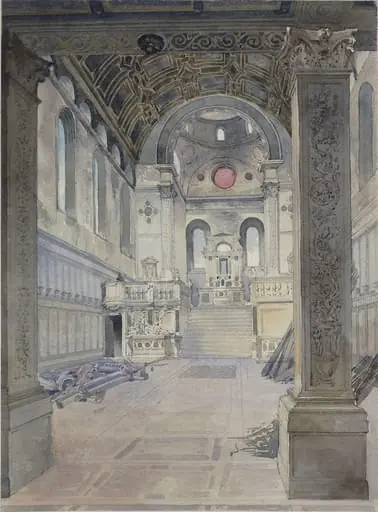 Interior of Santa Maria dei Miracoli, Venice
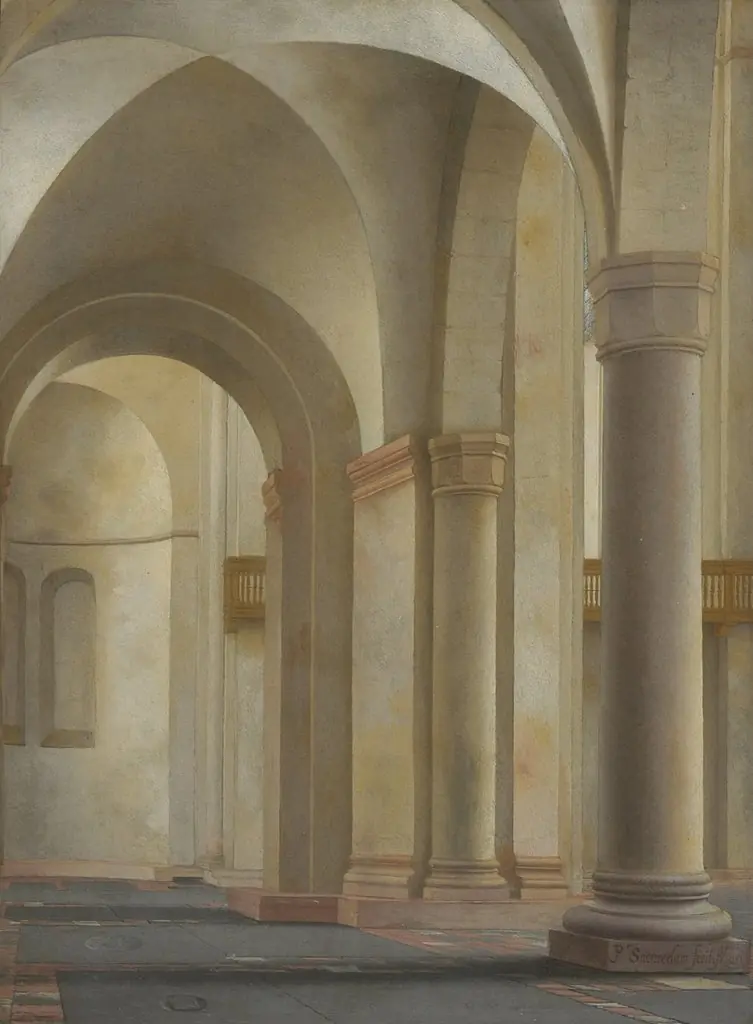 Interior of the Mariakerk, Utrecht
 The Knight is Dust
 Antiochus and Stratonice
 Arcade Decoration