Artwork
Studies of pansy flowers (recto) and highly magnified cell colonies (verso)
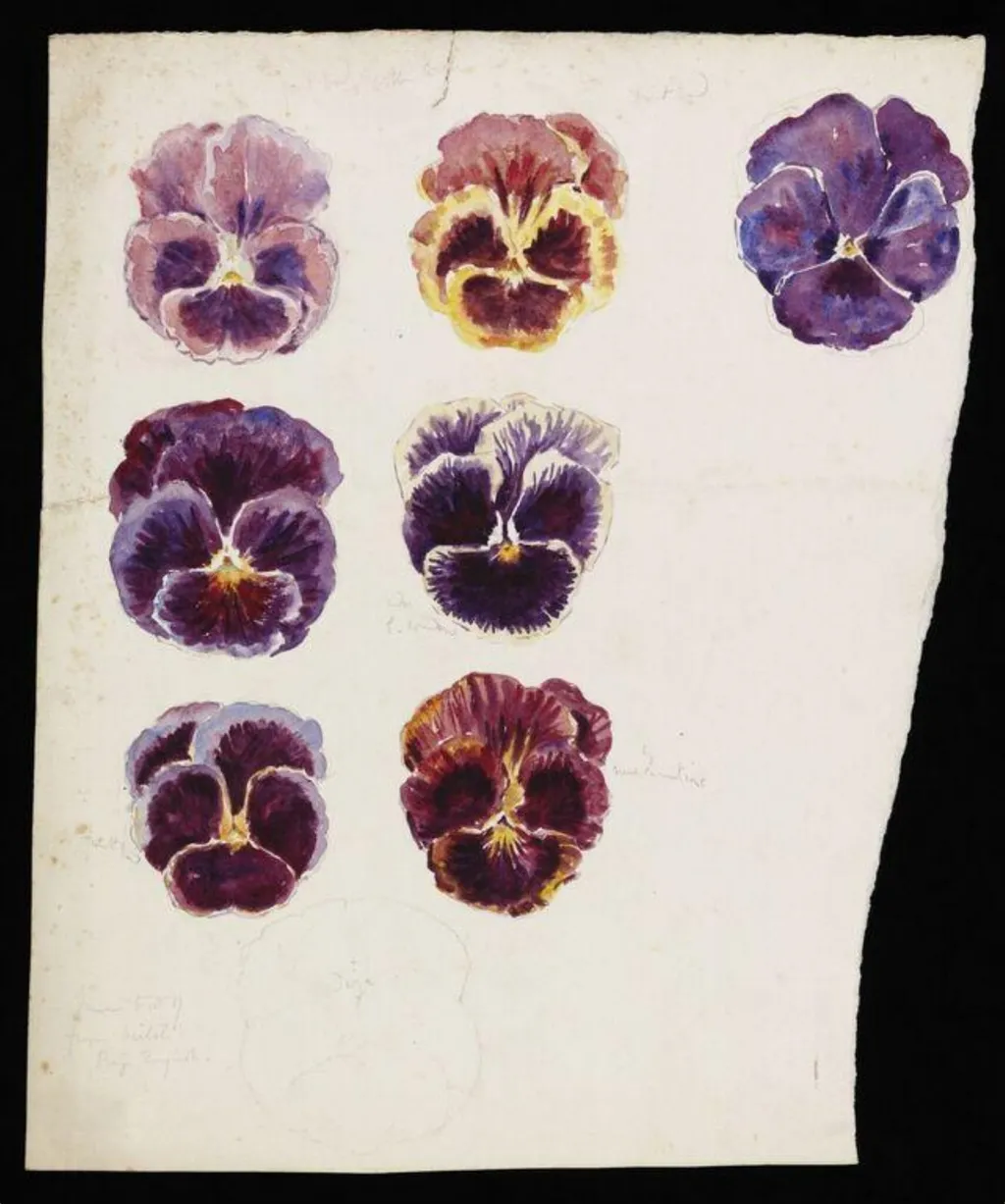
Studies of pansy flowers (recto) and highly magnified cell colonies (verso) is a watercolor work on paper by the Post-Impressionist artist Beatrix Potter. It dates from 6 and is held in the collection of the Victoria and Albert Museum.
About this work
This watercolor sheet shows two sides of Beatrix Potter’s careful eye. One side has pansy studies in pink and purple. The other side shows magnified cell colonies.
The pansies are dated June 5, 1909 and labeled “from Veitch’s Prize English.” Potter linked her plant studies to her famous children’s books.
Try searching the Victoria and Albert Museum for more of her work.
Overview
Created in 1909, the work reflects her dual engagement with botany and natural science, separate from but deeply connected to her literary illustrations.
This watercolour sheet by Beatrix Potter contains two distinct scientific observations: on the recto, detailed studies of pansy flowers; on the verso, a magnified depiction of microscopic algal colonies. Created in 1909, the work reflects her dual engagement with botany and natural science, separate from but deeply connected to her literary illustrations. The piece exemplifies her disciplined approach to visual documentation of the natural world.
Subject & Meaning
The recto features precise renderings of pansies, annotated with their origin—'Veitch’s Prize English'—and the date, June 5, 1909. These are not decorative but observational, recording variations in petal shape and hue. The verso reveals microscopic structures, likely Desmococcus algae, suggesting her interest in cellular botany. Together, they demonstrate her belief that close study of nature underpinned authentic representation, whether in science or storytelling.
Technique & Style
Potter employed fine, controlled watercolour washes to capture the subtle gradations of the pansies’ petals, using delicate linework for veins and stamens. The verso employs ink and watercolour to delineate the clustered cells with scientific clarity, avoiding artistic embellishment. Her style is methodical and restrained, prioritizing accuracy over expression. The precision suggests training in naturalist illustration, aligning with contemporary botanical practices of the era.
History & Provenance
The sheet dates from 1909, a period when Potter was actively engaged in botanical research alongside her writing. She maintained a private collection of plant and fungal studies, many of which were later donated to institutions. This piece likely remained in her personal archive until its acquisition by the Victoria and Albert Museum, where it now resides as part of a broader collection documenting her scientific interests beyond children’s literature.
Context
In early 20th-century Britain, amateur naturalism was a respected pursuit among educated women. Potter participated in this tradition, corresponding with mycologists and submitting her fungal illustrations to scientific journals. Her botanical drawings were not merely preparatory for books but independent acts of observation, reflecting a broader cultural moment where art and science intersected in domestic study.
Legacy
Though best known for her literary works, Potter’s scientific drawings have gained recognition for their technical merit and contribution to natural history documentation. Her meticulous studies informed the lifelike detail in her book illustrations, lending credibility to her fictional worlds. Today, these works are valued as examples of how artistic skill and scientific curiosity could coexist in a single observer’s practice.
Artist & collection
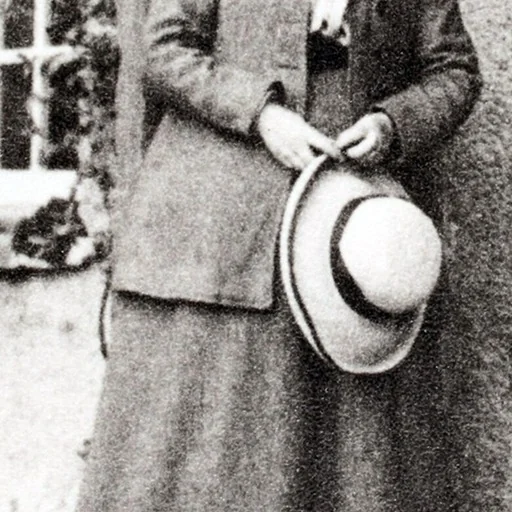
Artist
Helen Beatrix Heelis (née Potter; 28 July 1866 – 22 December 1943), usually known as Beatrix Potter ( BEE-ə-triks), was an English writer, illustrator, natural scientist, and conservationist.

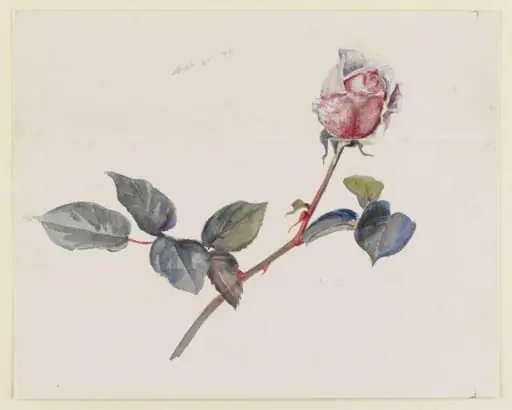 Pink rosebud with leaves
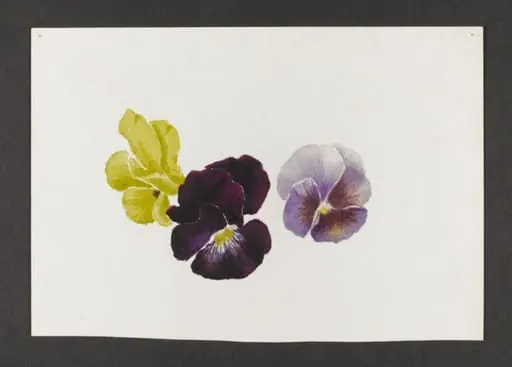 Untitled
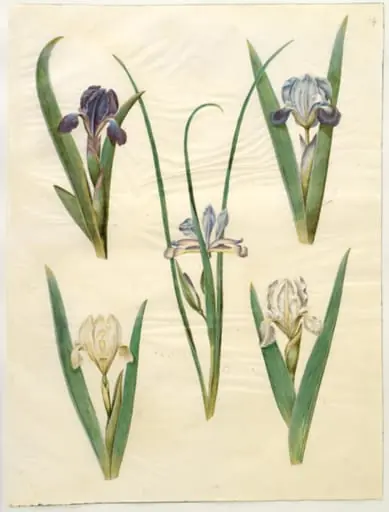 Iris pumila (lav iris) eller Iris lutescens (dværg-iris); Iris graminea (græsbladet iris)
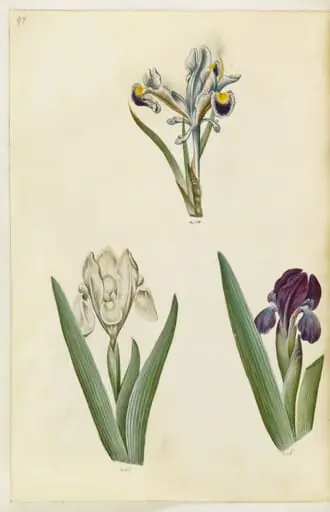 Iris persica (persisk iris); Iris lutescens eller Iris pumila (?) (dværg-iris eller lav iris)
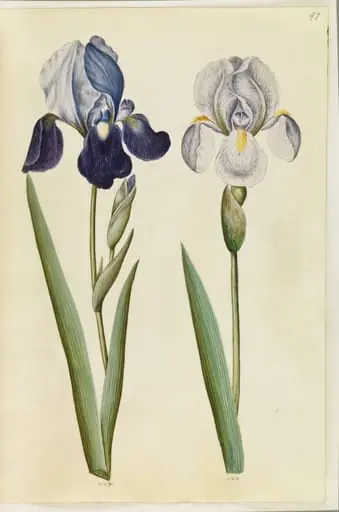 Iris ×germanica eller Iris ×sambucina (?) (have-iris eller hylde-iris); Iris ×germanica (have-iris)
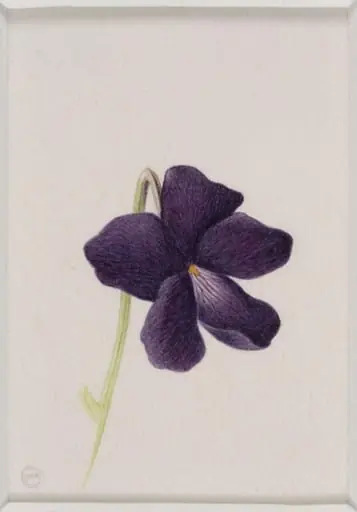 Wild Violet
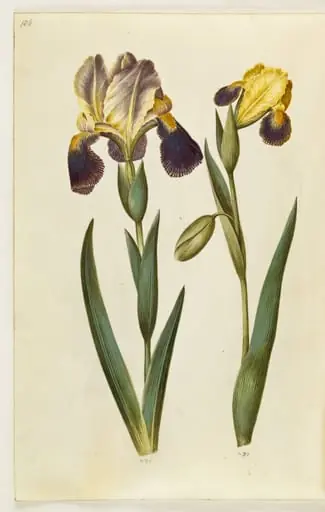 Iris ×germanica eller Iris ×sambucina (have-iris eller hylde-iris); Iris variegata (broget iris)
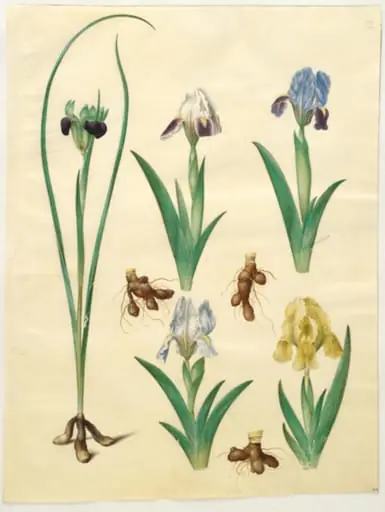 Hermodactylus tuberosus (hermesfinger); Iris pumila (lav iris) eller Iris lutescens (dværg-iris)
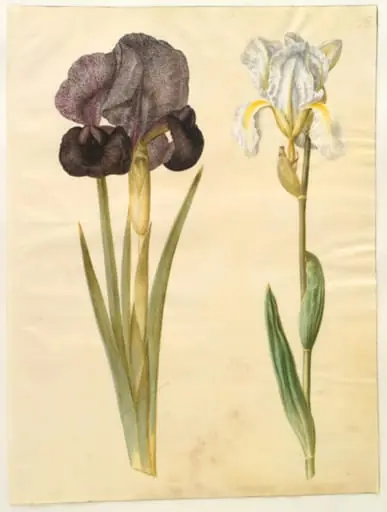 Iris susiana (sørge-iris); Iris ×florentina (violrod)
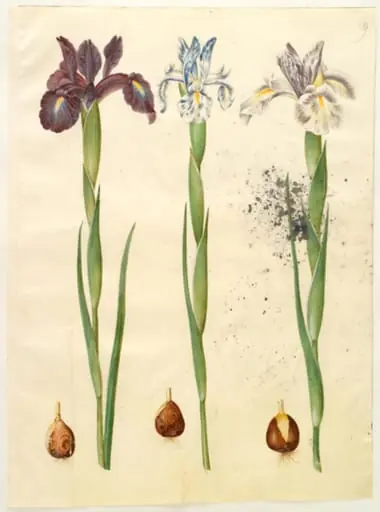 Iris latifolia (engelsk iris)
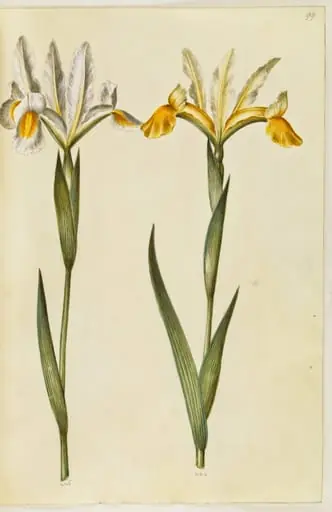 Iris xiphium, evt. Iris latifolia (?) (spansk iris eller engelsk iris)
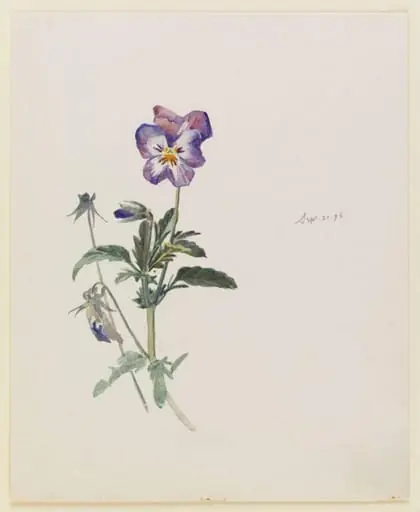 A pansy plant with buds