Artwork
Untitled
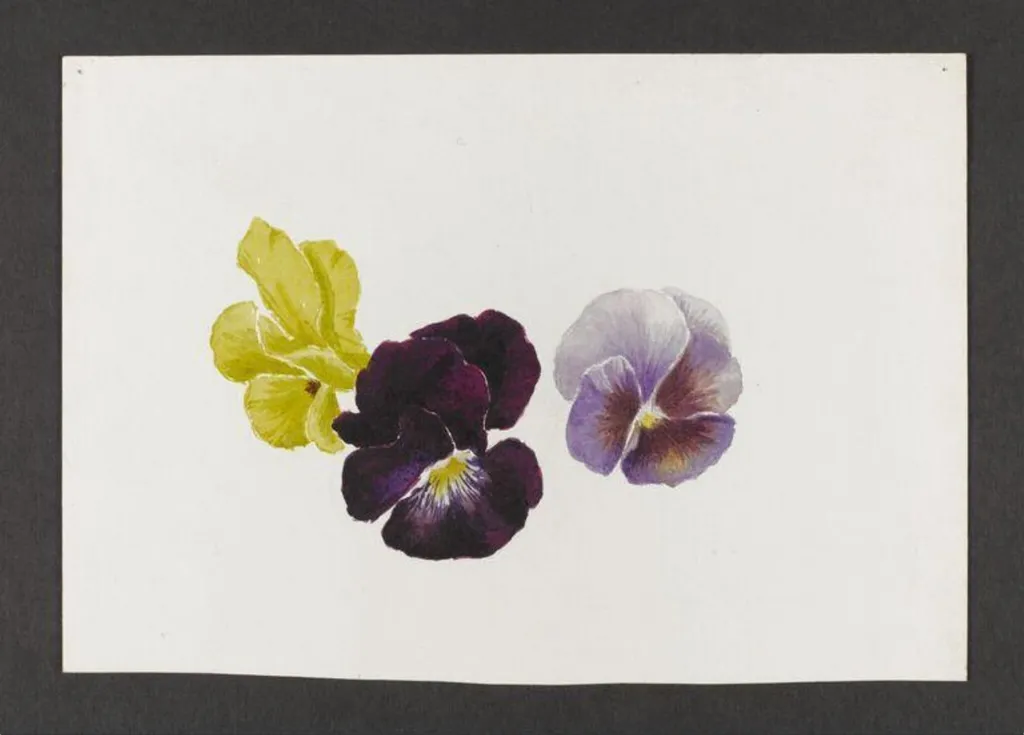
Untitled is a watercolor work on paper by the Impressionist artist Beatrix Potter. It dates from 1879 and is held in the collection of the Victoria and Albert Museum. This watercolour on wood depicts three flower heads against a bare white ground.
About this work
Overview
This watercolour on wood depicts three flower heads against a bare white ground. The support is a small wooden panel, its edges visible, suggesting the work was never intended as a finished painting. Pencil lines beneath the pigment indicate preliminary sketching. The reverse side holds a loose, incomplete drawing, reinforcing its role as a study rather than a display piece.
Subject & Meaning
Their placement is informal, without symbolic arrangement, suggesting the artist’s interest lay in observation rather than allegory.
The subject consists of three pansies and one yellow flower, likely a primrose or similar garden bloom. The flowers are rendered with botanical precision, emphasizing natural variation in petal shape and colour. Their placement is informal, without symbolic arrangement, suggesting the artist’s interest lay in observation rather than allegory. The work reflects a quiet engagement with botanical detail, typical of close study in natural history.
Technique & Style
Watercolour was applied with delicate washes, allowing the paper texture to show through in translucent areas, particularly in the petals. The artist blended tones subtly to suggest light falling across surfaces, with the purple pansy’s white and yellow centre creating a focal contrast. Fine pencil underdrawing guided the forms, while the wooden panel’s grain subtly influenced the composition’s boundaries, grounding the study in its physical support.
History & Provenance
The work entered the Victoria and Albert Museum’s collection in 1973 as part of the Linder Bequest, a large group of materials connected to Beatrix Potter and her family. Its inclusion suggests it was part of Potter’s personal collection of studies, possibly made during her years of detailed botanical observation. The piece was not publicly exhibited prior to its acquisition, remaining within private hands until its donation.
Context
Created during a period when Beatrix Potter was deeply engaged in natural science, this study aligns with her broader practice of documenting flora and fauna with scientific accuracy. While best known for children’s illustrations, her watercolours reveal a parallel commitment to botanical illustration, influenced by contemporary naturalist traditions and her own meticulous observation of the Lake District’s flora.
Legacy
This watercolour contributes to the understanding of Beatrix Potter’s artistic development beyond her literary works. It exemplifies the quiet, methodical approach she brought to natural observation, preserving a record of plant forms that informed both her scientific contributions and her illustrative style. Its preservation in a major museum underscores its value as a document of late 19th-century naturalist practice.
Artist & collection
Artist
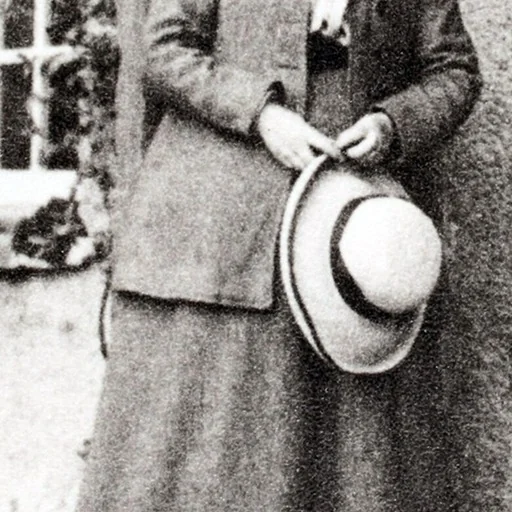
Helen Beatrix Heelis (née Potter; 28 July 1866 – 22 December 1943), usually known as Beatrix Potter ( BEE-ə-triks), was an English writer, illustrator, natural scientist, and conservationist.

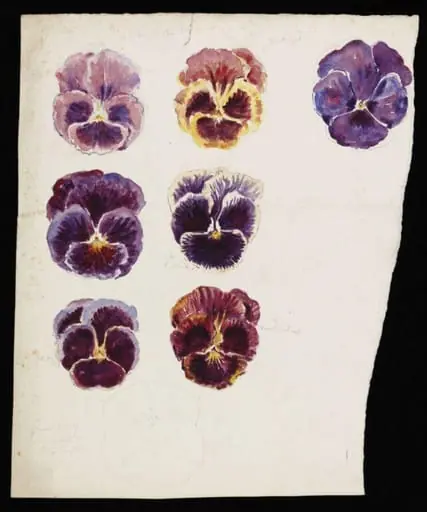 Studies of pansy flowers (recto) and highly magnified cell colonies (verso)
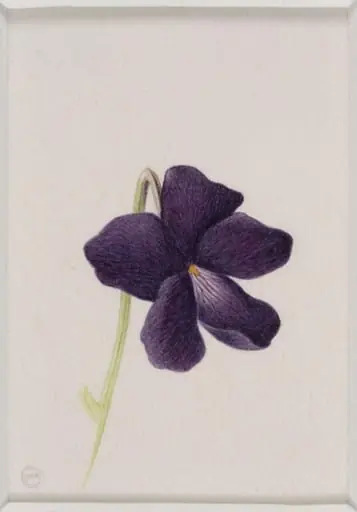 Wild Violet
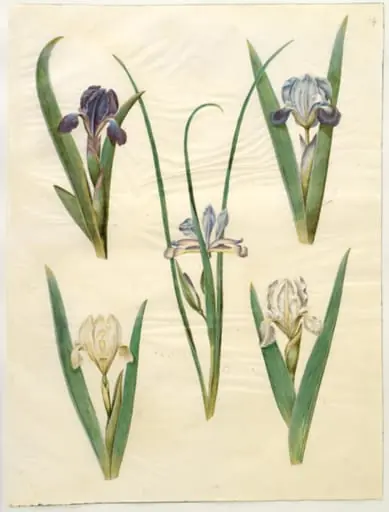 Iris pumila (lav iris) eller Iris lutescens (dværg-iris); Iris graminea (græsbladet iris)
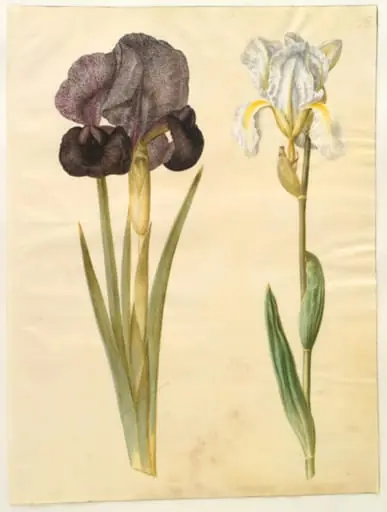 Iris susiana (sørge-iris); Iris ×florentina (violrod)
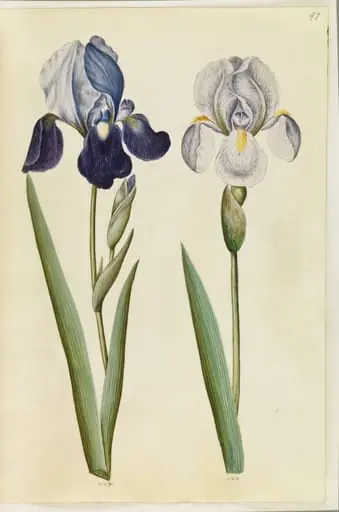 Iris ×germanica eller Iris ×sambucina (?) (have-iris eller hylde-iris); Iris ×germanica (have-iris)
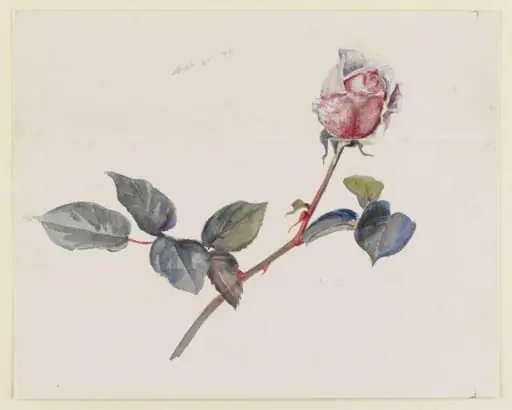 Pink rosebud with leaves
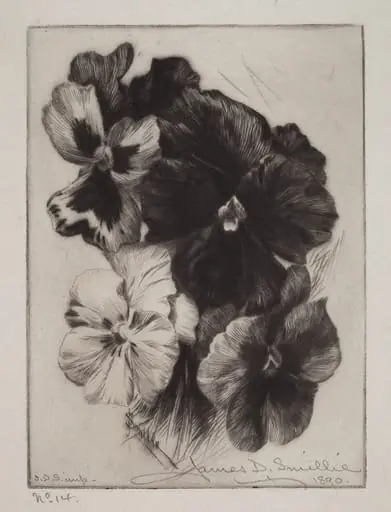 A Bunch of Pansies
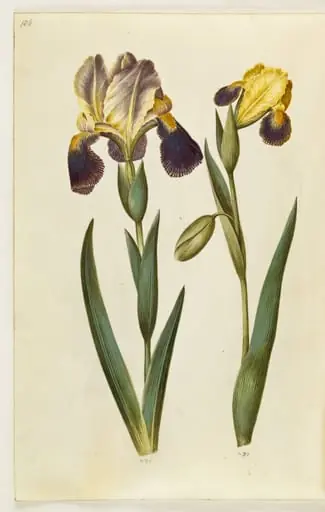 Iris ×germanica eller Iris ×sambucina (have-iris eller hylde-iris); Iris variegata (broget iris)
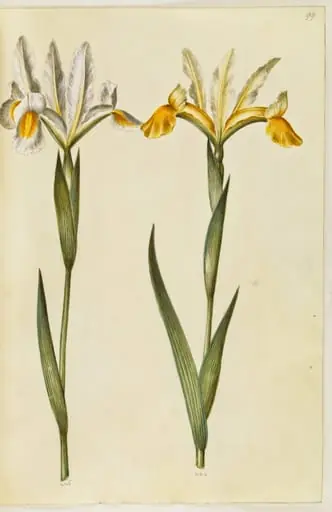 Iris xiphium, evt. Iris latifolia (?) (spansk iris eller engelsk iris)
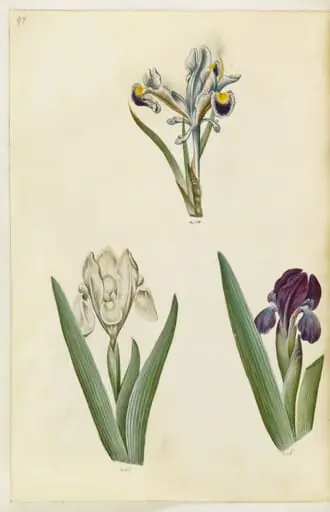 Iris persica (persisk iris); Iris lutescens eller Iris pumila (?) (dværg-iris eller lav iris)
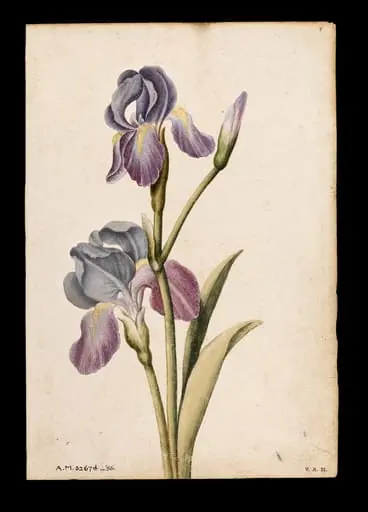 Iris
Iris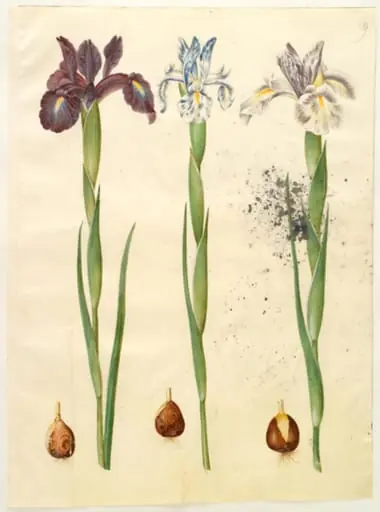 Iris latifolia (engelsk iris)