Artwork
Saint Brigitta
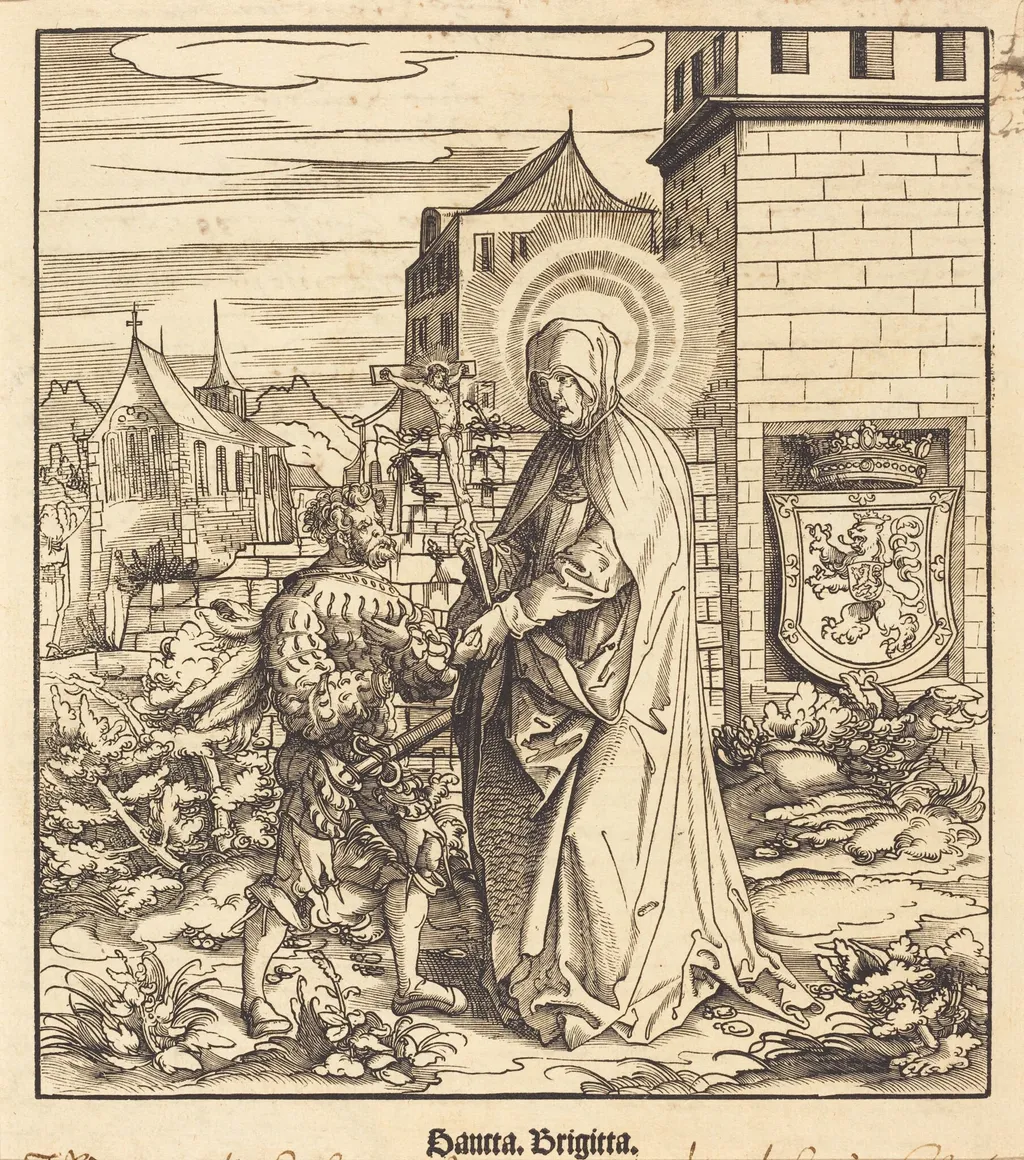
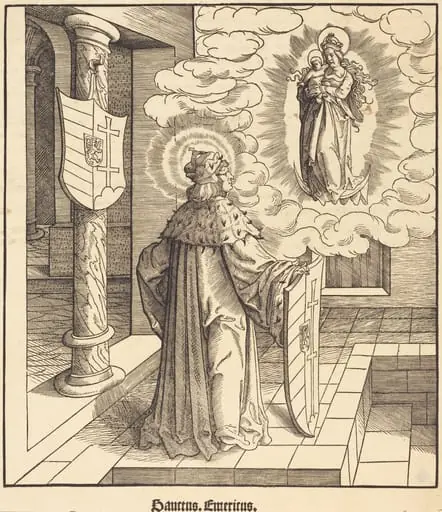
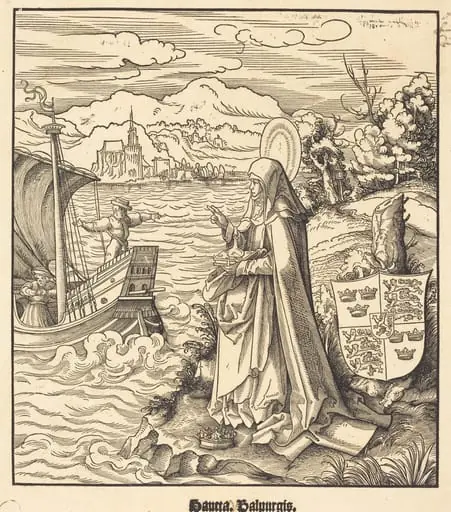
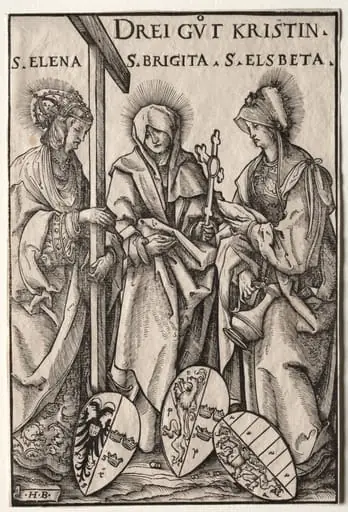
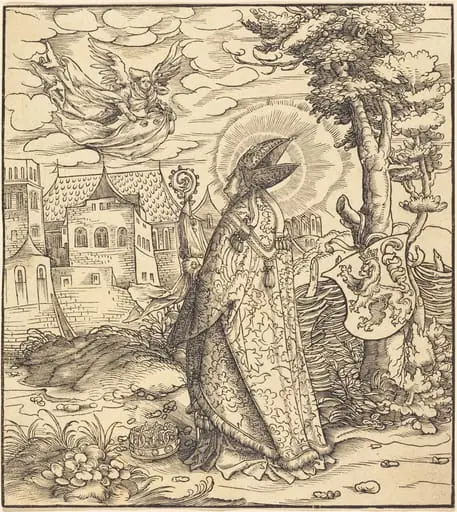
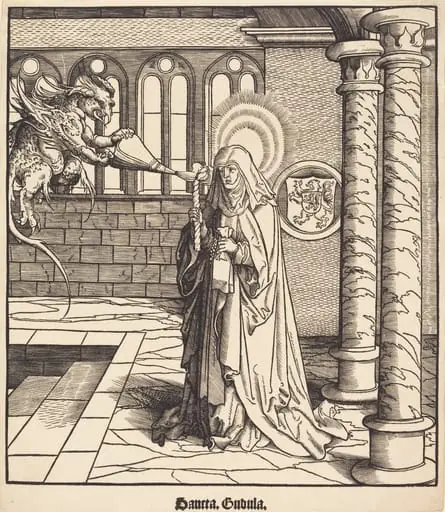
Saint Brigitta is an ink print by the Renaissance artist Leonhard Beck. It dates from 1517 and is held in the collection of the National Gallery of Art.
About this work
Overview
As a designer and printmaker, he was part of a generation that elevated woodcut as a medium for religious imagery.
Leonhard Beck, a German artist from Augsburg, produced this woodcut of Saint Brigitta in 1517. As a designer and printmaker, he was part of a generation that elevated woodcut as a medium for religious imagery. His work emerged from a family tradition of fine detail, and he contributed to imperial artistic initiatives under Emperor Maximilian I, whose court favored printed devotional subjects for wide dissemination.
Subject & Meaning
The print depicts Saint Brigitta of Sweden, a 14th-century mystic and founder of the Bridgettine Order, shown in monastic robes holding a tall cross. Her serene expression and luminous face suggest divine presence, while the church and castle behind her symbolize her spiritual authority and earthly influence. The swirling clouds and undulating ground imply a sacred space beyond the material world, reinforcing her role as a visionary saint.
Technique & Style
Beck employed fine, incised lines to carve the image into a woodblock, creating dense patterns in the background that contrast with the smoother contours of the figure. The use of sharp, rhythmic strokes to render clouds and architecture reflects the Northern European woodcut tradition. The black-and-white contrast enhances clarity, while the detailed textures demonstrate the precision possible in hand-carved prints of the period.
History & Provenance
Created during a period of intense religious and artistic activity in southern Germany, the woodcut likely served devotional or educational purposes. Beck’s association with Maximilian I’s print projects suggests it may have been part of a larger series commissioned for imperial or ecclesiastical use. Though its early ownership is undocumented, its survival reflects the durability and circulation of woodcuts in early 16th-century Europe.
Context
In early 1500s Germany, woodcuts were a primary means of distributing religious imagery, especially as literacy and devotional practices expanded. Beck’s work aligns with the trend of combining traditional iconography with intricate decorative detail, influenced by both manuscript illumination and emerging print culture. His training under his father and collaboration with Holbein the Elder placed him at the center of this evolving artistic network.
Legacy
Beck’s Saint Brigitta exemplifies how woodcut artists translated sacred narratives into accessible visual forms. Though less widely known than contemporaries like Dürer, his technical precision and integration into imperial projects contributed to the medium’s legitimacy. The print remains a representative example of how religious figures were visually codified for public devotion in the decades before the Reformation.
Artist & collection
Artist
Leonhard Beck (c. 1480 – 1542) was a painter and woodcuts designer in Augsburg, Germany. He was the son of Georg Beck, a miniaturist who was active in Augsburg c. 1490–1512/15. Leonhard collaborated with his father on…