Artwork
Saint Willibaldus
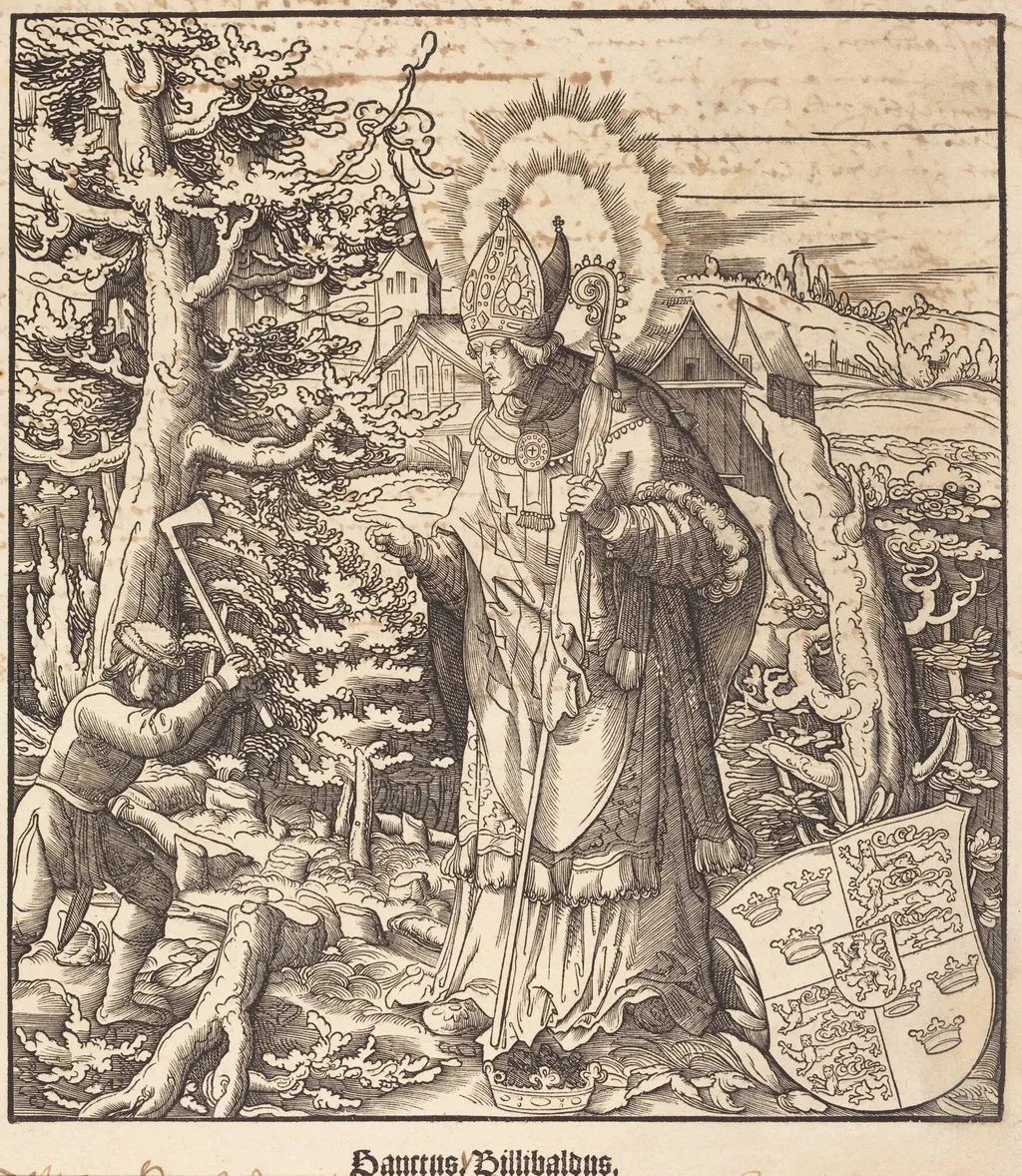
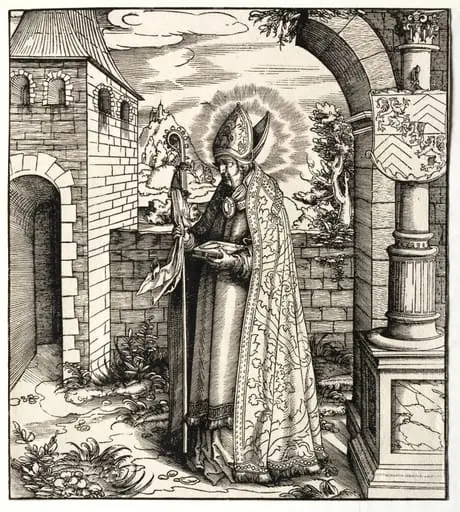
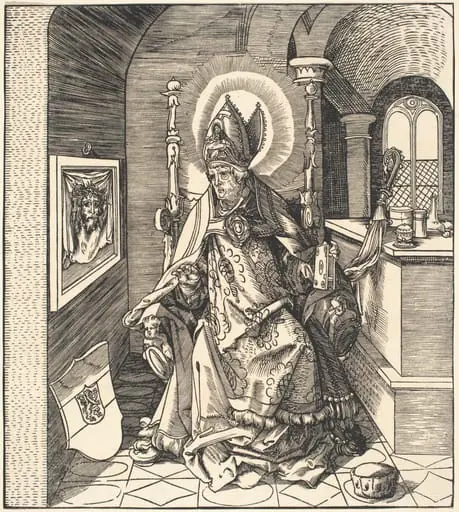
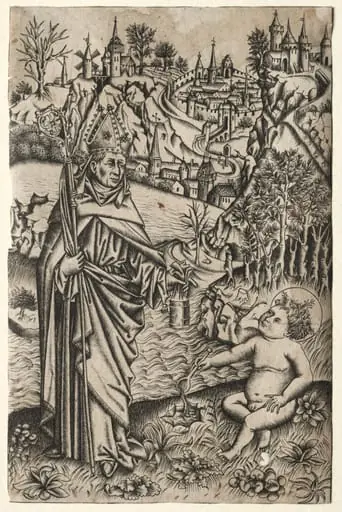
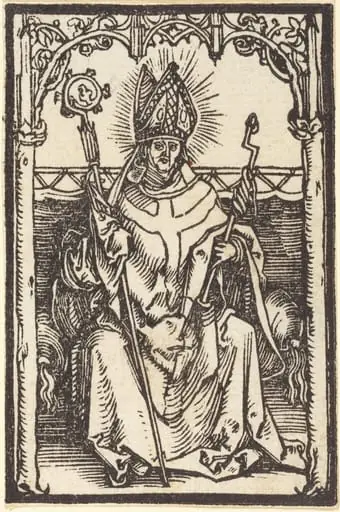
Saint Willibaldus is an ink print by the Renaissance artist Leonhard Beck. It dates from 1517 and is held in the collection of the National Gallery of Art.
About this work
Overview
Trained in manuscript illumination under his father, Beck later worked with major figures like Hans Holbein the Elder and contributed to imperial commissions.
Leonhard Beck, a German artist active in Augsburg, produced this 1517 woodcut depicting Saint Willibaldus. Trained in manuscript illumination under his father, Beck later worked with major figures like Hans Holbein the Elder and contributed to imperial commissions. This print is one of his religious works, made using the woodcut technique, in which an image is carved into a wooden block, inked, and transferred to paper.
Subject & Meaning
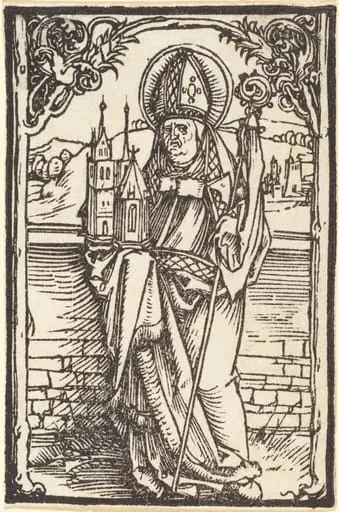
The figure represents Saint Willibaldus, an 8th-century bishop and missionary, shown in ecclesiastical robes with a crozier and a book, symbols of his pastoral authority and scholarly devotion. His tall mitre, crowned with a cross, identifies his episcopal rank. The quiet landscape and distant figures suggest a contemplative setting, reinforcing his role as a spiritual guide rather than a dramatic martyr.
Technique & Style
Executed as a woodcut, the image relies on carved lines and tonal contrasts to define form. Beck’s handling shows Renaissance influence: the figure is rendered with attention to drapery and posture, while the background includes detailed, miniature-like elements—animals, architecture, and swirling clouds. The blurred facial features reflect the limitations of the medium and the era’s focus on symbolic presence over individualized portraiture.
History & Provenance
Created in 1517, the print emerged during a period of growing demand for devotional imagery in southern Germany. Beck’s association with imperial projects suggests this work may have circulated among religious institutions or elite patrons. While its early ownership is unrecorded, its survival reflects the durability and dissemination of woodcuts in early 16th-century religious culture.
Context
In early 16th-century Augsburg, woodcuts served both devotional and propagandistic roles. Beck’s training in manuscript illumination informed his detailed compositions, while his work for Emperor Maximilian I connected him to broader networks of image-making. This print aligns with a trend of depicting saints in naturalistic settings, blending traditional iconography with emerging Renaissance sensibilities.
Legacy
Though not widely known today, Beck’s woodcuts contributed to the visual language of German religious print culture. His fusion of manuscript precision with the accessibility of print helped shape how saints were visually communicated to lay audiences. This work remains a quiet example of how local artisans sustained devotional traditions amid broader artistic shifts.
Artist & collection
Artist
Leonhard Beck (c. 1480 – 1542) was a painter and woodcuts designer in Augsburg, Germany. He was the son of Georg Beck, a miniaturist who was active in Augsburg c. 1490–1512/15. Leonhard collaborated with his father on…