Artwork
Saints Connected with the House of Hapsburg: A General Account of the Ancestry of Emperor Maximilian I
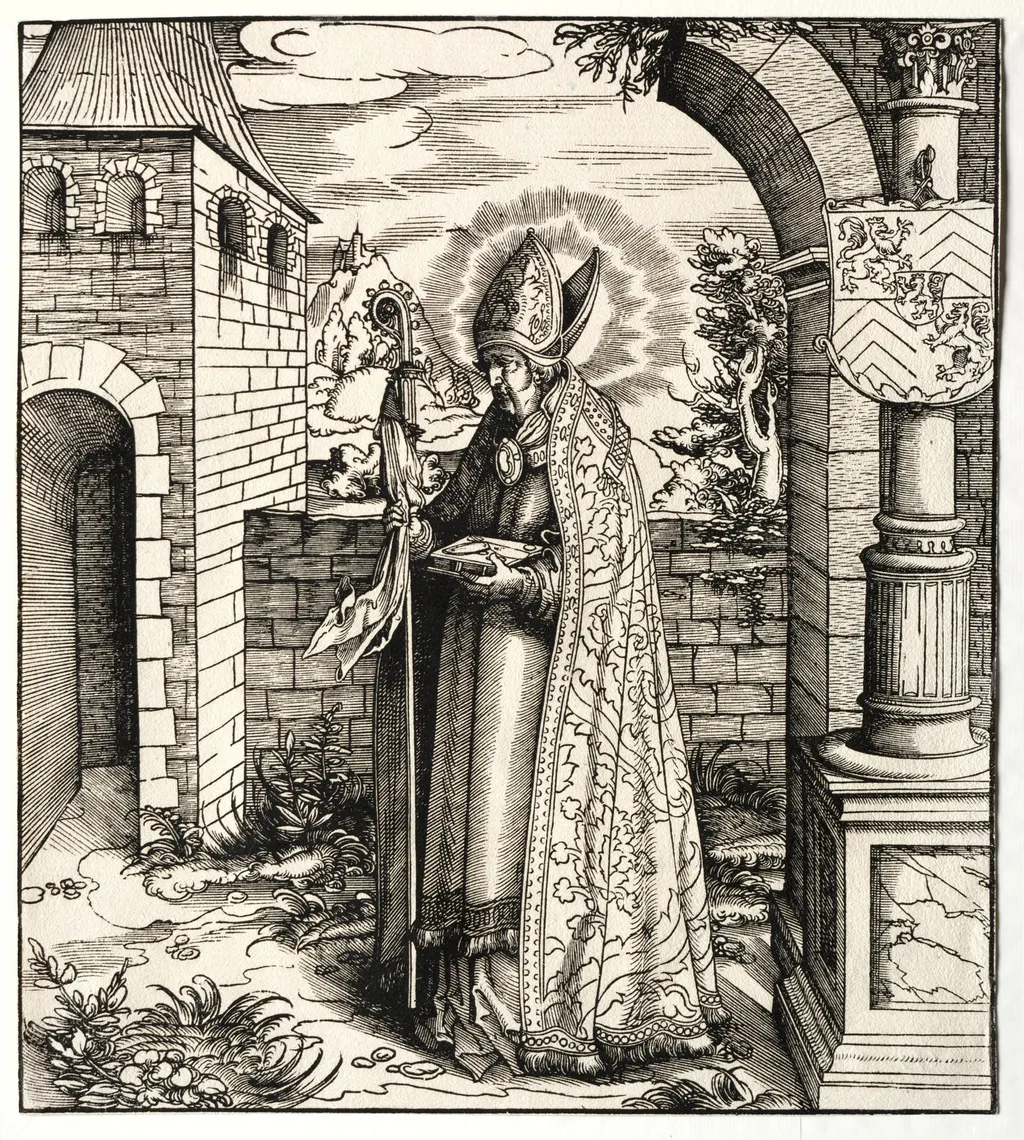
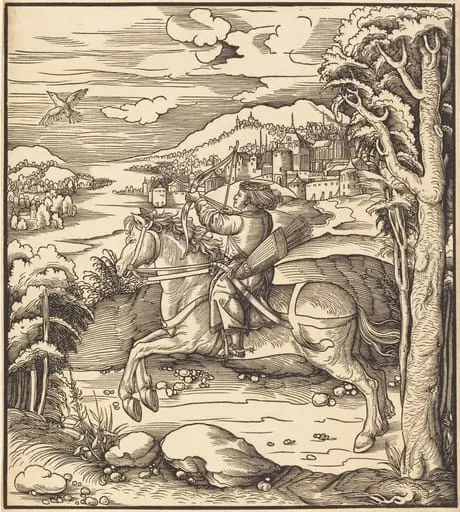
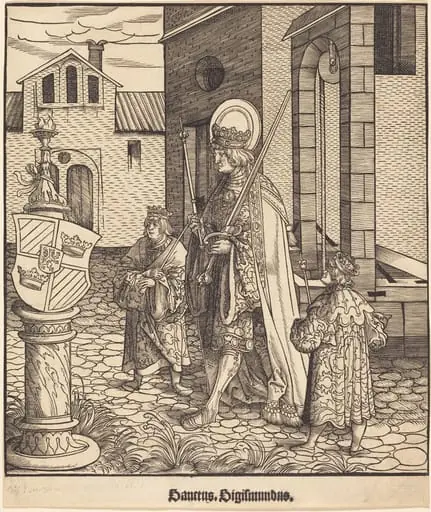
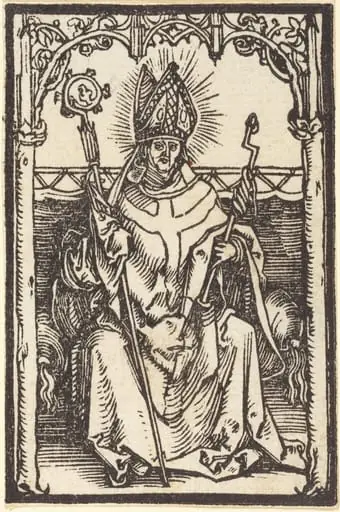
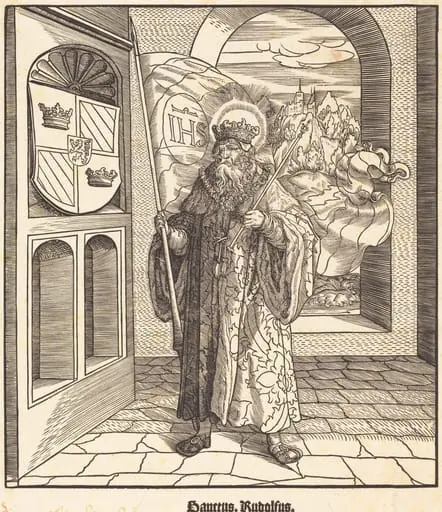
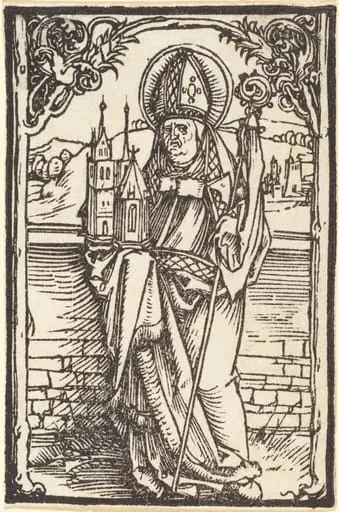
Saints Connected with the House of Hapsburg: A General Account of the Ancestry of Emperor Maximilian I is a print by Leonhard Beck. It dates from 1521 and is held in the collection of the Cleveland Museum of Art.
About this work
Overview
Created around 1521 by Leonhard Beck, this woodcut print forms part of a broader series commissioned to document the sacred lineage of Emperor Maximilian I.
Created around 1521 by Leonhard Beck, this woodcut print forms part of a broader series commissioned to document the sacred lineage of Emperor Maximilian I. Beck, an Augsburg-based artist trained in miniature painting and printmaking, contributed to imperial propaganda through detailed graphic works. The piece belongs to the Cleveland Museum of Art’s collection and exemplifies the fusion of religious iconography and dynastic ambition in early 16th-century German print culture.
Subject & Meaning
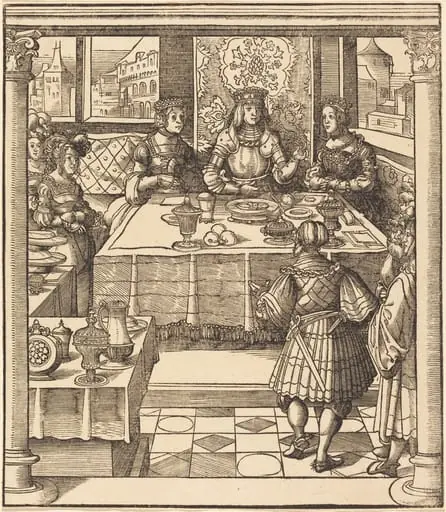
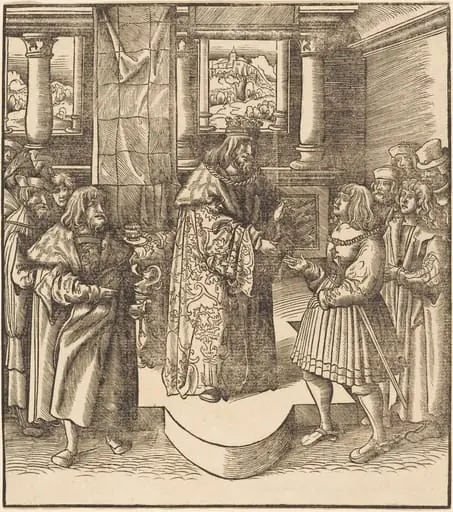
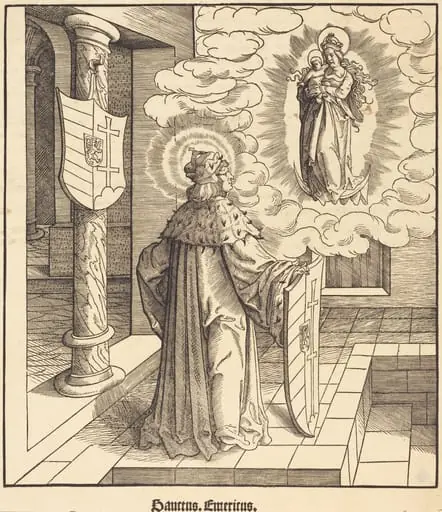
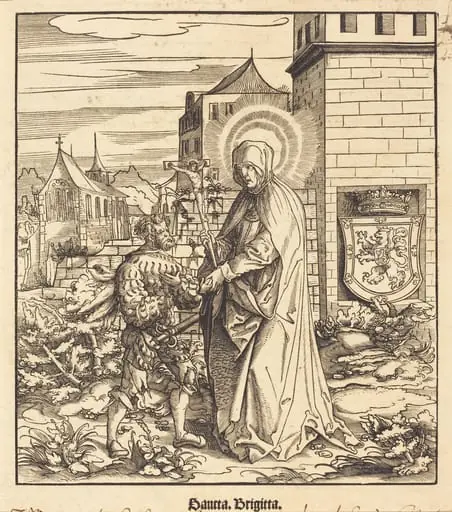
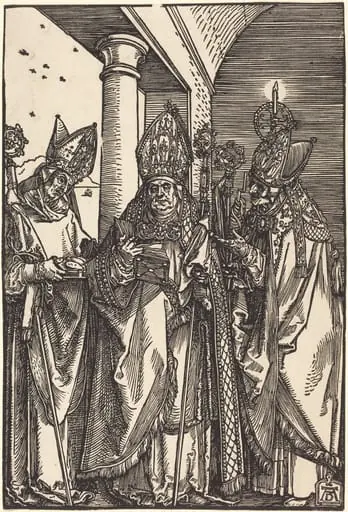
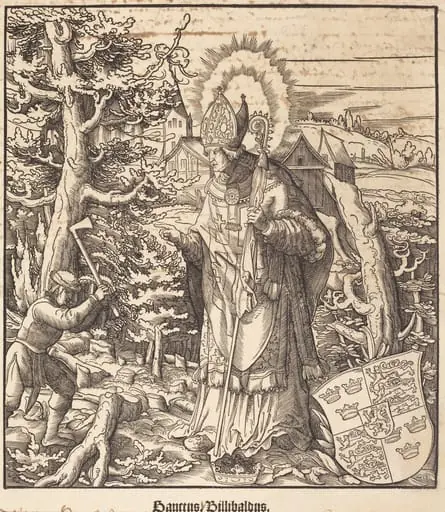
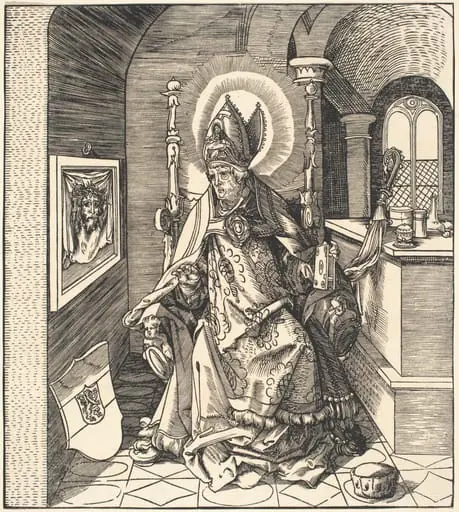
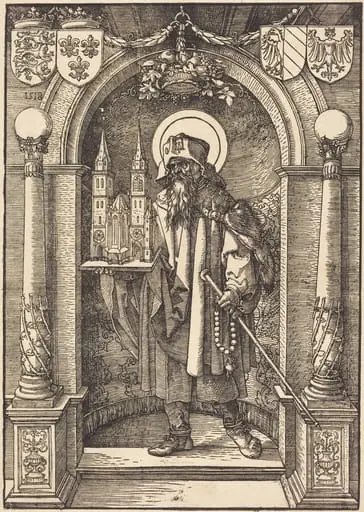
The figure depicted is a saint associated with the Habsburg family, likely chosen to legitimize imperial authority through divine ancestry. Dressed in ecclesiastical robes and holding a staff and book, the saint embodies spiritual authority and scholarly tradition. The architectural backdrop, possibly a chapel or reliquary, reinforces the sacred context. The composition serves as a visual genealogy, linking the emperor’s rule to holy precedent rather than mere political power.
Technique & Style
Beck employed fine linear engraving to render intricate details in the saint’s attire and the building’s stonework. Chiaroscuro is subtly used to model form and suggest spatial depth, particularly in the folds of fabric and the shadowed archway. The controlled contrast between light and dark enhances the three-dimensionality of the figure without overwhelming the flat, decorative qualities typical of woodcut design. Precision in line and texture reflects his training in both miniature and large-scale print production.
History & Provenance
Leonhard Beck, son of the miniaturist Georg Beck, worked in Augsburg’s vibrant artistic community and collaborated with major figures like Hans Holbein the Elder. His involvement in Maximilian I’s ambitious print projects placed him at the center of imperial visual propaganda. This print likely circulated among courtiers and clergy, reinforcing dynastic narratives. It entered the Cleveland Museum of Art’s collection in the 20th century, preserved as a key example of German Renaissance printmaking.
Context
During Maximilian I’s reign, woodcuts served as tools of political theology, merging religious imagery with claims of divine right. Beck’s work aligned with a broader trend in which rulers commissioned genealogical and hagiographic series to sanctify their lineage. Augsburg, as a center of printing and craftsmanship, provided the technical infrastructure for such projects. The image reflects the intersection of art, religion, and power in early modern Europe.
Legacy
Beck’s contribution to Maximilian’s print campaigns helped standardize the use of woodcut for dynastic storytelling. His precise draftsmanship influenced later generations of German printmakers. While less celebrated than contemporaries like Dürer, his work remains a vital record of how visual media reinforced political legitimacy. This print endures as a testament to the role of artisanal skill in shaping imperial identity during the Reformation era.
Artist & collection
Artist
Leonhard Beck (c. 1480 – 1542) was a painter and woodcuts designer in Augsburg, Germany. He was the son of Georg Beck, a miniaturist who was active in Augsburg c. 1490–1512/15. Leonhard collaborated with his father on…