Artwork
Saint Augustine
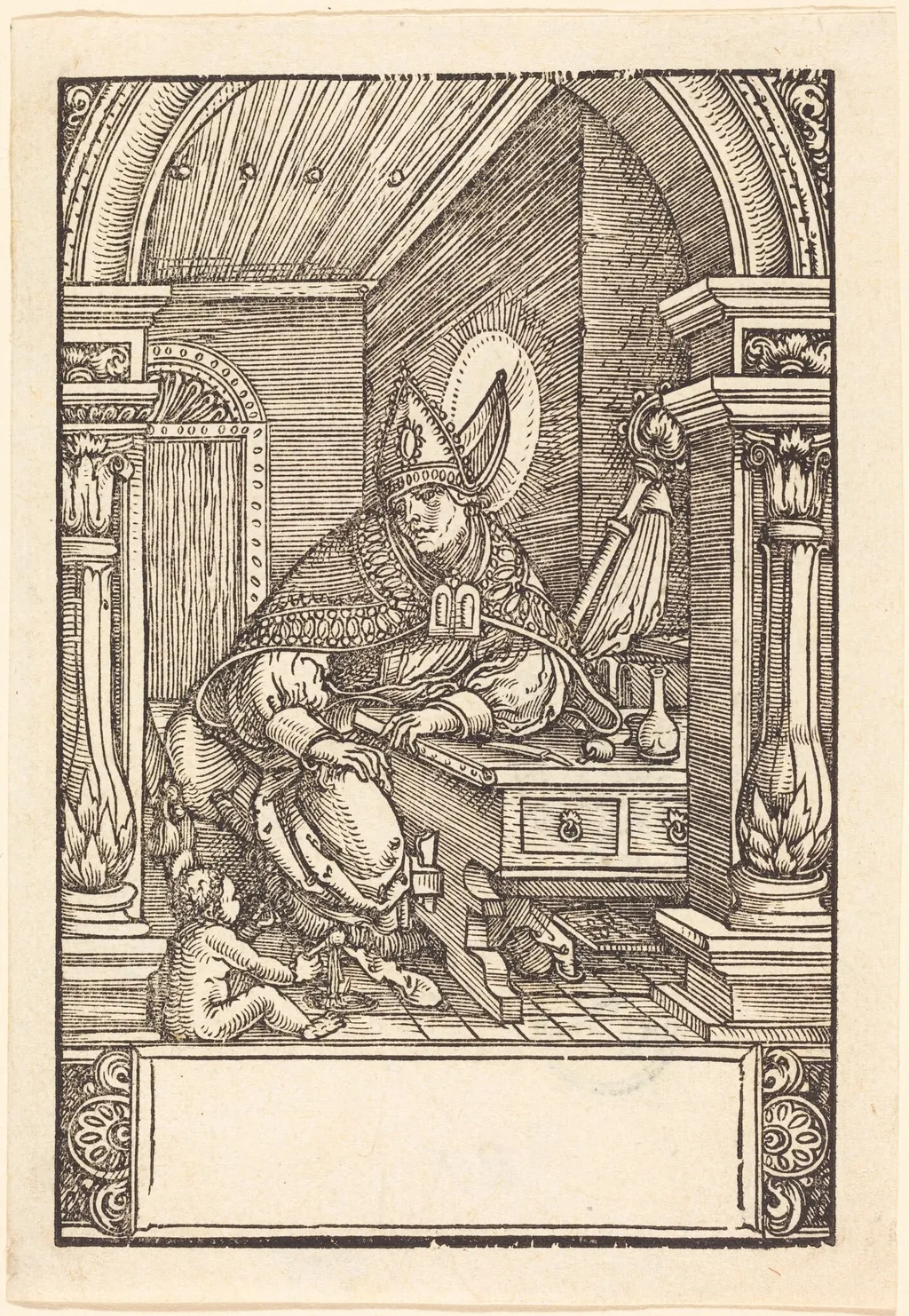
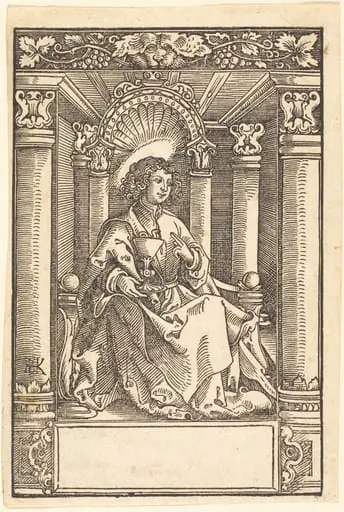
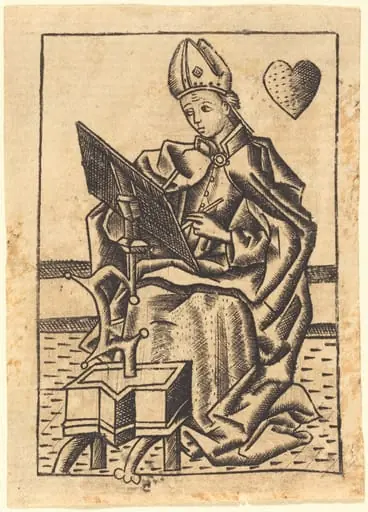
Saint Augustine is an ink print by the Renaissance artist Hans Springinklee. It dates from 1518 and is held in the collection of the National Gallery of Art.
About this work
Overview
Hans Springinklee’s 1518 woodcut titled *Saint Augustine* depicts a contemplative figure seated on an elevated chair, surrounded by architectural elements such as arched windows and decorative framing. The composition is rendered in stark black and white, emphasizing the contrast between the solemn saint, a kneeling supplicant, and a figure lying on the floor, all arranged within a richly detailed interior.
Subject & Meaning
The central figure, identified by his robes and the book he holds, represents Saint Augustine, a pivotal theologian of early Christianity. His upward‑tilted gaze suggests meditation or divine inspiration, while the kneeling figure below appears to be in prayerful appeal, reinforcing the work’s devotional purpose and its focus on the saint’s role as an intercessor.
Technique & Style
This linear rigor reflects the influence of Albrecht Dürer’s workshop, where meticulous line work was a hallmark of early sixteenth‑century German printmaking.
Executed as a woodcut, the image relies on precise incised lines to convey texture and depth. Springinklee employs tight hatching and patterned carving to render the folds of the garments, the intricate chair, and the architectural backdrop. This linear rigor reflects the influence of Albrecht Dürer’s workshop, where meticulous line work was a hallmark of early sixteenth‑century German printmaking.
History & Provenance
Springinklee, a native of Nuremberg and a known pupil of Albrecht Dürer, produced this work during a period when religious prints were widely circulated for devotional use. The woodcut was likely distributed as part of a series of saintly images, serving both private contemplation and public instruction within the early Reformation context.
Context
Created in 1518, the print emerges from the flourishing print culture of the German Renaissance, where advances in woodcut technology allowed for broader dissemination of theological imagery. The work aligns with contemporary efforts to make religious subjects accessible to a literate and increasingly visual public, bridging artistic innovation with ecclesiastical instruction.
Artist & collection

Artist
Hans Springinklee (c.1490/c.1495 – c.1540) was a German artist from Nuremberg, best known for his woodcuts. He was a pupil of Albrecht Dürer.

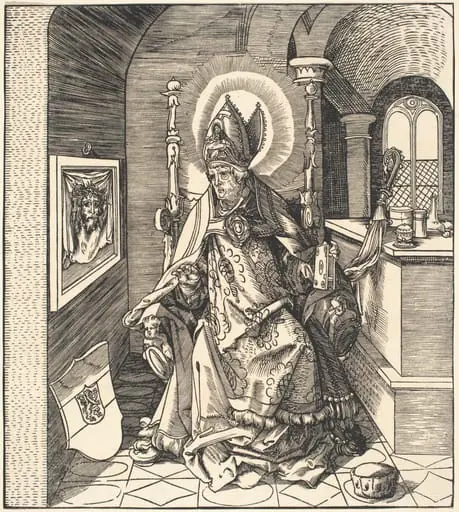 Saint Remigius
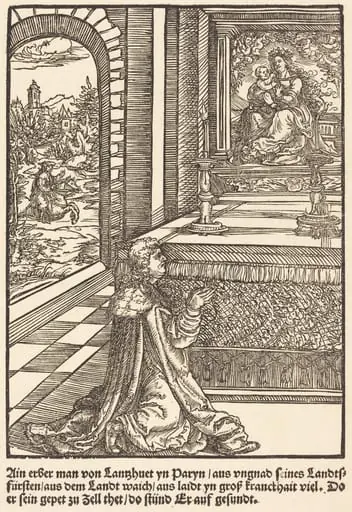 Ain erber man von Lanshuet ...
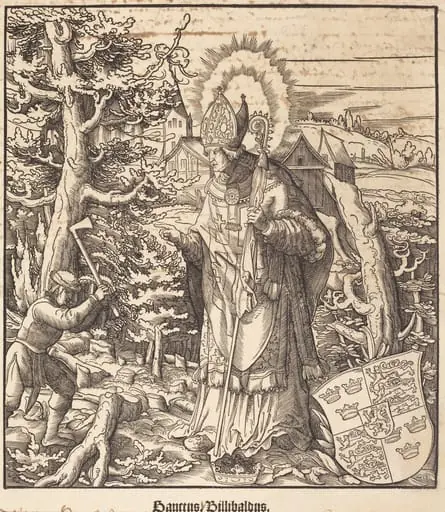 Saint Willibaldus
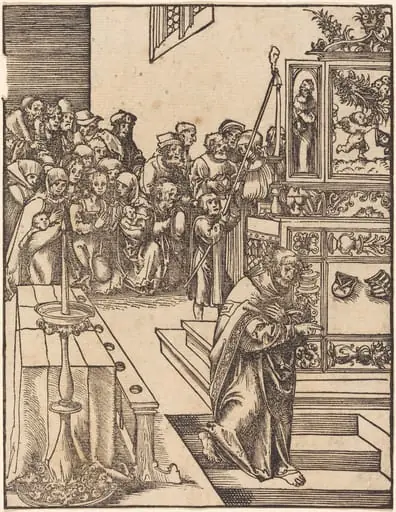 Saint John the Evangelist
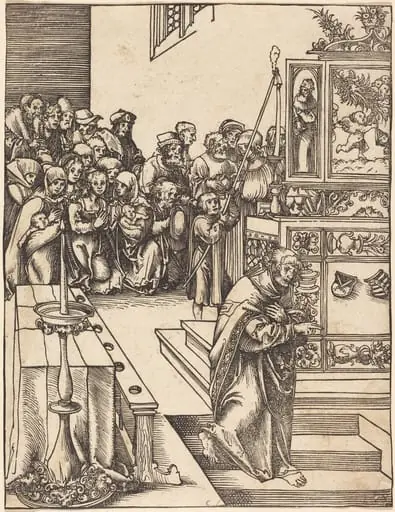 Saint John the Evangelist
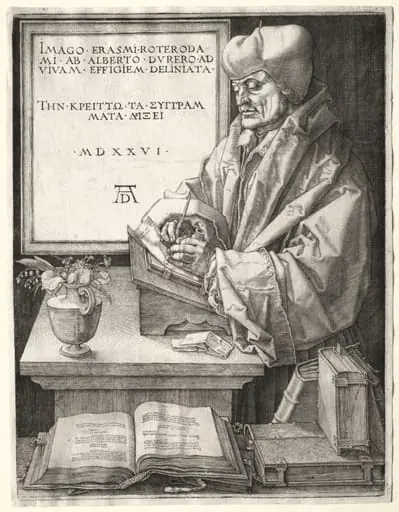 Desiderius Erasmus of Rotterdam
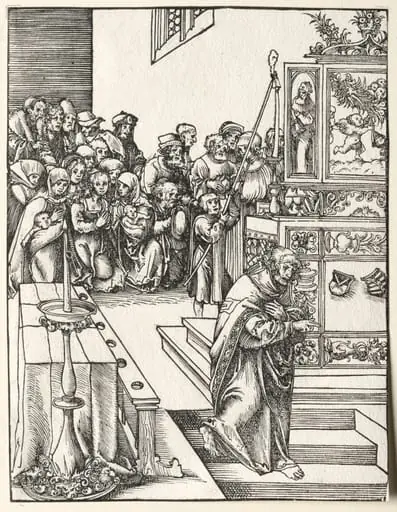 Martyrdom of St. John
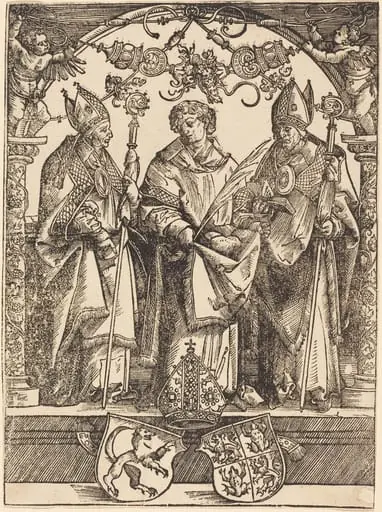 Saints Maximilian, Stephen, and Valentine
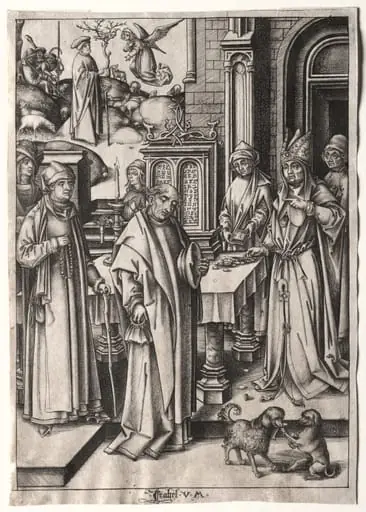 Life of the Virgin: High Priest Rejecting the Offering of Joachim
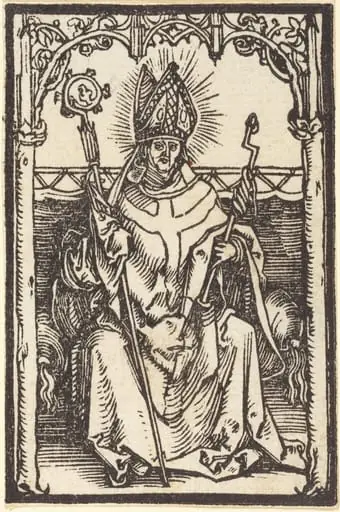 Saint Erasmus
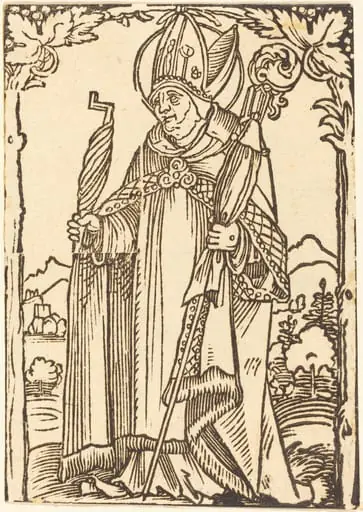 Saint Erasmus as Bishop
 Saint Augustine