Artwork
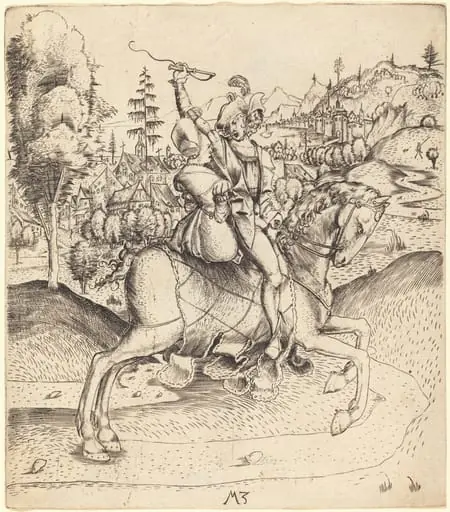
Halberdier on Horseback
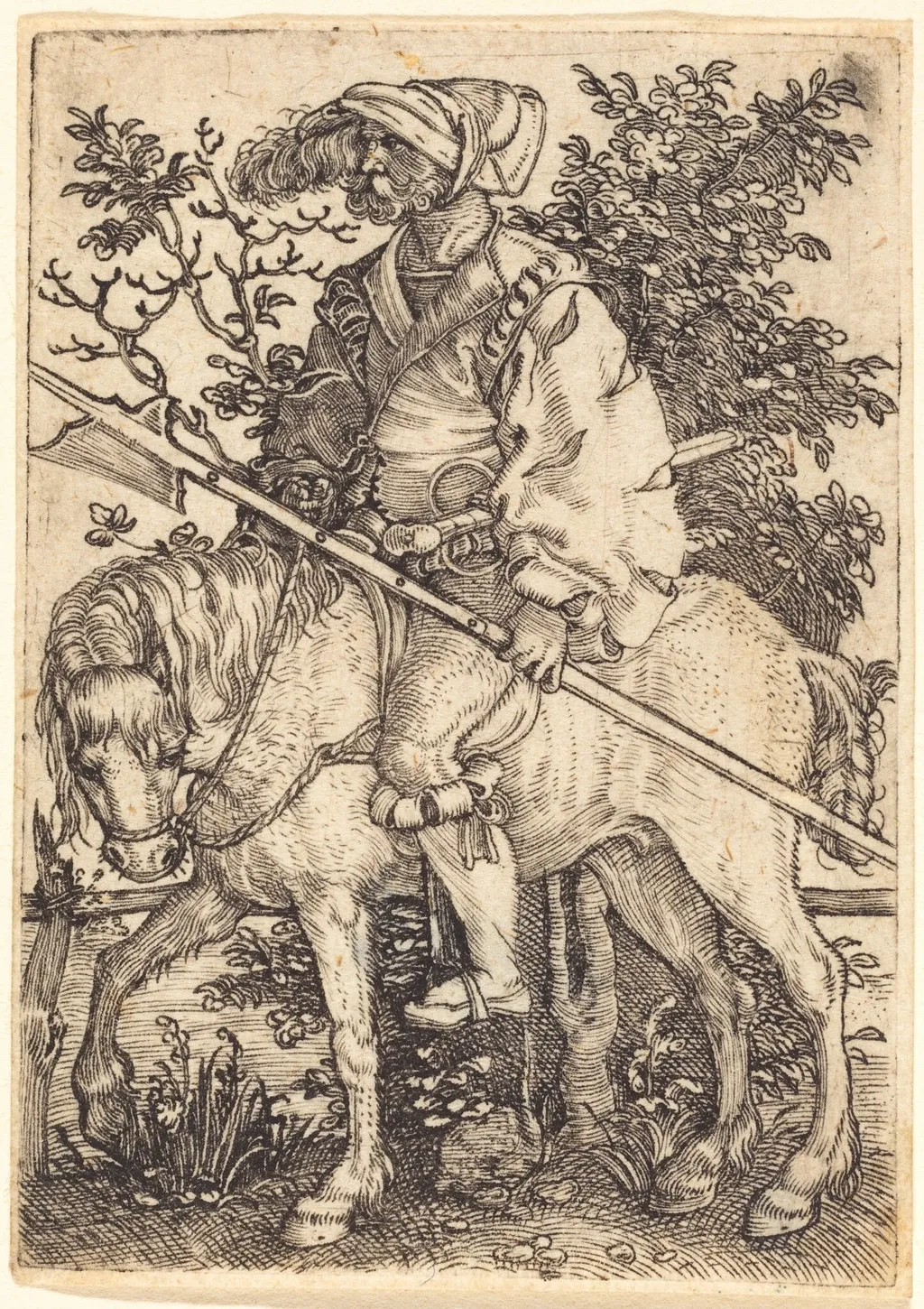
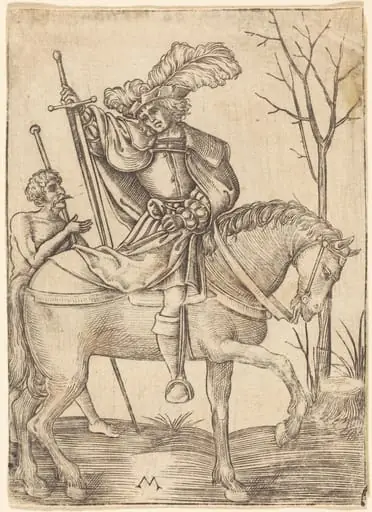
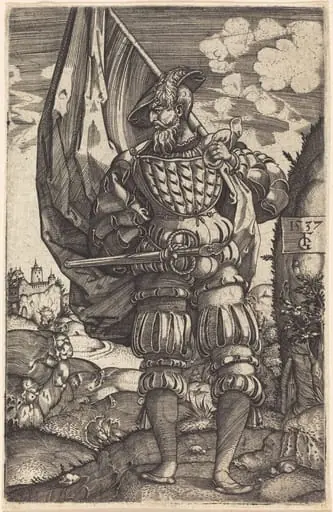
Halberdier on Horseback is an ink print by the Renaissance artist Barthel Beham. It dates from 1526 and is held in the collection of the National Gallery of Art.
About this work
Overview
The work belongs to a tradition of Northern European printmaking that emphasized precision and narrative suggestion over naturalism.
Created around 1526 by Barthel Beham, this black-and-white engraving depicts a mounted soldier bearing a halberd. The work belongs to a tradition of Northern European printmaking that emphasized precision and narrative suggestion over naturalism. Its intricate linework and compact composition reflect the technical rigor of the medium, designed for reproduction and dissemination rather than singular display.
Subject & Meaning
The figure is a halberdier, a type of infantry soldier equipped with a polearm combining axe, hook, and spear. Mounted and helmeted with a feathered crest, he conveys authority rather than specific identity. The scene lacks a clear narrative context, suggesting it functions as a symbolic representation of military power or civic defense, common themes in early 16th-century prints.
Technique & Style
Beham employed fine, layered lines to model form and texture, particularly in the horse’s musculature and the rider’s armor. The background foliage is rendered with rigid, repetitive strokes, creating a stylized, almost decorative effect. The contrast between detailed foreground elements and flattened surroundings reflects a preference for symbolic clarity over spatial depth, typical of the period’s graphic conventions.
History & Provenance
As a print from the early Reformation era, this engraving likely circulated among urban elites and military patrons in southern Germany. Beham, part of the Little Masters group, produced numerous small-scale engravings for collectors. While no specific early ownership records are documented, its style aligns with prints distributed through Nuremberg’s thriving print market during the 1520s.
Context
Engravings like this were part of a broader visual culture that translated military and civic ideals into portable imagery. With the rise of professional armies and the printing press, such images served both as propaganda and as status symbols. Beham’s work reflects the intersection of art, technology, and the militarized society of the Holy Roman Empire during a time of political and religious upheaval.
Legacy
Though not widely exhibited today, Beham’s engravings contributed to the development of printmaking as an autonomous art form. His precise line work influenced later generations of German graphic artists. This piece exemplifies how small-scale prints helped standardize visual motifs of authority and martial virtue across early modern Europe.
Artist & collection
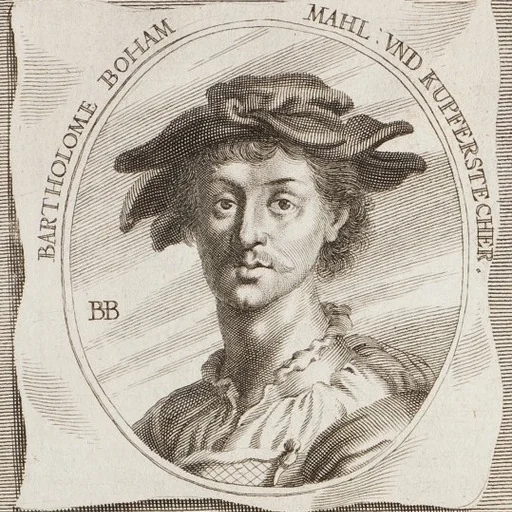

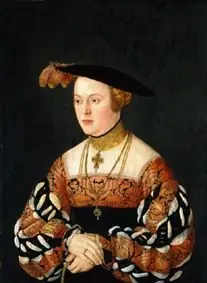 Portrait of Marie of Baden
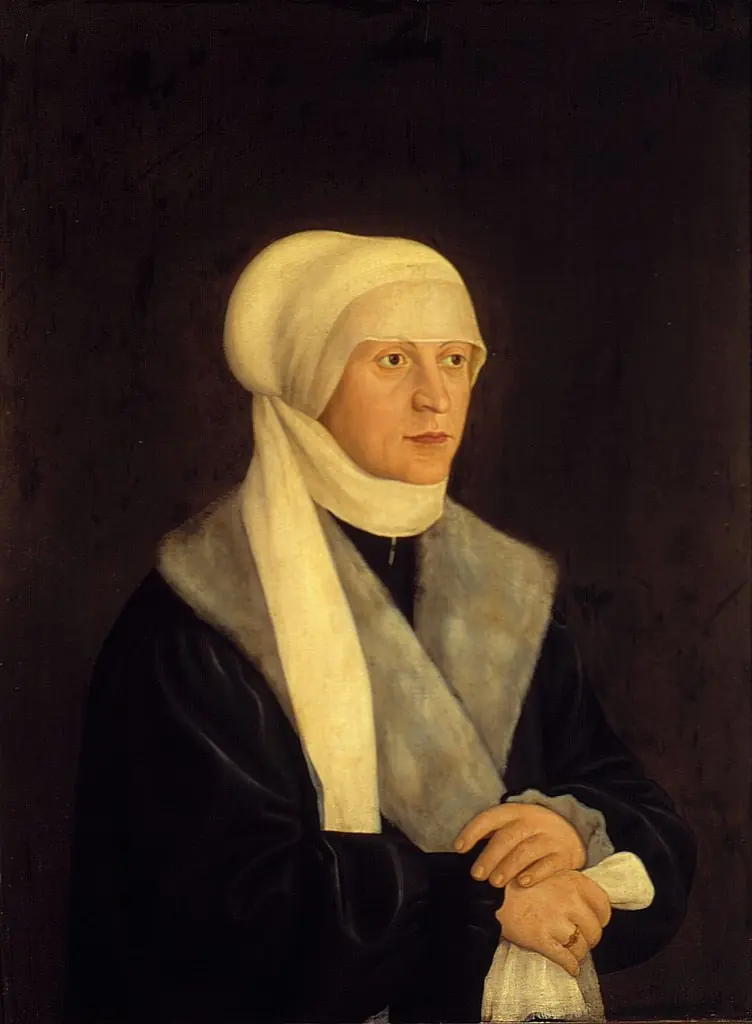 Portrait of Sabina of Bavaria
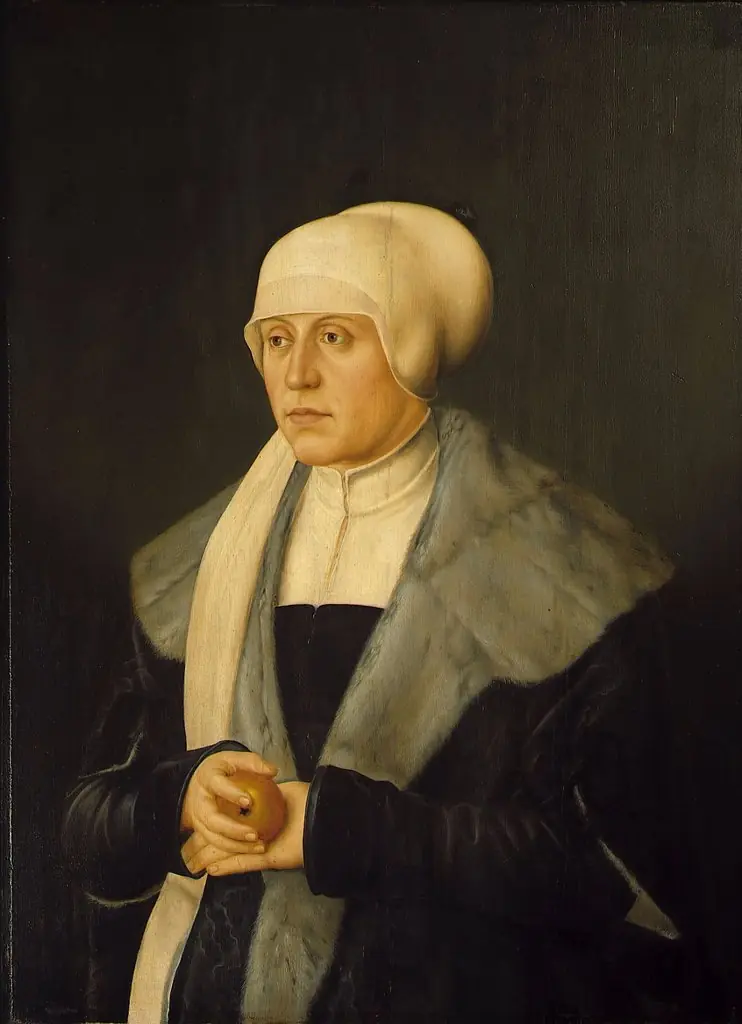 Kunigunde of Austria, wife of Duke Albrecht IV of Bavaria
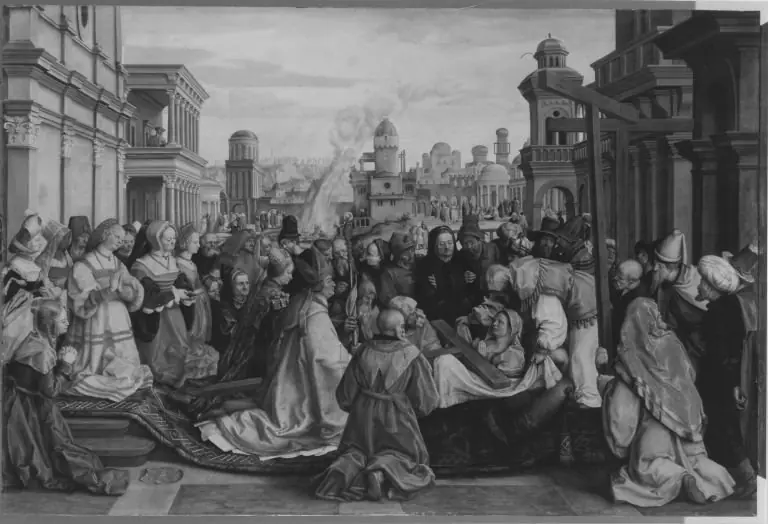 Historienzyklus: Kreuzauffindung der hl. Helena
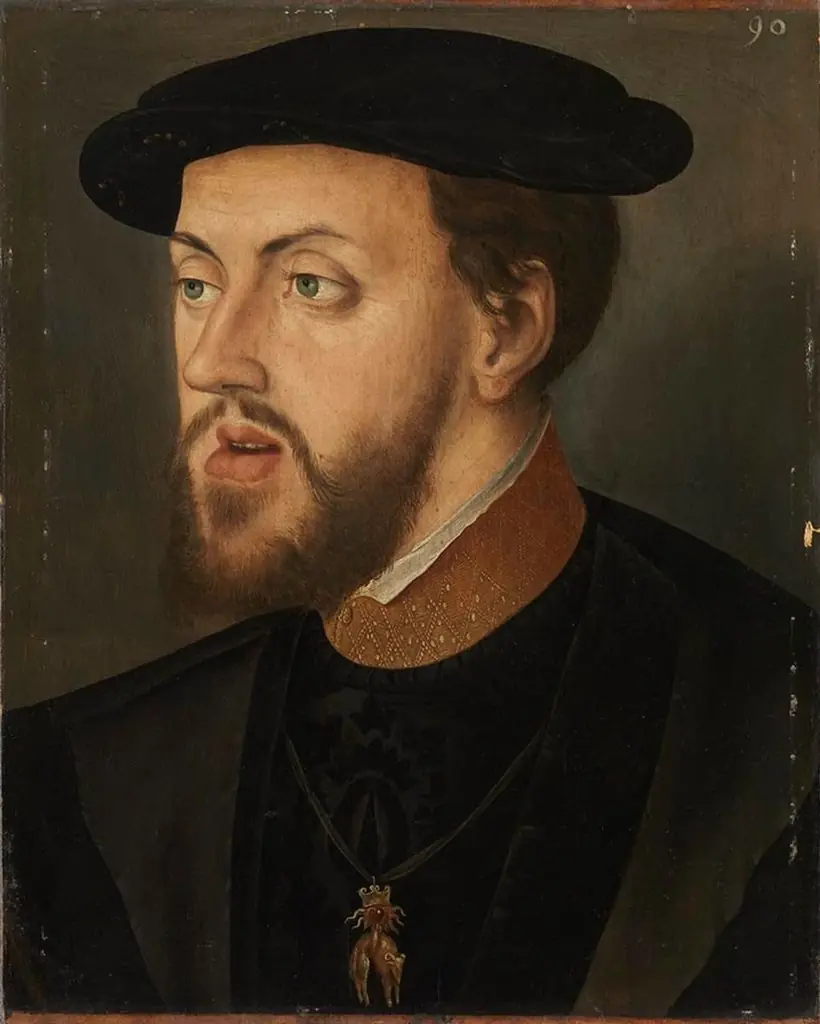 Emperor Charles V
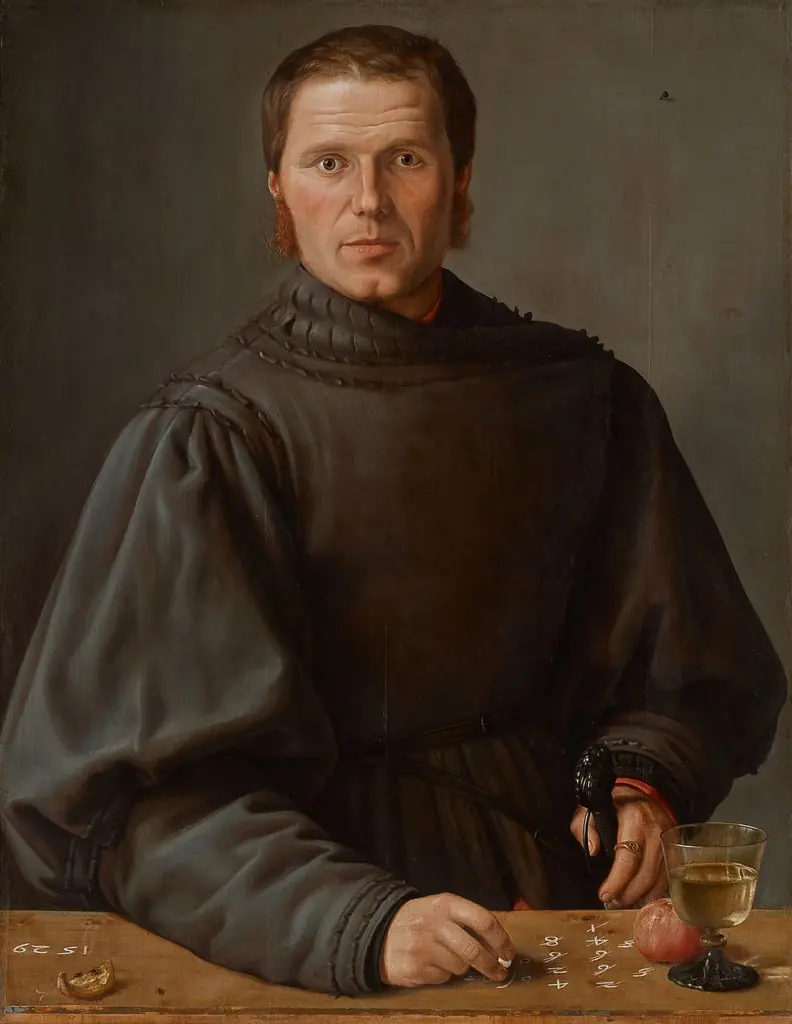 Portrait of a Man
 Susanna von Brandenburg, Gemahlin Ottheinrichs (Seitenverkehrte Kopie nach Inv.-Nr. 2450) (Kopie nach)
 Portrait of Herzog Johann III, Paltzgraf bei Rhein (1488-1538)