Artwork
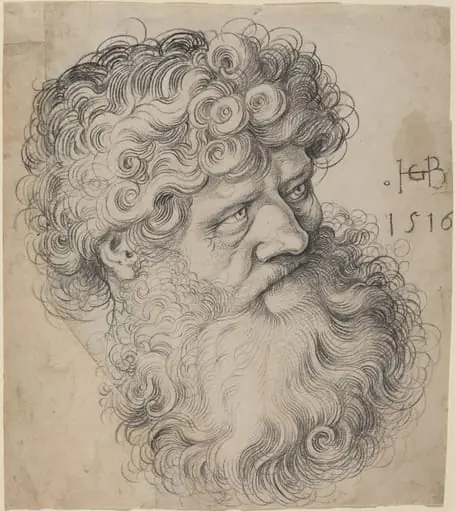
Bust of an Old Bearded Man
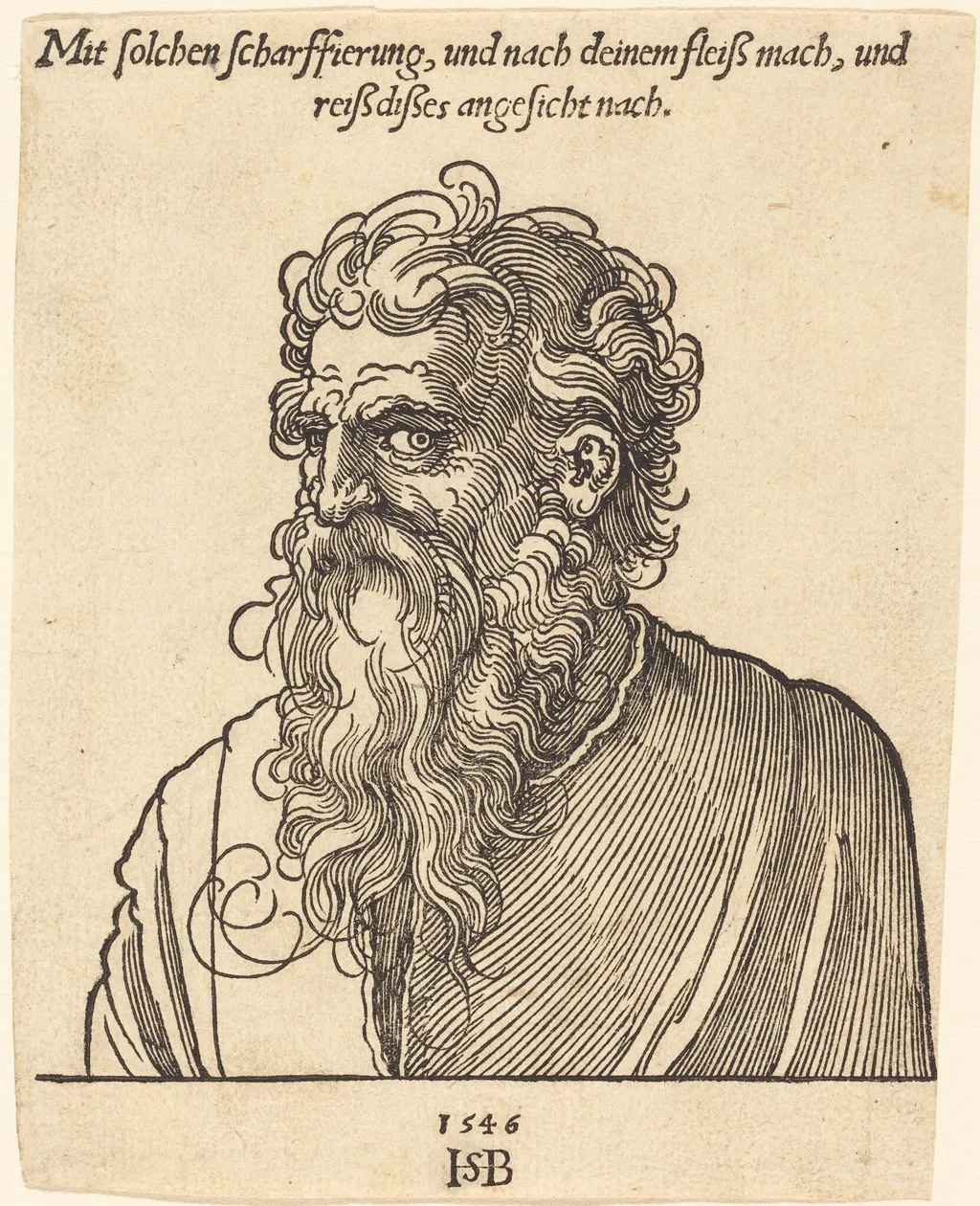
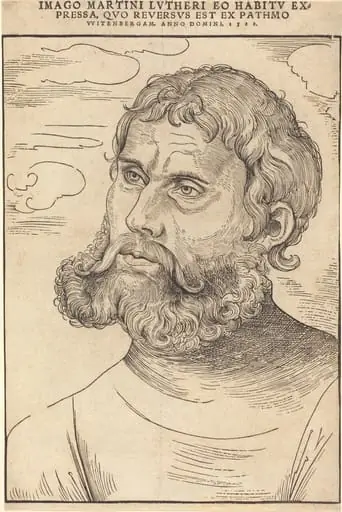
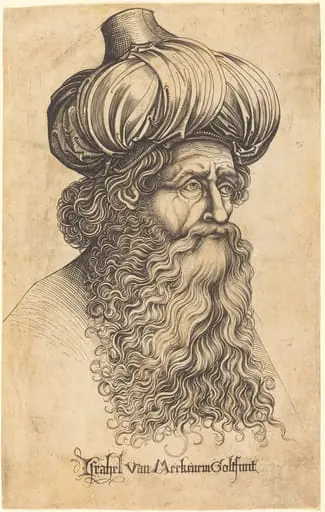
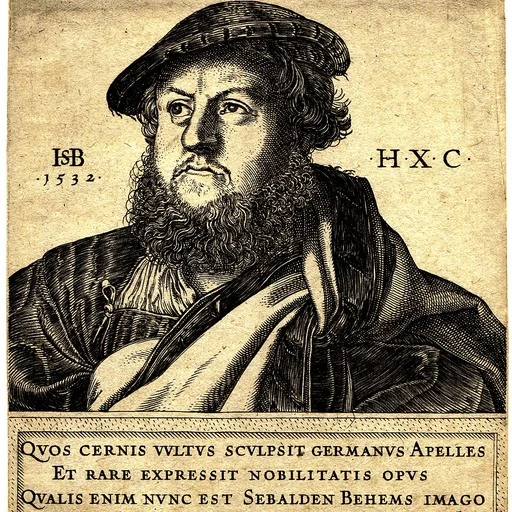
Bust of an Old Bearded Man is an ink print by the Renaissance artist Sebald Beham. It dates from 1546 and is held in the collection of the National Gallery of Art.
About this work
The face looks serious, with deep shadows under the eyes and a strong jawline.
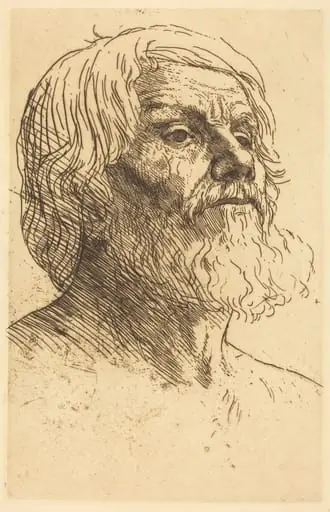
This is a black-and-white drawing of a bearded man’s head and shoulders. His hair and beard are thick, made of tight, swirling lines. The face looks serious, with deep shadows under the eyes and a strong jawline.
The top of the image has German text, and the bottom says "1546" and "ISB." This is a woodcut, meaning it was carved into wood and printed.
Look up woodcut to see how this printing method works.
Overview
Created in 1546 by Sebald Beham, this woodcut depicts the upper torso and head of an elderly man with a full beard. Executed in black ink on paper, the print exemplifies the precision possible in small-format German Renaissance printmaking. Beham, a key figure among the Little Masters, used the woodcut technique to render fine detail, demonstrating technical control over the medium’s limitations.
Subject & Meaning
The subject is an aging man, his face marked by deep-set eyes, a prominent jaw, and a dense, intricately carved beard. His expression is solemn, devoid of idealization, suggesting a focus on individual character rather than symbolic or religious meaning. The inclusion of initials and date implies a personal or professional signature, common among printmakers asserting authorship in an era of reproductions.
Technique & Style
Beham employed fine, interwoven lines to model form and texture, particularly in the beard and hair, where swirling strokes create volume and shadow. The woodcut’s linear density reveals his skill in carving delicate patterns into woodblock surfaces. The absence of tone or gradation relies entirely on line weight and spacing, a hallmark of his restrained yet expressive graphic style.
History & Provenance
Beham produced this work during his time in Nuremberg, before his later move to Frankfurt. As a prolific printmaker, he circulated his works widely through the German print market. The signature 'ISB'—likely his initials—and the date confirm its origin in his mature period, aligning with documented output from the mid-1540s.
Context
In mid-16th century Germany, woodcuts were a primary medium for disseminating images beyond elite circles. Beham’s small-scale works catered to collectors and artisans interested in refined graphic art. His focus on portraiture, unusual in a field dominated by religious or allegorical subjects, reflects a growing interest in individual likeness during the Renaissance.
Legacy
Beham’s technical discipline in woodcut influenced subsequent generations of German printmakers. His ability to convey psychological presence within minute formats helped elevate printmaking as a serious artistic endeavor. Though less known today than painters of his era, his contributions remain foundational to the history of Northern European graphic arts.
Artist & collection
Artist
Sebald Beham (1500–1550) was a German painter and printmaker, mainly known for his very small engravings.