Artwork
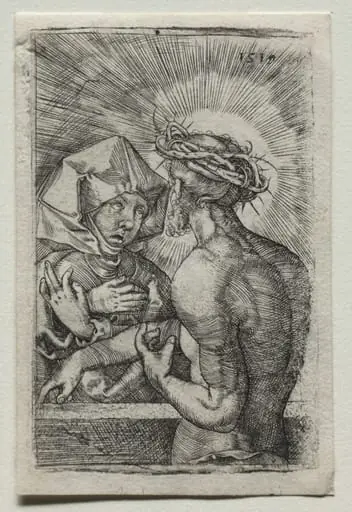
Christ Crowned with Thorns Speaking with His Mother
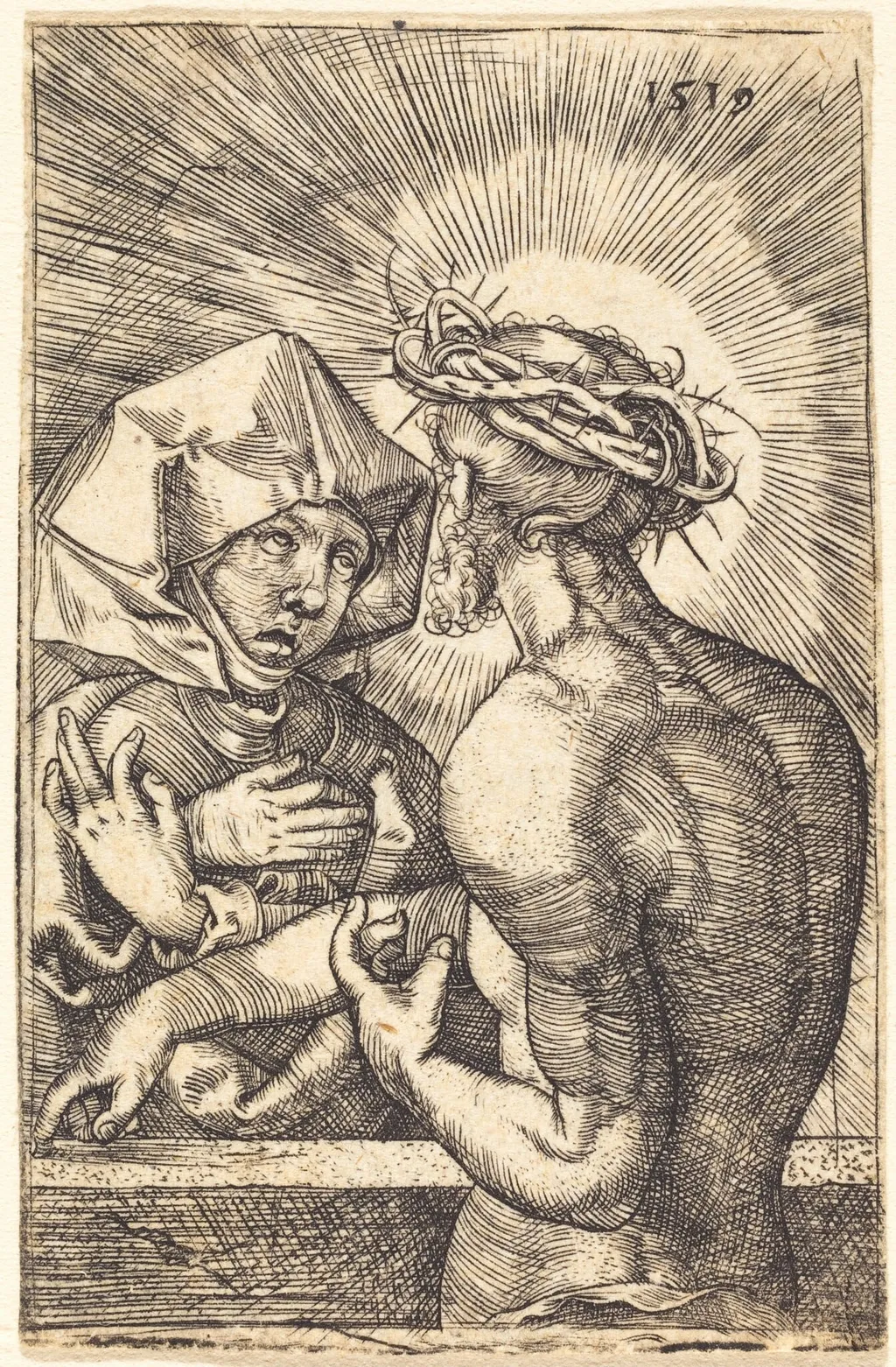
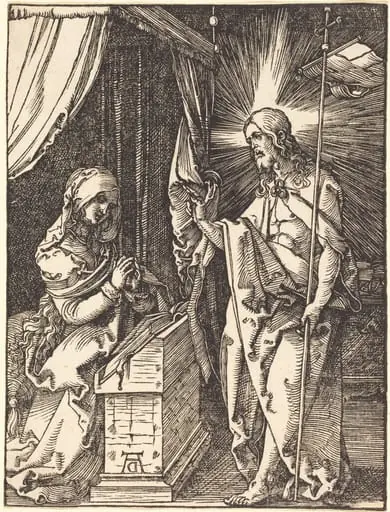
Christ Crowned with Thorns Speaking with His Mother is an ink print by the Renaissance artist Sebald Beham. It dates from 1519 and is held in the collection of the National Gallery of Art.
About this work
Overview
Created in 1519 by Sebald Beham, this engraving depicts a quiet moment between Christ and the Virgin Mary after the crowning with thorns. Executed in fine linear detail, it reflects Beham’s mastery of the small-scale print format. As a member of the so-called Little Masters, he focused on intricate compositions suited for intimate devotion rather than public display.
Subject & Meaning
The scene captures Christ, bearing the crown of thorns and a reed staff, gazing downward at Mary, who clasps her hands in sorrow. Their exchange is restrained, emphasizing spiritual communion amid suffering. The thorns, rendered with precise, sharp lines, underscore the physical and symbolic weight of Christ’s sacrifice, while Mary’s posture conveys silent grief and acceptance.
Technique & Style
Beham used fine, controlled engraving lines to model form and atmosphere. The background is densely packed with cross-hatched strokes, creating a shadowed, enclosed space that isolates the figures. The delicate rendering of textures—fabric, skin, and thorns—demonstrates his technical precision and alignment with Nuremberg’s tradition of meticulous printmaking.
History & Provenance
The print was produced during Beham’s early career in Nuremberg, a center of print culture following Dürer’s influence. Though no early ownership records are widely documented, such engravings circulated among educated laypeople and clergy as devotional aids. Its survival in multiple museum collections suggests steady demand in the 16th-century print market.
Context
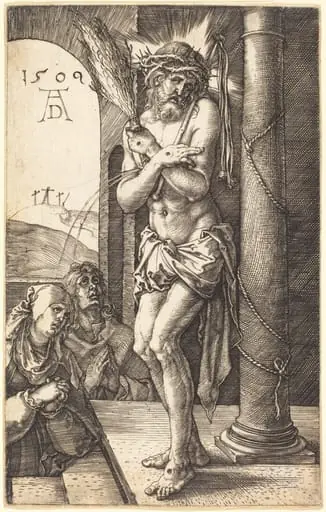
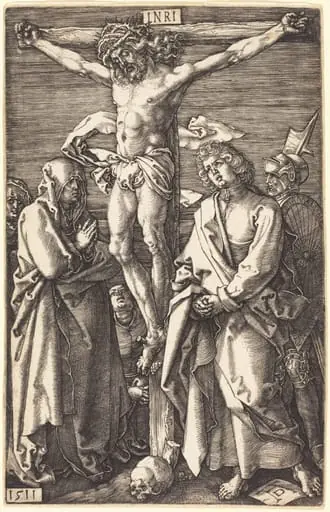
In early 16th-century Germany, religious imagery remained central despite growing reformist tensions. Beham’s small-scale engravings catered to private piety, offering contemplative alternatives to large altarpieces. His work bridges late medieval devotional practices and the emerging humanist interest in emotional intimacy within sacred narratives.
Legacy
Beham’s engravings, including this one, helped define the aesthetic of the Little Masters, influencing later generations of printmakers through their focus on detail and emotional nuance. Though less celebrated than Dürer, his contributions sustained the tradition of intimate religious imagery in Northern Europe well into the 1500s.
Artist & collection
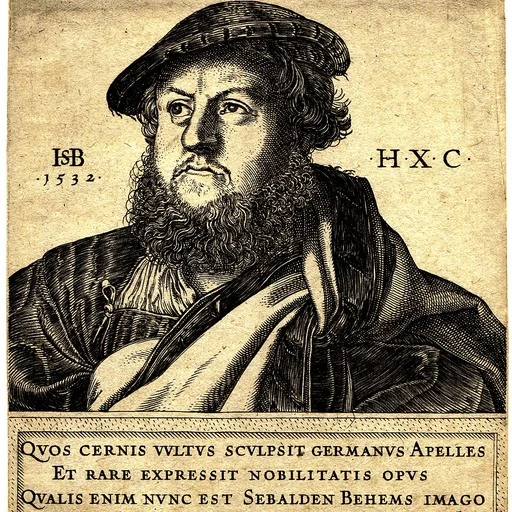
Artist
Sebald Beham (1500–1550) was a German painter and printmaker, mainly known for his very small engravings.