Artwork
Christ Crowned with Thorns Speaking with His Mother
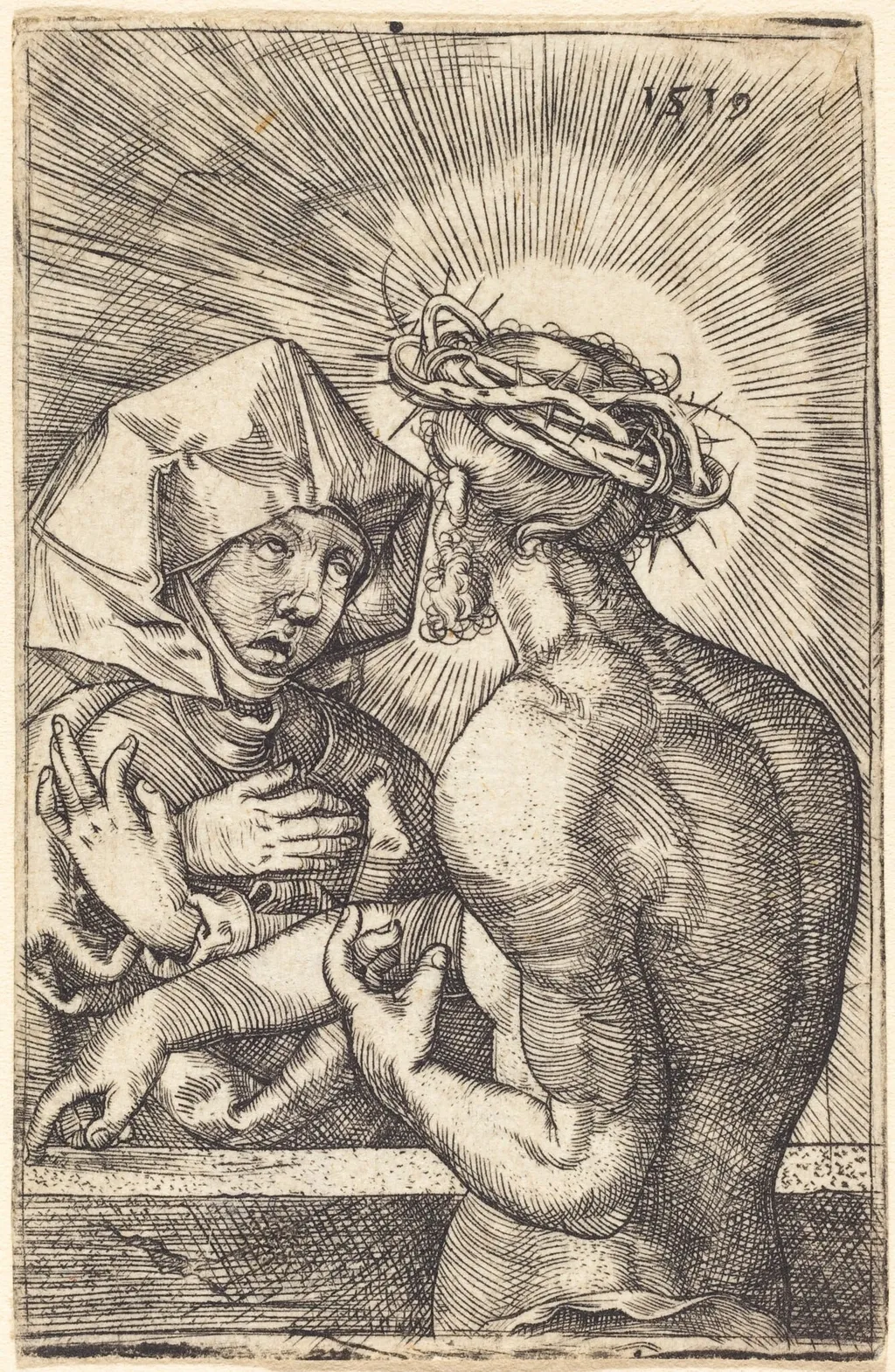
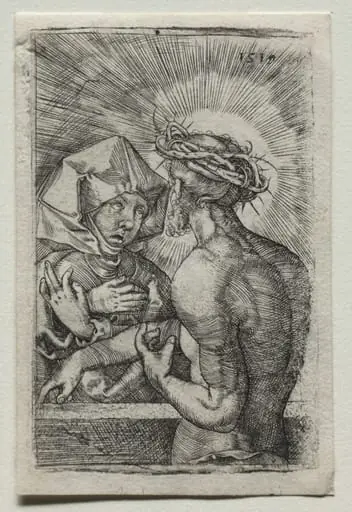
Christ Crowned with Thorns Speaking with His Mother is an ink print by the Renaissance artist Sebald Beham. It dates from 1519 and is held in the collection of the National Gallery of Art.
About this work
Overview
Created in 1519 by Sebald Beham, this engraving captures a quiet, intimate moment between Christ and the Virgin Mary following his crowning with thorns.
Created in 1519 by Sebald Beham, this engraving captures a quiet, intimate moment between Christ and the Virgin Mary following his crowning with thorns. Beham, a key figure in early 16th-century German printmaking, was known for his precision in small-scale works. This piece exemplifies his mastery of line and detail, characteristic of the group known as the 'Little Masters,' who refined printmaking techniques after Dürer’s innovations.
Subject & Meaning
The scene portrays Christ, bearing the crown of thorns, in silent communion with his mother. His upward gaze suggests resignation or prayer, while Mary’s gesture—one hand pressed to her chest, the other reaching toward him—conveys grief and tenderness. Their proximity and mirrored postures emphasize emotional intimacy, transforming a moment of suffering into a private exchange of sorrow and solace, rich with devotional resonance.
Technique & Style
Beham employed fine, controlled engraving lines to model form and emotion. The faces are rendered with subtle hatching to suggest pallor and anguish; the crown’s thorns are defined by sharp, radiating incisions. The background, composed of dense crisscrossing strokes, creates a luminous, textured void that isolates the figures and heightens their emotional weight. The composition’s intimacy is achieved through minimal space and focused detail, typical of Beham’s approach to narrative compression.
History & Provenance
Produced during Beham’s early career in Nuremberg, this engraving reflects the city’s thriving print culture and demand for devotional imagery. Though its early ownership is undocumented, it aligns with the circulation of small religious prints among private collectors and clergy in Protestant and Catholic regions alike. Beham’s prolific output ensured wide dissemination, and this work survives in multiple museum and library collections today.
Context
In 1519, as the Reformation gained momentum, religious imagery faced new scrutiny. Yet intimate, emotionally charged scenes like this one remained popular across confessional lines. Beham’s focus on personal piety, rather than doctrinal narrative, allowed such works to endure in both Catholic and emerging Protestant households, serving as aids for private meditation amid broader religious upheaval.
Legacy
Beham’s engravings, including this one, influenced later Northern European printmakers through their technical refinement and emotional restraint. His ability to convey complex human feeling with minimal means set a standard for small-scale religious imagery. Though less celebrated than Dürer, Beham’s work preserved a quiet, human dimension of faith in an era of doctrinal division.
Artist & collection
Artist
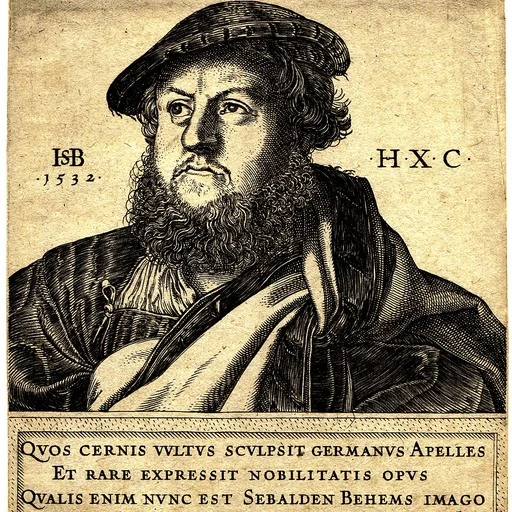
Sebald Beham (1500–1550) was a German painter and printmaker, mainly known for his very small engravings.