Artwork
Death of Hercules
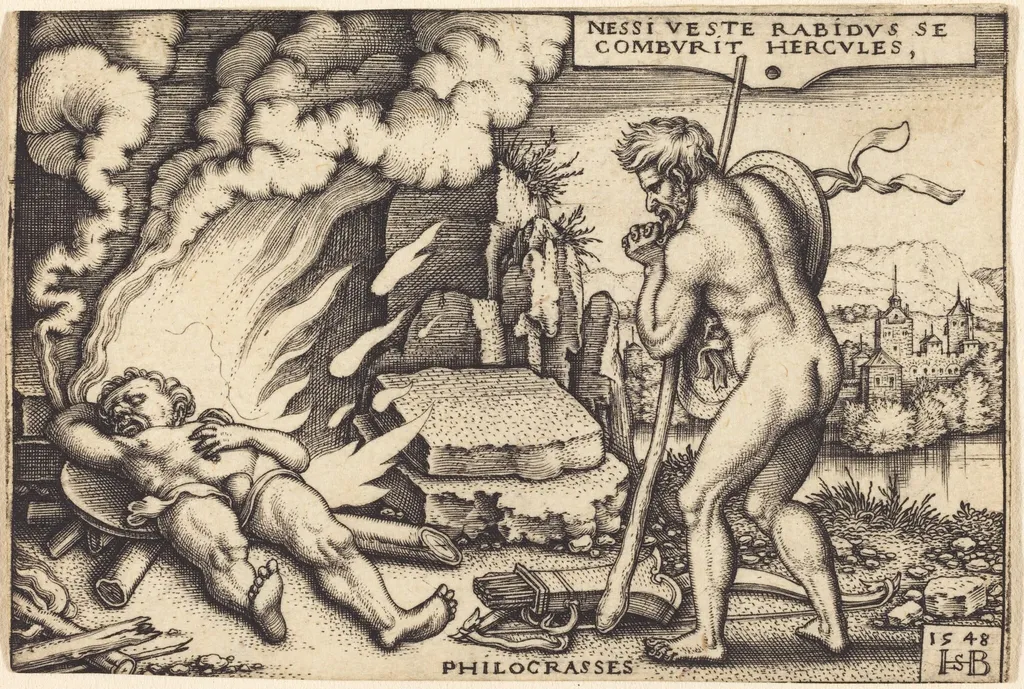
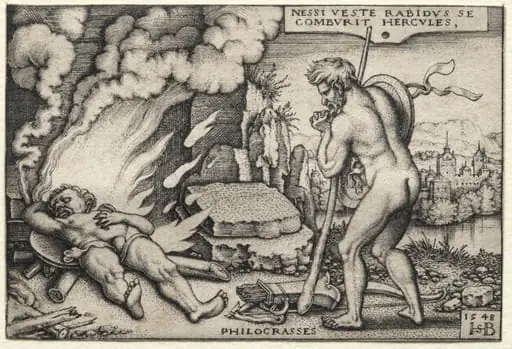
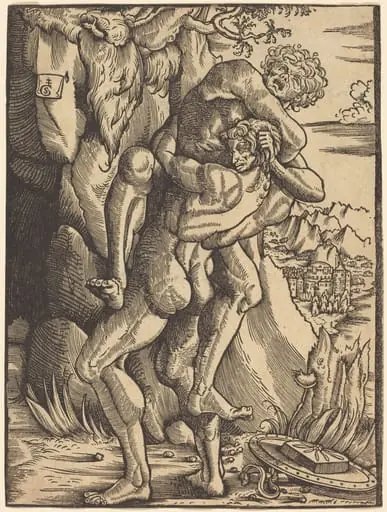
Death of Hercules is an ink print by the Renaissance artist Sebald Beham. It dates from 1548 and is held in the collection of the National Gallery of Art.
About this work
Overview
Death of Hercules is a 1548 engraving by Sebald Beham, a German printmaker and painter of the early to mid-16th century. It exemplifies his work as one of the 'Little Masters,' known for intricate, small-scale prints.
Subject & Meaning
The engraving depicts a dramatic mythological scene of Hercules' demise. On the right, Hercules stands armed with a club and shield, clad only in a cloak, while a figure lies dying or dead on the left, engulfed in flames, set against a detailed cityscape and mountain range.
Technique & Style
Beham's engraving showcases technical proficiency, achieving depth and texture through intricate details and cross-hatching, which adds shading and dimension to the composition.
History & Provenance
Created during Beham's active period, the work reflects his contribution to post-Dürer German printmaking, with the artist having worked in both Nuremberg and Frankfurt.
Context
Death of Hercules aligns with Beham's frequent use of historical and classical themes, characteristic of his engagement with Renaissance subjects.
Legacy
As part of Beham's oeuvre, the engraving contributes to the Renaissance movement, highlighting his role among the 'Little Masters' in the development of small-scale, detailed prints.
Artist & collection
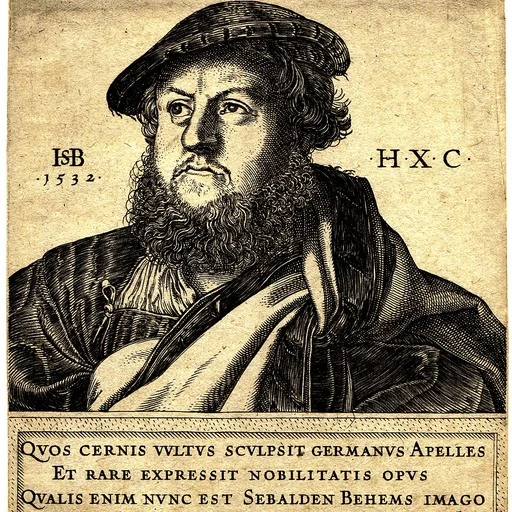
Artist
Sebald Beham (1500–1550) was a German painter and printmaker, mainly known for his very small engravings.