Artwork
Double Goblet with Oval Decorations
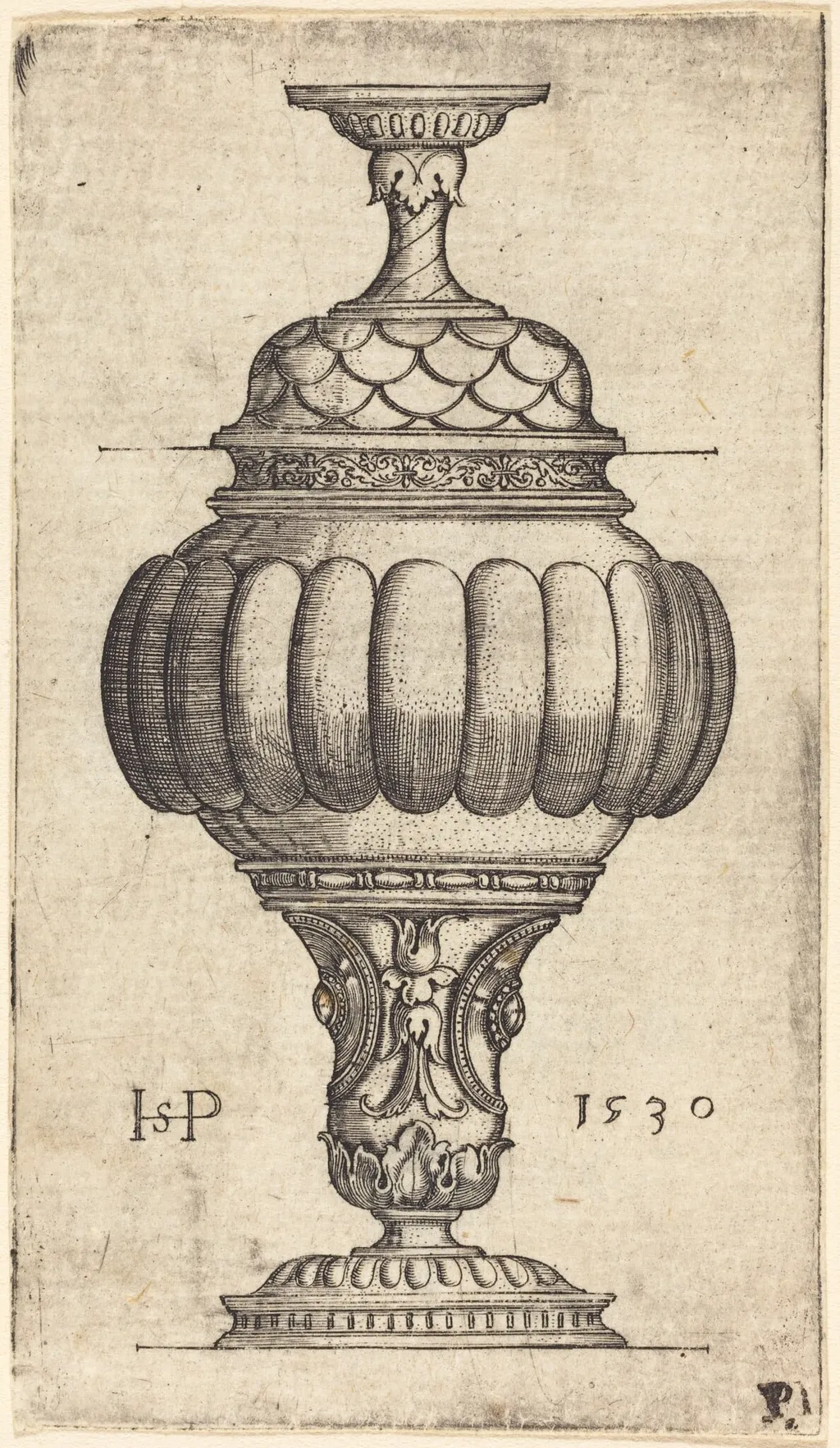
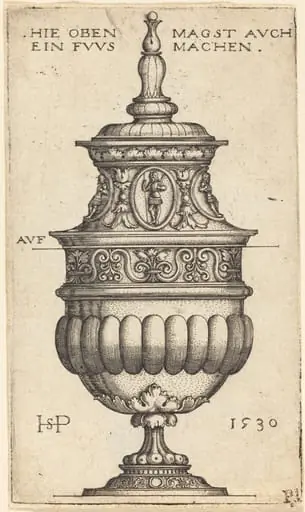
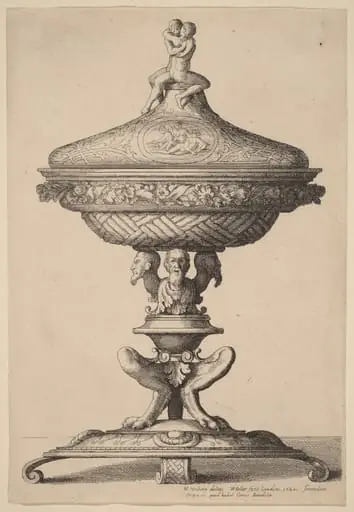
Double Goblet with Oval Decorations is an ink print by the Renaissance artist Sebald Beham. It dates from 1530 and is held in the collection of the National Gallery of Art.
About this work
The top part has a scalloped edge and a flat rim, while the bottom part sits on a detailed base with swirls and leaves.
This drawing shows a fancy goblet with two bulging oval shapes stacked on top of each other. The top part has a scalloped edge and a flat rim, while the bottom part sits on a detailed base with swirls and leaves. The lines are sharp and precise, giving it a clean, almost 3D look.
The date "1530" is written in the corner, so this is from the Renaissance. The artist used tiny parallel lines to create shadows—this is called cross-hatching.
Look up cross-hatching to see how artists build depth with just lines.
Overview
Sebald Beham’s engraving titled *Double Goblet with Oval Decorations* dates to roughly 1530. Executed as a small-scale print, the image centers on a stylized drinking vessel composed of two stacked ovals, each adorned with intricate ornamental motifs. The work exemplifies the meticulous line work characteristic of early‑Renaissance German printmaking.
Subject & Meaning
The composition presents a single goblet divided into an upper and lower chamber, each outlined by a scalloped rim and a richly carved base. The decorative elements—swirls, foliage and geometric patterns—suggest a fascination with ornamental design rather than narrative content, reflecting the period’s interest in decorative arts and the study of form.
Technique & Style
Beham achieved depth through dense cross‑hatching, employing parallel lines that intersect to model shadow and volume. The engraving’s crisp, linear precision creates a near‑three‑dimensional effect, while the miniature scale and elaborate detailing align with the “Little Masters” tradition of finely wrought prints that followed Dürer’s influence.
History & Provenance
Active in Nuremberg before relocating to Frankfurt, Beham was part of a circle of German artists known for producing compact, highly detailed prints for a market of collectors. The engraving bears the date “1530” in its margin, situating it within the early sixteenth‑century surge of print production that catered to both decorative and scholarly interests.
Context
The piece emerges from a broader Renaissance movement in which metal engraving became a primary medium for disseminating artistic ideas across Europe. German printmakers, building on Dürer’s innovations, emphasized technical virtuosity and ornamental complexity, qualities that Beham’s goblet exemplifies within the era’s evolving visual language.
Artist & collection
Artist
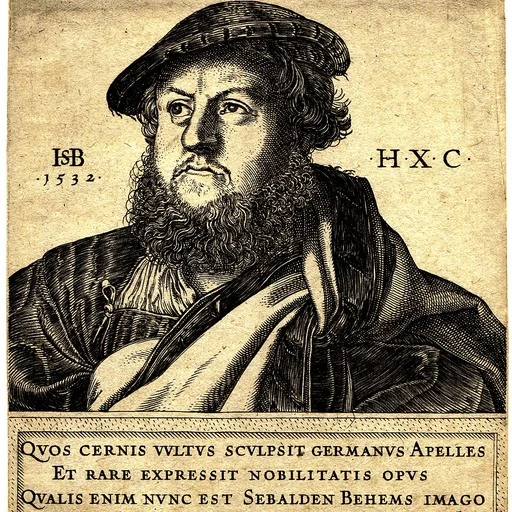
Sebald Beham (1500–1550) was a German painter and printmaker, mainly known for his very small engravings.


 Double Goblet with Oval Medallions of Knights
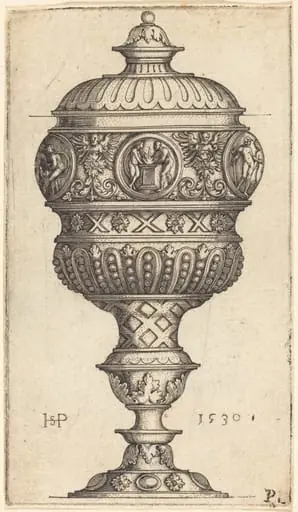 Goblet with Medallions
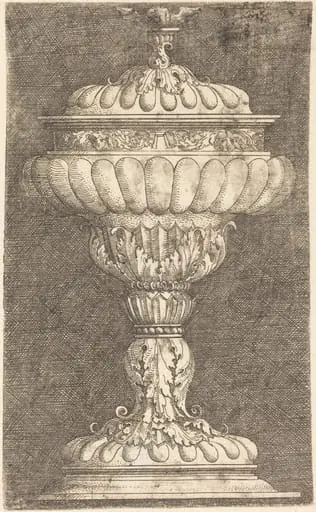 Covered Goblet with Winged Ball
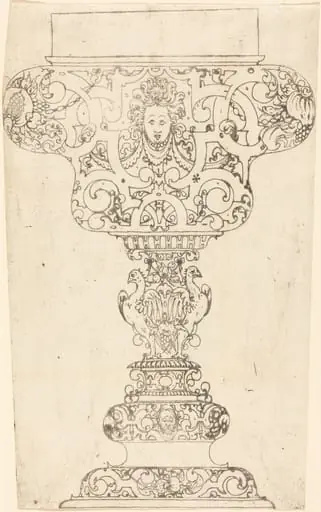 Ornament - Large Goblet
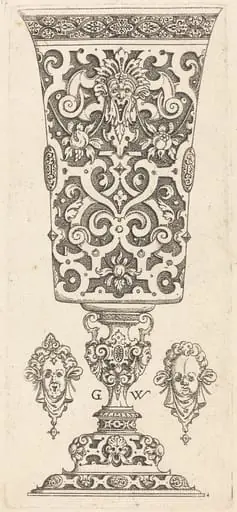 Goblet with base decorated with two large scallops
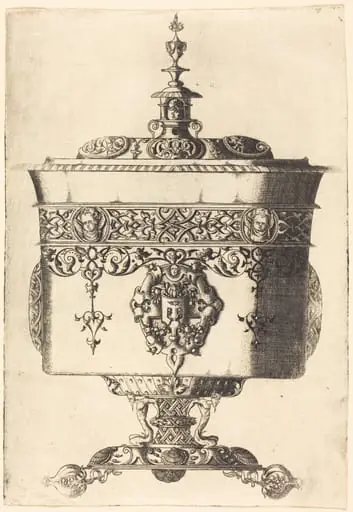 Richly Embellished Goblet
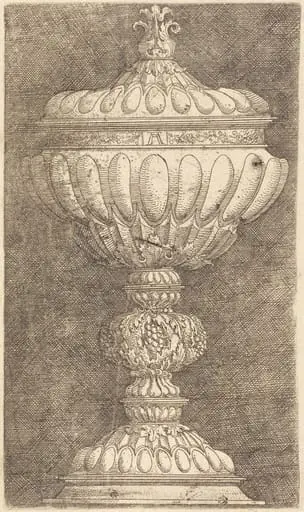 Covered Goblet with Grapes on the Stem
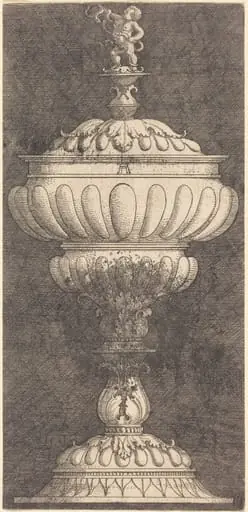 Covered Goblet with Young Hercules
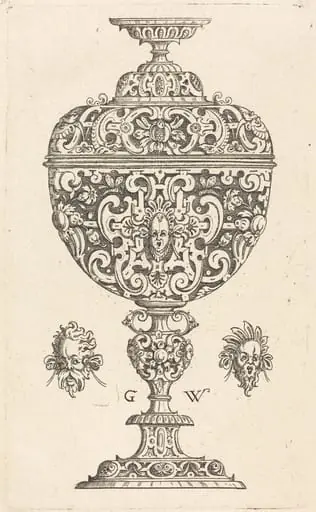 Goblet decorated with a masque with open mouth
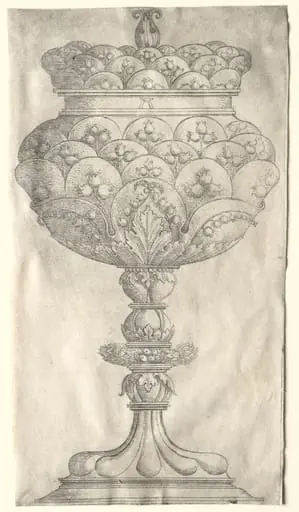 Goblet with Lillies of the Valley
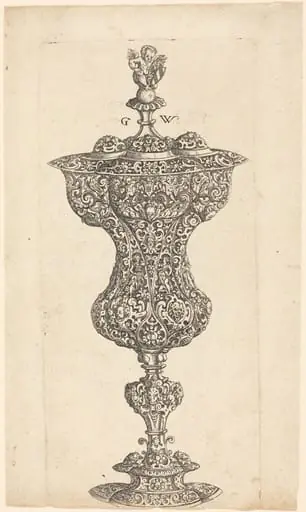 Goblet with Putto on lid
 Ornate Goblet